A President in Shreds: Ahmed al-Sharaa Between Dr. Jekyll and Mr. Hyde

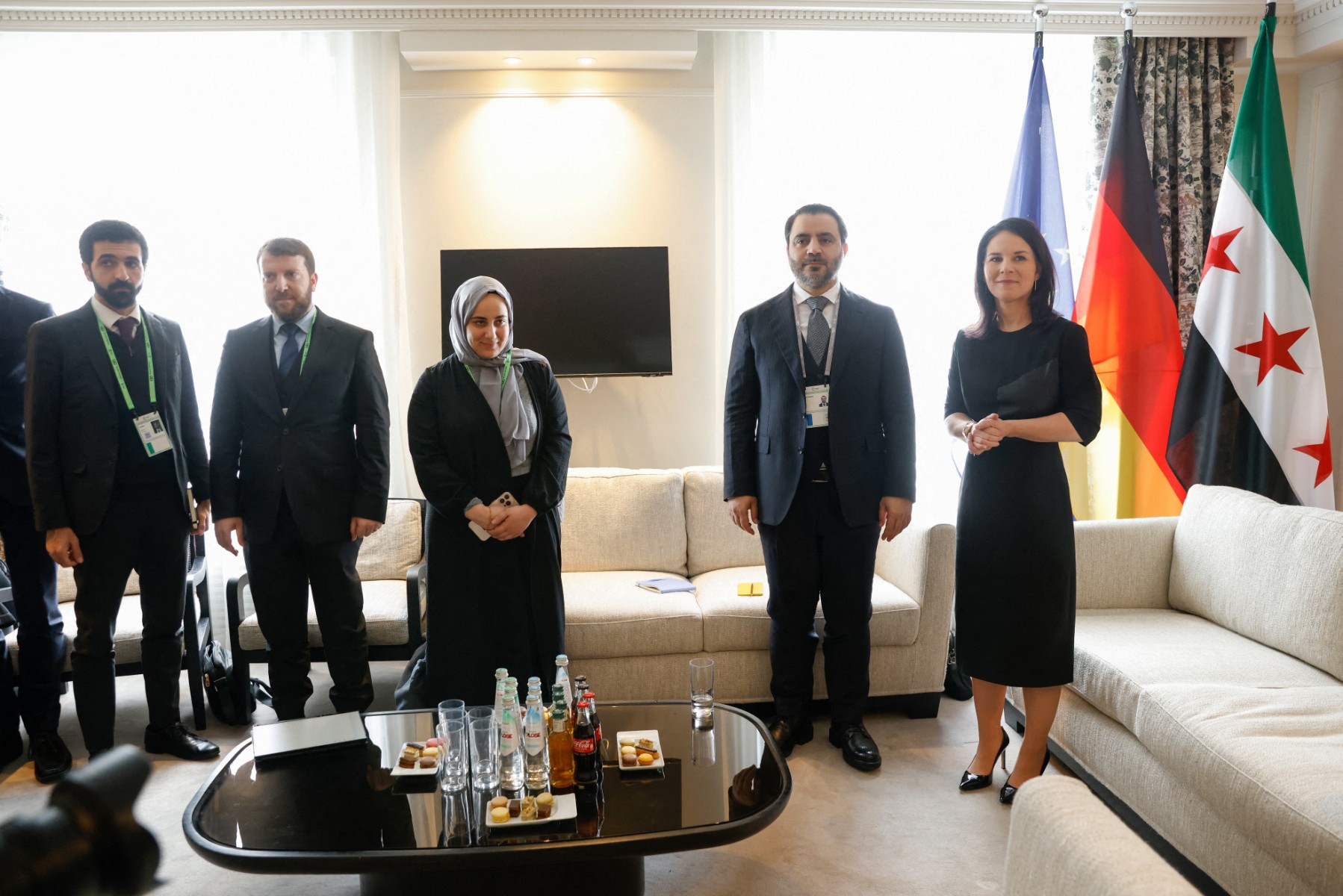
Delisting Ahmad al-Sharaa and his group HTS from the American and European terrorist lists has brought back an old, persistent question in a new form: Does the West have any moral compass? Does this stance not reveal a profound crisis in the West’s very ability to recognize and define “good” and “evil”; “friend” and “foe”?
“If we believe things have an unchanging essence, then these radical and abrupt reversals in Western policy cannot easily be explained. What lies behind these sudden and radical shifts is a worldview that wants to declare: there is no permanently stable situation, no unchanging essence, and no eternal relationship in history.”
The question has always been relevant, but its existence is acutely highlighted in our lives today, when a terrorist like Abu Mohammad al-Jolani is re-presented to the world as a new hero of the 21st century. It is also worth asking whether it even is “morality” if it can be diminished and deconstructed to be reformed into a tool for profit-driven policy, through which the West classifies friends and foes – a policy in which a ghoulish mass-murderer can be rebranded a “useful friend”?
Perhaps this ethical failure is a chance to explore deeper roots, reaching far into the heart of Western political worldview, to ponder whether this is merely the moral flaw of a specific class of Western capitalists and politicians, or does it require a more careful examination of the West’s historical way of looking at humanity in general and at “the Other” in particular?
This issue points to a much more fundamental question that has constantly preoccupied Western thought and literature: the concepts of definition and determination itself. In other words: do things possess a clear, fixed essence, or is there no such thing as a stable essence at all, and what exists is nothing but perpetual flux and change? Does a solid, stable, enduring state actually exist, or do we have only transformation, instability, and difference?
If we believe things have an unchanging essence, then these radical and abrupt reversals in Western policy cannot easily be explained. What lies behind these sudden and radical shifts is a worldview that wants to declare: there is no permanently stable situation, no unchanging essence, and no eternal relationship in history.
The problem first emerges in Greek thought.
For Plato, the desire to search for unchanging archetypes and fixed definitions is a fundamental part of his philosophical project. In his works, things can indeed possess an unchanging essence and definition. The Platonic world of Forms is the realm of true, original, and immutable essences; in that ideal realm things have a fixed essence and form that never changes. After Plato, the essentialist view became especially pronounced in Aristotle. For Aristotle things possessed an essence, which, no matter how circumstances changed, remained unaltered and intact. This classical vision of a stable, enduring, and fixed state of things suffered a devastating blow with the rise of the Enlightenment.
The Enlightenment brought forth a new set of views, and the liberal wing of Western thought has since rarely clung to unchanging definitions; pulling society away from the belief in the existence of immutable essence. Apropos: in the modern era, instances of the West operating according to essentialist logic has always produced catastrophes – for example: Nazi Germany, when Jews were regarded as a single, uniform unit bearing an inherently evil essence, an evil supposedly tied to their blood and race.
“Just as the evil Mr. Hyde contains the good Dr. Jekyll inside him, so too can the evil Mr. al-Jolani contain a good Dr. al-Sharaa inside him.”
But there is a flipside to this Western worldview; a side that believes in perpetual change, instability, and multiplicity. At its core, this opposing view is profoundly positive. However, neoliberal morality has hijacked this positive vision and turned it into a pragmatic weapon directed against inherent meaning and against the deeper implications of change and multiplicity.
In the postmodern era, the Western worldview has been reshaped under the shadow of a culture of instability, non-identification, and transformation: If the West defines an identity at one moment, it is only so that it can deconstruct and dissolve it the very next moment. Simply put, in the dominant contemporary philosophical current of the West, all things are multifaceted and multi-identified. Or, as the philosophers of Hegelian and Marxist dialectics used to proclaim, “Everything carries its opposite within itself.”
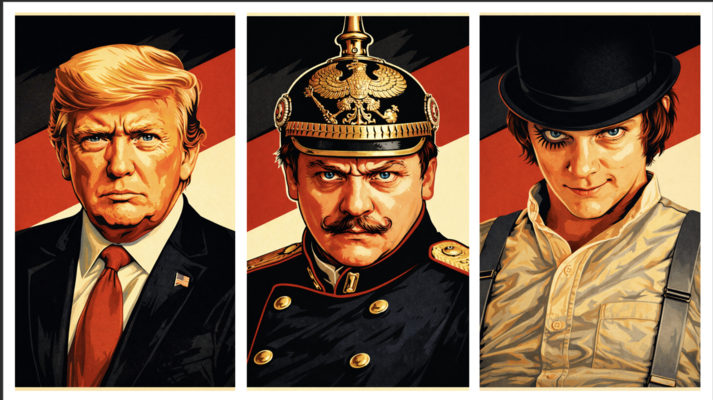
This philosophical outlook is also reflected in politics. Just as the evil Mr. Hyde contains the good Dr. Jekyll inside him, so too can the evil Mr. al-Jolani contain a good Dr. al-Sharaa inside him.
The image of the human being, of the Self, within Western literature and thought, is sometimes reenacted and displayed in a truly terrifying way in politics; where the Self’s existence and identity is contingent on the existence of “the Other” and thus defined as its opposite. Anyone who wants to understand the West must realize that the search for “the Other” is a central part of Western philosophical and political passion. Ahmad al-Sharaa is simply the latest vivid example of that relentless search for “the Other.”
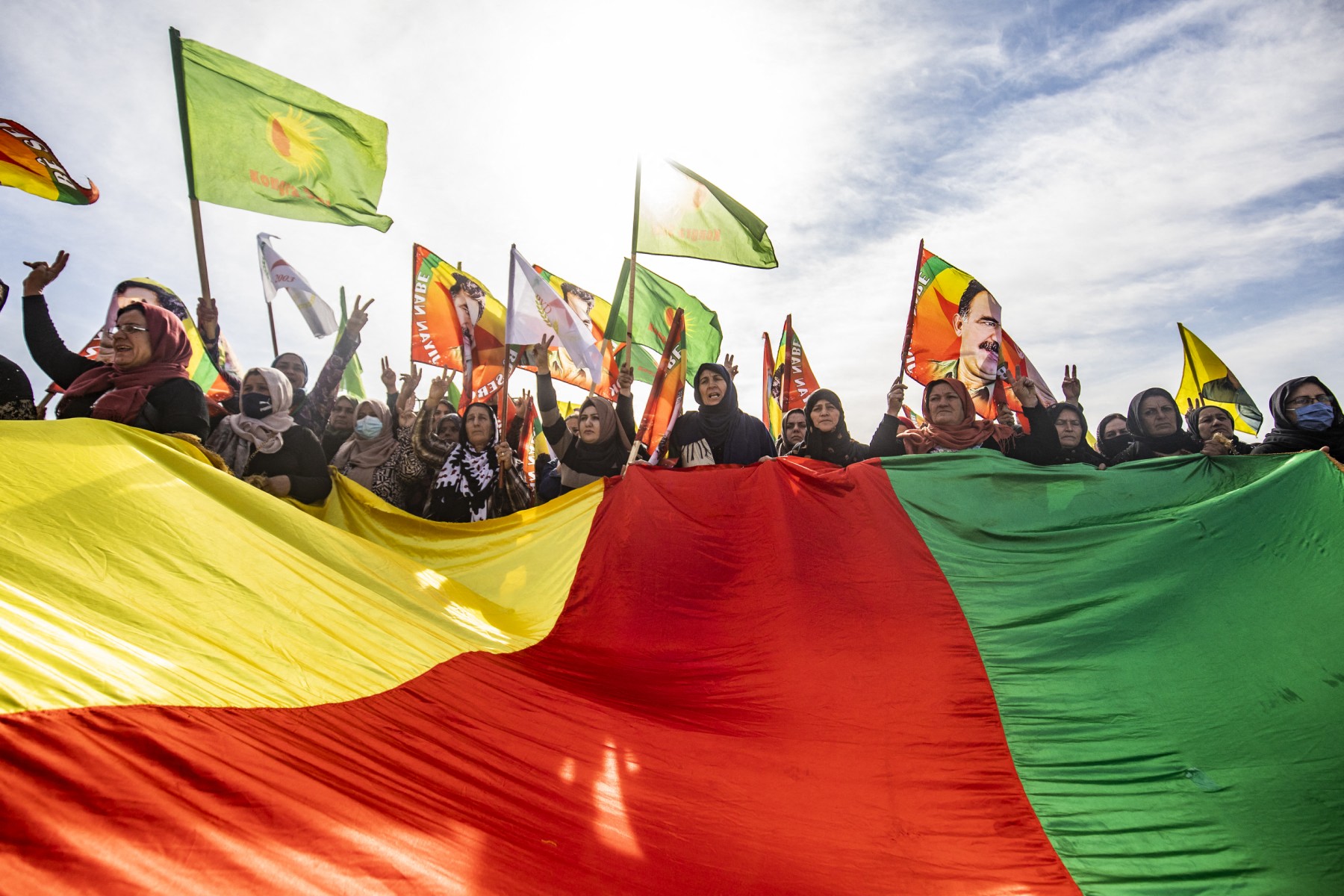
Putting “the Other” on display has always been part of the West’s political practice in the East. In 1975, the Americans abruptly and without precedent abandoned the Kurdish revolution, causing one of the greatest political collapses in modern Kurdish history. A few years ago, they repeated the same script in Afghanistan. And now, dancing to the very same rhythm and in exactly the same manner, they have in the space of a few weeks transformed the identity of the terrorist Abu Mohammad al-Jolani into the hero Ahmad al-Sharaa.
Here, the hidden message become clear, as though the West openly declares it: “Nothing is ever fixed or immutable; there is always another side waiting to emerge and take center stage.” Through examples such as Afghanistan and Syria, the West is also sending a crystal-clear signal to every political actor in the East: “You can always become something completely different from what you have been labelled today. Be at the ready, tomorrow everything may look changed.”
The thesis of an unstable and ever-changing world, at the level of philosophical theory, serves precisely to prevent us from surrendering to unchanging definitions, from creating eternal molds and perpetual clichés, from viewing things in the same way forever.
However, Western politics drags this very same thesis in a different direction and puts it to use for different purposes. It turns this thesis into a weapon of pragmatic politics that allows political gamesmanship, adaptation, self-fashioning, and moral double standards. Contemporary neoliberal politics operates in a direction that is hostile and opposed to the humanistic spirit of Western philosophy. It is exactly here that we clearly see that Western philosophical and literary culture is a humanistic culture that produces high moral values; yet, in stark contrast, Western politics is a duplicitous politics, very often devoid of principle and morality.
The fact that Western politicians have instrumentalized philosophical ideas and literary visions for their own ends is hardly a secret; there are hundreds, even thousands, of examples at hand. In fact, I would go so far as to say that understanding “Western political morality” is impossible without understanding Western philosophy and literature.
This does not mean that Western politics simply takes its orders from philosophy, art, or literature. Rather, it means that politics has had the power to take philosophical and literary views, turn them into tools, and reshape them into something that is useful to itself, and then wield them as pragmatic weapons for its own purposes.
Sometimes thought and literature are directly complicit in the crime – we see this in the cases of Rudyard Kipling, Martin Heidegger, or Filippo Tommaso Marinetti, the father of Italian Futurism, who themselves directly participated in producing racist and fascist ideologies. At other times the complicity is indirect: ideas are distorted, twisted away from their original intent and put to work – as when the Nazis appropriated Nietzsche or Beethoven. This double standard is not some fleeting, transient political or moral mistake. It is instead a product of Western history itself, and it is tightly bound to the long, protracted development of the Western worldview toward the world.
In the way Ahmed al-Sharaa is re-presented, the West simply repeats its own image of man and of “the Other”. This view of the human being as an unstable, two-faced creature is deeply embedded in Western thought.
In literature we do not only have the benevolent Dr. Jekyll who turns into the criminal Mr. Hyde at night; this pattern of splitting, this fragmentation of character, appears again and again in many of the great foundational works of Western literature. Take Oscar Wilde’s novel The Picture of Dorian Gray. Although Dorian Gray leads a life of crime and corruption, his own face remains forever beautiful and youthful; he always appears innocent, with no trace of guilt visible on his features. Yet with every sin he commits, the portrait that a friend painted of him grows older and more hideous. Dorian Gray’s real face is nothing but a mask that conceals “his other aspect”, the demon that the portrait reveals.
Very often, when looking at the West’s relationship with Ahmed al-Sharaa, the image of Dorian Gray comes to mind. Western politicians and corporate owners deal only with the “beautiful, spotless Ahmed al-Sharaa / Dorian Gray,” while a portion of their own media transmits the ugly, repulsive portrait. In other words, they have divided the labor: the true picture of al-Jolani is as hideous and repulsive as Dorian Gray’s true portrait, but Western politics leaves that ugly portrait to the media; it itself continues to transact with the immaculate image of Ahmed al-Sharaa, the one whose face bears no stain whatsoever, the one whom Donald Trump can, with complete ease, describe as “great.”
Yet, no real change has taken place in Ahmed al-Sharaa. Abu Mohammad al-Jolani the terrorist did not disappear so that Ahmed al-Sharaa the statesman could be born. Al-Jolani the terrorist is an eternal part of Ahmed al-Sharaa. The only difference is that whether he appears as a terrorist or as a statesman is no longer in al-Sharaa’s own hands. Others decide when he is the terrorist and when he is the liberator. Right now, al-Sharaa is nothing but a fragmented picture that everyone reassembles however they like: the Americans one way, the Turks another way, Israel yet another way… and so on. Al-Sharaa is a character without character; he has no face of his own. Others carve out whatever face they need from him.
In the novel One, No One, and One Hundred Thousand (published in 1926), Pirandello describes a predicament that is strikingly similar to al-Sharaa’s. The protagonist, Vitangelo Moscarda, has his entire life overturned by a simple remark from his wife about a slight droop in his nose. From that remark he realizes that others have an image of him that does not match that which he has of himself. He begins searching for “himself” in the eyes of others – who he is, and how others see him. Little by little he discovers that everyone carries a different image of him, each one irreconcilable with the image Moscarda has of himself.
Moscarda starts out as a man who knows himself, but then gradually loses himself. From being “one”, he becomes “no one”. He becomes a person who has a hundred thousand images – none of which are him, yet, simultaneously, all are him. This dissolution and fragmentation drive Moscarda to madness.
Ahmed al-Sharaa’s situation is not fundamentally different from Moscarda’s, except for one crucial detail: al-Sharaa is a manufactured character, a creature who can slip on any mask at will, so his sanity, unlike Moscarda, is not in peril. Ahmed al-Sharaa no longer asks, “Who am I?” He no longer wonders whether he is a terrorist or a hero. Wherever he goes, he simply opens his wardrobe of masks, picks the one that fits the occasion, puts it on, and walks out.
The West needs an Ahmed al-Sharaa who has many faces and many possibilities precisely so it can keep telling the politicians of the East: “The power to name, to label, and to decide belongs to me. Among all your different facets, I am the one who decides which name and which face I will grant you right now, at this particular stage.”
Ahmed al-Sharaa is useful to the West only for as long as he can be both Dr. Jekyll and Mr. Hyde, and as long as he carries a whole gallery of swappable faces with him.

Bachtyar Ali
Bachtyar Ali, a leading novelist, poet, and essayist, is celebrated as one of the most influential contemporary Kurdish authors. Best known internationally for The Last Pomegranate Tree, he has published over 40 works of fiction, poetry, and criticism, including 12 novels. His writings have been translated into numerous languages, from Arabic and Persian to German, Italian, and English. In 2017, he became the first author writing in a non-European language to win the prestigious Nelly Sachs Prize.