Iran Admits More Than Three Thousand Killed in Protests
Iranian authorities on Wednesday released their final figures on the number of people killed during the recent nationwide protests. According to statements issued by the Supreme National Security Council and the Martyrs Foundation, at least 3,117 people were killed across Iran during the unrest.
The statements said that out of this number, 2,427 people were described as “civilians” and “defenders of order and security.” They were killed, according to officials, by what they called “terrorists and rioters.” The statements also said that 690 of those killed were themselves “terrorists and rioters” who died during the protests.
However, the statements did not explain how the authorities classified the victims, and no evidence or documents were provided to support these claims. If these figures are confirmed, the killings on January 8 and 9 would be considered the deadliest protests in the history of the Islamic Republic. The unrest during these days resulted in a death toll that is more than four times higher than the total number of people killed during the 1979 revolution against Mohammad Reza Shah.
Since the protests intensified, Iranian officials and state media have repeatedly blamed the violence on what they describe as “terrorist elements,” while denying responsibility of military, police, and security forces in the killing of protesters. This comes as many videos (shared in limited ways due to a widespread internet shutdown since 8 January) from Iran appear to show security forces firing directly at protesters, some with military-grade weapons.
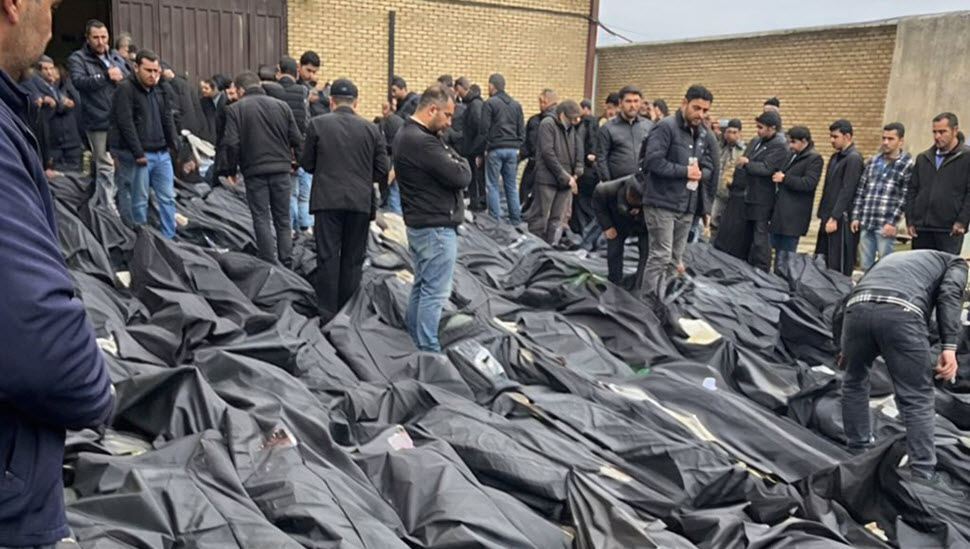
Images published from the Kahrizak Forensic Medicine Center in southern Tehran also show hundreds of bodies and families trying to identify their kin. These images, along with eyewitness reports, have raised doubts about the official figures announced by the authorities.
On Wednesday, the deputy governor for security affairs in Iran’s Razavi Khorasan province told local media that the number of people killed during protests in the city of Mashhad was “less than 400.”
Iranian officials in recent years have repeatedly claimed that the goal of “rioters and terrorists” is to manipulate public emotions through “manufacturing deaths.”
The Martyrs Foundation has similarly claimed in its statement that many of those killed were “passers-by” who lost their lives as part of what it described as attempts to “manufacture deaths” or during “indiscriminate terrorist shootings.” The statement also said that some of the victims were protesters who were shot within crowds by so-called “organised terrorist elements.”
Last week, Amnesty International said in a statement that based on verified video evidence and eyewitness testimony, Iranian security forces repeatedly fired at unarmed protesters on the streets and from rooftops, often targeting the head and upper body.
Human Rights Watch also said in a report published on January 16 that Iranian security forces, after protests escalated from January 8, carried out coordinated and widespread killings of protesters, adding that the number of those killed, including protesters and bystanders, is believed to be in the thousands.
At the same time, a group of doctors and medical specialists said in a statement published by the US-based rights group HRANA that some injured protesters died after medical treatment had begun, or were abandoned before treatment was completed. According to the statement, evidence such as IV lines, breathing tubes, and heart monitoring equipment found on bodies suggests that some victims were killed after receiving initial medical care or were removed from hospitals before death was officially confirmed. The doctors said this represents a clear violation of medical neutrality.
According to the latest figures from HRANA, the number of confirmed deaths has reached 4,902, while more than 9,000 other death cases are still under investigation. Mahmoud Amiry-Moghaddam, head of Iran Human Rights, based in Oslo, said the real number of people killed “may even be higher than the highest media estimates.”
The figures announced by Iranian authorities come as human rights groups and media outlets have previously reported that security officials pressured families of victims to either accept that their relatives were members of the Basij militia or pay large sums of money in exchange for receiving the bodies.
At the international level, Mai Sato, the United Nations Special Rapporteur on human rights in Iran, warned that the number of deaths is still rising and that the situation may meet the threshold for investigation of “crimes against humanity.” In an interview with ABC News, she said her minimum estimate of those killed is more than 5,000, a figure she said is reported by more cautious organisations.
Due to widespread internet shutdowns and severe communication restrictions, independent verification of the death toll from inside Iran remains extremely difficult. However, the large gap between official figures and reports by human rights organisations remains a major point of dispute.

The Amargi
Amargi Columnist