“A Historic Turning Point”: PDKI Leader Says Iran Is Too Weak to Recover
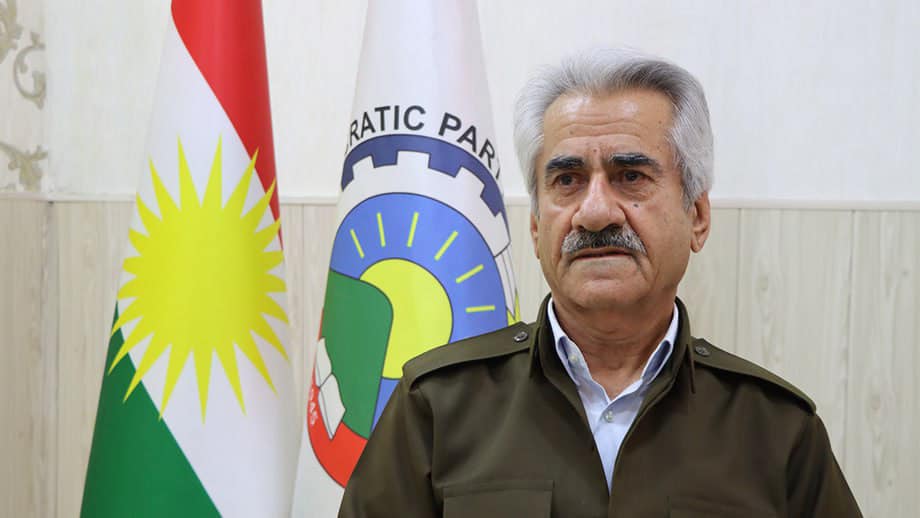
In an exclusive interview with The Amargi’s Editor-in-Chief, Kamal Chomani, Mustafa Hijri, Secretary General of the Democratic Party of Iranian Kurdistan, asserts that the Kurds in Iran are ready for any possible changes in the country, adding that, following the 7 October 2023 events and the 12-day Israel-Iran war, Iran is too weak to recover.
In the interview, he discusses a range of domestic and regional issues, including Iran post 7 October; the weakening of Tehran’s regional power; Israel and U.S. intervention; Kurdish unity; the lack of political alternatives faced by Iran’s opposition regarding the future of the country; and the readiness of the KDPI to enter into negotiations with the Islamic Republic of Iran.
A New Middle East and a Weakened Iran
In the wake of 7 October 2023, the Middle East entered what Mustafa Hijri calls “a new historical phase”, a period marked by shifting alliances, regional recalibration, and the erosion of Iran’s longstanding influence.
Speaking in an exclusive interview with The Amargi (full interview to be published on The Amargi on Wednesday, December 3), the leader of the Democratic Party of Iranian Kurdistan (KDPI) said that the region’s dramatic shifts have undermined Tehran’s power in unprecedented ways.
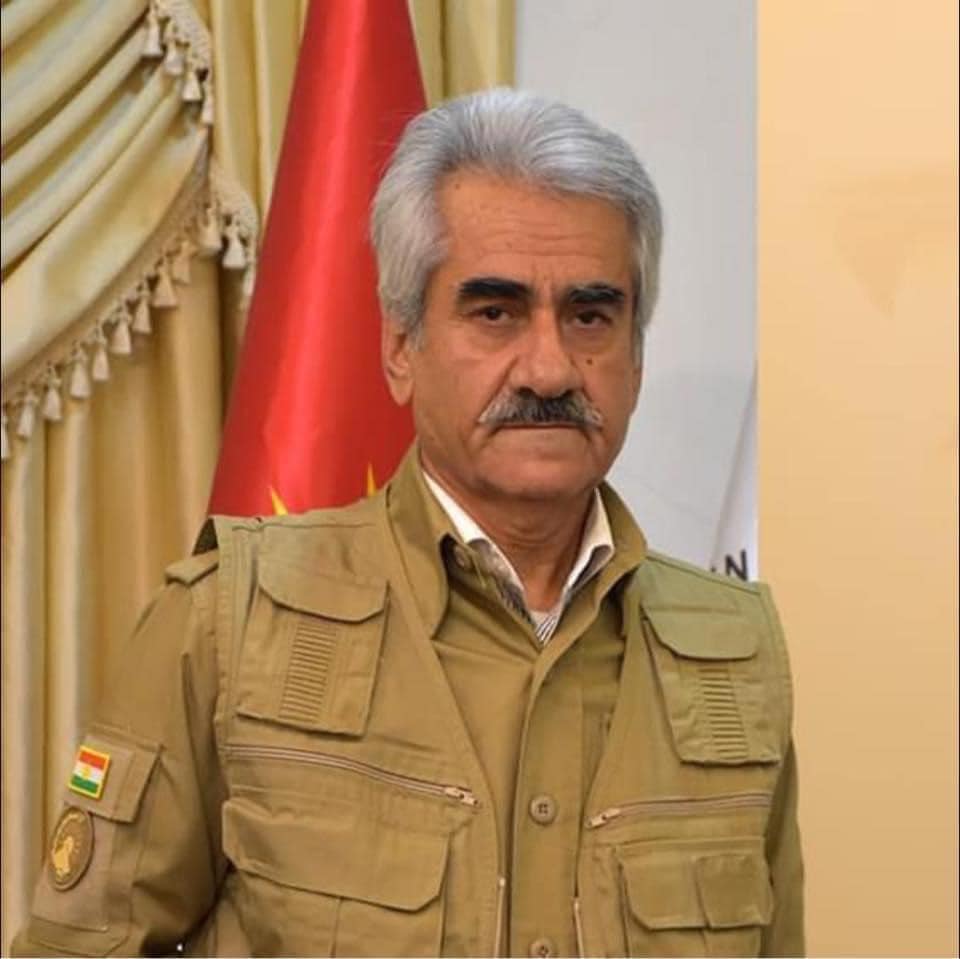
“The Islamic Republic had been increasing its power and hegemony day by day until 7 October,” Hijri said. “Now it is a weakened and fragile state.” He argued the turning point came not only from Israel’s military response and the subsequent U.S. involvement, but from Iran’s deeper structural unraveling, as economic collapse, water shortages, political repression, and growing disillusionment among non-Persian populations have hollowed out the regime from within.
“Kurdistan will undoubtedly benefit from these transformations,” but only if Kurdish political actors align their policies with regional changes and, crucially, build internal unity.
Hijri sees the region’s broader realignments – including Saudi-Israeli normalization efforts, Lebanon distancing itself from Hezbollah, and Syria potentially joining the Abraham Accords – as part of a “general trend” that indicates Iran’s regional hegemony is shrinking: “The weaker this hegemony,” he said, “the stronger the hope for greater stability in the Middle East.”
For Kurds, this new regional landscape creates both risk and opportunity: “Kurdistan will undoubtedly benefit from these transformations,” Hijri explained – but only if Kurdish political actors align their policies with regional changes and, crucially, build internal unity.
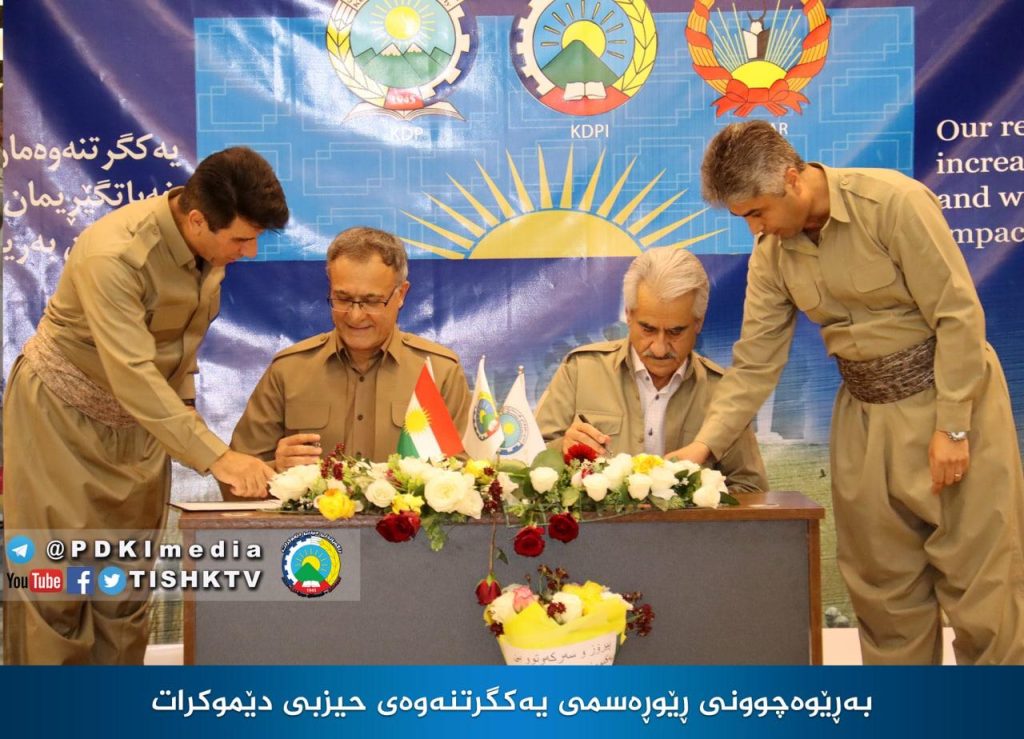
Hijri highlighted the development of Kurdish unity in Iran, in part through the Cooperation Center of the Parties of East Kurdistan – an initiative that began in 2018 to improve Kurdish coordination and political cooperation in Iran: “The positions of the parties regarding the formation of a shared platform for joint action have come significantly closer together.”
“Iran Cannot Return to Its Pre–October 7 Position”
Asked whether the Islamic Republic can recover its former regional stature, Hijri’s response was unequivocal: “After more than 40 years of the Islamic Republic attempting to reshape the region, and now that Western states have run out of patience, the Regime cannot return to its pre-October 7 situation.”
He listed a cascade of crises facing Iran: systemic corruption, the collapse of the Iranian currency, mass unemployment, severe shortages of electricity and water, and daily repression, which has fueled widespread anger, especially among non-Persian communities, including Kurds, Arabs, Baluch, and Azeris.
Western governments are left to conclude that Tehran will not change its behavior, and they are now taking direct steps to contain Iran’s military and proxy networks.
Even elites are turning against each other: “Within the circle of power itself, mutual hostility is now openly expressed.”
Hijri argued that the old model – a regime projecting force abroad while suppressing dissent at home – has cracked. Western governments are left to conclude that Tehran will not change its behavior, and they are now taking direct steps to contain Iran’s military and proxy networks.
“We Are Prepared for Every Scenario”
Despite the KDPI’s return to limited armed action in 2015, Hijri said the party shifted its strategy during the Jina (Mahsa) Amini uprising and the 12-day War sparked by October 7.
That shift was not a sign of weakness but a political calculation: “We Kurds, and other oppressed nations [in Iran], have endured the greatest sacrifices under this regime,” he said. “But none of us can overthrow the Regime alone. Armed struggle would bring enormous human loss to our people.”
Hijri emphasized that the KDPI does not want the burden to fall on only Kurds, “We want to continue our struggle shoulder to shoulder with the other peoples of Iran.”
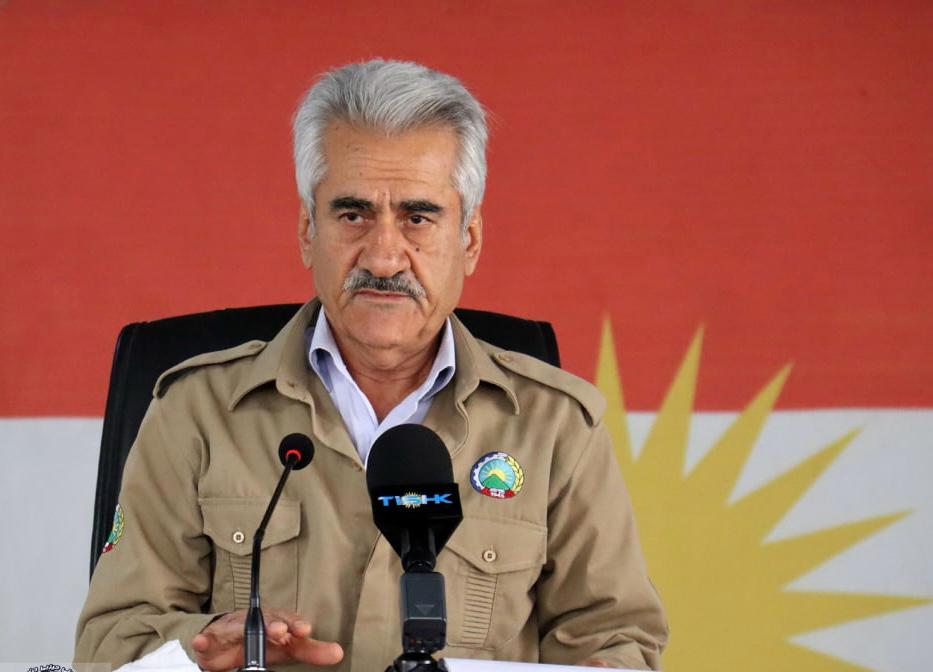
At the same time, he made it clear that the party has not abandoned the military dimension: “We are fully prepared to continue the struggle, including armed struggle. We have maintained our capabilities.”
However, he argued that civil and organizational resistance has become more effective in the current climate, as it lowers the chance of human casualties and leads to greater legitimacy and stronger international resonance.
Tehran’s Anti-Kurdish Security Agreements
Hijri acknowledged that recent security agreements among Iran, Iraq, and the Kurdistan Regional Government have limited the armed activities of Iranian Kurdish parties, “But other forms of struggle continue,” he said.
He noted that Tehran has pressured both Erbil and Baghdad to expel Kurdish opposition groups from Iraq entirely, which is a demand the KDPI has said it will resist: “We have stood our ground. With the weakening of the Islamic Republic in the region, especially in Iraq, we believe we can succeed.”
No Alternative in Sight: “Unity Has Never Been Learned in Iran”
Another noteworthy point in the interview with Hijri was his critique of the Iranian opposition, saying that the failure to unite is “one of the main reasons the Islamic Republic remains in power.”
He argued that Iran’s opposition forces have never developed a democratic culture of dialogue or political compromise: “Over the past hundred years, there has been no system that teaches collaborative political work. They all speak of democracy, but deep down, many remain authoritarian.” The result has been paralysis.
Due to this, Western governments have hesitated to support regime change because they do not know who could govern Iran after the Regime: “There is no credible alternative,” at least not among the Persian opposition.
By contrast, he pointed to the progress among the oppressed ethnic groups in the country: the KDPI has helped build unity across Kurdish, Arab, Baluch, and Azeri parties through frameworks such as the Congress of Nationalities for a Federal Iran and the Alliance for Freedom and Equality.
Reza Pahlavi and the Fragmentation of the Opposition
“Charismatic leadership emerges from work, struggle, and experience,” he said. “Not from media promotion or foreign endorsement.”
Hijri was blunt in his assessment of efforts by foreign governments to elevate Reza Pahlavi as the leader of a unified Iranian opposition.
“Charismatic leadership emerges from work, struggle, and experience,” he said. “Not from media promotion or foreign endorsement.” He rejected the idea that Pahlavi could unify Iran’s diverse political landscape: “He has no party, no leadership experience, and no base among [Iranian] people.” He argued that Pahlavi’s elevated profile has, in fact, deepened divisions: “His presence has been one of the causes of increasing fragmentation within the opposition.”
Western Reluctance and the Future of Iran
With Washington and European governments now seeking a new nuclear deal and reducing escalation, Hijri said the West remains cautious about endorsing regime change.
“The West does not know what Iran will look like after the fall of the regime,” he said, noting past failures in Iraq and Afghanistan. As a result, they have not made serious efforts to consult with Iranian opposition organizations, including the KDPI, about Iran’s future.
What Iran’s Kurds Want: A Federal, Democratic, Secular Iran
If negotiations with Tehran ever resume, Hijri said the Kurdish position is clear: Power must be decentralized, all ethnic groups must participate in governing Iran, regions must be governed by representatives elected by their own people, minority languages must be recognized as official at the regional level, and political parties must be legal: “These demands can be fulfilled within a democratic, federal, and secular Iran.”
Only then will all of Iran’s peoples “consider Iran their country” and work together for its reconstruction and progress.

The Amargi
Amargi Columnist