‘They had only stones’: witnesses describe deadly crackdown in Malekshahi
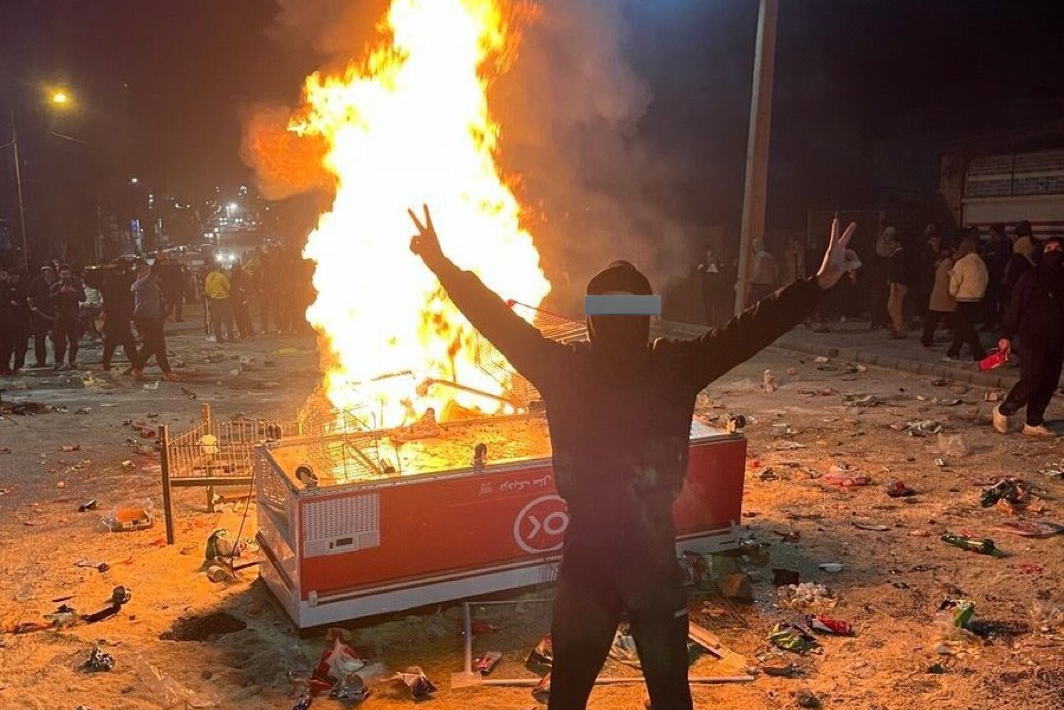
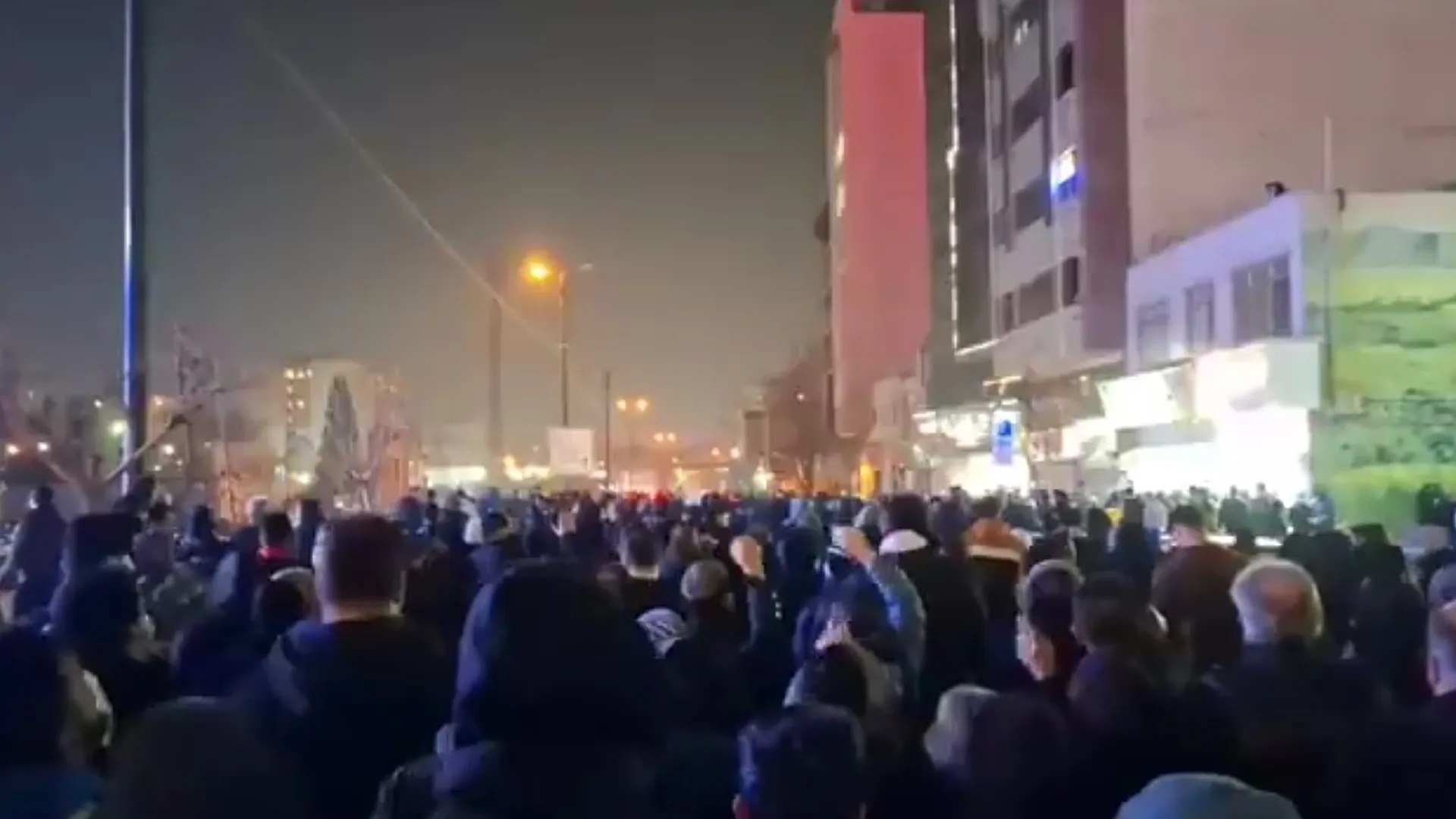
In the past week, Iran has seen a wave of nationwide protests that began with economic demands and quickly took on political dimensions. The protests began on 28 December and have now spread to many cities and provinces. According to reports, because of a heavy crackdown by security forces, dozens of people have been killed or injured, and hundreds have been arrested.
Among the affected areas, Ilam province, especially the city of Malekshahi, has become one of the main centers of the recent events. The protests in this area during the last three days became violent, and until now, at least four protesters have been killed, and tens of others have been injured. At the same time, dozens of people were detained by security forces, and there is no clear information about many of them.
…the security forces “opened fire without any warning.”
When the clashes intensified, the forces inside the military base fired at the protesters from the rooftop and from the entrance gates. A protester who was present at the scene told the Amargi that the protesters “did not have any weapons except stones” and they had not damaged the base. But “when a few stones hit the front gate, and one protester tried to climb the wall, they started shooting with live bullets, and three people there were killed immediately.”
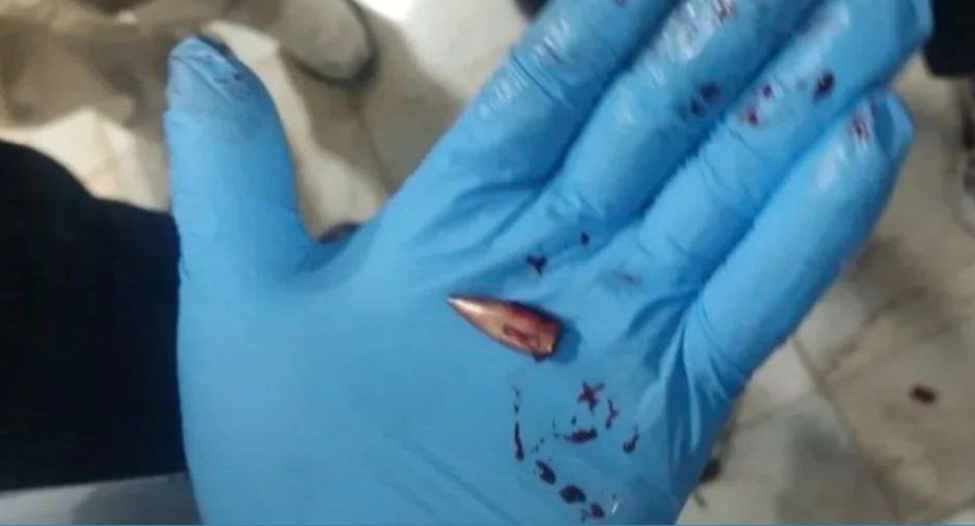
Isa Bazyar, a munitions and weapons expert in Norway who is closely monitoring the events in Malekshahi, told the Amargi that the security forces “opened fire without any warning.” According to him, the IRGC forces used not only shotguns, but also larger caliber weapons such as the Pulemyot Kalashnikova (PK).
A photo received by the Amargi shows that at least one protester, named Reza Azimzadeh, died after being hit by a bullet from a PK-class weapon. According to the witnesses, many of the injured were taken by locals and relatives to Imam Khomeini Hospital in the provincial capital. They also report, however, that during the past three days, security forces have entered the hospital multiple times to arrest the wounded protesters. According to available information, at least a few of the injured are still under treatment in Ilam hospital, some of them in a reportedly serious condition.
The brutality of these hospital raids led members of parliament from the province to issue a statement promising to follow the case through judicial and governmental institutions. Additionally,the Ministry of Interior and the Ministry of Health have sent separate delegations to Ilam and Malekshahi to investigate the situation.
The Amargi attempted to speak with the parliamentary representatives from Ilam, but none of them agreed to comment.
According to Isa Baziyar, the bodies of three victims have been returned to their families so far, but the authorities have refused to return the bodies of the others “because they are afraid that the protests will increase.” The funerals of those who were returned were held in the last few days with a large number of Malekshahi residents, and people were chanting slogans against the leader of the Islamic Republic.
the head of the judiciary ordered the judges of revolutionary courts to review the cases of the so-called ‘rioters’ with “no tolerance and no leniency.”
The sharp fall in the Rial, high inflation, and rising food prices have put strong pressure on low-income groups and are seen as the main reason for triggering the protests. The demonstrations first started in Tehran and its commercial areas, and then spread to cities like Isfahan, Hamedan, Babol, Fasa, and Kermanshah. Human rights groups say that so far, at least 28 protesters have been killed and hundreds wounded. As the protests grew larger, the leader of the Islamic Republic, unlike previous times, appeared very early and called for action against those he calls “rioters.”
After that, the head of the judiciary ordered the judges of revolutionary courts to review the cases of the so-called ‘rioters’ with “no tolerance and no leniency.” This is significant, since with the new anti-espionage laws, there are fears that detainees may be accused of spying for Washington and Tel Aviv, based on the public support statements by some American and Israeli officials, and also the security rhetoric of Iranian authorities.
However, threats from judicial officials and intensifying repression have not yet stopped the protests. On the contrary, in Ilam province and neighboring provinces, protests are growing, and in some cities, such as Abdanan, authorities have even cut electricity for several hours to curb them.
In peripheral regions like Ilam, which, despite large oil and gas resources, still suffer from high unemployment and chronic underdevelopment, economic pressures push people to the streets more quickly. Observers say that the gap between development promises and real-life conditions in these areas has increased social dissatisfaction.
Even though the protests in Ilam, Lorestan, and partly Kermanshah are stronger, these events have received little attention from Persian-language media outside Iran.
Behrouz Boochani, Kurdish journalist and writer from Ilam, believes that the current crisis is not only economic, but “is also the result of decades of political and identity discrimination, which has been accompanied by naked violence.” Regarding the intensity of protests in Ilam and Lorestan, he says, “This region is culturally and historically connected, and the repression of one city affects the others.” According to him, the repression in Malekshahi “reminds the historical memory of the region in its confrontation with the central government,” something that also happened in 1929 during the uprising of Shah Mohammad Yari against Reza Shah.
Even though the protests in Ilam, Lorestan, and partly Kermanshah are stronger, these events have received little attention from Persian-language media outside Iran. Boochani believes that part of this comes from a centralist way of looking at Iran by these media outlets, and partly due to “a dehumanising of the Kurdish people living in these provinces.” Another reason, according to the journalist, could also be the lack of pro-Pahlavi slogans in these regions, which “does not match the agenda of those media.”
Despite the rising repression, the authorities of the Islamic Republic are also trying in parallel to introduce economic packages and measures to reduce livelihood pressure and prevent the unrest from spreading. This situation, together with the increasing risk of renewed conflict with the United States and Israel, has made decision-making in Tehran a complicated business.

Ammar Goli
Ammar Goli is an investigative reporter whose work focuses on the relationships between mafia groups and totalitarian governments, and on the Kurdish issue in the Middle East. He has contributed to various media outlets, including BBC Farsi, Iran International, and Radio Ferda, in Persian, Kurdish, and German, drawing on his deep understanding of the political and social dynamics of the region. At The Amargi, he writes specifically about East Kurdistan and Iran, offering valuable insights and analysis of current events.