Iran Update: Brutal Silencing and a Fractured International Response
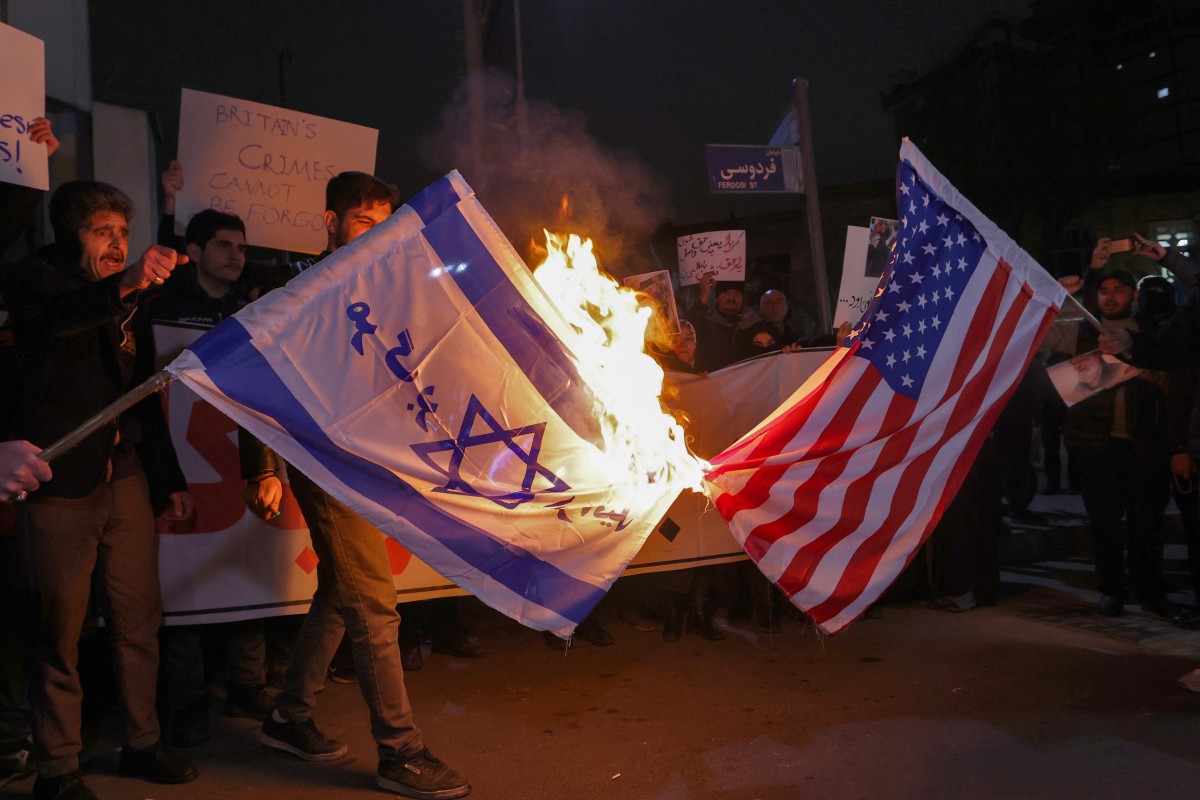
Members of the Basij volunteer Islamic militia burn US and Israeli flags during a protest in front of the British Embassy in Tehran on January 14, 2026. The Basij, linked to the Revolutionary Guards, are among the most devout supporters of the Islamic regime in Iran. Photo by ATTA KENARE / AFP)
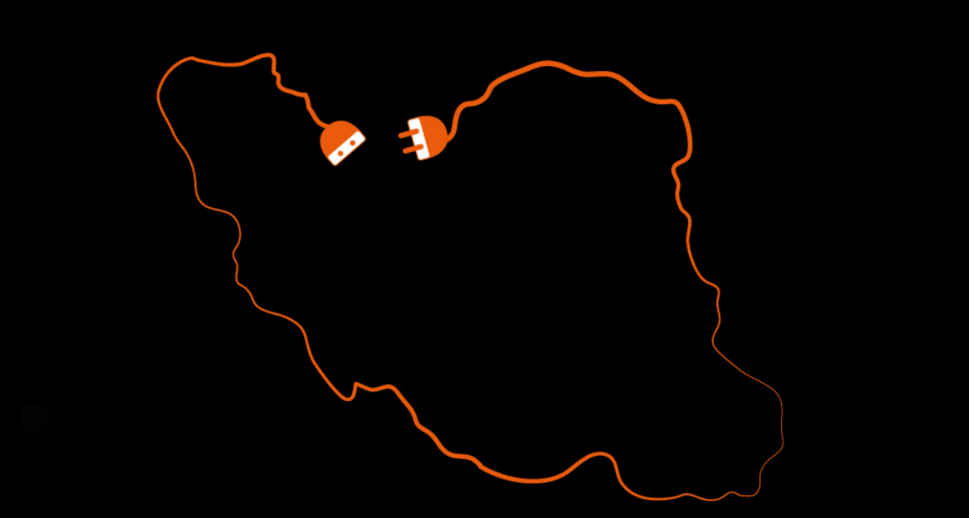
Iran is undergoing an escalation in repression by the government: a nationwide internet shutdown—now extended to satellite services such as Starlink—is being used to prevent international visibility while security forces kill protesters and extort families for the return of bodies.
This strategy echoes both Iran’s own November 2019 massacre and the former Syrian regime’s reliance on enforced disappearance and unaccountable violence, revealing a model of survival built on information control and militarized repression.
As the international order is being reshaped under the Trump administration, diaspora spaces are increasingly overtaken by authoritarian nostalgia, while the future of Iran remains suspended between mass repression, popular resistance, and an international community whose nations are unwilling to see beyond their own strategic interests.
Killing, extortion, and fear
The current wave of protests began in Tehran’s Grand Bazaar on December 28, quickly spreading to all 31 provinces and shifting from economic grievances to political demands, including calls for the overthrow of the regime. Over 80% of Iranian households are estimated to live below the global poverty line. Decades of sanctions, structural inequality, economic collapse, and social repression have left millions feeling there is no future under the current leadership. Against this backdrop, workers, women, students, and ethnic minorities have taken to the streets in an unprecedented uprising that challenges both the state’s authority and its narrative of control.
Despite a near‑total internet shutdown, the few videos that have leaked tell a horrific story of mass killing on the nights of 8 and 9 January.
The regime responded with a calculated escalation of violence. While in the early days of the unrest, Supreme Leader Ali Khamenei acknowledged protesters’ concerns over rising prices as “fair,” officials swiftly recast demonstrators as “rioters” manipulated by foreign powers, as the movement broadened into political demands, and the judiciary vowed “no leniency” for those it deemed responsible for the unrest. The courts have reactivated a machinery of killing exemplified by the case of 26‑year‑old Erfan Soltani in Karaj, sentenced to death just 48 hours after his arrest—a signal not of due process, but of a return to the logic of the 1988 mass executions, when thousands of political prisoners were executed while already serving sentences.
Despite a near‑total internet shutdown, the few videos that have leaked tell a horrific story of mass killing on the nights of 8 and 9 January. Leaked testimonies, including those from medical personnel, suggest Farabi Hospital in Tehran reportedly performed around 600 eye‑removal surgeries in a single night, underscoring the widespread use of pellet guns. Meanwhile, security forces removed dozens of bodies from hospital morgues. Eyewitnesses describe military‑grade weapons, direct fire on protesters, and indiscriminate shooting with machine guns as hospitals are overwhelmed by casualties and shortages of medical supplies and blood.
Horrific videos from the Kahrizak morgue show corpses being transported by pickup truck and families who were forced to identify their relatives among the dead. Families report being extorted for up to $1,500 to recover bodies, turning mourning into another site of state predation. Recent reporting suggests that internal figures from security bodies, hospital data, and firsthand accounts may place the death toll far higher, with preliminary estimates indicating as many as 12,000 civilians killed in the coordinated crackdown. These figures are impossible to verify independently under the communications blackout and therefore likely to remain contested.
International responses to the protests reflect divergent geopolitical interests and strategic calculations rather than a shared commitment to Iranian lives
On January 13, mobile phones briefly regained outbound international call capability, but internet access remained restricted to government‑approved sites. In Tehran, four and a half days of isolation coincided with heavy militarization, involving riot police, Basij paramilitaries, and plainclothes agents. Shopkeepers—especially in the Grand Bazaar—were ordered to reopen “at any cost,”
International pressure and its limits
International responses to the protests reflect divergent geopolitical interests and strategic calculations rather than a shared commitment to Iranian lives. American, Israeli, and several European leaders have declared support for the protests, while regional and global powers such as Turkey, China, and Russia have emphasized non‑interference and warned against external pressure on Tehran, highlighting a cautious, stability‑first approach. China’s Foreign Ministry, for instance, stressed support for Iran’s “stability,” while Russian officials have condemned what they frame as foreign meddling.
Leaders from Britain, France, and Germany have jointly condemned the killing of protesters and called on Iranian authorities to respect fundamental rights. The EU signalled its readiness to impose additional targeted sanctions, including travel bans and asset freezes, against those responsible for abuses. German Chancellor Friedrich Merz has gone further, stating that he believes Iran’s leadership is in its “final days and weeks,” a rhetoric that risks obscuring the immense human cost of any prolonged collapse. Yet such statements coexist with a global order in which policy tools remain largely symbolic or punitive, rather than designed to materially protect civilians on the ground.
The Trump administration has coupled rhetorical support for demonstrators with economic pressure and warnings of potential military action. Trump has condemned the regime’s violence and declared that “very strong options” are under consideration if the crackdown continues. This comes even as he signals openness to negotiations if and when Iranian officials indicate they are willing to engage in talks. On January 13, the administration announced a 25 percent tariff on any country doing business with Iran, deepening Iran’s isolation.
Israeli Prime Minister Benjamin Netanyahu has publicly voiced support for Iranian protesters, expressing hope that they will be “freed from the yoke of tyranny” and emphasizing that Israel is closely monitoring events.
In late December 2025, a Persian‑language social media account linked to Mossad posted messages in Farsi encouraging Iranians to protest and suggesting the agency was “with you in the streets.” The regime seizes on such messaging to frame protests as externally orchestrated and exonerate itself from committing arguably the largest mass killing of unarmed protestors in Iran’s history.
Diaspora fractures and the future
For some diaspora groups, Reza Pahlavi functions as a symbolic unifying figure, yet support is far from universal.
These geopolitical pressures reverberate across diaspora communities, where opposition spaces increasingly mirror the region’s fragmentation and power struggles. Reza Pahlavi, son of the last Shah and now the most visible royalist figure, has become a focal point for those seeking singular leadership in exile; a figure bolstered by sympathetic media and political backing, including from Israel. For some diaspora groups, Reza Pahlavi functions as a symbolic unifying figure, yet support is far from universal. As a survey by GAMAAN’s (2022–2025) indicates, roughly one‑third of respondents strongly support Pahlavi, about one‑third strongly oppose him, and the remaining third are lukewarm, undecided, or have no opinion.
Recent spikes in pro‑Pahlavi slogans appear to stem from parts of this undecided middle, but his support is noticeably weaker in provinces with large ethnic minority populations, such as Kurdish, Azeri Turk, and Baluch areas. Many republicans and feminists challenge royalist narratives, warning that centering one man risks flattening the movement and reinforces the regime’s ‘foreign backing’ claim.
In the face of a regime willing to kill without limit, an opposition unable—or unwilling—to unite across difference, and a United States openly poised to intervene, the future of the protests remains profoundly uncertain, while the core causes of discontent—economic collapse, systemic repression, and deep mistrust of the state—remain entirely intact.

Mahtab Mahboub
Mahtab Mahboub is an Iranian feminist activist and PhD candidate in the Department of Sociology at the University of Duisburg-Essen, Germany. Her research focuses on the intersection of gender and migration within the Iranian diaspora in Germany, with particular interest in narrative research, intersectionality, identity, and decolonial feminist theory. She also writes on social movements and political developments in Iran.