The Digital Iron Curtain: Iran’s New Architecture of Isolation
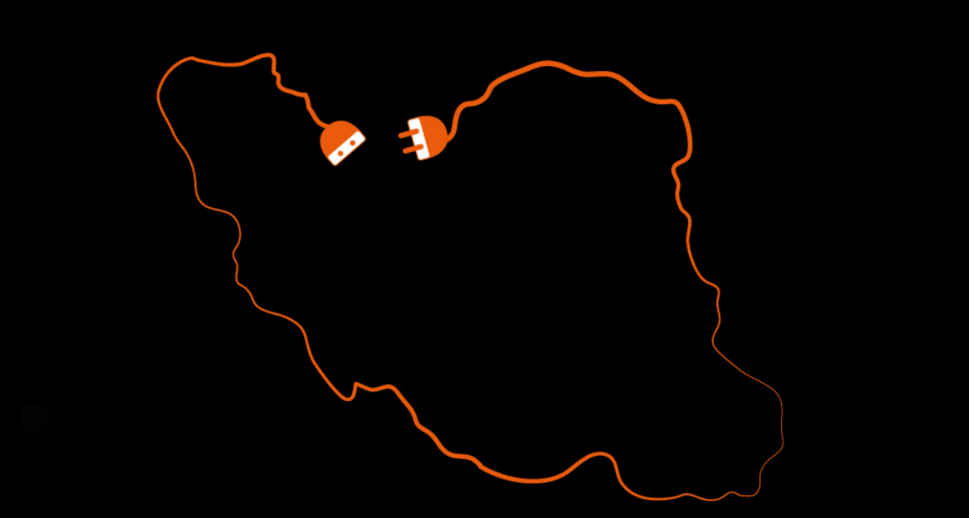
Picture Credits: Alex 1vg/ WIKIMEDIA COMMONS
Iran operates one of the world’s most extensive and technologically advanced systems for regulating internet access. At the core of its monitoring framework lies the National Information Network (SHOMA), which is designed to reduce dependence on the global internet and expand state control over content. During periods of unrest, this system rapidly transforms the internet from a public utility into a tool of containment and isolation.
As of 15 January 2026, Iran has experienced more than six consecutive days of near-total internet disruption, with connectivity reduced to around one per cent of normal levels. This has sharply limited protest coordination and external reporting, while granting security forces near-total informational dominance over events on the ground.
Historical Context of Internet Restrictions
The current disruption…unlike previous cases has extended beyond international connectivity to affect domestic networks and phone communications
Internet control in Iran has followed a recurring pattern, intensifying during moments of political crisis. During the 2009 Green Movement, the state primarily relied on throttling and selective filtering. In November 2019, amid fuel-price protests characterized by widely varying casualty reports, authorities imposed a week-long nationwide internet blackout. In 2022, following the death of Mahsa Amini, the government avoided a full shutdown but implemented widespread platform filtering, forcing millions to rely on VPNs.
The current disruption, which began on 8 January 2026, marks a significant escalation. Unlike previous cases, it has extended beyond international connectivity to affect domestic networks and phone communications, indicating a far more comprehensive strategy of digital containment.
Regarding the sustainability of the shutdown, Dr. Javad Chamanara, an IT specialist and analyst, told The Amargi that the duration of an internet blackout in Iran is a multi-dimensional issue. “The state will maintain this isolation as long as it can withstand the political, social, and economic costs,” Chamanara stated. “If the National Information Network (SHOMA) successfully provides essential public services, such as banking and public administration, it significantly reduces the pressure on the government. By keeping the ‘routine’ life of the majority functional through domestic servers, the authorities can sustain a global internet blackout for a much longer period.”
The Technical Side: How SHOMA Facilitates Isolation
The SHOMA is evidently the backbone of this isolation. According to technical reports, SHOMA is not a complete replacement for the global internet but a prioritised domestic layer that separates internal traffic from international gateways.
Tools like Deep Packet Inspection (DPI) enable authorities to identify encrypted connections. In a recent technical study, researchers noted that Iran’s “stealthy” shutdown model uses DPI to instantly drop any non-HTTP(S) traffic, rendering most VPNs and secure protocols like SSH unusable . Amir Rashidi, a digital rights expert, explains that this centralised enforcement at the national border allows authorities to “keep domestic services running while severing the link to the global web, effectively creating a digital island”.
Economic and Social Fallout
The economic impact of this internet blackout is staggering. Estimates from the NetBlocks Cost of Shutdown Tool (COST) suggest that nationwide disruptions in Iran could result in daily losses exceeding $200 million for the digital economy. According to reports from the Iran Chamber of Commerce, roughly 10 million Iranians now rely on the digital sector for their primary livelihood. A prolonged internet blackout of this scale is expected to lead to a permanent 30% contraction in digital employment, further accelerating the brain drain of IT professionals.
Beyond the financial cost, this isolation strikes at the heart of social cohesion. As noted by researchers at the Atlantic Council, when a state prioritizes information control over transparency, it fundamentally erodes the social contract. This digital severance forces a fragmentation of shared narratives among protesters, yet ironically, it often pushes citizens toward more resilient, offline, and localized trust networks, deepening the long-term instability of the political system.
Analyst and journalist Nikahang Kowsar emphasizes that these disruptions go beyond technical hurdles. In an interview with The Amargi, Kowsar explained that Iran lacks robust, independent real-world social networks, making the “virtual” space the primary fabric of communication. “By severing digital access, the state destroys the primary link between groups and individuals,” Kowsar stated.
Human Rights Implications: The Veil of Secrecy
Human rights organisations have warned that shutdowns are frequently used to conceal human rights violations. Rebecca White, a researcher at Amnesty International, stated: “The Iranian authorities have once again deliberately blocked internet access to hide the true extent of the grave human rights violations they are carrying out to crush protests.”
Digital rights experts have documented packet loss of between 30 and 80 per cent for Starlink terminals in early 2026, an unprecedented level of military-grade interference.
This perspective is echoed by journalist and political analyst Kambiz Ghafouri. In an interview with The Amargi, Ghafouri explained that the regime uses the blackout to lower the scale of international response by “managing the flow of information drop by drop.” He noted that by severing the link between people inside and the outside world, the state creates a “window of opportunity” to finalize its crackdown away from global scrutiny. Consequently, these blackouts provide a “blanket of impunity” for security forces, as real-time documentation of violence, such as the use of live ammunition and raids on hospitals, is systematically obstructed.
Disruptions to Alternative Connectivity: Starlink
In response to bypass attempts, the authorities have reportedly deployed advanced signal-jamming equipment. Digital rights experts have documented packet loss of between 30 and 80 per cent for Starlink terminals in early 2026, an unprecedented level of military-grade interference. While tens of thousands of terminals operate via informal channels, this jamming has significantly reduced their effectiveness during the most critical hours of the protests.
Dr. Chamanara also told The Amargi: “The disruption of Starlink is likely achieved through high-powered GPS jamming rather than targeting the data channel itself. Starlink terminals rely on precise GPS signals for time synchronisation and to locate satellites. By using advanced technology—likely imported from China or Russia—the authorities jam these GPS frequencies, preventing the terminals from connecting. Due to the high logistical costs of nationwide jamming, this equipment is often mobile, mounted on vehicles, and deployed to ‘hotspots’ or areas where high densities of protest-related video uploads are detected.”
Iran’s current internet shutdown is not just a technical measure; it is a strategic instrument of political control. The 2025–26 protests demonstrate that digital isolation is now central to Iran’s crisis management strategy—one that prioritises control over transparency, and containment over accountability.

Ali Asghar Faridi
Kurdish-Iranian journalist based in Germany