Iran’s Protest Crackdown Relies on Targeted Force and Intimidation, Says Sociologist
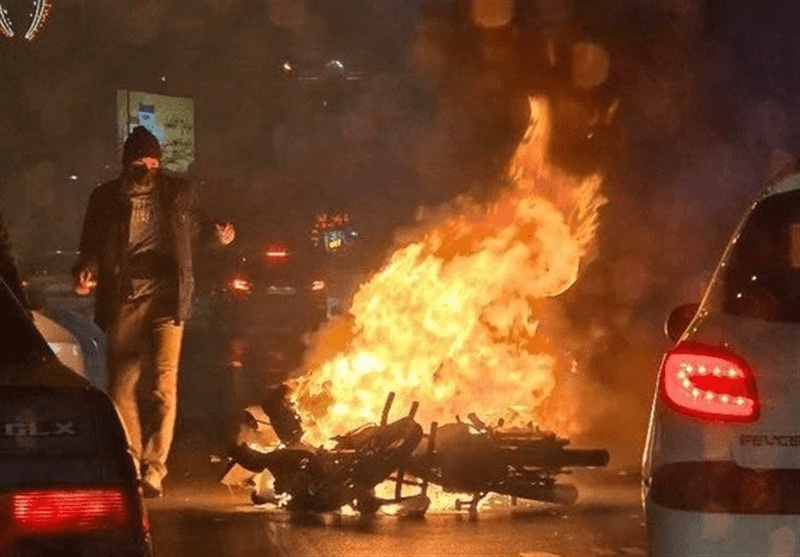
Picture Credits: Iranian News Agency Tabnak
Iranian authorities have responded to recent protests with a coordinated strategy of “targeted shooting, intimidation and coercive control,” sociologists and human rights advocates monitoring the nationwide crackdown say.
According to human rights groups, confirmed fatalities have reached 5,002, with another 9,787 deaths under investigation. At least 7,391 people have been seriously injured, and the number of arrests has soared to 26,852.
Sociologist Jamil Rahmani, a member of the Kurdistan Human Rights Network, and Dr. Aso Javaheri, a sociologist at Simon Fraser University, speaking to The Amargi, analyze the regime’s instruments of control, the key actors involved, and the geography behind the violence.
Mechanisms of Repression
Rahmani identifies three chief tactics of repression: ‘targeted shooting, intimidation, and coercive control.’’
The first two are significant for their timing. Rahmani explains that “state repression begins long before protests erupt. Security agencies threaten and intimidate perceived political opponents and civil activists through summonses and interrogations,” often targeting those who have not participated in protests before. For instance, before the 2022 Jin, Jiyan, Azadi protest, security forces summoned teachers’ union leaders in Tehran and warned them not to participate in the widespread protests.
As protests begin, physical violence follows. “The regime typically resorts to beatings, pellet guns, and sometimes even live ammunition, mass arrests, and enforced disappearances,” Rahmani says. Inside detention centers, “torture produces coerced confessions that are later aired on state television.”
Among those forced into televised statements was rapper Toomaj Salehi, whose confession, rights groups claim, was extracted under torture. Women detainees face sexual threats, and many reported being coerced into denouncing the protests on camera.
Hemen Khastan, a political prisoner from the 2022 protests, told The Amargi that the repression from the state ranged “from being beaten inside the vehicle at the time of arrest, to psychological torture and repeated threats of rape.” He added that they pressured him to tell his family that his “execution had been issued” and that they were not to wait for him. In court, his family was insulted and threatened with arrest.
Courts double down on repression “with heavy charges behind closed doors,” Rahmani continues. Charges such as acting as the ‘enemy of God’ [Farsi: Moharebeh] or ‘acting against national security’ carry long sentences or even capital punishment.
These indicate that repression continues even after the protests have faded. “When the state calls protesters ‘rioters’ or ‘terrorists,’ Dr. Javaheri explains, “it not only labels them, it licenses violence against them.”
Repression and Its Impact
Pellet guns, widely used during the Jin Jiyan Azadi movement, caused thousands of eye and facial injuries, a phenomenon Rahmani calls ‘intentional maiming.’
Dr. Mohsen Sohrabi, a Kurdish physician from Sanandaj, recalled treating a man shot in 2022. “He said he’d rather lose his leg than fall into their hands,” Sohrabi said. “People were terrified to go to hospitals filled with security forces.” “That night, they (the security forces) flooded Kowsar Hospital, blocked the entrance, fired tear gas inside, and seized a protester’s body.”
Aliollah Veisi, another detained protester, recounted, “I witnessed indiscriminate gunfire against children, women, and the elderly. In Sanandaj alone, 22 people were killed.”
Internet Blackout and Civic Surveillance
Once labeled an enemy, “almost any method of redressal becomes a viable option.”
The Iranian state has also weaponized digital spaces. The internet slows to a crawl or is completely severed during periods of unrest. Authorities use domestic apps to monitor social media and trace accounts linked to activism. Following the brief Israel-Iran war, activists were charged with espionage for their online posts.
Dr. Javaheri warns that “regional powers exploit Iran’s unrest to weaken its influence, not to support democracy.” This, she says, feeds the government’s propaganda, which brands protesters as spies and “slides every political act into a security case.” Once labeled an enemy, “almost any method of redressal becomes a viable option.”
Iran has been under a national internet blackout for over two weeks, with near‑zero connectivity except via regime‑approved networks.
Institutions and Forces of Repression
A complex network underlines the enforcement of the crackdowns. The state broadcaster IRIB, Rahmani says, “spins false narratives portraying protesters as violent” and dismissing reports of state brutality. The Ministry of Information and Communications Technology leads the digital crackdown and blocks VPNs.
The judiciary “provides legal cover,” Rahmani adds, through opaque and politically charged trials.
The Intelligence Ministry and IRGC Intelligence fabricate national‑security cases, conduct illegal arrests, and extract forced confessions under torture. “Agents pressure judges to shape verdicts,” Rahmani notes. These structures, he argues, form the backbone of Iran’s “deterrence doctrine.”
Geography of Repression
“Regions like Kurdistan, Baluchistan, and Khuzestan bear the heaviest toll.”
Repression in Iran is not arbitrary, however. Data reveals that state violence is heavier in those regions that are home to ethnic minorities.
As Rahmani explains, “regions like Kurdistan, Baluchistan, and Khuzestan bear the heaviest toll.” During the Jin, Jiyan, Azadi uprisings, Iran’s security forces used lethal force in 26 of the country’s 31 provinces. The minorities most affected by this repression are Kurds, Baluch, Azaris (Turks), and Ahwazi Arabs. The 2022 ‘Bloody Friday’ massacre and the massacre in Jiwanro (Javanrud), a majority Kurdish city, in the same year, exemplify this further.
In late December 2025, another wave of protests broke out in Iran, lasting two weeks. The state’s reaction was felt across Iran. The authorities unleashed a nationwide militarized clampdown, from Tehran and Esfahan to Kurdistan, Kermanshah, Ilam, and West Azarbaijan.
Up to now, Kurdish human rights groups have verified that at least 240 Kurdish protesters were killed across Iran and over 1,500 were arrested.
Dr. Javaheri calls repression in the periphery “structural.” Under the guise of “protecting territorial integrity,” She says, “What may be exceptional in Tehran is routine in Kurdistan.” Similarly, Rahmani notes that Kurdistan has been “permanently securitized” since 1979, with dissent regularly branded as separatism.’’
The current clampdown follows patterns seen in 2017, 2019, and 2022 – again striking hardest against marginalized regions. Officials justify the violence against the protesters under “national defense” and “territorial integrity.” By framing local grievances as threats to national unity, “the state normalizes violence as governance itself,” Rahmani explains.

Kawe Fatehi
Kawe Fatehi is a journalist and translator, based in Berlin, with a Master's degree in English Literature and Language. He has written for multiple Kurdish and Persian media outlets, covering topics related to the Kurdish community in Iran, Iraq, Turkey, and Syria. In addition to his journalism work, he is a social worker.