Kurdish Leaders Demand Accountability After Deadly Attacks on Aleppo’s Kurdish Neighborhoods
Syrian Kurdish leaders on Tuesday held the Syrian transitional government responsible for the deadly attacks on Aleppo’s Kurdish neighborhoods that took place from 6 – 9 January 2026. Nearly 119,000 civilians were displaced from Sheikh Maqsoud and Ashrafiyeh. Speaking in Washington, D.C. on Monday and in an online Zoom press conference on Tuesday, Kurdish officials called for accountability, international investigations, and an immediate halt to military operations against civilians, warning that the violence threatens any chance of a political settlement.
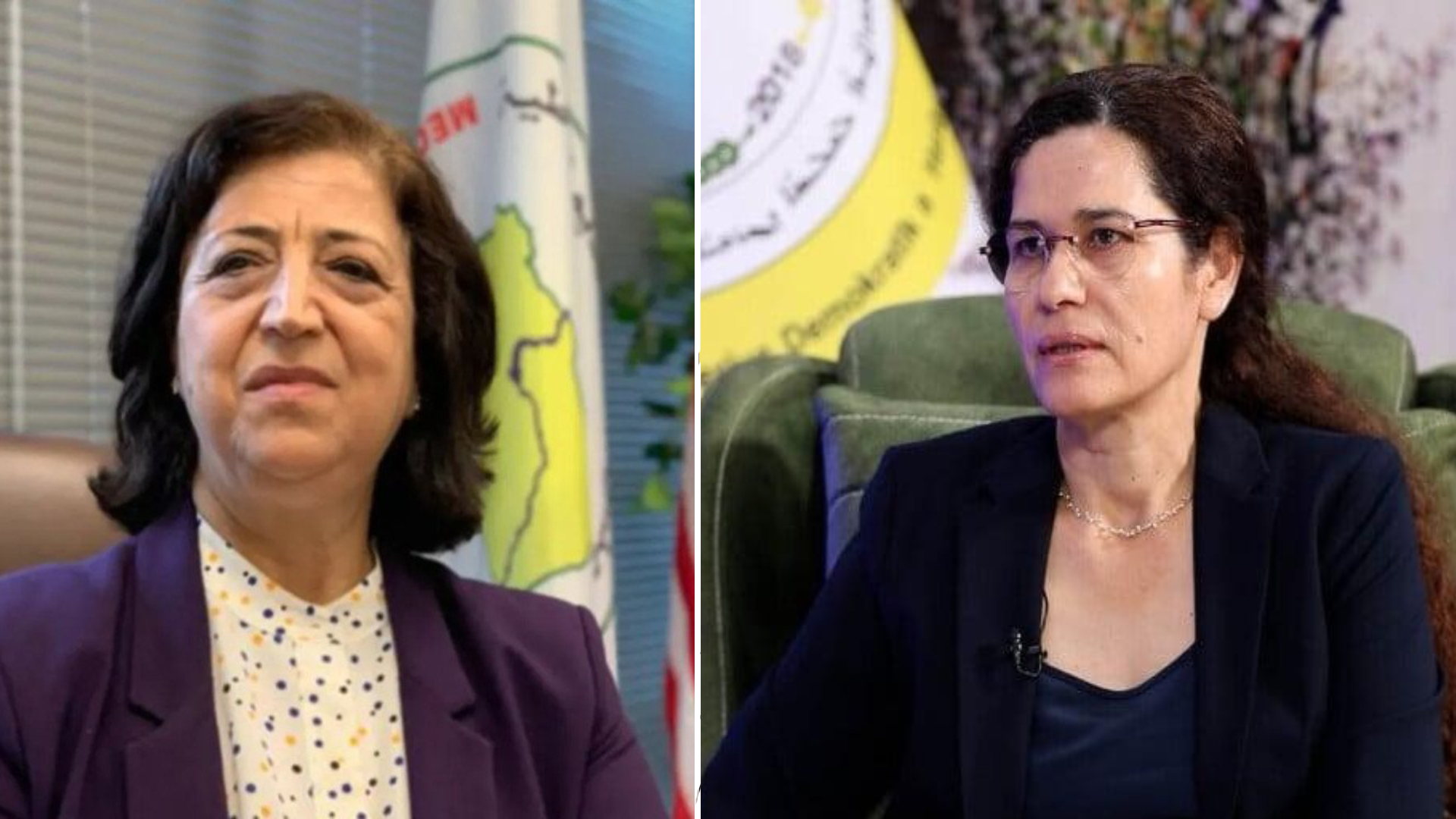
Sinam Sherkany, U.S. Representative of the Syrian Democratic Council (SDC), stated during a press conference in Washington, D.C. on Monday that the SDC holds the interim authorities in Damascus fully responsible for the violent events in Aleppo. “The SDC remains committed to resolving political issues through dialogue,” she said,” but strongly condemned “the transitional government’s recurring tendency to address political disagreements through military means.”
“The agreement was meant to stabilize the region. Instead, the government has used it as a pretext to escalate violence.”
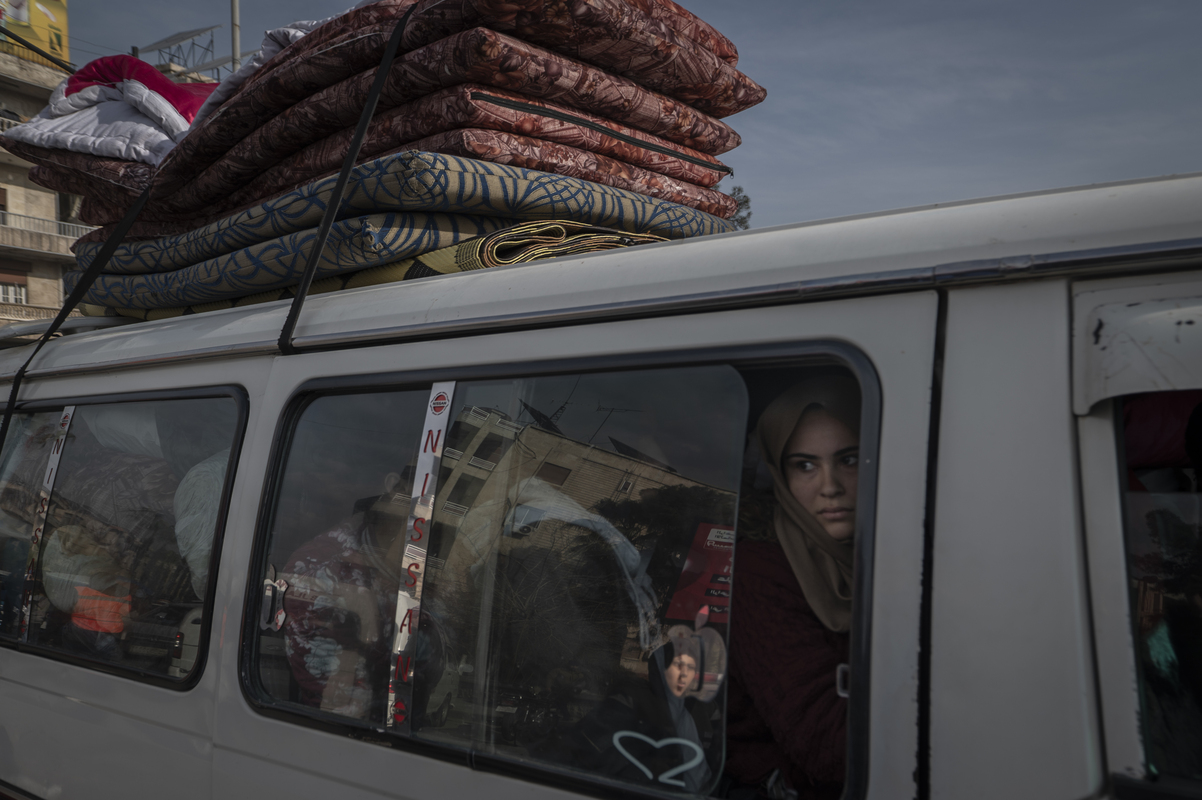
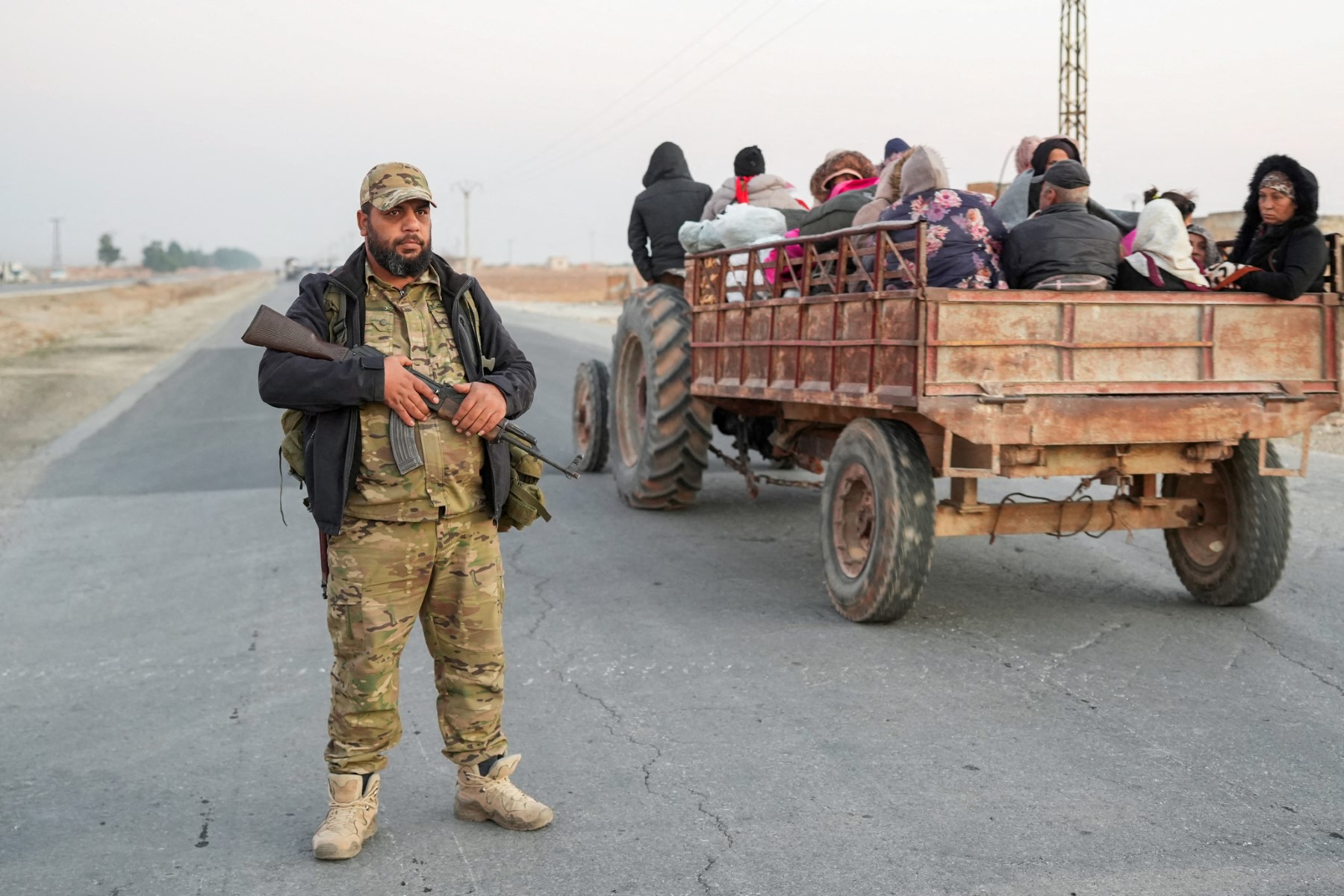
The offensive, described by the transitional government as a necessary measure to restore state authority and stability, had transformed two of Aleppo’s most historically significant Kurdish neighborhoods into active conflict zones. According to the United Nations, approximately 119,000 residents were displaced, with many fleeing to nearby cities, including Afrin. The Kurdish Red Crescent (Heyva Sor) reported on Sunday that nearly 100 injured people were evacuated from Sheikh Maqsoud as medical teams struggled to reach wounded residents amid ongoing hostilities and road closures.
Sherkany emphasized that the current military action violates the 1 April 2025 security agreement between Kurdish authorities and the Syrian Transitional Government, which had allowed the Internal Security Forces (Asayish) to maintain local security in the neighborhoods while broader political negotiations continued. “The agreement was meant to stabilize the region,” she said. “Instead, the government has used it as a pretext to escalate violence.”
According to the Rojava Information Center, the new Syrian authorities later exerted humanitarian and economic pressure on the neighborhoods by periodically cutting off access to electricity, water, fuel, food, and free movement. The pressure escalated from late September, when government forces constructed earth barriers at checkpoints and later sealed off all access to Sheikh Maqsoud on October 6.
The SDC representative outlined six demands to restore political dialogue and protect civilians. First, she called for an immediate cessation of all military operations in civilian areas, with full protection for essential services and humanitarian facilities. Second, she demanded the launch of an independent, transparent international investigation into all alleged violations and massacres, with guarantees of non-recurrence through civilian oversight mechanisms. Third, she called for the safe and dignified return of displaced persons, fair compensation for affected families, and the reconstruction of damaged areas.
Fourth, Sherkany insisted that any future negotiations must be grounded in the 10 March and 1 April 2025 agreements, which she described as the foundation for a peaceful, inclusive political process. “Negotiations must be free from coercion, imposition, or subjugation,” she said. Fifth, she called for the restructuring of Syrian military and security institutions on professional and national foundations, ensuring they serve the people rather than threaten them. Finally, she urged convening a comprehensive Syrian national conference to chart a path forward.
“What kind of army attacks its own citizens?”
In a parallel statement on Tuesday, Ilham Ahmad, Co-Chair of the DAANES Department of Foreign Relations, echoed Sherkany’s concerns and called on the United States to take a clear stance against the Syrian government’s actions. She said the Syrian transitional government bears primary responsibility for failing to implement the March 10 agreement, noting that government-affiliated factions had repeatedly attacked Kurdish neighborhoods in recent months, despite the withdrawal of SDF under the 1 April agreement.
Ahmad explained that the offensive involved nearly 80 tanks and targeted areas where SDF presence was no longer permitted. She reported that 276 civilians were kidnapped during the fighting, with only preliminary numbers available due to restricted access. She cited the killing of an entire family in Sheikh Maqsoud by a drone strike and the desecration of bodies as evidence of systematic violence. “What kind of army attacks its own citizens?” she asked. “They are not legitimate and are not open to negotiations or a peaceful transition of government.”
Representative Sherkany also warned that various components of the new Syrian Security Forces currently include individuals and organizations sanctioned for terrorism by both the United Nations and the United States. She stated that sanctioned Turkish-backed groups previously implicated in violence in Aleppo, including Hamza Division and Sultan Murad Division, have been integrated into the New Syrian Army and continue to pose a threat to civilians.
One of the conditions for lifting U.S. and Western sanctions on Syria was the protection of minorities and the removal of foreign fighters. Ahmad said the government has instead targeted Alawites, Druze, Christians, and now Kurds.
In addition, she said that Damascus must address its integration of foreign jihadist fighters into the Syrian Security Forces. She referenced footage showing the body of a Kurdish female member of the Internal Security Forces being thrown from a building by a member of the forces of the Syrian transitional government identified as the prominent Egyptian jihadist Ahmad Mansour.
Ahmad further highlighted that one of the conditions for lifting U.S. and Western sanctions on Syria was the protection of minorities and the removal of foreign fighters. She said the government has instead targeted Alawites, Druze, Christians, and now Kurds. She accused the attacking factions of committing severe violations, revealing that fighters from the Islamic State (ISIS), Uyghur militants, Turkish groups, and other foreign elements participated in the offensive.
Both Sherkany and Ahmad called for international oversight, urging the UN and the international community to enforce accountability. They also highlighted the role of the U.S. as a regional guarantor, particularly given ongoing U.S.-Kurdish military cooperation against ISIS. “The U.S. should take a clear stance against a government that kills its own people,” Ahmad said, urging US Special Envoy to Syria, Tom Barrack, to act.
Security concerns have persisted following the fighting. ANF News reported that government-affiliated militiaskidnapped hundreds of residents from Sheikh Maqsoud and Ashrafiyeh during and after the clashes. The armed groups established checkpoints and conducted detentions in the neighborhoods, contributing to continued fear among residents.
The Washington Post reported that some residents have begun returning to the neighborhoods since the fighting subsided. However, services remain limited, and concerns persist about long-term security and stability.
Ahmad emphasized that while the DAANES remains committed to peace, it will not engage in dialogue under conditions of military coercion. “We are still open to dialogue,” she said, “but we see that the Syrian government wants to solve problems with weapons, which will lead to chaos and spread throughout the region.” Sherkany and Ahmad’s remarks reflected the position that any future negotiations must be grounded in concrete security guarantees, accountability for violations, and the protection of civilians. With the neighborhoods now under full government control, and tens of thousands of residents displaced, the trajectory of talks between Damascus and Kurdish representatives remains uncertain.
On Tuesday, the transitional government’s defense ministry declared the towns of Dayr Hafir and Maskanah in eastern Aleppo as closed military zones, citing alleged SDF military mobilization and the use of the areas as launch points for Iranian suicide drones targeting Aleppo. The SDF rejected the claims, calling them misleading and accusing Damascus of fabricating tensions to justify escalation. Since then, artillery shelling, suicide drone strikes, and alleged Turkish drone strikes have intensified along the front, according to reports.

Lara Jalal
Lara Jalal is a Research Associate at the Kurdish Peace Institute and an undergraduate student majoring in International Affairs at the George Washington University, concentrating on Security Policy and the Middle East. She is also a co-founder of Trigger Empathy, a student-led organization focused on amplifying the voices of women in conflict zones.