Sheikh Manea al-Jarba Warns Against Militarization, Calls for Dialogue as Syria Slides Deeper Into Crisis
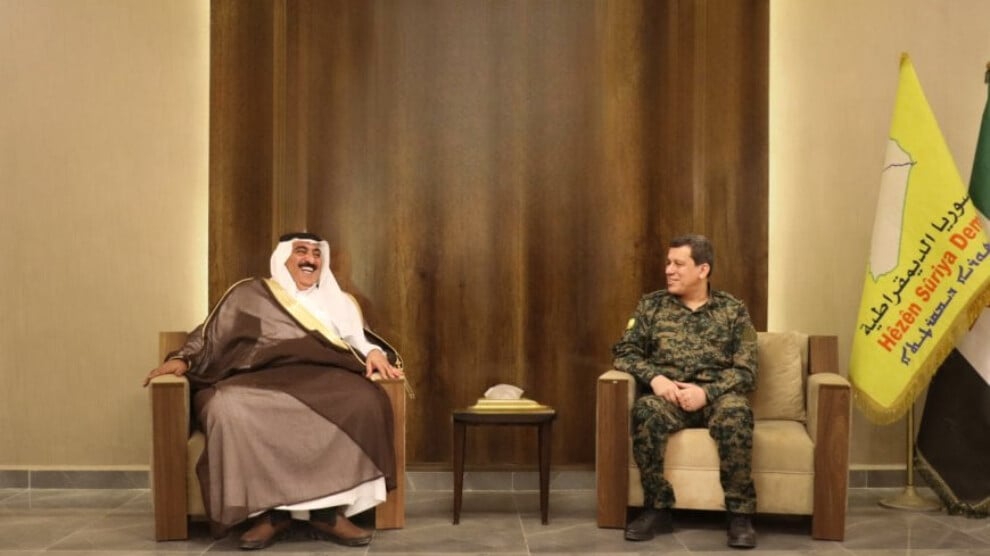
SDF General Commander Mazloum Abdi (right) and Sheikh Manea al-Jarba (left).
The Amargi, Northeast Syria- As violence continues to reshape Syria’s fragile transition, the latest attacks on the Kurdish neighborhoods of Sheikh Maqsoud and Ashrafiyeh in Aleppo have underscored the deepening political and security crisis.
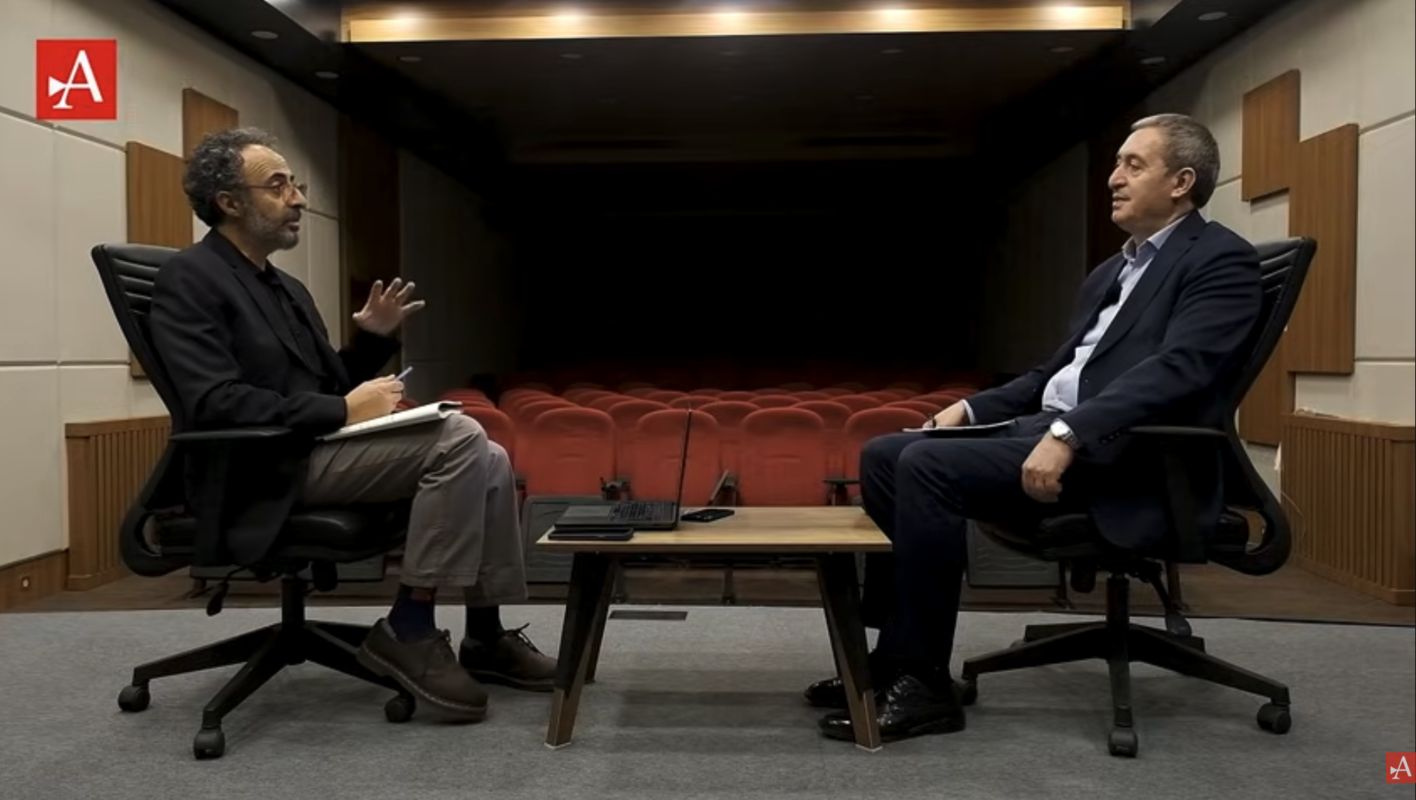
Against this backdrop, The Amargi’s correspondent Abbas Abbas in Qamishli spoke with Sheikh Manea Hamidi Daham al-Jarba, Chief of the Sheikhs of the Shammar Tribe, to understand how tribal leaders view the unfolding events and the direction Syria is taking.
In the interview, Sheikh al-Jarba addresses the Syrian transitional government’s turn to armed force whenever political dialogue reaches a dead end, and reflects on the growing external pressures shaping this moment, particularly Turkey’s efforts to influence tribal positions and the broader Syrian political process during this critical period of transition.
Mr. Al Jarba highlighted, however, that many internal actors in Syria have aimed to continue dialogue based on the March 10 agreement between the Syrian Democratic Forces (SDF) and the Damascus government.
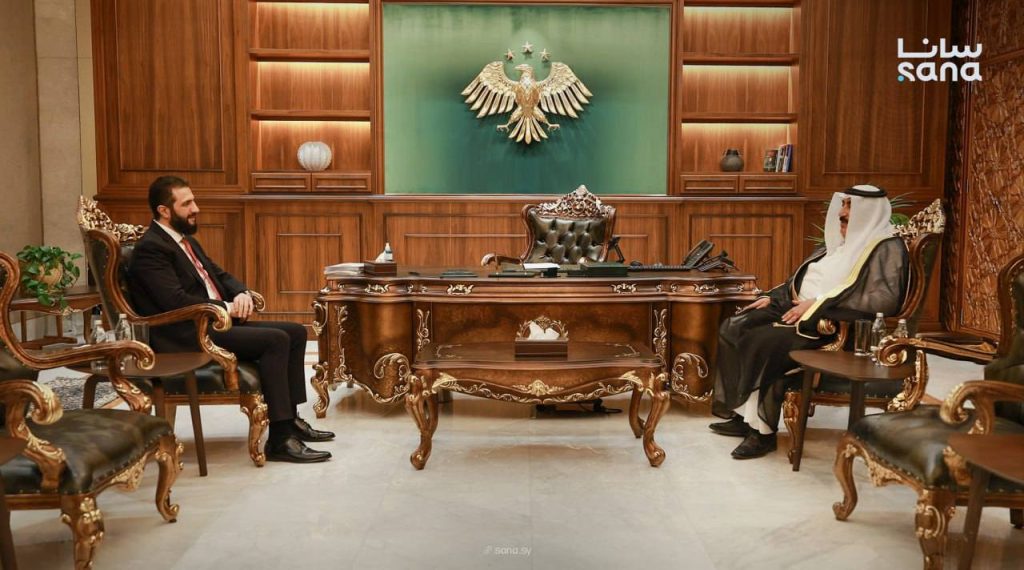
Talking about his latest meeting with Syria’s transitional president Ahmed al-Sharaa, Mr. Al Jarba had an optimistic outlook. He said their conversation revolved around finding a solution in the integration process for the Jazira Region in northeast Syria.
“A key item on the agenda was the implementation of the March 10 agreement, and I sensed a genuine and strong desire on his part to implement this agreement to bypass any potential problems or confrontations in the upcoming phase,” he said.
Mr. al Jarba also met with SDF General Commander Mazloum Abdi in a meeting that he described as “very positive, with a serious inclination towards seeking a genuine solution” in line with the March 10 agreement.
The Role of the Shammar Tribe
The Shammar Tribe confederation is one of the largest and most respected in Syria. Sheikh al Jarba along with the rest of the tribe’s leadership, believe their privilege and esteem comes with a host of responsibilities, specifically in terms of mediating problems and creating social harmony: “We believe it is our obligation to work towards finding solutions to some of the ongoing crises. In general, we consider the tribes the nation’s last bastion and see them as protectors of national memory.”
Given the tribe’s settled influence and history, Mr. Al Jarba described their role in society as a responsibility rooted in “the values and ethics that have shaped [us], which empower [us] to protect the vulnerable and assist those in need.” Among their efforts has been an alliance with the Kurdish-led SDF, showcasing an example of cross-ethnic support and solidarity.
The Events of Sheikh Maqsoud and Ashrafiyeh
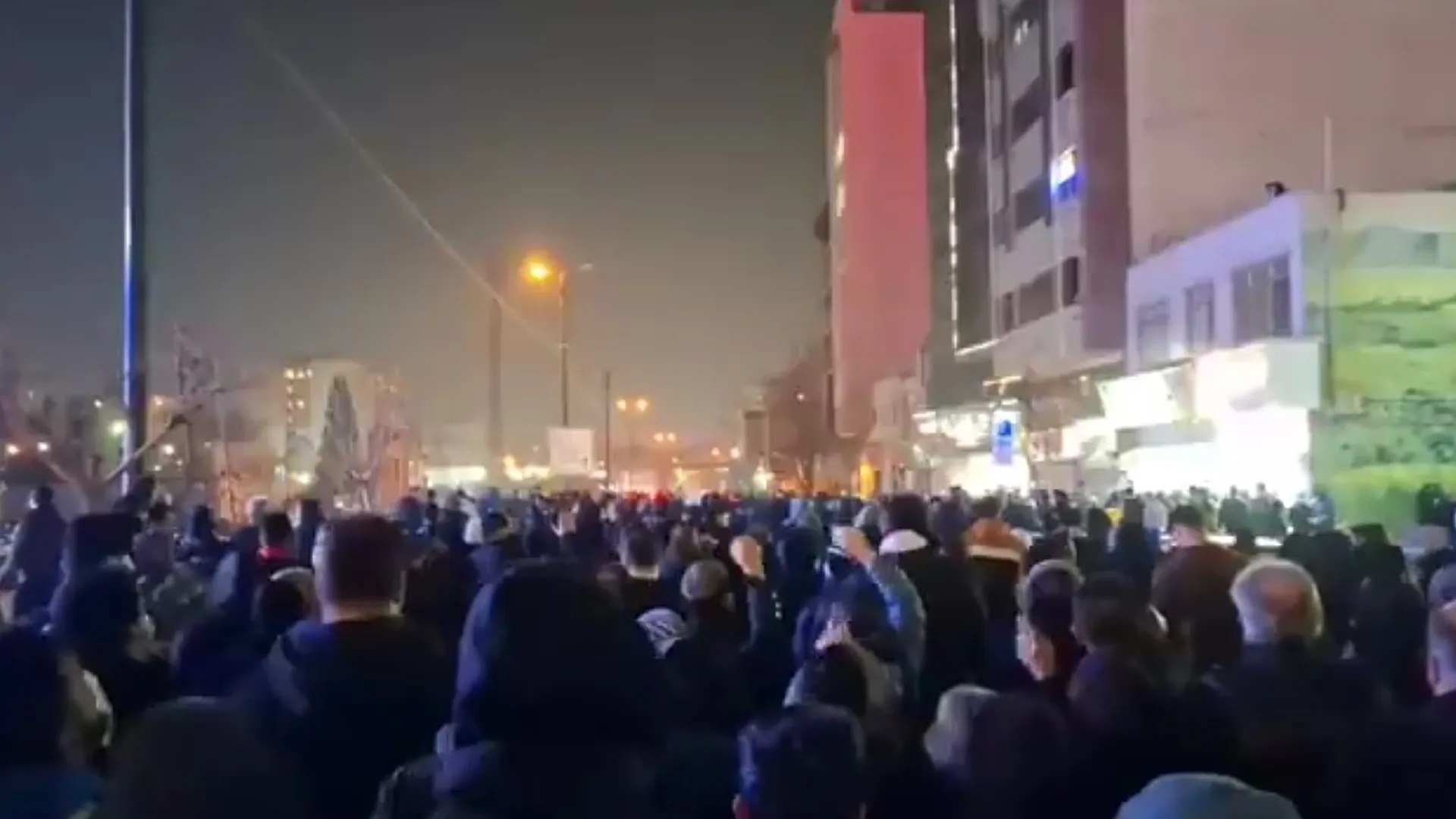
For the past few months, the Kurdish neighborhoods of Sheikh Maqsoud and Ashrafiyeh in Aleppo, has been under siege, leading to shortages of food, fuel, and medication.
On the morning of January 8, after negotiations between the SDF and the Damascus government collapsed, the Syrian Ministry of Defense and Turkish-backed factions attacked these areas, indiscriminately shelling civilian buildings.
Mr. Al Jarba argued that this type of approach is detrimental to future solutions and threatens to fracture Syrian society further: “The Syrian people are tired of wars and clashes. New events occur regularly, forcing people to flee their homes and home regions to seek refuge in shelters. We need stability and mutual understanding.”
Along with the attacks, many pro-government voices have used their platforms to share negative rhetoric against Kurdish people as a whole, laying blame on them for the unrest and calling for their massacre. “We should not occupy ourselves with finding out who is at fault or who started the conflict. The important thing is to prevent clashes and find real solutions.” The Sheikh said in describing the destructive discourse.
One of the arguments that the Damascus government has used, often repeated and emphasized by the Turkish government, is that the Kurdish-led Autonomous Administration and the SDF in northeast Syria have stalled negotiations – something that the Kurdish side have repeatedly denied.
Mr. Al Jarba said that regardless of how much time a potential agreement takes, dialogue should remain the path to a solution, “Even if the solution is delayed, a delayed solution is better than armed outbreaks.” He emphasized that killing Syrians of any background is a tragedy and a crime against the whole nation.
Turkish Pressure
Since the fall of the Assad regime, the Turkish government has tried to sway regional and international actors to move against the SDF and the Autonomous Administration. During the early months of Assad-free Syria, the Turkish government also empowered and supported factions loyal to them to attack Kurdish regions in north Syria.
This pressure has also been extended to the tribes, but according to him, it is not a factor in how they go about rebuilding Syria: “The tribes are not political parties who are subject to pressure, and we will not accept being tools for any party. We act according to the interests of our country and our regions, and wherever the interests of the area lie, we move without any external guidance.”
Sheikh Al Jarba stated that their primary goal is to cool tensions, rather than add to them in this sensitive period, “Our obligation today is to be a safety valve in the fact of any problem that may arise in areas where our voice is heard.”
For the Shammar tribe this has meant working with local actors like the SDF, whose inclusive structure empowers communities to protect themselves without political impositions on their society. Mr. Al Jarba reaffirmed this position, stating their actions are guided by the needs of Syrians at large.

Abbas Abbas
Abbas Abbas is a journalist and photojournalist for The Amargi in Qamishli, northeastern Syria (Rojava). He has worked with Al-Youm TV and Ornina Media, and contributed reports and visual stories to local and international outlets, focusing on field coverage and the humanitarian realities of the region.