National Security Strategy Document: Pragmatism and the Turn Toward What Is Possible
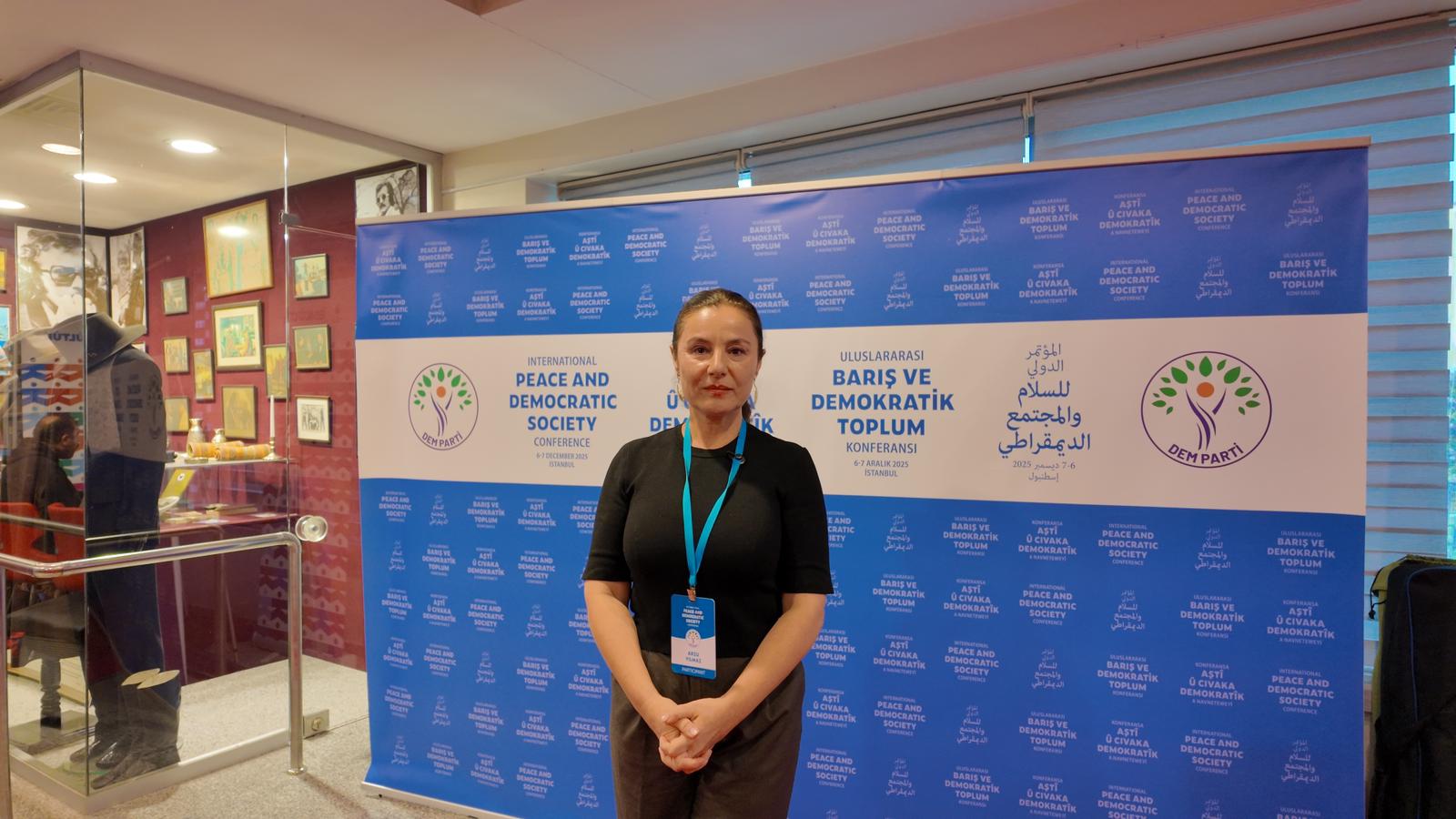
Arzu Yılmaz, Associate professor in the Department of Political Science and International Relations at the University of Kurdistan Hewlêr (UKH)
When US President Donald Trump released his new National Security Strategy on December 4, 2025, it signaled not a bold reassertion of American power but a narrowing of it – a shift that, according to Associate Professor of Political Science Arzu Yılmaz, reflects United States’ increasing commitment to pursuing what it believes is possible, and not what is necessary.
The National Security Strategy Document sparked intense debate both within America and around the world. The document explains where the US no longer intends to position itself and which burdens it no longer wants to carry, worrying American allies and security stakeholders.
National Security Strategy documents generally lay out the foreign policy roadmap of a presidency. Within such documents perceived threats and priorities, the roles assigned to alliances, and the limits of military and political projects are clarified. Looked at this way, the Trump administration’s document is significant.
However, worth highlighting is that this latest document reads as a plan that narrows the United States’ global responsibilities, which is why many are worried.
The Isolationism Debate Is Over
The Trump administration’s new National Security Strategy is not a surprise. Signs pointing in that direction appeared months earlier, according to Arzu Yılmaz, an associate professor in the Department of Political Science and International Relations at the University of Kurdistan Hewlêr (UKH).
Yılmaz argued that the US is redefining its position within the global system through a foreign policy focused on the Western Hemisphere and by frequently referring to the Monroe Doctrine – which emphasized the Western Hemishphere as the US’s sphere of influence.
She interpreted this preference as a retreat from being an active power on every front of global politics, representing a strategic rupture that must be taken seriously at a time when the possibilities of a World War III are being discussed.
The Burden of Security
The strategy document also reaffirms the anxieties due to cooling transatlantic relationships. The US does not entirely dismiss the importance of its relations with Europe; however, it makes it clear that the US will no longer assume primary responsibility for European security as it did after World War II.
Yılmaz emphasized that the document delivers a particularly critical message for the North Atlantic Treaty Organization (NATO): “The US states that it will scale back its commitments within NATO. Meanwhile, Europe openly admits that it is not prepared for the threat posed by Russia. The fact that America has clarified its position through this doctrine – one that also encompasses its relations with Europe in terms of its Russia policy – is another indicator that lowers the likelihood of World War III breaking out in the coming few years.”
However, Yılmaz added that the phrase “peace through strength” appearing in the document should not be overlooked: While this expression does not directly point to an imminent war, peace achieved through strength ultimately produces an imbalance, in which one side suffers a major loss while another secures major gains. For this reason, Yılmaz warned that once existing frozen conflicts are resolved, the parties involved may confront one another in a far harsher and more comprehensive manner.
Transitional Phase
For Yilmaz, the strategy document ought to be read within a broader historical framework; in that the period we are living through is a transitional phase, in which “the old has died, but the new has not yet been born,” as Italian political philosopher Antonio Gramsci once said. She believes that the dominant politics of today, Trumpism, lacks the capacity to construct a new order.
The document also communicates Trump’s Middle East policy in general, and his approach to the Kurds in particular.
Rather, Yılmaz views Trump and Trumpism as products of this transition: Trump’s performance during his first term, as well as this strategy document, appears as an approach that merely manages crises but lacks any founding vision beyond. She does not see Trump and Trumpism as capable of steering or completing the transition itself.
The USA’s Policy Toward the Kurds
The document also communicates Trump’s Middle East policy in general, and his approach to the Kurds in particular.
Yılmaz does not believe that the Trump administration has a coherent policy toward the Kurds. Highlighting the point, she referred to statements made by the US Special Envoy for Syria Tom Barrack: “One day, we hear from Barrack himself that federalism is the most appropriate method or that a decentralized system is being proposed, and the very next day we hear the exact opposite. There is a deeply contradictory approach.”
She argued this contradiction helps explain the general character of the Trump era: the US’s relationship with the Kurds is not based on a strategic plan or political reasoning. It’s based on pragmatism: only what is possible on the ground matters. There does not seem to be any long-term political objective, nor a clear vision regarding the status of the Kurds.
This approach has not been exclusive to the Trump era. Despite differences in method, Yılmaz argued that there is no major rupture in the fundamental approach between the Trump and Biden periods.
“When the Biden administration withdrew from Afghanistan, debates emerged over whether it would also withdraw from Rojava [North and East Syria]. At that time, the message given regarding the USA’s Middle East policy was clear: ‘From now on, we will look at what is possible.’”
America’s Middle East policies are shaped by this pragmatism: “There is a commitment to the ‘existing reality’. In other words, what is possible has effectively been adopted as policy, as stated in the document: ‘The key to successful relations with the Middle East is accepting the region, its leaders, and its nations as they are…’”
A New Plan for a Political–Economic–Geographical Region
The strategy document points to a critical assessment in the US’s view of the Middle East: the conclusion that the nation-state is no longer functioning.
Since the 1990s, the foundations of nation-states have been steadily eroded, making their survival increasingly difficult. Yılmaz described collapsed states such as Iraq, Syria, and Lebanon as structures that fracture even further when pushed toward reconstruction.
…this pragmatism does not translate into support for Kurdish demands for autonomy or federalism
She argued that along with the transformation of the capitalist financial system, there is a growing need for new political structures – adding that in a period where the US’s Middle East policy is shaped by a pragmatism prioritizing Israel’s security, she sees no plan beyond the creation of a new political, economic, and geographical region.
Yılmaz interpreted the US’s relationship with the Syrian Democratic Forces (SDF) through this lens of pragmatism: “Within this pragmatic frame, dismantling the SDF would not be something that America itself – specifically, the Pentagon, referred to here as the ‘Ministry of War’ – would want.” Referencing the words of Brett McGurk, the former Special Envoy for the Global Coalition to DefeatISIS, she highlighted that the partnership with the SDF has, for the US, come at the lowest cost, yet yielded the greatest political outcomes.
However, this pragmatism does not translate into support for Kurdish demands for autonomy or federalism. Following this strategy document, Yılmaz said, the most the USA can do in Syria is to apply pressure for the SDF to be integrated into the Syrian army of the emerging transitional government, to the extent that conditions allow: “The limits of this process will be determined not only by Turkey, but also by Israel.”
The Middle East is now being shaped within a new politico-economic geography stretching from the Caspian Sea to the Eastern Mediterranean. Borders, alliances, and political projects in the Middle East are extremely fluid, provisional, and written in sand, Yılmaz said.
For this reason, she believes that every actor in the region today is deliberately formulating its strategies around buying time, strengthening positions, and surviving within shifting balances.

Rengin Azizoğlu
Rengin Azizoğlu is journalist and news editor based in Istanbul.