Northern Syria Faces Humanitarian Crisis as Kurdish Forces and Damascus Fail to Reach Agreement
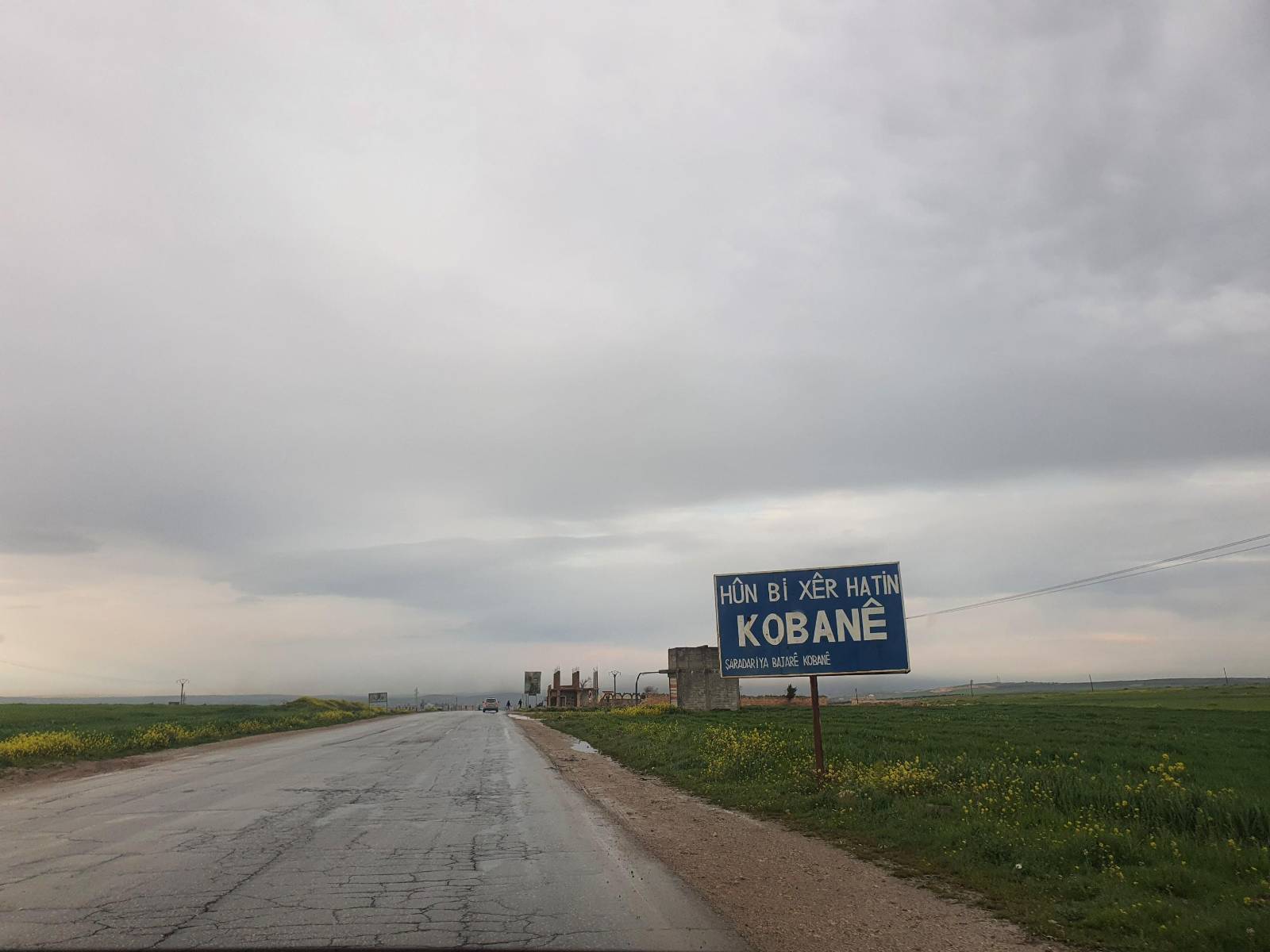
Road sign reading “Welcome to Kobani” in Kurdish. Photo: Rojava Information Center
Over the past six days, the territorial map of Syria has been completely overturned after clashes between Damascus and the Syrian Democratic Forces, prompting northern Syria’s majority-Kurdish population to mobilize and defend themselves against attacks from the Syrian Arab Army.
Despite an announced ceasefire aimed at facilitating an integration deal, Kurds remain deeply sceptical of what Damascus’ transitional government can offer them. Now, with the city of Kobane under siege, many Kurds are viewing the current situation as a matter of life or death.
Ceasefire Opens Window for Negotiations
After the Kurdish-led Syrian Democratic Forces (SDF) rapidly pulled out from the Arab-majority areas of Raqqa, Tabqa, and Deir ez-Zor last Sunday, the size of the territory governed by the Democratic Autonomous Administration of North and East Syria (DAANES) more than halved.
The Syrian Arab Army and its affiliated Turkish-backed factions and Arab tribal groups pushed northwards into the southern Hasakah countryside, towards the DAANES’ Kurdish-majority areas after negotiations between the sides collapsed. Damascus and Turkey have said DAANES and the SDF are stalling the negotiations, while the Kurdish side have reiterated that they need constitutional guarantees that can protect Syria’s ethnic and religious minorities.
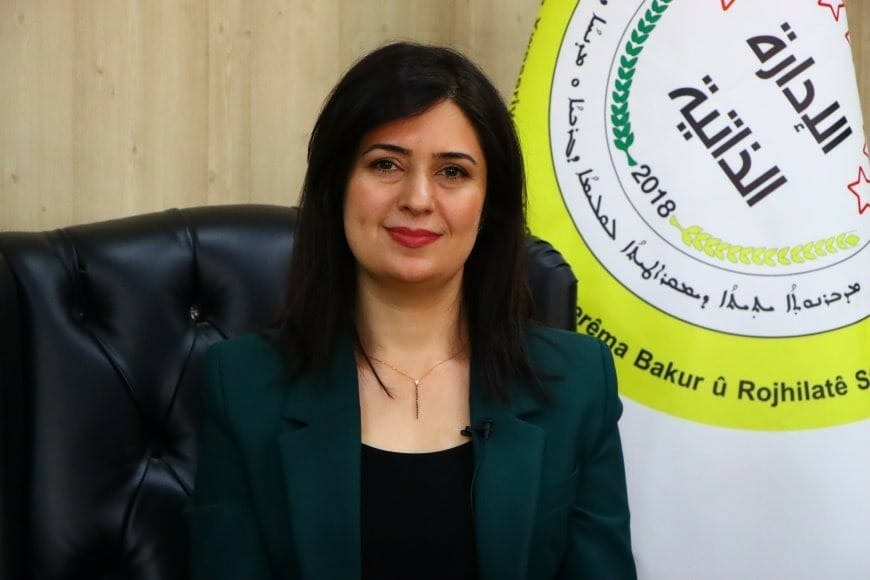
Evîn Sweid, co-chair of the DAANES, asserted the military pressure being put on Syria’s Kurdish regions aims to weaken the SDF’s hand with regards to integration with Damascus: “Conditions we could not accept during discussions [over the past months] regarding how to implement integration are now being imposed on us through war,” said Sweid. “Through brute force and violence, we are being told ‘you must surrender and accept everything’”.
A new ceasefire deal announced on Tuesday evening stipulates four days for dialogue, during which the SDF are expected to outline a proposal for integration with Damascus. This could see the Syrian army barred from entering Kurdish cities and towns. “A ceasefire means you save the lives of hundreds of thousands of people,” Sweid noted. “But will Damascus respect it?”
Just after the ceasefire was declared, two drone strikes blasted the Kurdish-majority city of Qamishlo. Meanwhile, the SDF say heavy weapon attacks from Syrian forces in the Hasakah and Kobane countryside continued in the subsequent 24 hours.
The Syrian government says an SDF drone strike killed seven of its soldiers as they were securing a base containing explosives. The SDF blamed the blast on Syrian soldiers moving explosives.
Large Popular Defensive Preparations
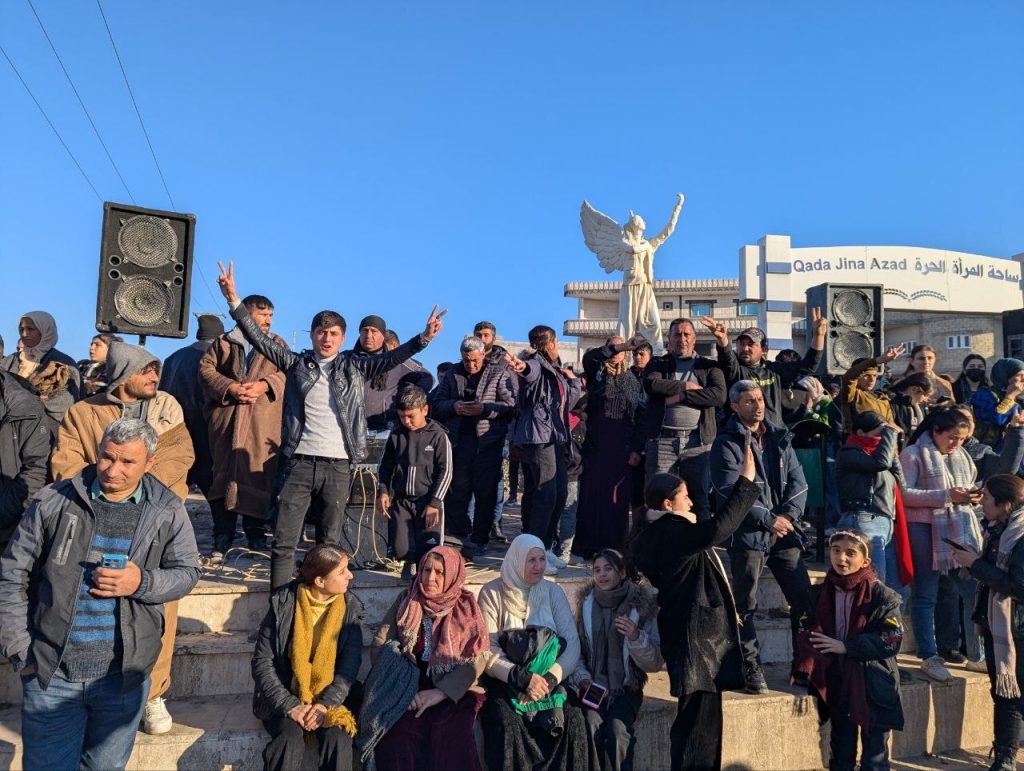
Civilians initiated an unprecedented popular mobilization, arming themselves for self-defence and gathering around bonfires in the streets to dance.
A previous ceasefire document – published and supposedly signed by both parties on the 18th – had stipulated the administrative integration of the Kurdish-held Hasakah region into the central Syrian state, and the effective dissolution of the SDF, with its fighters able to join the Syrian army as individuals. Yet the next day, when SDF Commander-in-Chief Mazloum Abdi, met with Syrian Interim President Ahmed al-Sharaa in Damascus, no such agreement was reached.
Syrian state TV described the negotiations as “failed”, while senior Kurdish politician Fawza Yusuf, said Damascus had demanded the “hand over [of] all authority”, which would amount to a return to pre-2011 status, wiping away 15 years of hard-fought gains.
After news of the failed negotiations spread, the public mood in northern Syria’s Kurdish towns and cities shifted. Civilians initiated an unprecedented popular mobilization, arming themselves for self-defence and gathering around bonfires in the streets to dance.
And it is not only Kurds who are preparing for self-defence; SDF-held territory is also home to Yazidi, Armenian, and Syriac minorities. In Tirbespi, Aram, a young Yazidi man fresh out of university, explained: “We are all joining together. We know the threat is not towards one person or group – it is against a whole community.”
Eroded trust in Damascus
The US special envoy to Syria, Tom Barrack, recently penned a lengthy statement, asserting that the “greatest opportunity for the Kurds in Syria” lies under Ahmed al-Sharaa’s government. However, many are sceptical of the negotiations and integration prospects. Last year’s massacres by the new Syrian Army in Suwayda and the coastal region caused widespread mistrust in Damascus.
Dayika Serxwebun, an elderly woman living in Qamishlo, referred to other minorities as she argued that Kurds need to rely on themselves for protection: “The Druze, the Alawites, they lacked a strong self-defence force, and you saw what happened to them.”
Al-Sharaa issued Presidential Decree No.13 on the January 17, formally recognising Kurdish cultural and linguistic rights – something unprecedented in the history of the Syrian state. This, however, did little to change the prevailing sentiment.
Ahin, a media professional from the town of Amude, said “We hardly believe that decree – there’s no substance to it.” She pointed out that without change to the constitution, decrees can be easily published and repealed. “Ahmed al-Sharaa is not giving us some great gift with this.” She added that Kurds in their areas have governed themselves and protected themselves, emphasizing the political rights Kurds want: “Our rights are so much more than language.”
Ahin highlighted how women’s rights and position in social and political spheres have been prioritised with the DAANES’ governance system, and the representation and protection of religious and ethnic minorities it offers. “Will he guarantee we can keep all this?” She asked.
ISIS Detention System Teetering Near Collapse
“The region may soon shift from managing the remnants of ISIS to confronting its re-emergence not as a conventional territorial entity, but as a resilient, decentralised movement capable of projecting violence well beyond Syria’s borders and further globally.”
Due to the Syrian army’s assault, the SDF lost control of prisons holding suspected ISIS members, and detainees escaped. Both the SDF and Syrian army have accused each other of facilitating these breakouts.
Research from the Qamishlo-based Rojava Information Center indicates that Damascus’ account of the escapes was unsubstantiated, identifying six prisons where detainees were released by Syrian army or affiliated personnel. The exact number of escapees remains unclear, but the security crisis is evident.
When international media visited one prison holding ISIS fighters just outside the town of Shaddadi, all that remained were open doors, vacant cells, and discarded prison jumpsuits. Darren White, a British security consultant, voiced “acute concerns about a renewed wave of extremist mobilisation”, issuing the sobering warning:
“The region may soon shift from managing the remnants of ISIS to confronting its re-emergence not as a conventional territorial entity, but as a resilient, decentralised movement capable of projecting violence well beyond Syria’s borders and further globally.”
This situation prompted Iraqi Prime Minister Mohammed Shia’ al-Sudani to visit the Iraq-Syria border to assess security conditions. Iraq’s Popular Mobilization Forces (PMF) had already reported capturing “a prominent ISIS leader”, Mahmoud Hassan al-Jubouri, as he attempted to cross into Iraq from Syria. Since then, the US military has transferred a number of ISIS prisoners from SDF-controlled territory to Iraq.
Although US envoy Tom Barrack released a statement affirming Damascus as “both willing and positioned to take over security responsibilities, including control over ISIS detention facilities and camps,” one American official told the New York Times that these transfers were being carried out urgently due to concerns about the Syrian transitional government’s ability to safely manage the detainees. The Syrian interior ministry said on Monday night that its soldiers had re-arrested 81 of the escapees.
Violence From Syrian Forces
Numerous social media videos appear to show serious rights violations by the Syrian army, including field executions,prisoner abuse, and the mocking and desecration of SDF corpses. The SDF released footage alleging that several of its fighters were decapitated “in the style of” ISIS.
“These are just the ones that were filmed,” said Nalin, a lawyer in Qamishlo. “It is likely that these incidents represent only a fraction of violations and war crimes that have actually occurred.”
Incorporated into the Syrian Army are extremist jihadist factions and militias subject to international sanctions for human rights abuses. In this context, these reports may not come as a surprise.
Kobane Surrounded and Under Siege
January 26 will mark the 11th anniversary of the liberation of Kobane from ISIS by the Kurdish YPG and YPJ. By that time however, if there are no serious deconfliction steps taken, there may be no one there to celebrate.
In Kobane – the city that once made global headlines with ISIS’ first major defeat – “the clashes have continued without stopping,” said top Syrian Kurdish politician Elham Ahmed.
Civilians have fled villages around Kobane to seek shelter in the city, fearing the Syrian army advance. While attacks pressure the southern countryside, conditions inside the city are worsening.
“What we are experiencing in Kobane is beyond human comprehension,” said city civil council co-chairs Amina Weyso and Fewaz Ahmedin in a public statement. Kobane has been without water and electricity for nearly a week. With the heavily militarized Turkish border to the north and Syrian forces advancing on the other three sides, the city is completely encircled. Damascus has acknowledged“outages due to the battles and some clashes around service centers” and said the Syrian government is “working to repair these services”.
Kobane residents’ internet access was also severed. This is “creating an environment conducive to further violations away from the eyes of the media and public opinion”, said local human rights activist Ibrahim Sheikho, who claims the cut is deliberate:
“If the Syrian government, through Presidential Decree No.13, affirms that the Kurds are a fundamental component of Syria society, then we ask: why are these measures being taken against the city of Kobane? Should Kobane’s population be treated as militants and punished with siege and starvation? [If so] this decree is nothing but a smokescreen and a manipulation of public opinion.”
On January 20, Syrian foreign ministry figure Qutaiba Idlibi said, “No force belonging to the defence ministry or the army will enter Kobane”. But with an apparent humanitarian disaster pending in the city, it seems the Syrian Arab Army does not even need to enter for damage to be inflicted.
January 26 will mark the 11th anniversary of the liberation of Kobane from ISIS by the Kurdish YPG and YPJ. By that time however, if there are no serious deconfliction steps taken, there may be no one left there to celebrate.

Eve Morris-Gray
Eve Morris-Gray is a freelance writer focussed on civil society movements and democracy.