Turkish and Kurdish Politicians Active in Rojava
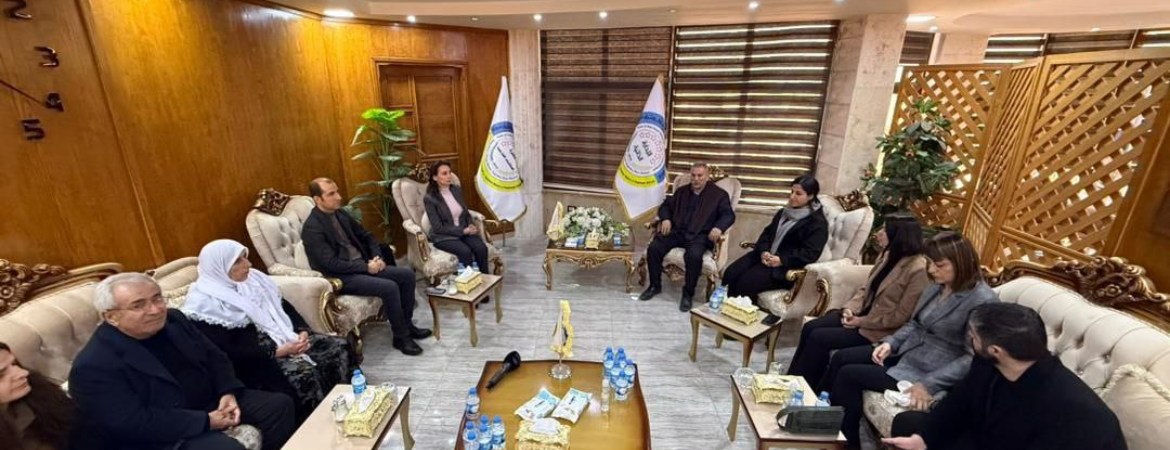
DEM Party and BDP representatives in Rojava. Photo: DEM Party Website
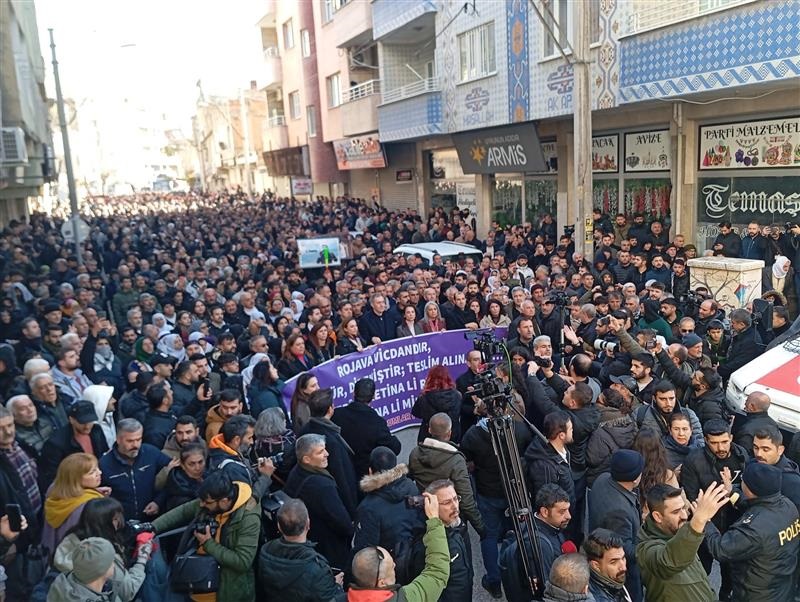
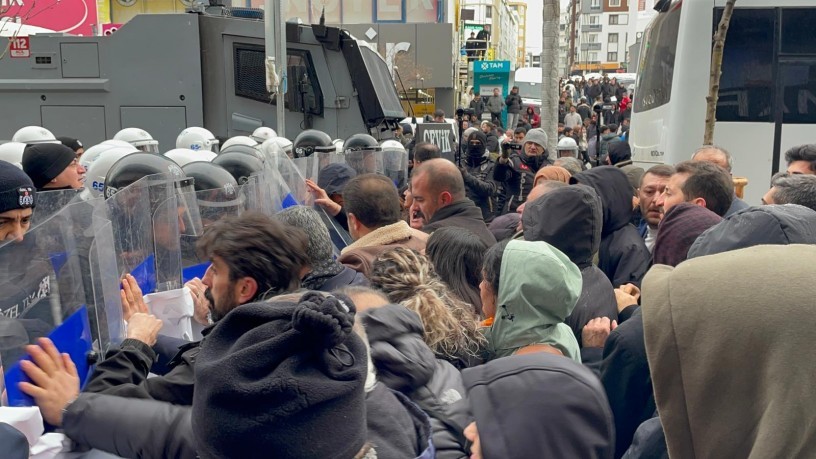
On January 21 and 22, Kurdish and Turkish politician have been publicly vocal in reaction to the clashes in Syria between the Kurdish-led Syrian Democratic Forces and Damascus’ Syrian Arab Army. Turkey’s President Erdogan has showed support for Damascus, while Kurdish parties have urged an end to the conflict.
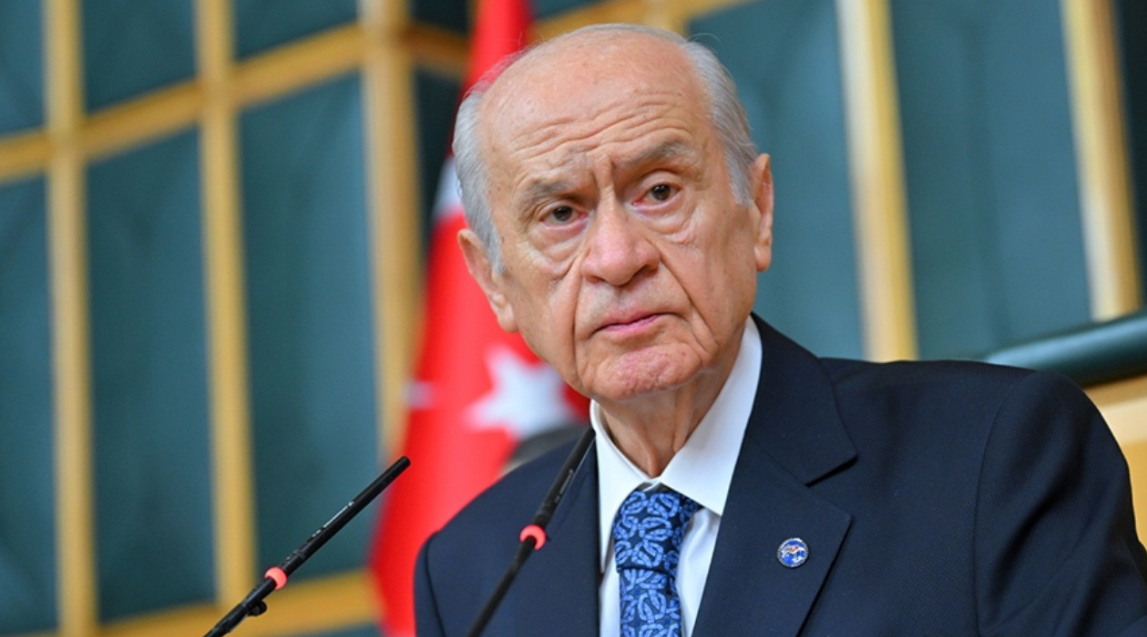
Turkish President Recep Tayyip Erdogan and his ally Devlet Bahçeli, leader of the Nationalist Movement Party (MHP), met at the Presidential Complex (Beştepe) in Ankara on Wednesday, January 21. No official information was released about the content of the meeting, but it is assumed that their talks focused on the recent developments in Syria, where Turkey has had an active role.
In the past week, both leaders had already made public statements addressing Syria and, in connection with it, Turkey’s Kurdish question
Speaking after the Presidential Cabinet meeting on Monday, January 19, Erdogan accused the SDF of failing to comply with the March 10 agreement, described the military operations carried out by Syria’s interim administration as “successful,” and congratulated the authorities in Damascus.
“The era of terrorism in our region has completely come to an end,” Erdogan said. He emphasized that the ceasefire and integration requirements must be fulfilled swiftly, and warned, “No one should miscalculate again.”
Taken together, his statements reiterated Ankara’s long-standing framing of the Kurdish issue primarily through a security-based approach – one that denies any kind of Kurdish political agency and prioritizes the dismantling of all independent or autonomous Kurdish political and administrative structures at home and abroad.
Bahçeli’s written statement was more confrontational. He accused Turkey’s pro-Kurdish Peoples’ Equality and Democracy Party (DEM) of being responsible for an attack on the Turkish flag along the Syrian-Turkish border, describing the incident as a “provocation against the peace process.” The attack was condemned by both the DEM Party and the KCK (Kurdistan Communities Union).
The co-presidency of the KCK Executive Council described the incident as a provocation and stated that it maintains a long-standing policy against targeting symbolic objects, adding that its imprisoned leader, Abdullah Ocalan, has expressed respect for the values of the Turkish people.
Against this backdrop, a delegation comprising representatives of the DEM Party, the Democratic Regions Party (DBP), and various legal, women’s, and civil society organizations travelled to Rojava on 21 January. The delegation entered via the Semalka border crossing through the Kurdistan Region of Iraq and held meetings in Qamishlo with Kurdish political actors, primarily the Democratic Union Party (PYD).
The meetings were closed to the press and focused on military operations carried out by Syria’s interim administration, the humanitarian situation in besieged areas, and the future status of Kurdish political structures.
The delegation stated that its engagements would continue and that a comprehensive assessment would be shared publicly at a later stage. The visit highlighted the existence of an open and direct channel of solidarity between Kurdish political actors in Turkey and Rojava.
While the SDF and Kurdish civilians continue to reiterate their determination to resist efforts aimed at dismantling their institutions and gains, Kurdish political actors appear to be pursuing a broader strategy that extends beyond military resistance, including legal, political, and diplomatic initiatives aimed at mobilizing transnational pressure.
So far, no formal institutional response has yet emerged from the international community, however, individual reactions have begun to appear, and Kurdish representatives have indicated that diplomatic channels are active.

The Amargi
Amargi Columnist