Progress on Iraqi Repatriations as Foreign ISIS Families Remain Stranded in Camps in Northeast Syria
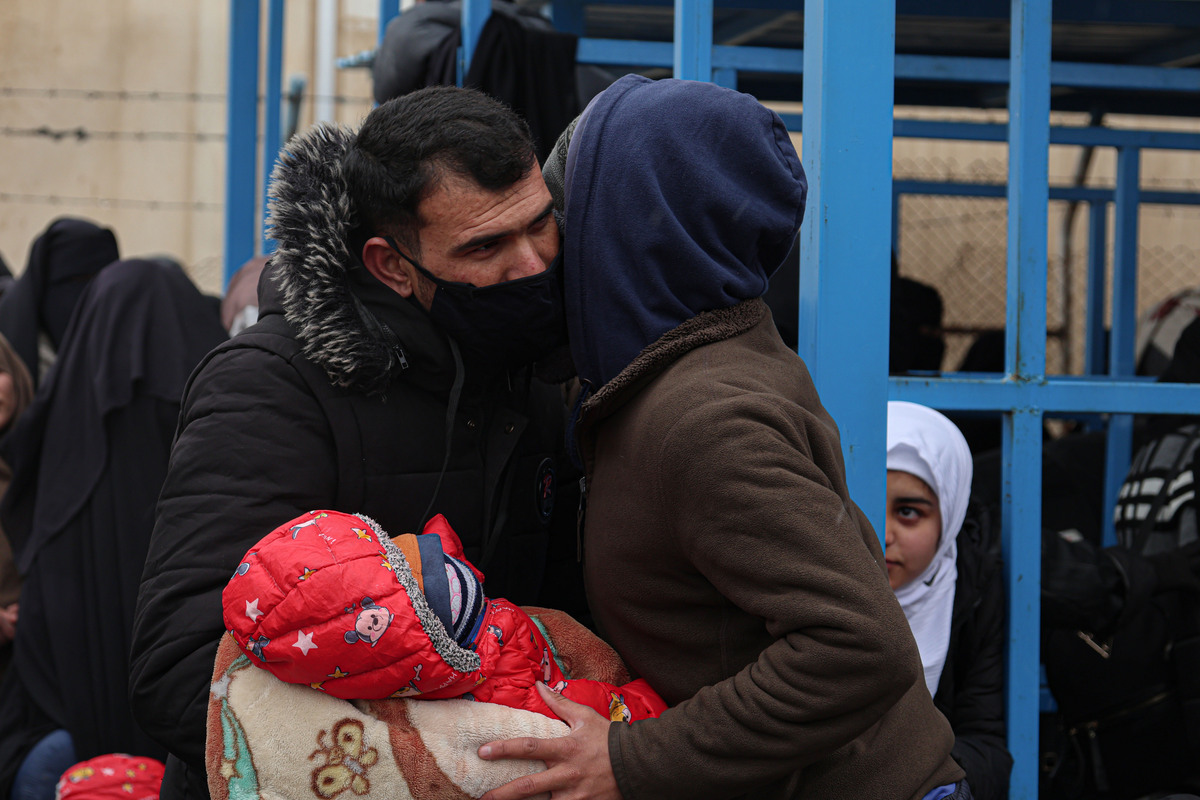
Nasr saying goodbye as he leaves for Iraq. Photo Credits: Abbas Abbas
In late December 2025, the Democratic Autonomous Administration of Northeast Syria (DAANES), in coordination with the Security and Defense Committee, and the Migration and Displacement Committee of the Iraqi Council of Representatives, repatriated a new batch of Iraqi families from Al-Hol camp in Al-Hasakah governorate, northeast Syria.
Al-Hol camp, located near the Iraqi-Syrian border, was established in 1991 to host Iraqi refugees and is recognized by the United Nations. After 2019, when ISIS lost its territorial control, the camp became a major site for detained families of ISIS members in northeast Syria. Currently, approximately 8,400 ISIS-affiliated detainees from over 70 countries are detained in Syrian Democratic Forces(SDF)-run facilities, according to the US State Department.
“Our Feelings Are Indescribable”
Nasr, 29, along with his daughter and wife waited in line to enter prefabricated rooms where they would submit their information before boarding buses to Iraq.
“I’ve been living in this camp since 2017,” Nasr told The Amargi. “We’re hoping that we will lead safer lives in the Al-Jadah camp in Iraq, and in better living conditions. We have suffered from displacement, difficulties, and a lack of job opportunities for years.”
“We were displaced from our homes because of the war, and today, thank God, we will leave the camp and go back to Iraq, where we will have more peace”
“Our feelings about returning to Iraq are indescribably happy,” he added. “We’ve been waiting here, ready to leave, since yesterday.”
Salma, 36, described the harsh conditions she and her children endured during their seven years in Al-Hol camp. One of her children has tuberculosis, and she said she struggled to get treatment.
“We were displaced from our homes because of the war, and today, thank God, we will leave the camp and go back to Iraq, where we will have more peace,” she said.
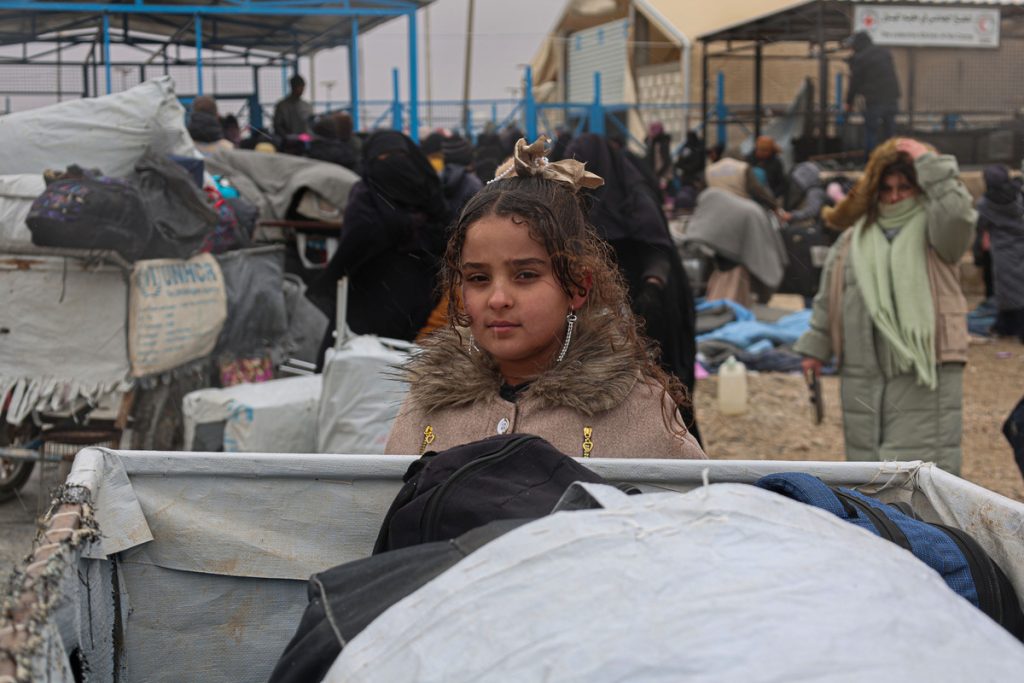
The camp, controlled by the SDF, remains under heavy security due to the presence of families linked to the Islamic State (ISIS), many of whom hold extremist views.
Syrian ISIS Families Remain in Limbo
While walking through the camp, a group of Syrian women from families linked to ISIS was sitting by a tent. Fatima Ali (pseudonym used for security reasons), originally from Aleppo, lives in a tent with her three children. Her husband was an ISIS member and is currently imprisoned in Guiran Central Prison, one of the largest detention centers for ISIS fighters in Syria.
“When we were transferred to the camp, the men were separated and taken to prison, while the women and children were brought here,” Fatima said. “As we watch the Iraqis being repatriated to their country, we also hope to return to our homes and leave the camp. I hope this can happen this year .”
Coordination Mechanism with Iraq
Jihan Hanan, co-head of the Al-Hol camp administration, explained that there is an established mechanism for the repatriation of Iraqis.
“Their data is shared with the Iraqi government, which takes the necessary measures. Then a departure date is set in coordination between the camp administration and the Iraqi government,” she said.
She confirmed that the total number of Iraqis who left the camp from 2022 to 2025 exceeded 20,000
Hanan noted that coordination is ongoing between the camp administration, the Iraqi government, and the SDF, under the supervision of the international coalition. She claims it is a successful mechanism, with 15 repatriation trips departing the camp in 2025 alone.
She confirmed that the total number of Iraqis who left the camp from 2022 to 2025 exceeded 20,000. During 2025, 2,495 families—comprising 10,865 people—departed, with approximately 2,000 people remaining in the camp, refusing to return to Iraq,[3] fearing excessive punishment. She further added that approximately 167 Syrian families, comprising about 500 people, have been repatriated to their villages and cities.
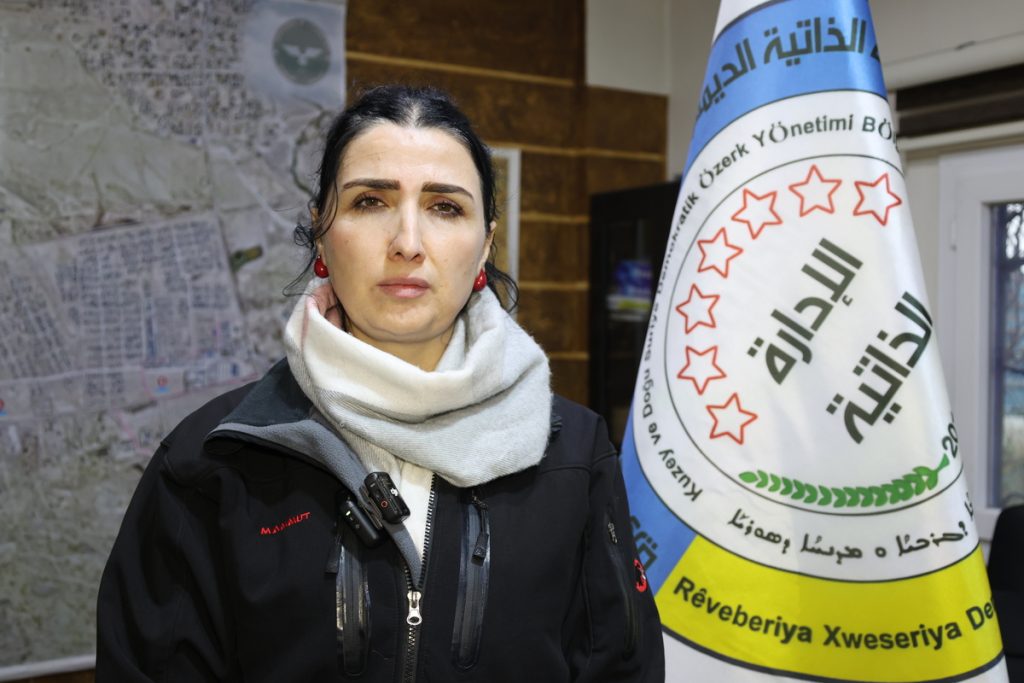
The figures could not be independently verified with Iraqi or Syrian authorities at the time of publication.
The Foreign Nationals
Regarding foreign families affiliated with ISIS, Hanan said the camp administration is open to communicating with any country that coordinates with DAANES and wishes to repatriate its nationals.
“There is no problem with that from our side,” she said. “However, some countries do not communicate and do not wish to repatriate their nationals. Some of the camp residents themselves do not wish to return, and some have security files or special legal issues in their countries.”
According to Hanan, during 2025, the Al-Hol camp recorded no departures of foreign nationals to their home countries. She reports that the camp’s migrant section currently houses approximately 6,200 people from foreign ISIS-affiliated families, all women and children, and representing 40 different nationalities.
In contrast, Roj Camp, a smaller facility also housing ISIS families in the eastern countryside of Qamishli near the Semalka border crossing, witnessed limited movement in 2025. Some countries repatriated 43 children and 17 foreign women, according to data from the Foreign Relations Department of DAANES.
Roj Camp was originally established in 2014 to receive Iraqi displaced persons and was later expanded to include families of foreign ISIS members transferred from Al-Hol.
“A Threat to the International Community”
Sheikhmous Ahmad, co-chair of the Office of Displaced Persons and Refugees, confirmed that the coordination mechanism between DAANES and countries with nationals in Al-Hol camp has been ongoing since 2019.
“There has been a slowdown in the implementation of this mechanism by a few, especially Arab and European countries,” Ahmad said.
He noted that thousands of foreign ISIS-affiliated families remain in Al-Hol and Roj camps, and their repatriation is carried out through agreements concluded by DAANES’s Department of Foreign Relations with countries willing to take back their nationals.
“Despite reports from international intelligence agencies confirming that the camp poses a danger and threat to the region and the international community, and despite the appeals and concerns of DAANES and the SDF, the majority of countries have failed to coordinate and refuse to repatriate their nationals,” Ahmad said.
He explained that Syria is currently going through a sensitive phase amid the presence of jihadist organizations, particularly ISIS, which has shown increased activity within Syrian territory, especially in the Badia desert region.
“This organization has a network of communication between its cells, both inside and outside Al-Hol camp,” he warned. He expressed hope that countries would respond and coordinate with DAANES to repatriate their nationals from Al-Hol camp.
An Uncertain Future
This population interred in these camps is often referred to as an “ISIS army in waiting”
As Syria enters a new political phase following the fall of Bashar al-Assad’s regime, the fate of thousands of foreign nationals in Al-Hol and Roj camps remains uncertain. While Iraqi repatriations continue to show progress, the international community’s reluctance to address the foreign ISIS families leaves an ongoing security threat to the region and beyond.
This population interred in these camps is often referred to as an “ISIS army in waiting” because, should ISIS succeed in breaking out, as it did during the attack on the Ghweiran detention facility in 2022, these detainees could join the ranks of ISIS.
The question of what happens to these families and their children, many born in the camps, remains one of the most contentious humanitarian and security challenges in Syria.

Abbas Abbas
Abbas Abbas is a journalist and photojournalist for The Amargi in Qamishli, northeastern Syria (Rojava). He has worked with Al-Youm TV and Ornina Media, and contributed reports and visual stories to local and international outlets, focusing on field coverage and the humanitarian realities of the region.