The Amargi Exclusive – New Peace, Old Fears: DEM Co-Chair Urges Ankara to Deliver on Kurdish Reforms
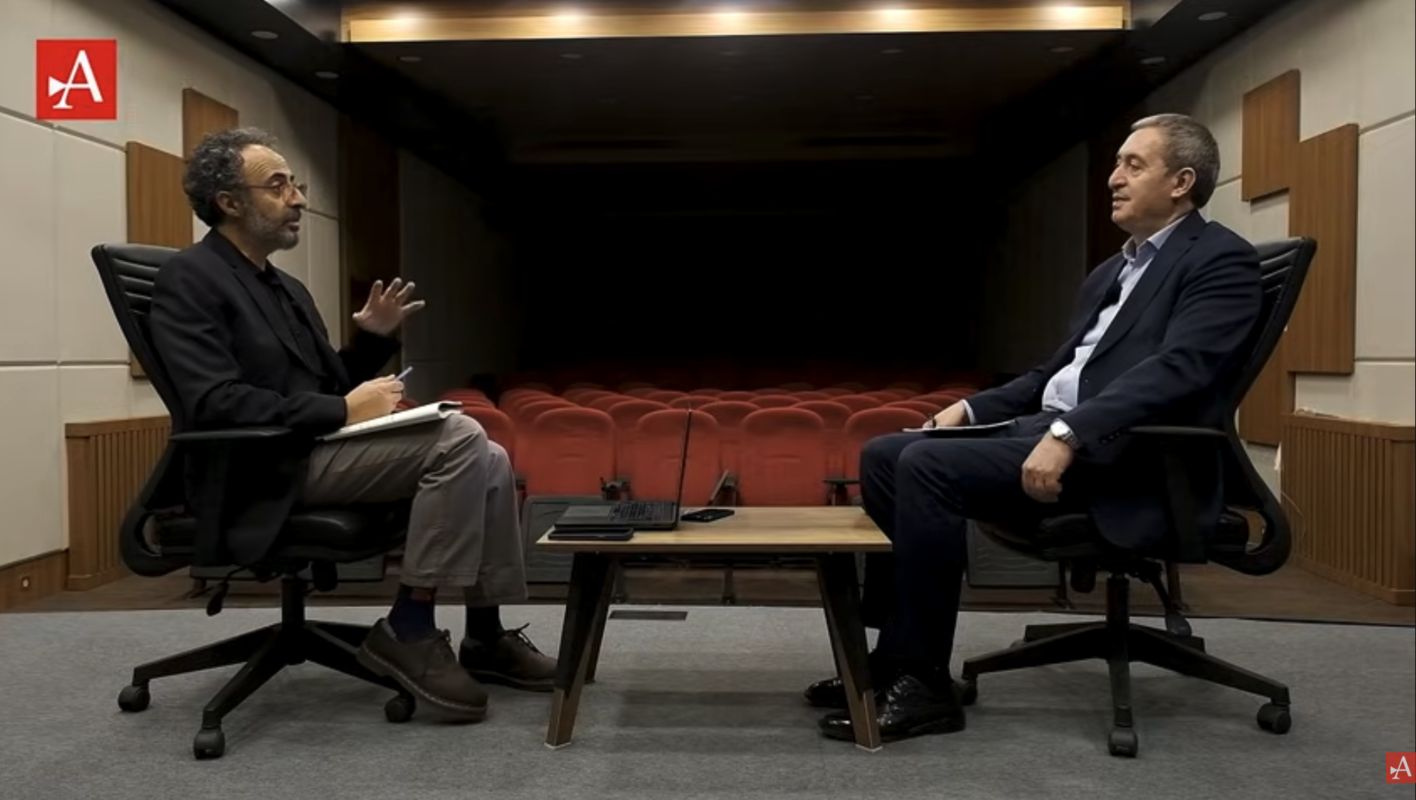
The Amargi: Good day. For the past year, Turkey has been engaged in a process aimed at achieving a democratic and peaceful resolution to the Kurdish issue – a process that has gone through, and continues to go through, various moments of tension. A commission has been established within the Grand National Assembly of Turkey, and this commission is expected to submit several legislative proposals to Parliament concerning the transition period, particularly regarding the conditions under which weapons might be laid down following the PKK’s self-dissolution. Parliament will then discuss these proposals and decide whether to pass new laws. This is a critical stage.
The commission has completed most of its work. Three of its members–one from the ruling AK Party, one from its partner the MHP, and one from the DEM Party, which largely represents the Kurdish political movement–visited Imralı Island and held a lengthy meeting with Abdullah Öcalan. With that, the commission’s consultation phase has come to an end. Now it’s time to outline a concrete framework.
Meanwhile, this process is directly tied to developments in Syria. Turkey has certain reservations regarding Northeast Syria, Rojava; the Kurds have reservations regarding Turkey; and there are also concerns involving Damascus. In this entire equation, how is the peace process moving forward? Are we heading toward a deadlock, or is there a broader path ahead? We’ll discuss these questions with DEM Party Co-Chair Tuncer Bakırhan. Welcome.
Tuncer Bakırhan: Thank you, glad to be here.
The Amargi: When I spoke with my editor about what we should ask, the first question that came to both of us was this: How is the process going? What stage is it at in Turkey?
Tuncer Bakırhan: A process has been underway for about a year. And yes, it’s not moving very quickly. There are still no developments or steps that would ease the public’s concerns. But credit where it’s due: people have not been losing their lives for a year. At the very least, there’s a sense of hopeful waiting.
So yes, it’s a slow process, moving at its own pace–but at this stage, it needs to accelerate a bit; it needs to pick up its rhythm, shift gears. Because the first phase is over. The commission went to Imralı, met with Mr. Öcalan. Now the public’s attention is on the legislation that may come out of Parliament–on the laws that might be enacted.
The Amargi: So, how do politics and society in Turkey view this peace process? Is there broad support? There’s also a rising right-wing current that opposes the process, and some say the main opposition party, the CHP, risks drifting in that direction. You also pointed this out during your parliamentary group meeting the other day. Looking at it from this angle, how strong are the elements that might act as a safety valve for the process?
Tuncer Bakırhan: Well, the sense of hesitation in society continues – and understandably so. Because so far, no concrete legal steps have been taken. Trustees are still being appointed. People are still being detained for the tweets they post or the opinions they express. Just yesterday, 17 university students were taken into custody and are now facing trial. There are still sick prisoners behind bars. There are people who are not released even after completing their sentences.
The Amargi: Approximately how many people?
Tuncer Bakırhan: It’s difficult to give an exact number.
The Amargi: I mean roughly how many people are imprisoned because of the Kurdish issue – whether DEM Party members, ordinary citizens, or those convicted of PKK membership. Is there any sense of the total?
Tuncer Bakırhan: There used to be an estimated 4,000 to 5,000, but this changes constantly. Some are released, new people are detained, and others finish their sentences. But society is reading the process in this way: people listen to what is being said, they are curious about where things are heading, but they look at what is actually happening. They ask: How has this process affected our daily lives? Can we express our thoughts freely? Have we got rid of the fear that someone might show up at our door at 4 a.m.? People are looking for more concrete steps. And removing this atmosphere of hesitation is not that difficult. We’ve already passed the hardest part.
The PKK laying down its weapons, withdrawing beyond the border, pulling out of a place like Zap, which had been inaccessible for years, actually showed how committed and sincere they are about this process. Zap was one of the most difficult regions.
The Amargi: A region where the PKK was present and where Turkey couldn’t intervene.
Tuncer Bakırhan: Exactly. A place where Turkey tried to intervene but could never really make progress. So on that side, significant steps have been taken, and the process is being followed sincerely. But on the other side, things are moving very slowly. As I said, there has not yet been a single concrete democratic gain that people can point to. So the way to overcome these doubts is precisely this: the commission will meet on the 4th. The report of the meeting with Mr. Öcalan on Imralı will be presented to the commission members. Each party is preparing its own report. Those reports will then be submitted to Parliament. After the commission conveys what it heard from Mr. Öcalan, it must finalize its report and submit it to Parliament. Then Parliament must take steps.
These steps could ease society’s concerns. Support for the peace process is already high; it would increase even more and give people hope. So we need these steps taken, so that people can believe in this process – or at least grow more hopeful – without being overly influenced by external factors.
The Amargi: Mr. Chairman, you mentioned society’s anxieties, but I imagine the concerns of Kurds and Turks about this process are quite different. What are Kurds worried about, and what are Turks worried about?
Tuncer Bakırhan: Yes. I mean, perhaps we shouldn’t divide it into Kurds and Turks as two separate groups. There are shared concerns as well. Democracy is a concern shared by Kurds and Turks – by all 86 million people. The ultimate destination of this process is democracy. Without democracy, this process doesn’t amount to much.
Of course, Kurds have some additional, distinct worries. They are living through this in a very immediate, visceral way. Much of what they have experienced over the past 40 years is still ongoing. They fear the process breaking down again and the consequences that would follow. For example, their child may be abroad, in exile, in prison, in the mountains; their spouse or parent may be a party member, dismissed by decree (KHK), unable to find work; they may be struggling economically; the region has been economically neglected because of this conflict. So the Kurdish concern is that this process should eliminate all these problems and similar ones.
There are also various concerns within Turkey more broadly. The opposition – especially the main opposition CHP – carries this anxiety: “If this process moves forward, will the political credit go to the government?” This is an unnecessary and misplaced fear. Those who genuinely want this issue resolved have concerns that are in fact closer to those of the Kurds.
In short, society as a whole carries the weight of a century-old problem – a fifty-year conflict that has affected every inch of the country. The way to ease these anxieties is through concrete steps. These steps can reassure society, reassure the opposition, and eliminate uncertainties.
For example, complying with ECHR rulings and Constitutional Court rulings would significantly ease the worries of both Kurds and Turks. In the latest judicial package, a COVID-related regulation was included. We are still insisting on this; our colleagues continue to push for it. I believe that – aside from crimes that deeply wound public conscience, such as violence and abuse against women and children – regulations should be applied without discrimination, without making a political-versus-criminal distinction. This would help reduce public anxiety.
Another example is the trustee (kayyım) issue. Just yesterday, our Siirt Co-Mayor – who had been removed and replaced with a trustee – was acquitted. So why was a trustee appointed in the first place? You said there was an investigation, a trial, and you claimed a “link to an organization.” Now the court has ruled that no such crime exists. The trustee was appointed based on an allegation that the court has now dismissed. Therefore, our acquitted Siirt Co-Mayor – and our other co-mayors – should be reinstated. Even fulfilling that would ease distrust and anxiety.
So at this point, eliminating the question marks and concerns in society depends largely on what the executive – the government – chooses to do. What we need is for the opposition to feel confident that this is not a process where steps are taken only for Kurds, while repression continues in the west of Turkey. And the way to do that is clear: implement Constitutional Court rulings, implement ECHR rulings, and ensure judicial processes without pre-trial detention.
The Amargi: Now, one of those ECHR rulings concerns your former HDP Co-Chair, Selahattin Demirtaş. The Court has issued several decisions about him, and last month his release was considered almost certain – because Turkey’s objection to the ECHR was rejected. So legally, the ruling became final. But Demirtaş was not released, and many people are asking about this. For example, not releasing Demirtaş is obviously a decision made by the government. Doesn’t this tell you something about the process? Why does the government refrain from taking even steps like these?
Tuncer Bakırhan: Yes, the ECHR ruling has now become final. Three times, in fact, the Court has issued a clear decision concerning Mr. Selahattin Demirtaş, Ms. Figen Yüksekdağ, and our friends in the Kobani Conspiracy Case. We are fighting to ensure that these decisions are implemented without further delay. These are not rulings that can simply be ignored for years. And this is exactly why we say: one of the steps the government could take to reduce the “anxiety among Kurds and anxiety among Turks,” as I mentioned earlier, is to implement these decisions. We want to reiterate that we have expressed this consistently across every platform.
This is where the core of the matter lies. The government needs to directly take part in this process – until now, it has brought it forward only through words. I don’t know exactly what it is waiting for, but I do know that the historic and strategic steps it expects from others have already been taken. Since the government is the actual decision-making body, it must now take concrete steps.
The hesitation, let me be clear, is not about peace. It’s not about ending conflict or violence. The hesitation is not about exiles, prisoners, or people who have laid down their arms returning to this country. The hesitation is exactly where you pointed: people say, “This government is not sincere.” They point to the Court decisions as evidence. They point to the trustees. People ask, “If Siirt was acquitted, why is there still a trustee?” These are the reasons for public hesitation. And it is not our party’s responsibility to eliminate this hesitation; it is the responsibility of the executive. Because this entire process depends on a single word, a single directive, a single decree, a single step from them, it is the government that must resolve this doubt. We are repeating this again and again.
The fact that such simple steps are not taken in the resolution of a century-old issue also puts us in a very difficult position. Believe me, we become the direct targets of the frustrations you mentioned – out in the field. People say, “You say this is a process, but no steps are being taken. You say it’s a process, but the government is not active. It’s not socializing the process. It’s not taking small decisions that wouldn’t even require legislation and would ease public concerns.” And we are exhausted from being the addressee of all these questions.
The Amargi: Understood. Now, Mr. Chairman, there is a demand for a special law. I assume the DEM Party or the Kurdish public also expects a special legal framework for this process. Specifically, a legal arrangement concerning PKK members who lay down arms, and also for Kurdish politicians or actors who are imprisoned or in exile. There is also talk of “integration,” democratic integration. There is a similar discussion regarding Syria. As the parliamentary commission completes most of its work and prepares to present concrete proposals, what kind of law do you want to see for a real and concrete solution?
Tuncer Bakırhan: Of course, there must be a special law. There is an organization laying down arms, and there are consequences accumulated over many years – exile, trials, imprisonment, people in rural areas.
The Amargi: And it’s not talked about much, but there are also those living as fugitives within Turkey.
Tuncer Bakırhan: Yes, of course. And there are also millions of case files. We cannot reduce this to hundreds or thousands – there are millions of people who have been prosecuted. A special law is needed for this.
But since the process itself is a democratization process, the special law should deal with the organization and the results it has produced. Beyond that, democratic reforms that would institutionalize and socialize this entire process must also be introduced together – reforms to the Anti-Terror Law, the execution regime, equality in execution, the Criminal Procedure Code, and so on.
The Amargi: There is talk of a Turkish–Kurdish peace. Particularly, Devlet Bahçeli, the Chairman of the Nationalist Movement Party, who seems to have initiated this process within the governing bloc, emphasizes this often. President Tayyip Erdoğan also stresses this. I assume you want to establish a legal foundation for such a peace. But what does the government say? In your closed-door meetings, do they give any hope?
Tuncer Bakırhan: Look, this century-old issue is not something that will be resolved with just a special law. The problem of speaking, using, and receiving education in one’s mother tongue still continues, doesn’t it?
The Amargi: Of course.
Tuncer Bakırhan: Local governments are still subject to being removed from office, not through a court ruling, but merely through the opening of an investigation. There doesn’t need to be an actual case – just the initiation of an investigation is enough to appoint a trustee. And, for instance, people still cannot freely express their thoughts – Kurd, Turk, whoever they may be.
Therefore, a special law is extremely important in this matter, because we are dealing with an environment of conflict and violence that has lasted for forty years. But there are also the underlying causes that produced this situation. Eliminating those causes depends on democratic steps, legal reforms, and perhaps, in the future, constitutional amendments.
A special law is necessary, yes, because there is a large group of people who need to reintegrate into normal life once they have laid down their arms. Tens of thousands of people are outside the country for this reason, and tens of thousands are being prosecuted. But in addition to this, there are steps that must be taken to resolve the issue within a democratic framework. These things form a whole. Meaning, once a special law is passed, the Kurdish issue does not end. Democratization does not end. On the contrary, exactly after such a law, perhaps together with it, perhaps even before it, certain legal reforms that will reassure Turkish society and meet its expectations need to be enacted.
Now, regarding integration, it is fundamentally related to democracy. Let’s say the armed struggle has ended. The special law has been enacted for the return of PKK members who laid down arms, right?
The Amargi: Meaning, a law enabling the return of those who have disarmed?
Tuncer Bakırhan: Yes, exactly. So that part is correct. But what comes next? Will the trustee system continue or not? Will Kurds be able to speak their language freely? Will people whose mother tongue is different be able to receive education in that language? Will the representatives elected by the people be allowed to govern until the next election? Will people be able to freely express their thoughts? Will they be able to criticize? Will anti-democratic laws concerning women and children be reformed? Will the wrong approaches in this area be corrected? We can multiply these questions.
Therefore, since integration is linked to democracy, the real issue is whether we will be living on a basis that eliminates assimilation, recognizes everyone’s identity, sees everyone as equal citizens, right? A basis where people can live as they wish, according to their beliefs, without interference in their lifestyle – whoever they are. This is related to democracy. It will take time. These are matters that require discussion, consensus-building.
And this is exactly where major duties and responsibilities fall on the Republican People’s Party. That is where the problem lies. The main opposition party sees this only as a matter requiring a special law. Since it doesn’t see it as a comprehensive democratization issue, it approaches the process with distance. And it acts with the concern that “if this issue is resolved, it will benefit the government.” In reality, this benefits everyone – it benefits 86 million people.
Therefore, the opposition – especially the main opposition – must support this process. This will improve the lives of 86 million people, not only those of Kurdish citizens. At the end of the day, when the ballot box is set, people will freely choose whom to vote for. From the very beginning, the idea that this would serve a particular political party, help it get re-elected, or carry it to power is completely wrong.
The Amargi: I think the hesitation from the opposition in Turkey – not just from parties outside you, but from what we call Turkish society – stems from something else. There is a perception like, “Democracy for Kurds, authoritarianism for the West [of Turkey].”
Tuncer Bakırhan: Kurds would not accept that. Democracy for Kurds, but an authoritarian and repressive system in the West – Kurds would not accept that. Kurds themselves have been fighting for democracy for years, and not just for themselves – for all 86 million people, for the Middle East, for the world. So yes, such a concern may have emerged, but those who create this concern are committing a great injustice.
Turkey urgently needs to resolve the Kurdish issue and its democratization problems. We can use this emerging process as an opportunity for that. How? Not by staying away from it. Not just by criticizing. But by contributing – offering solutions, showing solidarity, acting together, pushing this anti-democratic system toward a democratic ground, creating democratic pressure. This is what we expect from the opposition.
To narrow this down, to confine it to a certain region, to claim that only people living there will gain certain rights while something else happens in the West – this is an injustice to a century-old issue, an injustice to Kurds, an injustice to those fighting for democracy. Separating Kurds from democracy is the greatest injustice.
The Amargi: Now, finally, let’s talk about the Rojava issue. A few questions. First, I believe you will hold an international conference in Istanbul in early December, around December 6–7. In your speech at the parliamentary group meeting, you said you invited Ilham Ahmed, the Foreign Relations Executive of Northeast Syria, to this conference. You publicly announced this and said Turkey should respond positively.
However, AKP spokesperson Ömer Çelik displayed a rejectionist attitude. First of all, how do you interpret this? Do you think the government is saying “no” to Ilham Ahmed’s visit only for now? Could these doors open in the medium term? And how related is this to the current process? After this, I have a few final questions, and then we’ll wrap up.
Tuncer Bakırhan: Now, this is very important. The government needs to update its thinking regarding Kurds, both in Syria in general and in the specific context we’re talking about. There is an incomplete approach, a wrong approach. I want to emphasize that the mindset that sees Kurds as a threat is incorrect.
We invited political parties from the Federated Kurdistan Region as well. We also invited representatives of leftist, socialist, and democratic parties from Europe, as well as institutional representatives. And rightly so – after all, there is a regional administration in Rojava, and they have been governing that area for thirteen years. They have legitimacy; they are actors recognized by the international community.
Ilham Ahmed conducts diplomacy in Europe. She spends her days explaining this issue in the European Parliament and the parliaments of various countries. So, her coming here as a female diplomat was not only important for our conference. On the contrary, it would have provided an opportunity for the Turkish public – especially government circles – who have concerns and unanswered questions about Syria, to pose their questions directly to the relevant interlocutor.
Are Kurds a threat to Turkey? Let Ilham Ahmed answer that. What do Kurds want in Syria? Let Ilham Ahmed give the answer – because she is an actor from that very place.
The Amargi: And apparently, Ilham Ahmed held a teleconference meeting with Öcalan. She did not deny this, and Mazlum Abdi also stated that they held some indirect meetings with Öcalan. Actually, within the context of this process, actors in Rojava are expected to meet with Öcalan. Perhaps your conference could have served as an occasion for this as well – but at this stage, apparently not yet…
Was this officially denied?
Tuncer Bakırhan: No. We just heard Mr. Çelik’s comments. That is exactly what I’m pointing out. A major responsibility is placed on Mr. Öcalan in this matter – by the government itself, by political parties in Turkey.
Okay, let’s say they consider this a security concern. We do not see it that way. But how will those concerns be addressed? Is the way not to sit down with the actors on the ground? Is it not to take the extended hand? Is it not to talk to them?
What are we going to do – write these issues into thin air?
What harm is there in Turkey sitting down with the administration in Rojava?
What harm is there in meeting them?
What harm is there in the opposition speaking with them?
If you evaluate this issue in its entirety, then let Turkish society hear directly.
It would be unfair to say the following: There is currently a regime in Syria that has not been institutionalized. Just yesterday, attacks against Alevis began again – people lost their lives. We recently witnessed what happened to the Druze. Now, instead of repeatedly asking, “What do Kurds want?”, shouldn’t this government – those governing this country – ask themselves:
“Kurds are a dynamic of Syria, right? They live in a region there, together with other peoples. So, what should the democratic rights of Kurds be as Syria is being rebuilt?”
Millions of Kurds have brothers and relatives there. Turkey’s negative attitude toward Kurds in Syria deeply disturbs Kurds here. Because they belong to the same tribes as those in Nusaybin, they are relatives – a border was simply drawn between them.
Believe me, this so-called security concern – wherever and from whomever it emerged – is profoundly unjust. It is not something acceptable.
Therefore, what will bring relief in this matter is Turkey’s approach toward Kurds in Syria. There is no institutionalized state structure, no institutionalized democracy, no inclusive formation we could describe as an “army.”
Thus, understanding only the security concerns, failing to empathize, failing to see the problems Kurds face there, reducing everything to a security issue, and refusing to talk – not knowing what they want, or not wanting to know – is not right.
The Amargi: Or not wanting to know.
Tuncer Bakırhan: Exactly – not wanting to know. That is wrong. Kurds have never been a threat to Turkey or to Turks anywhere – and they never will be. I say this as someone who has been in politics for a long time.
But Turks must also show respect for the rights, language, identity, and security of Kurds.
The Amargi: Now, Mr. Chairman, there is another perception that the state has established in Turkey. The PYD is a legal political party founded in Syria. Although during the Assad period, forming a political party did not have much of a legal basis, it is still a political party of that place, separate from the SDF. In fact, the PYD is a consultative member of the Socialist International, of which CHP and your party, the DEM Party, are also members.
So it is a party with legitimacy in the international arena.
First question: Does the DEM Party have relations with the PYD?
Second: Are you making efforts for the PYD to be included in other international political platforms?
How directly are you connected to the PYD on this issue?
The Amargi: So, a party that also has legitimacy in the international arena. First, does the DEM Party have relations with the PYD? And are you making any effort for the PYD to be admitted into other international political platforms? How directly are you involved with the PYD on this matter?
Tuncer Bakırhan: We don’t have a direct relationship, simply because the conditions don’t exist. Physically, we cannot come together in the same place.
The Amargi: Because PYD officials cannot come to Turkey.
Tuncer Bakırhan: Exactly – they cannot come to Turkey. And in the international arena, from time to time, they attend conferences where we are also invited, where the CHP and other parties are also invited. We can only see each other there. The PYD is a dynamic of Syria; it is a political party established there. We cannot decide whether it is legal or illegal.
Therefore, we support the development of relations between Turkey and the PYD, and between political parties in Turkey and the PYD. And we shouldn’t ignore the facts: when Mr. Davutoğlu was prime minister, PYD officials actually came here and held meetings. Asya Abdullah, for example, came to a conference in İzmir and delivered a speech. Salih Muslim as well.
What I’m trying to say is this: if we genuinely want to resolve this issue sincerely, we need to build a relationship on a sound basis – one that does not view Kurds as a threat, that empathizes, but also respects democratic rights. I reviewed the PYD’s program. It largely overlaps with the programs of democratic parties here: recognition of all peoples and faiths, positions on the environment and nature, and opposition to hegemonic, imperial interventions in the Middle East. These are not very different from the programs of democratic parties in Turkey – ours or others.
Beyond that, we have not seen any contrary practices. We have not witnessed the PYD acting unjustly toward another political party, engaging in racism, or adopting an authoritarian approach.
And importantly, El-Shara went to the United States. The U.S. Special Representative for the Middle East calls Mazlum Abdi. So there is a degree of international acceptance – a legitimacy. They meet with him, and they also call here. Clearly, while seeking a way forward, the international community acknowledges that one of the actors is this structure.
Turkey delaying this is not right. Believe me, it would ease 25 million Kurds. It would strengthen their sense of belonging to this country. Kurds can ensure Turkey’s inclusion in the regional equation in the Middle East. If Turkey is outside the equation, it is because of the Kurdish question it faces. If Turkey is not a guarantor country there, that is a result of its own policies. We would wish that a Turkey that resolved the Kurdish issue through democratic means at home could have been a guarantor country in Syria as well.
The Amargi: Now, Mr. Chairman, it is said that if this peace process in Turkey fails, a new war may erupt – both domestically and in Syria. This prediction is made partly by looking at the terrible conflicts that followed the breakdown of the 2013–5 peace process. If this process fails, what happens? What happens to the DEM Party? To the Kurdish movement? To the future of Kurds in Turkey and Syria? And, importantly, people often try to gloss over this – various conspiracy theories circulate that Kurds might align with Israel or enter into an alliance with Israel. In the event of such a catastrophe, what awaits the Kurds? What are Kurds expecting?
Tuncer Bakırhan: Kurds have experienced many catastrophes. For this reason, while we conduct this process, we do not focus on the negative scenario. We have lived through and witnessed periods when the process collapsed – and it benefited no one.
So we are putting forth every effort for a positive outcome. And there are conditions in Turkey today – unlike any previous period – that allow this process to evolve positively. Because there has been conflict for years, and it has produced no result. Kurds did not abandon their identity because of this conflict. Perhaps Kurds did not fully achieve their demands. Neither side was able to overpower the other. The problem grew; it became internationalized – and we see this in Syria as well.
Therefore, rather than thinking “what if it fails,” we should all focus on achieving success. We must concentrate on ensuring that this process reaches a successful conclusion. Otherwise, hesitation may cause the process to move slowly. It will not collapse. And even if it did, we would continue our struggle as we have until today.
Second: Kurds are a very unique people. I appreciate them greatly, I value them greatly. If Kurds had aligned with imperial powers during the War of Independence, perhaps they would have a state today. But they chose the people they lived with. Despite suffering immense oppression, Kurds never abandoned this independent stance.
I say this as someone who knows the Kurdish movement in Turkey: Kurds always seek a solution together with the peoples they live alongside. They see true liberation there. They know that is the right path.
Yes, Israel has become a significant power in the region in recent years. But Kurds are not seeking a remedy or a solution there because Israel is a regional power. They have no such intention. As far as I can see, Kurds in Syria want to resolve their issue with the Syrian regime.
For many years in Turkey, in Ankara, despite all pressures and every kind of hegemonic game, we have never turned our face elsewhere. Even those who struggle against us should acknowledge this. Even if they respect nothing else, the Kurdish people’s determination to seek solutions with the administration of the country in which they live, on the land where they reside, independently and with a neutral stance, is praiseworthy.
When we were under pressure, we never said, “This didn’t work, let’s lean on a hegemonic power, let’s rely on a regional force to solve this problem.” And no one should ever expect us to say this. Because Kurds do not think this way. At the end of the day, we will continue to live together with the various peoples of Turkey; we will exist together in this geography. We have not conducted this process–and will not conduct it–by leaning on forces from outside or by expecting help from external powers. This should be valued and appreciated.
In the forty-year span of this process, neither during the bipolar world order nor under the unipolar one, can anyone say that Kurds showed special interest in any political pole or acted in ways that served the interests of any global bloc. This is, in itself, extremely valuable. Perhaps not today, but in the future, the society of Turkey will appreciate this.
Some actors, whenever they are in trouble, one day align themselves with Russia, the next day with a Gulf country, and the following day speak with an ambivalent tone about Israel’s attacks on Palestinians. But from the day we began, we have always said: if something is oppression, it is oppression; if it is democracy, it is democracy; if something is good, it is good; if bad, then bad. And we will continue to speak this truth. This is exactly what distinguishes us from others. And believe me, international actors respect this stance as well.
No one should confuse us with other movements–ones that can be pulled in a direction with a hook, guided or influenced through political manipulation. There is no such ground for that here. We are a movement that trusts in its own strength everywhere in the world and seeks a solution with whoever holds governance in the lands where we struggle–not only for ourselves but also to make the geography we live in more beautiful and more democratic. This approach will continue indefinitely, because it is the right one.
We know well that you cannot descend into a well using the rope of hegemonic powers. Kurds have lived without status for a century, and they know the meaning of this. Yet this reality is neither seen nor valued. Around the world, even the most ordinary political parties, when drafting their programs, send messages to some international actor or center. We have never done that.
The Amargi: Yes. Thank you very much, Mr. Chairman. Thank you. Let’s hope everything turns out well, just as you wish.
Tuncer Bakırhan: We will do our best. We will work for it.
The Amargi: We have been speaking with Tuncer Bakırhan, Co-Chair of the DEM Party, which most strongly represents the Kurdish political movement in Turkey, along with leftist and socialist components, and is the third-largest party in the Grand National Assembly of Turkey. Goodbye.

İrfan Aktan
İrfan Aktan was born in Hakkari-Yüksekova. He graduated from the Journalism Department of the Faculty of Communication at Ankara University in 2000 and completed his Master’s Degree in the Women’s Studies Center at Ankara University. He worked as journalist for Bianet, BirGün newspaper, Express, Nokta, Yeni Aktüel, and Newsweek-Türkiye magazines, Gazete Duvar, Artı Gerçek and IMC TV. His books include Nazê/Bir ‘Göçüş’ Öyküsü, Zehir ve Panzehir: Kürt Sorunu and Karihōmen: Japonya’da Kürt Olmak.
![[Amargi Exclusive] In the Zagros Mountains, PJAK’s Co-chair Says Iran has “Already Collapsed” and Warns Against “Another Dictatorship”](https://cms.theamargi.com/wp-content/uploads/2026/01/ressize-Screenshot_2026-01-12_at_15.05.23-1.png)