YPJ commander: “No steps forward” in Syrian army negotiations as deadline looms
Baderkhan Ahmad contributed to the reporting.
As a year-end deadline approaches for integrating the Kurdish-led Syrian Democratic Forces (SDF) into a new Syrian army, tensions remain high along the Euphrates River frontline separating SDF-controlled territory from areas held by Damascus-aligned forces.
Clashes have continued since mid-March, underscoring the fragility of the ceasefire and the lack of progress on the March 10 agreement, which has yet to be implemented.
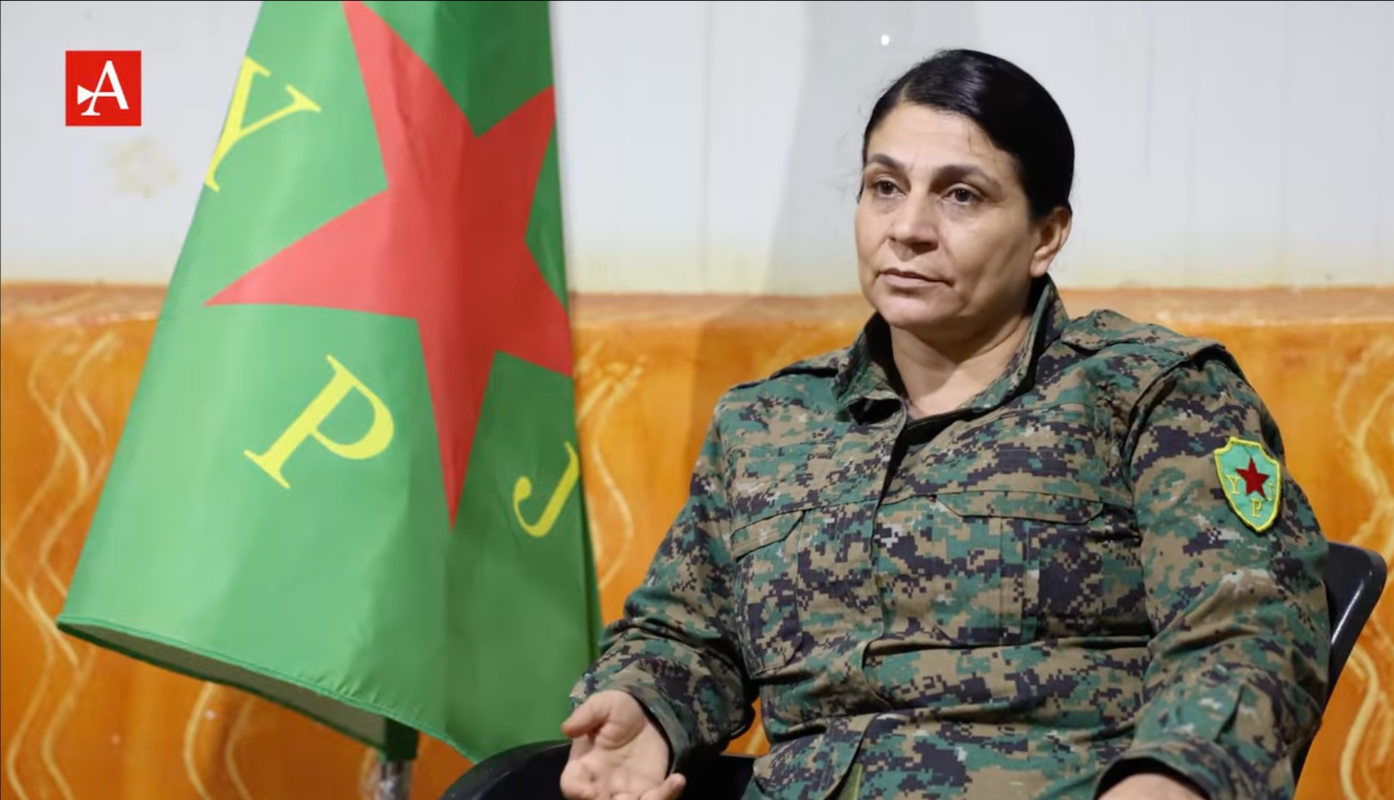
In this interview, Sozdar Hacî, a member of the SDF and the leadership of the all-female Women’s Protection Units (YPJ), discusses the stalled talks with Damascus, the frontline situation, relations with the United States, and the future of women fighters in any prospective Syrian army.
Hacî, 46, was part of the SDF delegation that entered negotiations in Damascus and says no substantive steps have been taken as the deadline looms. The interview was conducted at a YPJ military base in Tabqa, west of Raqqa.
In the last few days, conflicting reports about the deal have circulated: some say an agreement has been reached between the two sides, while others deny the rumors.
The conversation has been edited for brevity and clarity.
How is the situation at the frontline?
They [Turkish and Damascus-aligned factions] are making the situation more tense. We have faced tough battles against them, for example, in Tishrin, Qara Quozaq village in the Kobani countryside, and Ghanem Al Ali village in the Raqqa countryside. There have been on-and-off clashes in those areas. We also realized that ISIS members were participating in those clashes, specifically the Ahrar al-Sharqiya group led by Abu Hatem.*
In Shaqra, Deir ez-Zor area, there were also clashes. We spread our forces to be ready in case of attacks. They also sent some groups to the Deir Hafir area, trying to get closer to our positions. We responded and managed to push them back to their previous positions. We always have the right to respond to them and protect our positions. Overall, the situation is quite unstable.
What do you think of the supposed integration between the SDF and the Syrian Army, and what are the possible outcomes of the negotiations?
At this stage, I do not see them as negotiations. What we had were just talks. The reason it cannot be considered a negotiation is that they [Damascus] were trying to force our side. A negotiation should be a democratic process between two parties, but they are just telling us, “it’s like this,” and they want us to accept it.
Damascus wants to dissolve the SDF and have its members join the new army as individuals, not as units. They want to melt away an army that we have built over years. From their side, at the moment, there’s not even a proper Syrian army. It’s mainly HTS plus different groups and factions. If this is how they are dealing with the SDF, then an agreement is impossible.
A long time has passed since the 10 March agreement, and there’s only one month left before the deadline. There were supposed to be institutional changes inside the new government – that was the main condition to start speaking about integration. These changes have not happened.
We agree that there should be only one army in Syria, but this process should involve democratic integration. For us, it’s not only about the military structure – we must also address the political and institutional aspects. We are responsible for the people and society here, not only for the rights of the Kurdish people. We also consider the Arabs, Christians, and other minorities that we have in Northeast Syria. The new Syria should have real multiethnic representation.
The new Syrian army depends on Islamic Sharia law. If you are a fighter and want to join, you must complete Islamic religious lessons before joining the army. This doesn’t work with our internal system, which isn’t centered on any specific religion.
Everyone [every ethnic minority] should be represented within the new government and the new army. We have seen what has happened to the Alawites and the Druzes. Those were Syrians, and they were killed. Now they want to build an army with that same mentality. As the YPJ, we can’t be part of this mentality. Even if the SDF joins the Syrian army, the YPJ will retain its independence.
Analysts say the new Syrian army is unlikely to allow women soldiers, especially in all-female units. If the YPJ were asked to lay down weapons, would you do that?
We are not treating war as a first option, but we are forced to bear arms and to protect ourselves. We have years of military experience, and we defeated an organization [ISIS] that was terrorizing the whole world. Women played a major role in defeating terrorism. We had hundreds of martyrs – we will never leave them behind and put their weapons down. As long as there is a threat to women and our society, it will not be possible to put down our weapons.
We will remain armed until we have a peaceful atmosphere in our region and a genuine democracy. However, the current situation does not seem to be going in this direction. We are not seeing any signs of peace from the government. They do not seem to see women’s freedom as a priority, and we do not see from them a plan to be democratic.
Syrian interim president Al-Sharaa recently visited Washington. The U.S. has long been an SDF ally and still has military bases in Northeast Syria. Do you feel betrayed by the U.S.?
There’s no change in our relations with the U.S., so I don’t consider the meeting between Jolani [Al-Sharaa] and the U.S. President in Washington as a betrayal towards us.
Still, the U.S. announced it will shut most of its bases in Syria and concentrate its forces at a single location. It has already withdrawn hundreds of troops from Northeast Syria. What do you think of that?
We have cooperated with the U.S. for 10 years in the war against ISIS. The U.S. has supported the SDF extensively, both financially and through military training. It’s normal that the U.S. wants to build relations with the new Syrian government, whether it’s with Jolani or another person. What we want is for this not to affect the democracy that we have been building here.
The main thing the SDF and the U.S. have been working on together is the war against ISIS. Nothing has changed from that point of view. The U.S. can leave or stay – their reasons for staying or not depend on their interests. To change their military positions is normal – all armies do that. This does not affect us as the YPJ or SDF. We will stay and continue to protect our society. We have enough forces on the ground, so we do not have any worries about that.
Do you think the looming deadline for the integration of the SDF into the Syrian army will be respected? If not, will there be a new deadline?
The government has put forward no practical steps since the 10 March agreement. There is a possibility of a new deadline because the U.S. is now also acting as a mediator in these negotiations. All possibilities and options are open at this stage. We want to solve this with negotiations and discussions from Syrian to Syrian, but if they attack us, we have the right to respond.
It seems that when the agreement was signed, there was no real basis for an agreement. Why did [SDF Commander] Mazloum Abdi sign the agreement? Was it because of international pressure, or were there other reasons to sign instead of waiting for better conditions?
Before making the deal with the new government, there was an ongoing war in Syria. There was a need to make a deal to make the situation more stable. We believe that signing the deal was not a mistake. However, after the agreement, we did not see any practical steps in our direction from the government. That is why it did not work. The problem was on their side, not our side. They were not ready to implement this agreement. We believe Syria needs a peaceful, democratic solution to the current situation, and we will do our best to find one.
Is there anything else that you would like to add?
I would like to give a message to the world and the international community, as a member of both the YPJ and the SDF. We have spilled a lot of blood to protect this region and the world [from ISIS]. We took this responsibility upon ourselves. Therefore, we believe there is a significant need to support our army, not only financially but also through media and political support. I am sure the international community can take on this responsibility.
*In an interview with Reuters, Abu Hatem reportedly acknowledged recruiting former ISIS militants. In May, the Syrian transitional government appointed Abu Hatem to lead the military’s 86th Division, which operates in Deir ez-Zor, Hasakah, and Raqqa.
Baderkhan Ahmad contributed to the reporting.

Valeria Mongelli
Valeria Mongelli is an independent multimedia journalist. She has covered conflict and humanitarian crises in Europe, Asia, and the Middle East. Her reporting has appeared in The Guardian, Bloomberg, The Times, Der Spiegel, and El País, among others. In 2021, her coverage of the migrant crisis in the Mediterranean Sea was part of an Associated Press team nomination for the Pulitzer Prize. Her work often centers on stories of women navigating war and resistance, with a focus on narratives that challenge dominant portrayals of conflict. Originally from Italy, she is currently based in Bangkok.