A Wedding Fire Has Traumatized Iraq’s Christian Community
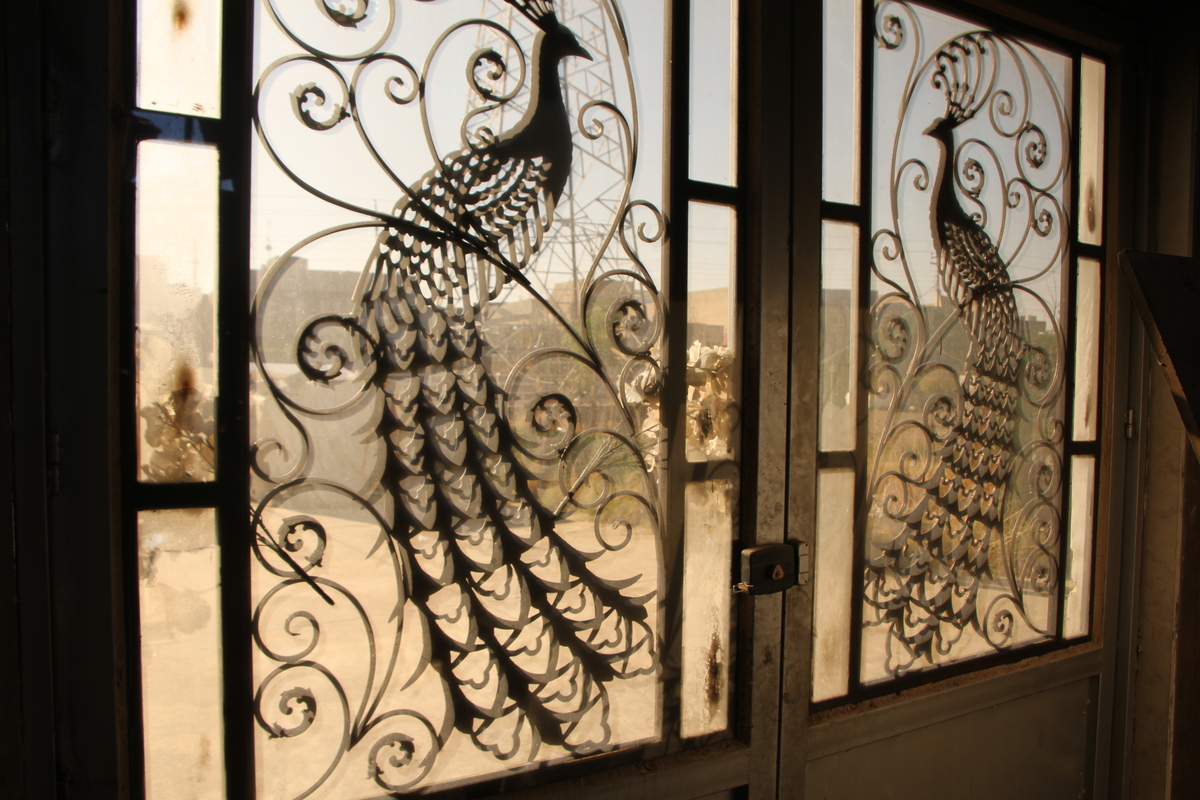
Picture Credits: Sylvain Mercadier
Christmas trees, lights, gifts, and joy are the hallmarks of December, but in the Christian town of Qaraqosh, very few are thinking of celebrations this year.
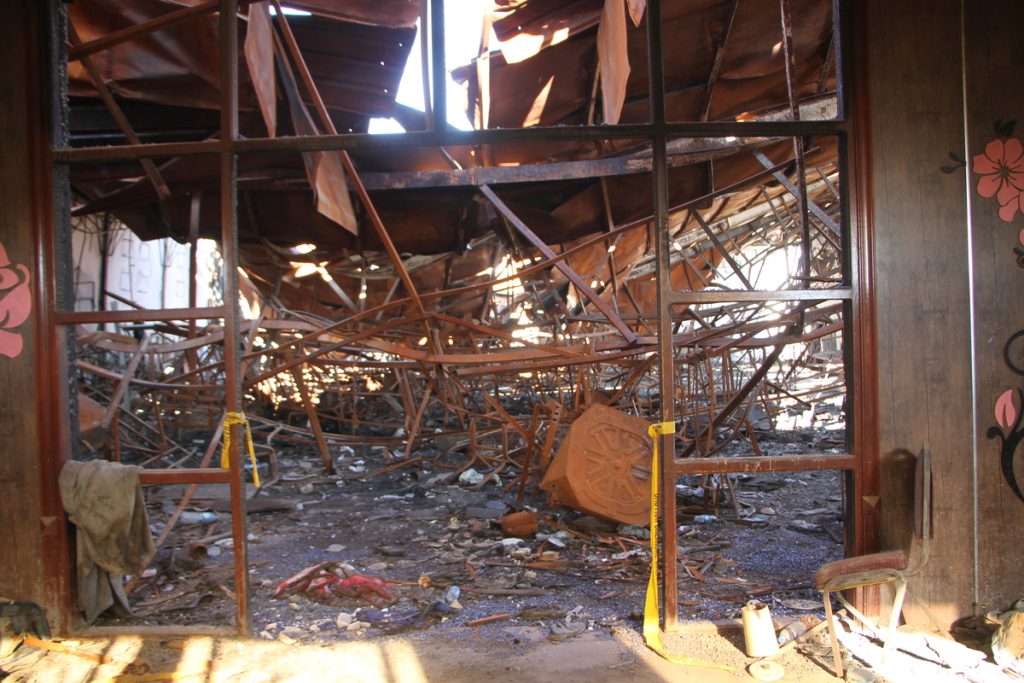
On the 26th of September 2023, a fire broke out at the al-Haitam wedding hall, in which more than 100 people died, and more than 200 were injured. Two years later, the atmosphere in town is grim. People are burdened with a memory they refuse to forget.
Walking through Qaraqosh’s streets with his two children, the joy of the festive season is slipping through Artin Behnam’s fingers. Their whole community has lost the will to celebrate Christmas; they are still mourning their dead.
Artin’s wife was among the victims that night. “Loneliness is all I have today,” he said, holding his daughter’s hand as though she might vanish too.
The incident changed Artin. He now tries to fill the void for his kids, Fabi, 5, and Mela, 8, by being both parents for them.
Speaking to The Amargi, he opened up about the difficult years of displacement after ISIS attacked in 2014, and added that his marriage to his wife Hanin sparked joy in joyless circumstances. But the last two years of his life have been unending struggle and relentless pain, “Her passing in 2023 ruined my life. The psychological toll is hard to bear, for myself and my children.” He explained that the trauma has left his family in a state of dysfunction: little Mela cannot sleep alone at night, and Fabi cannot speak and, like his older sister, he also struggles to sleep.
Many Christians are hopeless about their future, and their dwindling numbers due to migration – from roughly 1.5 million at the beginning of the century to 150,000 today – reflect this.
Artin’s own trauma runs deep, too, to the point where he feels incapable of restarting his life. When asked if he wanted to remarry, his answer was swift: “No. Not for now; I don’t feel ready for that. I think I will wait for her [Hanin] until we meet again in the hereafter.”
A Grim Future
Christians in Iraq have paid a heavy price amid constant instability and sectarian violence. Many Christians are hopeless about their future, and their dwindling numbers due to migration – from roughly 1.5 million at the beginning of the century to 150,000 today – reflect this.
Fabian Haqo, 30, from al-Hamdanyeh, is a striking example of this reality. He was displaced by war and moved to Ankawa in Erbil, the Kurdistan Region’s capital. But after some time, he decided to seek asylum abroad as he came to the conclusion that Iraq’s future would only be more instability.
He explained that after four years of displacement, they returned to al-Hamdaniyeh in 2018, hoping for a better life, “But then tragedy returned with the wedding fire. Since then, all my optimism has vanished. I really don’t have any hope for a positive future for Christians here.”
Despite his determination, however, for now his family is not ready to leave Iraq.
The Court Decision
Following the devastating event and the protest of Christians in Qaraqosh, the court investigated the matter, but its conclusions fell short of the survivors’ expectations.
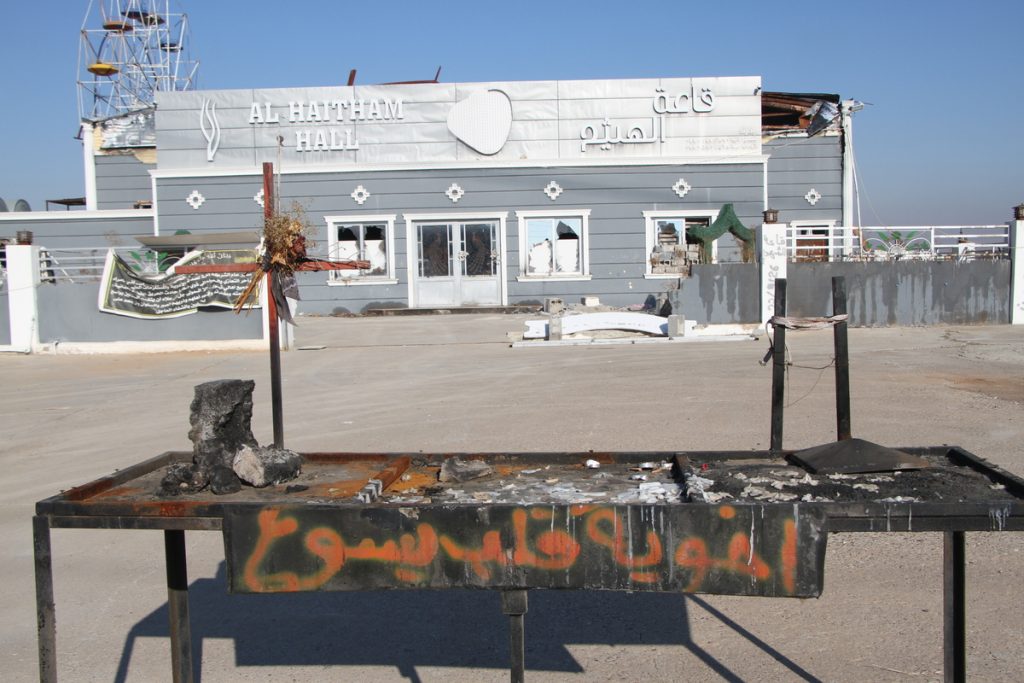
The Nineveh Criminal Court concluded that the usage of fireworks inside the building, and the building material being highly flammable, were the main causes of the raging fire. As a result, the court stated that the wedding hall owner’s negligence regarding safety precautions is relevant, sentencing him to ten years in prison – the maximum sentence allowed by the Iraqi Penal Code, Article 343, which covers loss of life or property damage as a result of accidental fires.
The victims’ families believe the court’s decision is “unfair“.
…the owner of the hall is not the only bearing responsibility; others who have remained behind the scenes and enjoy political protection should also be prosecuted.
Rami Yalda, who lost six members of his family in the tragedy, said they reject the decision as it does not equate to a just punishment, given that more than one hundred people lost their lives and the many hundreds were wounded.
The Christians of Qaraqosh have requested that the government provide more details about how it conducted its investigation. They have also argued that the hall’s owner is not the only one responsible; others who have remained behind the scenes and enjoy political protection should also be prosecuted.
Adding to the controversy, the groom, who survived the tragic incident, spoke a few days later, creating more unanswered questions. In several interviews with local media, he contradicted official reports and claimed that fireworks are not the culprit. He also called for an international investigation into the matter.
Cultural Roots
Despite their struggles, many Christians from Qaraqosh, like Amjad Hano, have hesitated to migrate. Hano, 34, a doctor and former activist, has had an important role in their district. In the days following the incident, he treated the wounded without respite.
“We can’t protect our heritage if we all try to leave the country”
Today, he is adamant about staying rooted in his land. Speaking to The Amargi, he said that many who have left have done so because the life they used to have became untenable after the ISIS attacks and the 2023 fire. “As for my family and me,” he explained, “we decided to stay because this territory holds our roots. It is our land.” He said that part of his decision was the importance of protecting their cultural heritage, “I feel it is our responsibility as [Iraqi] Christians from the Nineveh plain.”
According to Father George Jahola of al-Tahira Church in al-Hamdaniya, it is important that Christians remain in Iraq: “The Nineveh governorate is an important region for Christians in the country; they hold a cultural and moral weight for all of Iraq.” He argued that even with the smaller numbers, Iraq’s Christians have an important balancing role in the northern parts of the country.
Father Jahola added that their continued presence in the region is vital for their identity as well: “We can’t protect our heritage if we all try to leave the country; it is a history that goes back more than two millennia. By maintaining a presence here, we can protect this rich history and heritage.”
Although the community remains determined, the tragedy has left a deep scar. As Artin Behnam pointed out, religious holidays and celebrations are no longer joyful for him. Like many others, he yearns for a future where stability and security are provided for him and all communities in Iraq.

Samir Harboy
Sameer Harboy is a journalist from the Kurdistan Region of Iraq with a decade of experience at Al Salam Radio, the Voice of Refugees in Iraq. Joining as a reporter in 2015, he became deputy director in 2019. He has completed advanced training in radio management at Radio France in Paris (2016) and a three-month program at Lille School of Journalism, one of France’s most prestigious media institutions (2018).