
France Signals Support for Kurdish Rights in Syria
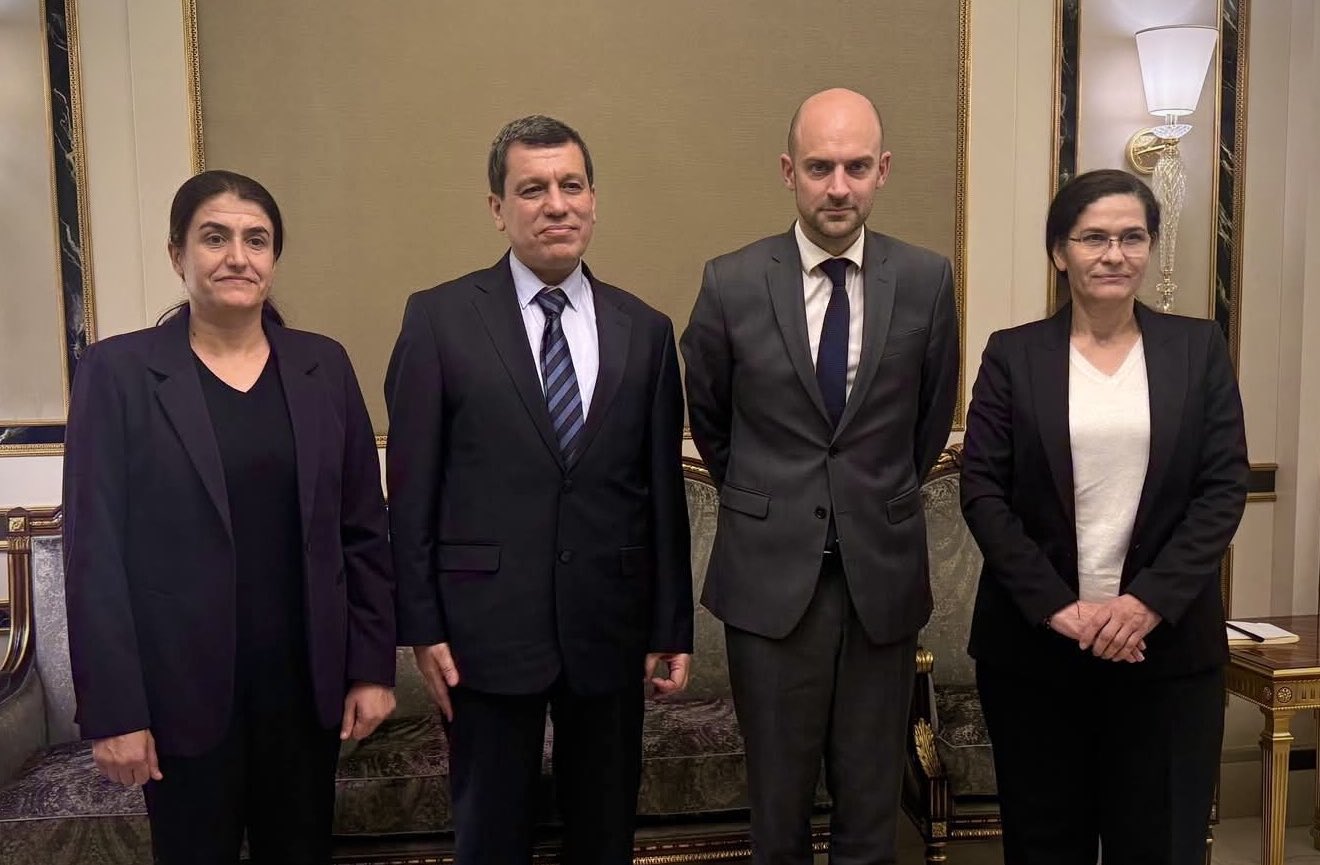
Picture Credits: French Foreign Minister, Jean-Noël Barrot, ‘X’ account
Erbil, Iraqi Kurdistan – The French Foreign Minister Jean-Noël Barrot has ended a comprehensive tour of the Middle East, focusing on the integration of Kurdish forces in Rojava with the Syrian army, implementation of the January 30 agreement in Syria, and the continued mission against ISIS.
The trip comes at a time of significant geopolitical shifts and new instability in the region, amid ongoing tensions between the Islamist-led Syrian transitional government (STG) and the Kurdish-led Democratic Autonomous Administration of North and East Syria (DAANES).
It was Barrot’s second visit to Syria since Ahmed al-Sharaa took power in Damascus and featured stops in Baghdad and Erbil for meetings with Kurdish leadership and the Iraqi prime minister.
Barrot met with Syrian Foreign Minister Asaad al-Shaibani and discussed the ongoing fight against ISIS. He also emphasised the importance of implementing the integration agreement, signed on January 30 by the STG and the Kurdish-led Syrian Democratic Forces (SDF). The deal should see the civilian institutions and military bodies in Syria’s Kurdish-majority regions merge with those of Damascus.
The SDF is set to join the Syrian army as one division and one brigade – the division, with three brigades, will be in the Heseke governorate, and the additional brigade will be in Kobane in the Aleppo governorate.
“This is an important transition on the path to a united Syria, in which each of the components of this pluralistic country feels recognized and supported,” Barrot stated on social media following the meeting.
France will act as a guarantor power, watching over the implementation of the agreement. Ensuring that both the SDF and the Syrian Arab Army (SAA) forces respect the ceasefire and that all displaced persons can safely return to their areas of origin will be crucial here.
Context: A Fragile Peace
This was not the first ceasefire agreement between North and East Syria (NES) and Damascus. In March 2025, SDF Commander-in-Chief Mazloum Abdi flew to Damascus and signed a highly anticipated 8-point pact with al-Sharaa, committing to military, security, and administrative integration, and a country-wide ceasefire. But tensions rose when months of negotiations failed to facilitate shared understandings on how such integration could actually be implemented.
After abruptly halting negotiations on January 4 – under what SDF officials claim was pressure from Turkey – Damascus began a full-scale attack on NES, seizing over 80% of its territory in a matter of weeks.
There is now hope that the new deal will provide a pathway to lasting stability. However, many are concerned that it could lead to the erosion of the gains made by the Kurdish population in northern Syria, who have spent the last 14 years governing their region autonomously from the central Syrian state.
Emina Omer, a coordination member of the North and East Syria Women’s Council, asserted that many details of the agreement were still to be discussed. Speaking in a public seminar yesterday, she said, “If we can preserve the institutions we have established locally here, things will go well.” But she added that attempts from Damascus to destroy their institutions and rights would be “disastrous”, especially “with regard to the achievements secured by women who have struggled a lot for their rights.”
Support for the SDF and Kurdish rights
Barrot also travelled to Erbil, where he met senior SDF and DAANES leaders, including SDF General Commander, Mazloum Abdi, co-chair of the DAANES Foreign Relations Department, Ilham Ahmed, and Commander of the Women’s Protection Units (YPJ), Rohilat Efrin.
According to the SDF, the discussions centred on the practical steps required to implement the 30 January agreement, ensuring the continuation of the fight against ISIS and safeguarding the unique identity and rights of the Kurdish population.
Damascus insists that they are committed to the protection of the Kurds. On February 6, Syrian state television presented news in the ,Kurdish language for the first time in its history, while President al-Sharaa’s decree no.13 recognising Kurdish linguistic and cultural rights in Syria was internationally commended last month.
But due to the violent attacks on Kurdish-majority areas by the SAA, and the string of abuses and reported human rights violations committed in the process, Syria’s Kurdish community fears they are facing an “existential” threat. These fears are also shared by Syria’s Christian community in the northeast.
The region is also experiencing a humanitarian crisis, with the UN reporting that over 170,000 civilians have been displaced in the recent attacks. The Kurdish town of Kobane, famous for its role in defeating ISIS, has been besieged by the SAA for more than two weeks. Residents there say international intervention is crucial to stop further assaults and have called on France to put pressure on Damascus.
Concerns over ISIS and Regional Stability
Barrot’s tour also focused on the ongoing threat posed by ISIS. The French minister stressed the importance of maintaining the Global Coalition’s efforts against the group and ensuring the security of detention camps holding ISIS fighters and their families. This is a key international concern given the estimated hundreds of ISIS prisoners that escaped from detention facilities in Syria as the STG seized these prisons from the DAANES’ control. The recent fighting in Syria has raised concerns that extremist jihadist groups could exploit the situation to regroup and launch attacks. Damascus’ takeover of ISIS prisons – and subsequent breakouts – prompted the USA to swiftly initiate the transfer of prisoners from Syria to Iraq.
In his statement, the French foreign minister underlined that “the security of French women and men is also at stake here”. Furthermore, he said he discussed the importance of “preserving the achievements of the counter-terrorism partnership established with the Syrian Kurds” and “strengthening of Syrian counter-terrorism capabilities” with his Syrian counterpart.
France’s Role and Future Prospects
France has long been seen as a supporter of the SDF and DAANES, recognizing their role in defeating ISIS. Barrot’s visit signals a continued commitment to the region and a desire to see the January 30 agreement implemented successfully. At the same time, France appears eager to explore new economic opportunities presented by the shifting geopolitical landscape, with Barrot citing Paris’ efforts to “mobilise our companies, in particular through the Franco-Syrian Business Council, as well as our public financing instruments, which are reopening to Syria”.
Kurdish political and diplomatic institutions worldwide are likely to maintain pressure on the French government as it assumes its guarantor responsibilities. The Kurdistan National Congress (KNK) has issued urgent demands, calling on the international community to establish a protected zone with international monitoring, guarantee constitutional rights and democratic self-governance for Kurds in Syria, apply concrete diplomatic and economic pressure, and act decisively to prevent further escalation.

Eve Morris-Gray
Eve Morris-Gray is a freelance writer focussed on civil society movements and democracy.

![[The Amargi Exclusive] Investigating the Syrian Army’s Abuses](https://cms.theamargi.com/wp-content/uploads/2026/02/AFP__20260118__934D2KE__v1__MidRes__SyriaConflictKurds.jpg)