As Iran’s Protests Spread Nationwide, Kurdish Parties Break Their Silence
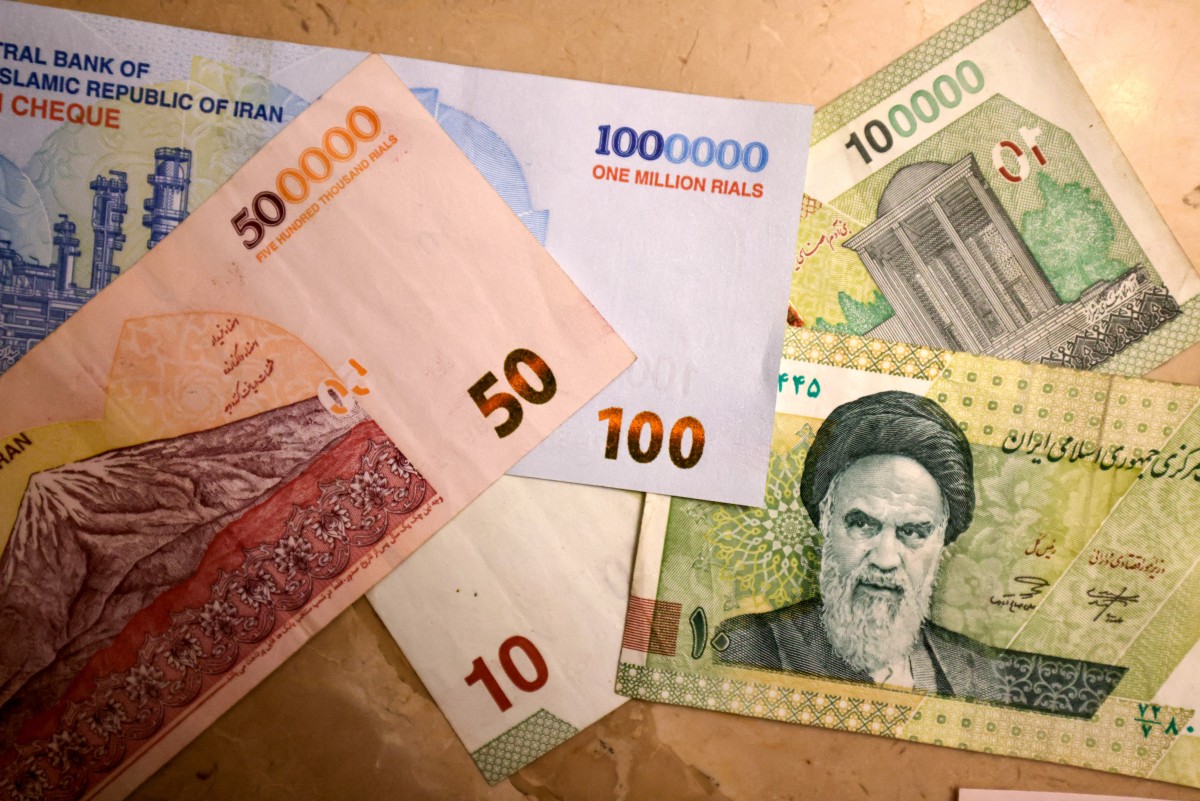
This picture shows new Iranian bank notes of one million, 500,000, and 100,000 rials on August 3, 2025. (Photo by ATTA KENARE / AFP)
Demonstrations have spread across much of Iran, following the collapse of the Iranian rial to a record low on December 28, 2025. The eruption of protests led to a violent crackdown by Iranian security forces, which has drawn strong reactions from major Kurdish political parties.
Protests exposing the depth of Iran’s political and economic crisis began with shopkeepers and merchants near Tehran’s Grand Bazaar who could no longer price goods because of the currency’s extreme volatility. Demonstrations rapidly spread to dozens of cities, where anti-government slogans and violent confrontations became common.
By January 4, protests had reached 22 of Iran’s 31 provinces, and the reported death toll had risen to at least 17, including at least nine Lurs and seven Kurds. According to the Hengaw Organization for Human Rights, security forces have arrested 132 people so far, including 64 Kurds and 39 Lurs, by January 3.
While demonstrations spread to major Kurdish cities such as Kermanshah (Kirmaşan) and Ilam, where crowds chanted “Down with the dictator,” large parts of Iranian Kurdistan adopted a more cautious posture, shaped by the memory of the brutal repression that followed the 1979 revolution.
Who Is Being Targeted?
In a recent address, Supreme Leader Ayatollah Ali Khamenei emphasized the bazaar’s loyalty to the Islamic Republic of Iran, while also warning that “rioters must be put in their place.”
As unrest spread, Iranian authorities adjusted their rhetoric to distinguish between “protesters” and “rioters.” Officials portrayed merchants and shopkeepers as legitimate protesters with economic grievances, while labelling other demonstrators as “agents” trained by foreign powers.
In a recent address, Supreme Leader Ayatollah Ali Khamenei emphasized the bazaar’s loyalty to the Islamic Republic of Iran, while also warning that “rioters must be put in their place.”
Observers view this framing as an attempt to divide the protesters in order to contain the economic protest base while legitimizing harsher repression of explicitly anti-regime mobilization.
Following Khamenei’s speech, security forces intensified their response, particularly in Malekshahi, a Kurdish city in the Ilam province. The Kurdistan Human Rights Network reported that at least four protestors were shot dead by Islamic Revolutionary Guard Corps (IRGC) forces on January 3. Kurdpa Organisation reported that 26 Kurdish citizens were arrested in the Kermanshah province on the first two days of January.
These events in Malekshahi triggered a wave of statements from Kurdish political organizations. The Kurdistan Democratic Party of Iran (KDPI) condemned the “crimes and massacres” committed against protesters and called on “all democratic and freedom-loving forces” to unite against the regime and support efforts to overthrow it. The Kurdistan Free Life Party (PJAK) described Kermanshah and Ilam as vanguards of Kurdistan, continuing the 2022 “Women, Life, Freedom”. And while condemning state violence, PJAK also declared self-defence a legitimate right of the people, but argued that it must be organized so as not to impose high human costs.
Are Kurds Fighting Back?
For Kurds – who largely boycotted the 1979 referendum on establishing an Islamic Republic in Iran – the memories of the post-1979 violent attacks remain fresh
Across Rojhelat (Kurdistan region in Iran), reactions have been mixed. In Kermanshah and Ilam, protests erupted early, according to the Kurdistan Human Rights Network. Elsewhere – Sanandaj, Bukan, Mahabad, Naqadeh, and Urmia – political actors moved more cautiously. Having suffered severe repression under both republican and monarchist systems, Kurds in these areas have little trust in these two political currents in Iran.
For Kurds – who largely boycotted the 1979 referendum on establishing an Islamic Republic in Iran – the memories of the post-1979 violent attacks remain fresh: rather than autonomy or cultural rights, Kurdish participation in the revolution against the Shah led to mass repression, after Ayatollah Khomeini’s August 1979 “fatwas” authorized military campaigns in Kurdish regions. Tens of thousands of Kurds were killed in the early years of the Islamic Republic (IR) in cities such as Sanandaj, Bukan, Mahabad, Mariwan, and Paveh.
Having lived through these experiences, they anticipate the collapse of the IR with caution and remain uncertain about what would follow. They therefore demand minimum political guarantees before engaging substantially in efforts to overthrow the regime.
Despite this historical caution, Kurdish political parties have not remained silent. Komala Party of Iranian Kurdistan declared its full support for the protests on December 29, later following it up by describing the unrest as “not a temporary reaction but the expression of a deep political and economic crisis,” and as a continuation of the “Women, Life, Freedom” uprising, similar to PJAK’s statement.
The KDPI followed on December 30 with a call for “solidarity, unity, and synergy among all segments of society.”
On January 1, PJAK warned against dividing the movement along centre-periphery lines and described the crisis as systemic, requiring democratic unity across identities and regions. It warned that monopoly, opportunism, and political manipulation would undermine the movement.
Komala Kurdistan’s Organization of the Communist Party of Iran went further, urging nationwide general strikes to transform the protests into a mass political movement capable of paralyzing state repression.
The Kurdistan Freedom Party (PAK) called for immediate unity among Kurdish political forces.
Despite the numerous statements, however, Kurdish political engagement has been restrained. Nonetheless, Kurdish participation remains vital in posing a serious challenge to the Regime, as Kurds are among the most organized social and political forces in Iran, shaped by a century-long struggle for political and cultural autonomy.
Iran today faces what analysts describe as a “polycrisis”: economic collapse, environmental stress, diplomatic isolation, and expanding civil mobilization. All of these factors make political change unavoidable. The shrinking interval between major protest waves over the past decade suggests mounting systemic pressure. Political change, however, does not guarantee democratic transformation.

Rojin Mukriyan
Rojin Mukriyan has PhD in the Department of Government and Politics at University College Cork, Ireland. Rojin’s main research areas are in political theory, feminist and decolonial theory, and Middle Eastern politics, especially Kurdish politics. She has published articles in the Journal of International Political Theory, Philosophy and Social Criticism, and Theoria. Her research has thus far focused on the areas of Kurdish liberty, Kurdish statehood, and Kurdish political friendship. She has published many think tank commentaries and reports on recent political developments in eastern Kurdistan (Rojhelat), or north-western Iran. She has also frequently appeared on a variety of Kurdish and Persian language news channels. X account: @RojinMukriyan