From White Scarf to Hair Braiding: Kurdish Resistance Through Civil Disobedience and Symbolism
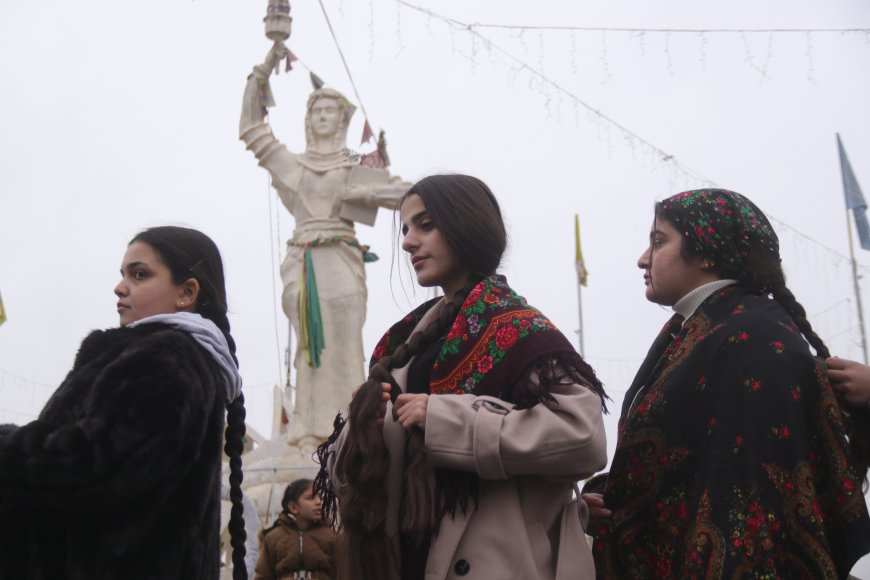
Picture Credits: Hawar News Agency
Civil disobedience, one of many tools in the toolkit of resistance, does not receive the pomp and attention often given to armed resistance or loud demonstrations. But in the case of Kurdish resistance and the hair-braiding campaign, which was prompted by gendered violence against Kurdish women, it has proven to be significant.
Two understandings of civil disobedience stand out in this instance: John Rawls defines civil disobedience as a public, nonviolent, and conscientious act that challenges law to correct serious injustices within a “nearly just” society, aiming to stabilize constitutional democracy. Jürgen Habermas, by contrast, views civil disobedience as “communicative action” that emerges when legality diverges from legitimacy, serving as a symbolic warning of broken constitutional promises.
The Saturday Mothers, many of whom are Kurdish women, have gathered weekly since the mid-1990s to demand truth and justice for enforced disappearances in Turkey.
While Rawls’s model is influential in civil disobedience studies, Habermas’s approach is more applicable to contexts such as Turkey, Syria, or Iran, where democratic institutions exist in form but not in reality. In these cases, Kurdish civil disobedience operates through gendered symbols – largely mobilized by women – relying on symbolism, memory, and moral persistence rather than legal violation or violence act.
For example, The Saturday Mothers, many of whom are Kurdish women, have gathered weekly since the mid-1990s to demand truth and justice for enforced disappearances in Turkey. Their protest is silent, nonviolent, and ritualized. Central to this practice is the white headscarf, traditionally associated with mourning, motherhood, and moral authority. The white headscarf transforms private grief into public resistance, allowing the mothers to occupy public space without confrontation. Through sustained presence, absence becomes visible through communicative action. The protest does not reject the state outright but demands that it confront its own failures and constitutional violations. From a Habermasian perspective, this represents civil disobedience as communicative action, a moral message repeated until it can no longer be ignored.
Another case worth highlighting resolves around the 2011 Roboski (Uludere) Massacre, which killed 34 Kurdish civilians: Victims’ families have engaged in continuous acts of remembrance through public mourning, cemetery visits, and symbolic commemorations. Despite closed investigations and the absence of accountability, the families refused both silence and violence. These practices constitute civil disobedience as resistance to erasure. Rather than escalating conflict, families insist on memory as a moral obligation, aligning closely with Habermas’s argument that legality without legitimacy cannot sustain justice.
During the Syrian Arab Army’s assaults on Rojava in January 2026, a video circulated online showing Rami Yousef Dahsh, a member of the Syrian Army, displaying and mocking a braid cut from the body of a deceased Kurdish woman fighter affiliated with the Women’s Protection Units (YPJ), brandishing it as a trophy. The act followed clashes between Syrian government forces and the Syrian Democratic Forces in Raqqa. Although the fighter’s identity was not immediately confirmed, the symbolism was immediately clear. Cutting and displaying the braid was not incidental violence but a deliberate act of humiliation, aimed at desecrating both the body and the collective identity it represented.
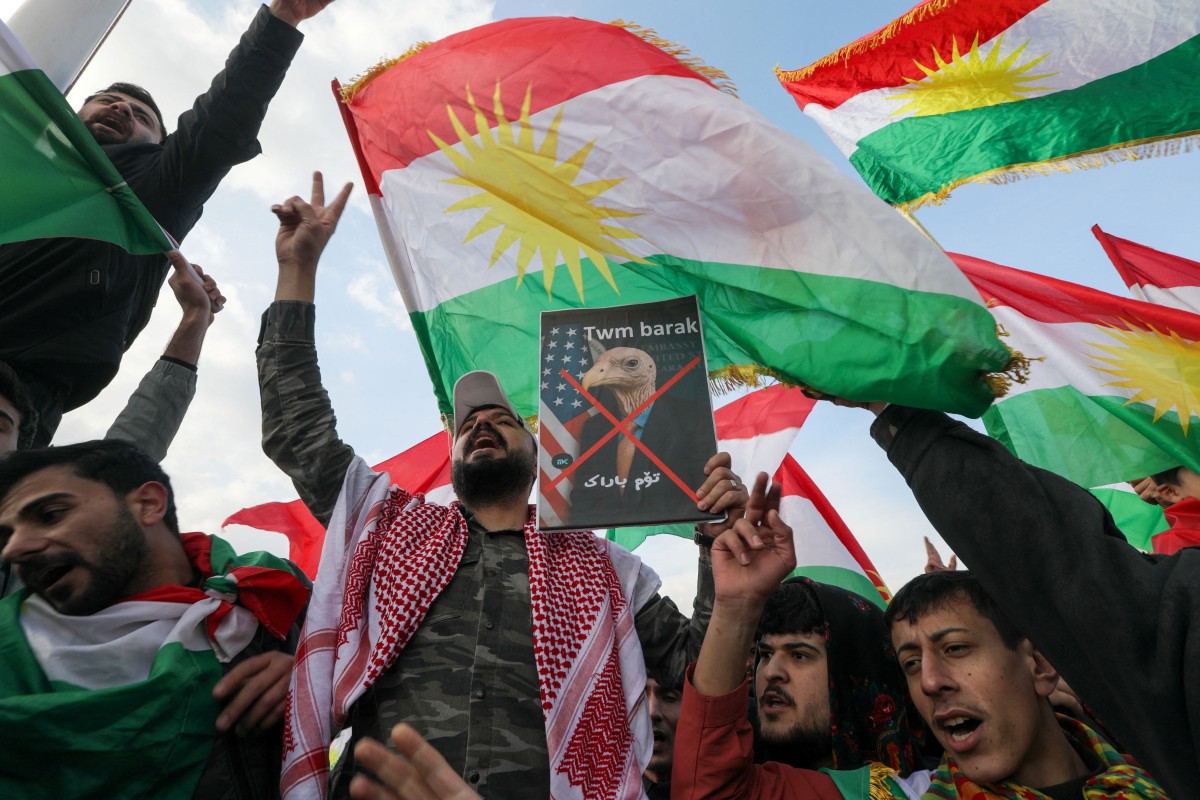
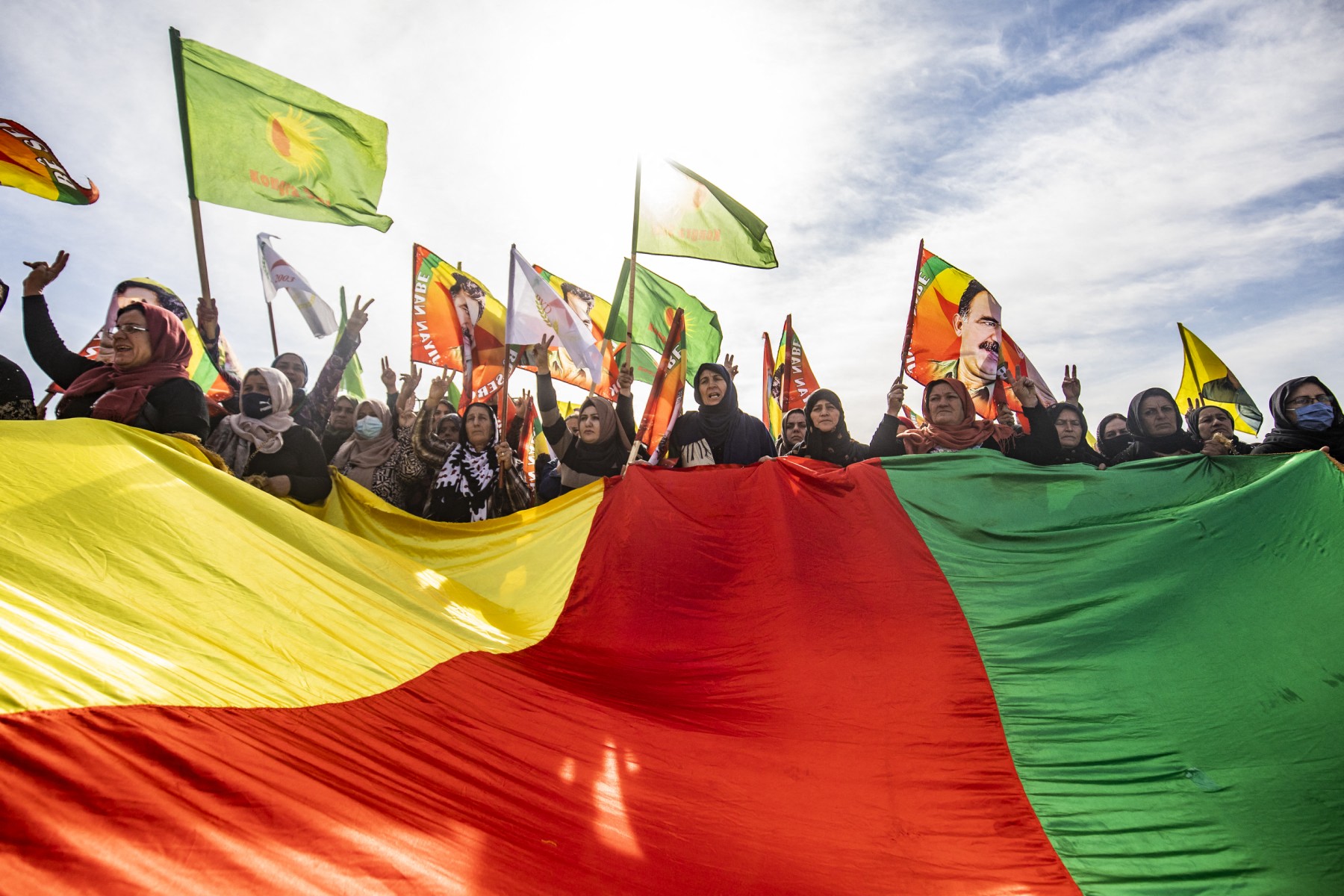
When the video provoked widespread outrage, Dahsh attempted to downplay the incident by claiming the braid was fake. This denial did little to mitigate the response. Kurdish women and men across cities from London to Van and Erbil mobilized rapidly in solidarity, engaging in what became known as the hair-braiding campaign. In public squares, streets, and demonstrations, people braided their own hair or others’ hair openly, transforming a deeply personal cultural practice into a collective political sphere.
In Kurdish culture, a woman’s braid signifies far more than physical beauty; it embodies identity, dignity, continuity, and resistance.
The protests were often accompanied by the chant “Jin, Jiyan, Azadî” (“Women, Life, Freedom”), which had already gained global echo following the death of Jina “Mahsa” Amini in Iran in 2022, a Kurdish woman killed by Iran’s so-called “Morality Police”. Through repetition and visibility, the campaign reframed the original act of violence: what was intended as humiliation became a catalyst for symbolic resistance in Syria and Iran.
In Kurdish culture, a woman’s braid signifies far more than physical beauty; it embodies identity, dignity, continuity, and resistance. Appearing in oral traditions, poetry, and visual culture, hair is understood as an extension of the self, symbolizing both femininity and strength. Among YPJ fighters, braids serve practical needs but have also come to represent discipline, care, and resistance.
Within Kurdish society, braiding is a daily cultural practice associated with care and protection, often performed by intimate family members at key moments in a woman’s life, making it a deeply embodied expression of belonging.
Rami Yousef Dahsh, adhering to Islamist beliefs that impose hijab on women, knew the significance of women’s hair and its connections to honor and dignity within the more secular and feminist Kurdish culture, which is precisely why cutting a braid was meant as an act of humiliation. Instead, it triggered immediate backlash, as the act was recognized not as an isolated crime but as part of a historical pattern of abuse – one associated with extremist practices that targeted Yazidi and Kurdish women, turning the braid into a platform where gendered violence, ethnic domination, and political repression converged.
The hair-braiding campaign transformed an intimate cultural practice into a transnational space of solidarity. Women braided hair publicly, sometimes weaving flowers, green leaves, or ribbons in the colors of the Kurdish flag into the strands. The repetition of the act across dispersed locations generated a shared visual language, communicating a powerful message: if one braid is cut, countless others will appear. The campaign did not rely on confrontation or physical disruption. Its power lay in symbolic multiplication. Each braid reproduced the meaning of the original violation while reversing its intent. What had been meant to degrade instead affirmed dignity; what had been meant to silence instead generated visibility.
The campaign also carried a broader political demand. By circulating images and occupying public spaces, participants drew attention to the impunity surrounding gender-based violence, particularly in conflict and digital settings where perpetrators often face no consequences. Activists linked the campaign to calls for legal accountability, stronger protections for women, and resistance to online hate speech, concerns that extend beyond borders.
Kurdish civil disobedience shows that resistance does not have to be violent, loud, or illegal to matter politically.
This episode fits within the broader pattern of symbolic civil disobedience in Kurdish contexts. Like the white headscarf of the Saturday Mothers, hair-braiding remains within the law yet acts as a public moral language that exposes the gap between legality and justice, transforming grief and anger into collective presence rather than humiliation. What distinguishes this act is its embodiment and memorialization: unlike banners or slogans, hair-braiding turns the body itself into a space of resistance. Grounded in women’s bodies and universally visible, it offers a lens for understanding humanitarian action as solidarity-based mobilization, showing how culturally rooted symbols become transnational practices of resistance.
Kurdish civil disobedience shows that resistance does not have to be violent, loud, or illegal to matter politically. Through communicative actions in mourning, memory, and everyday symbols – especially carried by women – acts like the white headscarf of the Saturday Mothers and the hair-braiding campaign create shared spaces of dignity and solidarity where justice has been denied and law has lost its meaning.

Dr. Abdulmelik Alkan
Dr. Abdulmelik Alkan was born in Van, Eastern of Turkey. He earned his bachelor's degree in international and Global Studies from Lindenwood University in Missouri, United States, and later moved to Tbilisi, Georgia, where he completed his master’s degree with honors in International Relations and Politics at the International Black Sea University (IBSU). He is an Associate Professor at Webster University Georgia and a scholar specializing in International Relations and Political Science. He completed his Ph.D. at the University of Georgia in Tbilisi focused on Turkish Foreign Policy and Ethnic and Religious Communities in Georgia, offering fresh perspectives on identity, diaspora, and soft power in the South Caucasus. Dr. Alkan has published widely in respected international journals, is an active member of several global academic organizations, and serves on the editorial boards of multiple scholarly publications. He has been a speaker on many platforms including human rights, cultural studies, and international relations.