Siahkal and the Emergence of Armed Struggle Against the Shah: Selective Memory and Today’s Uprising in Iran
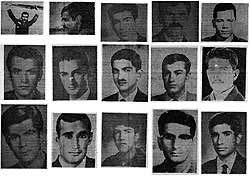
Guerrillas of the Siahkal Movement | Picture Credits: Wikimedia Commons
February 8 marks the 55th anniversary of the Siahkal insurgency, widely regarded as the birth of organised armed struggle against Mohammad Reza Shah Pahlavi, Iran’s last monarch, whose rule ended with the 1979 revolution. Remembering this event is particularly urgent at a time when currents within the Iranian monarchist opposition openly call for reviving institutions such as SAVAK (Sâzmân-e Ettelâ’ât va Amniyyat-e Kešvar) – the Shah’s intelligence and secret police agency. Critics of monarchy are frequently dismissed as “leftists” and accused of betraying what monarchist narratives describe as an “Iranian National Revolution”, sometimes accompanied by slogans such as “Death to the three corrupt groups: Mullahs, Leftists, and Mojahedin” in their demonstrations in the diaspora. These trends highlight an ongoing struggle over historical memory, political legitimacy, and narratives shaping Iran’s future.
The story of Siahkal illustrates how chapters of Iran’s political past can be sidelined as competing forces attempt to define the nation’s historical narrative
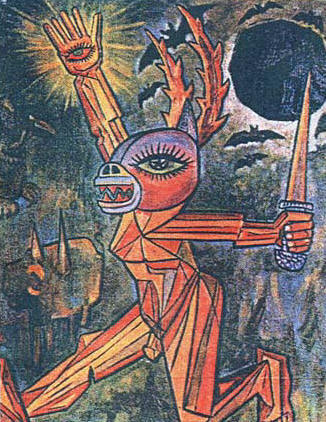
Historical memory is not natural or neutral; it is constantly reconstructed through present political struggles. The story of Siahkal illustrates how chapters of Iran’s political past can be sidelined as competing forces attempt to define the nation’s historical narrative. Once a major symbolic reference point for segments of Iran’s left – inspiring numerous artistic and cultural works – Siahkal shaped debates about resistance and revolutionary strategy. Yet in current discourse, particularly within monarchist narratives seeking to reinterpret Iran’s modern history, this episode is often marginalised or stripped of broader political context. Revisiting Siahkal, therefore, means restoring a missing chapter of Iran’s contested political history and asking what its absence means for Iran’s future.
Historical context: Resistance under the Shah
In the two decades before Siahkal, resistance to the Shah stemmed primarily from the 1953 US and British-orchestrated coup that ousted the democratically elected Prime Minister Mohammad Mosaddegh, who had nationalised Iran’s oil. The coup restored the Shah’s absolute power and cemented foreign domination over Iran’s resources and politics. This fuelled resentment among many Iranians against the monarchy as a puppet of imperialism, compounded by authoritarian consolidation, corruption, and SAVAK’s brutal suppression of dissent. Policies such as the “White Revolution” promised modernisation through land reform, but instead disrupted rural economies, displaced peasants, and concentrated wealth among the elite.
Legal opposition groups such as the National Front and moderate Islamic currents channelled this anger through constitutional channels – elections, petitions, and demands under the 1906 constitution for the Shah to “reign, not rule” – yet faced bans, imprisonment, and censorship that exposed their powerlessness. The communist Tudeh Party was crippled by mass arrests, executions, and exile after 1953. Universities subsequently became hotbeds of anti-imperialist, Marxist, and Third Worldist radicalism, convincing a rising generation that only armed struggle could shatter the regime’s facade of invincibility. This mix of grievances, blocked reforms, and discredited legal avenues set the stage for the Siahkal militants.
Siahkal: Breaking the impasse
Jazani championed guerrilla “propaganda of the deed” – symbolic armed actions to shatter the Shah’s aura of invincibility – as the only viable path.
In the mid-1960s, radical students at Tehran University – disillusioned with the gradualist strategies of the Tudeh Party and National Front – formed underground Marxist reading and debate groups. These circles studied revolutionary experiences from China, Vietnam, Cuba, and Algeria, drawing from Mao, Guevara, and Fanon to conclude that guerrilla war could break the regime’s grip.
One key group was led by Bijan Jazani, an engineer and veteran activist who had broken from Tudeh over its Soviet alignment and post-1953 passivity. Jazani championed guerrilla “propaganda of the deed” – symbolic armed actions to shatter the Shah’s aura of invincibility – as the only viable path. In 1968, SAVAK arrested him and 12 comrades for plotting a bank robbery to fund operations; his smuggled prison writings shaped emerging strategy.
Surviving members joined young revolutionaries Amir Parviz Pouyan and Masoud Ahmadzadeh, author of Armed Struggle: Both Strategy and Tactic, forming urban and rural teams. By 1969, the rural squad (Jangal Group) selected Gilan’s forests near Siahkal due to the region’s Jangali Movement (1915-20) legacy and difficult terrain.
Still in an exploratory phase – focused on building local ties and logistics – the group was unprepared for an immediate attack. However, when member Hadi Bandeh-Khoda Langarudi was arrested by Siahkal gendarmes in January 1971, militants feared he would expose the network under torture. The nine-member group, therefore, hastily launched the February 8, 1971, gendarmerie raid to free him. The guerrillas freed their comrade, seized weapons, and retreated to the forests. A large-scale military operation led by the Shah’s brother followed; two guerrillas were killed and eleven captured. By mid-March 1971, ten guerrillas were executed, with one dying under torture.
Survivors from the Jangal group formalised the Organisation of Iranian People’s Fedai Guerrillas (OIPFG) immediately after Siahkal, publicly announcing their existence on April 7, 1971, by assassinating General Farsiu, the judge who had sentenced their comrades. In April 1975, SAVAK executed Jazani and six comrades alongside two senior members of the People’s Mojahedin Organisation of Iran, all serving prison terms.
Selective memory, contested narratives, and Iran’s future
Siahkal’s resonance within Iran’s intellectual and political environment transformed a failed guerrilla operation into a mobilising symbol, encouraging underground activist circles and helping turn a small militant action into a broader movement influencing segments of Iran’s leftist opposition.
Throughout the 1970s, the OIPFG expanded underground networks, carried out guerrilla operations, and contributed to the radicalisation of anti-monarchical discourse. Although not the largest force within the coalition that overthrew the Shah in 1979, they helped normalise the idea that the monarchy could be challenged through direct confrontation, undermining claims of regime stability.
The revolution triggered fragmentation within the Iranian left, and the OIPFG split over responses to the Islamic Republic. During the 1980s, as the regime consolidated power, Mojahedin and leftist opposition faced mass executions, imprisonment, and exile.
Siahkal, as a lost memory, reveals SAVAK’s nature: not merely intelligence gathering, but torture, mass arrests, and executions that eliminated nonviolent options.
Their discursive erasure persisted: reformist circles reframed leftist revolutionaries as “terrorists”, such as when the 2005 Mehrnameh journal labelled executed Marxist Bijan Jazani a “terrorist intellectual”, a label echoed today by monarchist currents. This bipartisan framing discredits Iran’s leftist history by ignoring repressive conditions – including SAVAK’s systematic closure of reform avenues – that fuelled armed resistance. As the case of Siahkal illustrates, it was repression that destroyed democratic paths, crushing legal opposition such as the National Front and Tudeh Party.
Siahkal, as a lost memory, reveals SAVAK’s nature: not merely intelligence gathering, but torture, mass arrests, and executions that eliminated nonviolent options. This forgotten history contrasts with diaspora protesters calling for SAVAK’s return as a nostalgic “stabiliser”, framing left resistance as the problem while obscuring Pahlavi authoritarianism.
Amid ongoing protests, Pahlavi nostalgia normalises SAVAK while reformists and monarchists unite in demonising the “terrorist/corrupt left” for the Islamic Republic’s failures. For survivors of repression, families of executed activists, and leftist organisers, this historical erasure renders justice more elusive and Iran’s future vulnerable to authoritarian revival.
Siahkal endures less as a military event than as a struggle over memory. Whether remembered as misguided militancy, revolutionary courage, or erased altogether, its legacy reveals how competing visions of Iran’s past continue to shape political possibilities. The debate over Siahkal is therefore not only about interpreting a failed insurgency, but about which histories inform emerging visions of power, resistance, and justice.

Mahtab Mahboub
Mahtab Mahboub is an Iranian feminist activist and PhD candidate in the Department of Sociology at the University of Duisburg-Essen, Germany. Her research focuses on the intersection of gender and migration within the Iranian diaspora in Germany, with particular interest in narrative research, intersectionality, identity, and decolonial feminist theory. She also writes on social movements and political developments in Iran.