Homs, Syria: Film Club Creates Peace Amidst Sectarian Tension
After 14 years of censorship, the Homs Cinema Society works to rebuild social peace in its war-torn hometown of Homs, Syria. Director Hala al-Abdalla described their film screenings as a big step forward for her country, but continuous massacres and new waves of sectarian violence are shattering that hope.
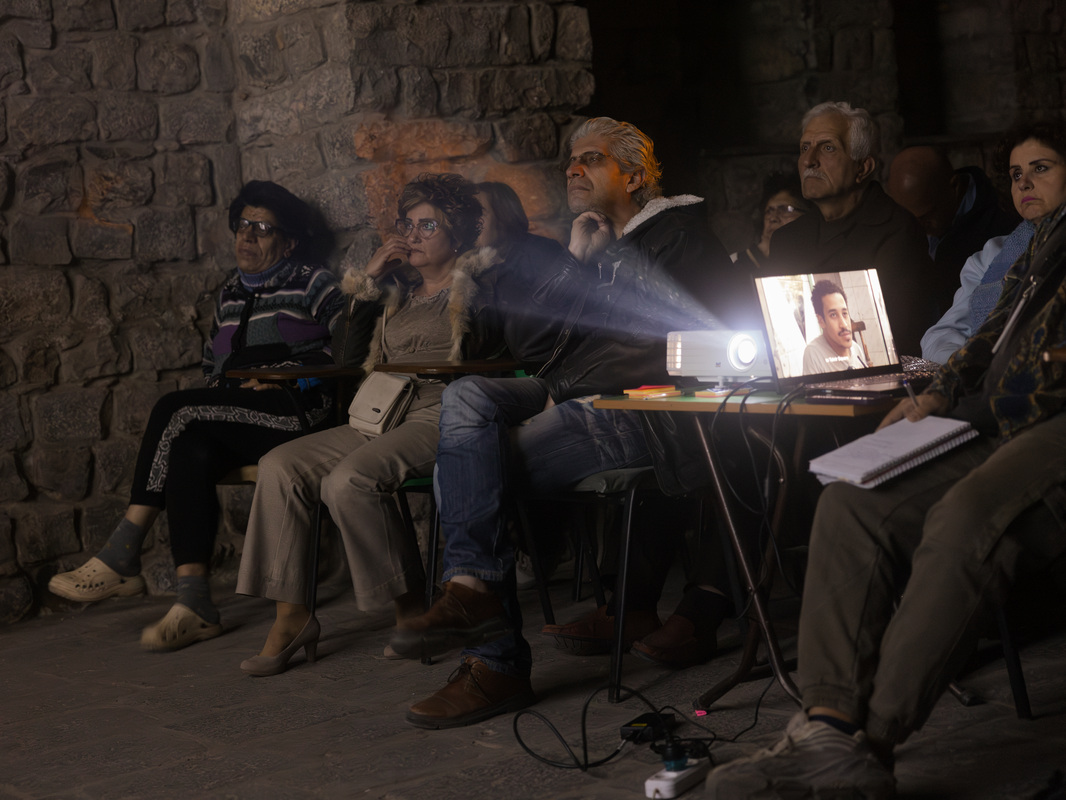
The Homs Cinema Society, a cinema club created after the fall of the Assad regime, has aimed to bring people together. Founded by seven cinephiles in their 20s, it addresses topics ranging from war and exile and the Arab Spring to struggles of Syrian refugees in Europe, highlighting local and international Arab filmmakers who are present during the screenings.
Syrian director Hala Al-Abdalla witnessed a screening of her documentary As If We Were Catching a Cobra for the first time in 14 years – a documentary that spotlights artists’ revolutionary initiatives during the early days of the Arab Spring in 2011.
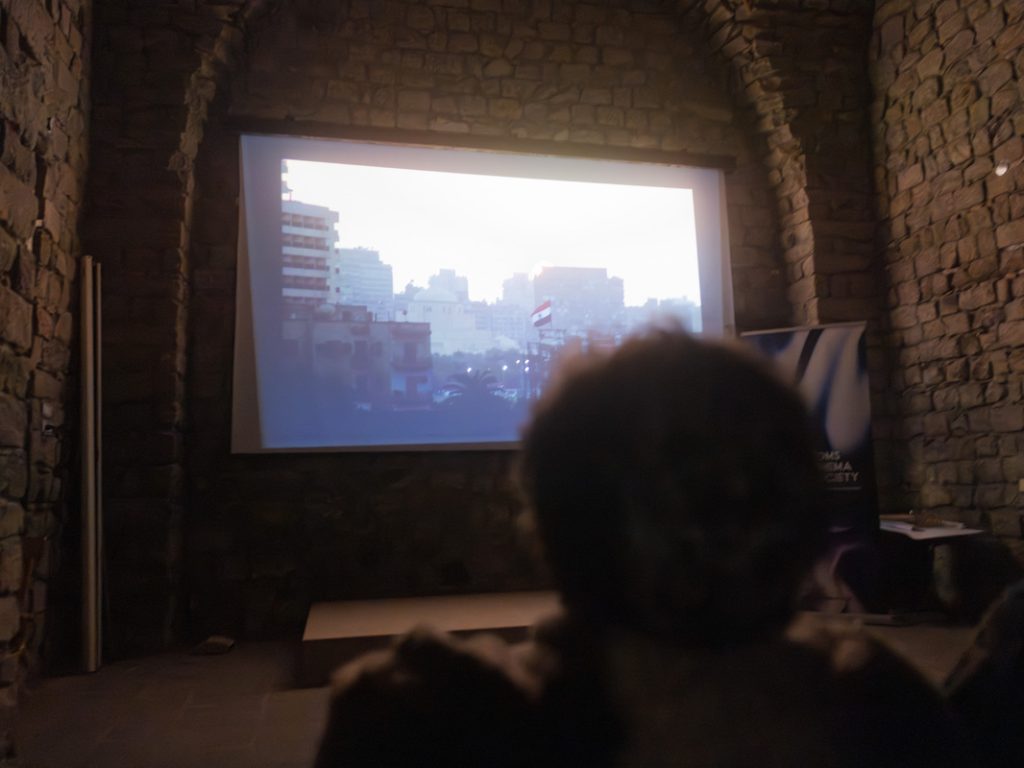
However, the club is not only a hub for movies; it is also a place of inclusive discussions and opinions about the revolutionary period and a space for personal narratives by people who fled the war and those who remained in regime-controlled areas.
The goal is to foster dialogue and address the pains of members of a polarized society who view each other as collaborators or as having avoided the shared experience of sacrifice.
A Place for Memory and Dialogue
The films the club showcases speak not only about dispossession and exile, but of the conditions under which histories are being narrated, memories preserved, justice pursued, and liberation imagined and lived.
Some of them cried as they remembered their own struggles; others experienced a reality that was new to them.
Hala al-Abdala’s documentary looks at the start of the uprisings in Egypt and Syria, as Arab artists and cartoonists in both countries used their work to support demands for freedom, expressing political dissent, criticising authority, and aligning themselves with the protest movements through art and satire.
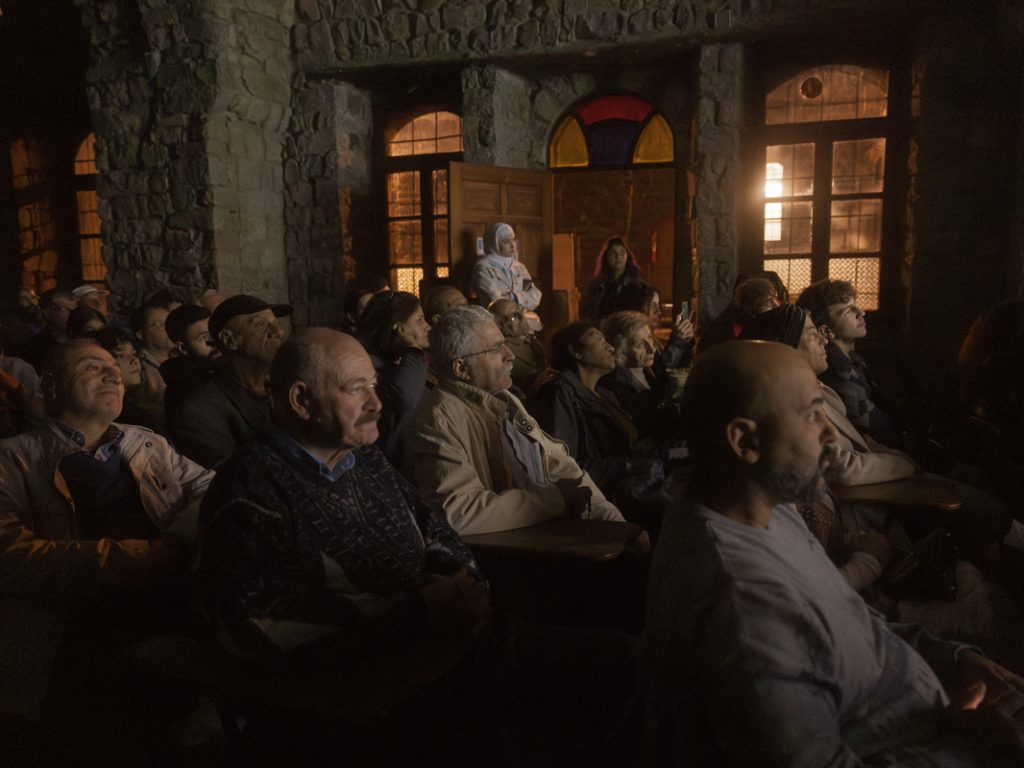
Among the audience members were people of all ages and backgrounds: students, doctors, artists, pharmacists, retirees, people who moved back to Syria after the fall of the regime, and people who’ve seen Homs under siege. Some of them cried as they remembered their own struggles; others experienced a reality that was new to them.
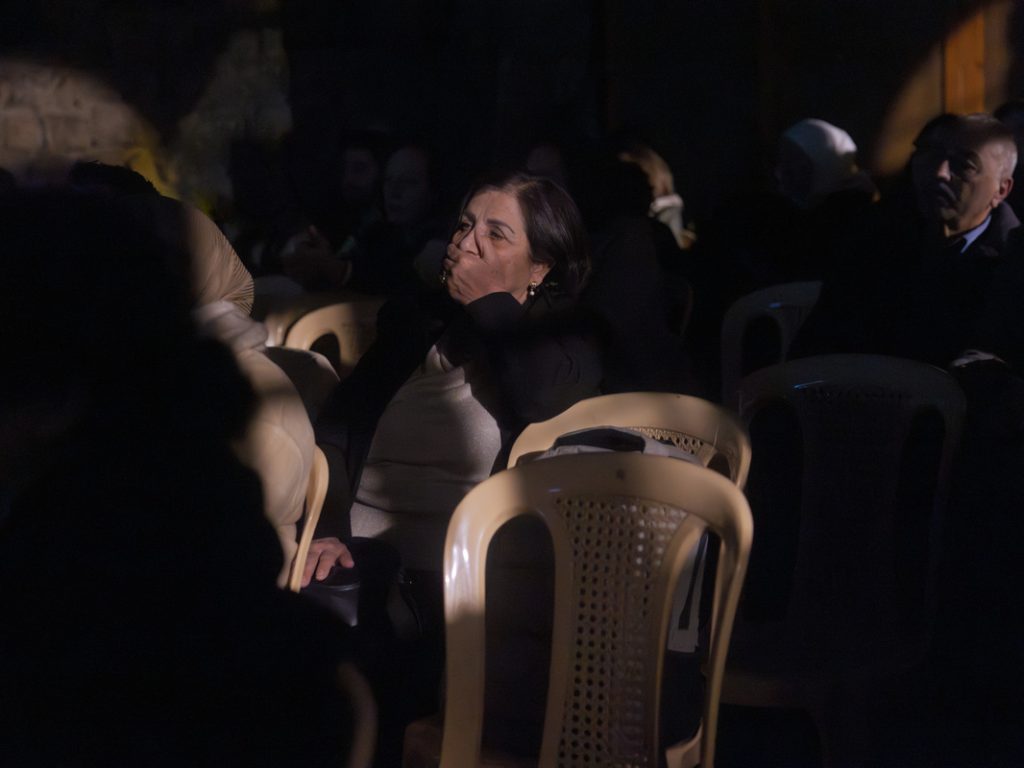
For Haya, 21, an English literature student interested in filmmaking, the cinema club represents a cultural refuge: “I come because it’s a rare space where cinema is taken seriously as art.” She said what she appreciated were the films and discussions “that you don’t usually find elsewhere in Homs.”
Homs Desperately Needs Trust
The Homs Cinema Society positions cinema as a modest but deliberate act of repair. With two of the city’s movie theatres destroyed during the war and the last remaining one long repurposed, film screenings had become less about infrastructure than intention.
Haya described the atmosphere as quietly reassuring and a return to normalcy. She said that sharing the experience of a film creates unspoken bonds: “Sitting next to someone, sharing the same emotions, laughing or feeling heavy at the same scenes – that shared silence creates an invisible connection, which leads to trust.”
Homs, described as the “capital of the revolution,” is among Syria’s most devastated cities, ranking as the fourth most destroyed nationwide. Entire neighbourhoods were reduced to rubble, leaving behind a fractured urban and social landscape that remains deeply scarred. Today, that fragmentation persists.
Since the fall of the Assad regime in December 2024, reports of kidnappings and killings have been a daily occurrence, and the ethnically- and religiously-diverse city has become a focal point of sectarian violence.
According to the Syrian Observatory for Human Rights (SOHR), at least 393 people have been killed in Homs province since early 2025, including 254 deaths linked to sectarian motives – the highest recorded in any Syrian governorate this year.
…the cinema club is not an escape from reality but a way of facing it together.
Recent incidents, from targeted shootings to a deadly explosion inside a mosque in the Wadi al-Dhahab neighbourhood, underscore the persistent instability.
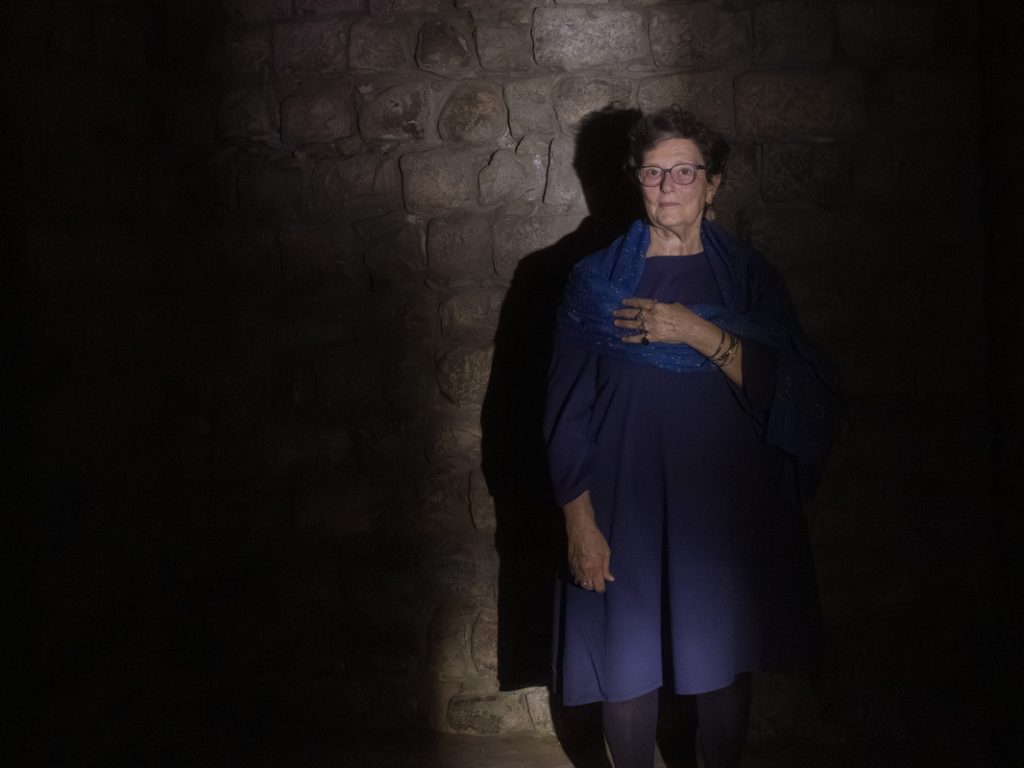
Filmmaker Hala Al-Abdalla offered simple advice to aspiring filmmakers: “Make freedom your motive, and don’t approach things based on preconceptions.” For her, there is no single law governing cinema, only conditions shaped by circumstance – among them, freedom itself.
For Haya and others who gather at the screenings, the cinema club is not an escape from reality but a way of facing it together. In a city still struggling to emerge from violence and fragmentation, the act of watching a film together becomes a quiet assertion that dialogue, imagination, and shared humanity have not disappeared – and that even in Homs, life continues to seek new ways to begin.

Alexandra Corcode
Alexandra Corcode is a Romanian photojournalist documenting inequality, migration, loneliness, and human absence across her home country and conflict zones.