KDP, PUK and Kurdish Opposition Field Separate Candidates for Iraqi Presidency
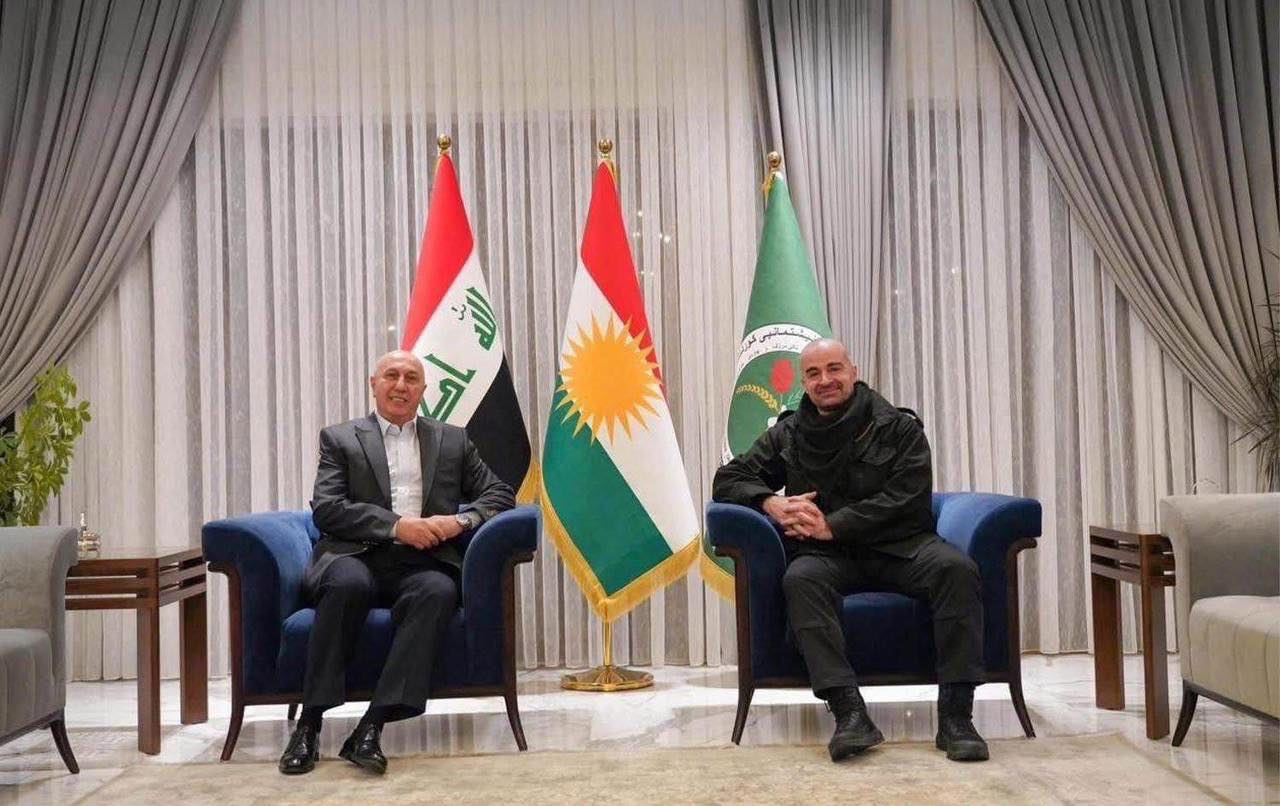
PUK President Bafel Talabani (right) alongside Nizar Amedi (left), the PUK’s main nominee for the Iraqi presidency, Baghdad, January 5, 2026. | Picture Credits: PUK Social Media
The Amargi, Erbil –
Iraq’s race for the presidency has exposed deepening divisions within Kurdish politics, as the Kurdistan Democratic Party (KDP), the Patriotic Union of Kurdistan (PUK), and Kurdish opposition groups in Baghdad move forward with separate candidates for the post of President of the Iraqi Republic.
Following the election of the Speaker of Parliament and two deputy speakers in the Iraqi cabinet, attention has now shifted to the presidency, an office that has become, by political convention, the Kurdish share of Iraq’s post-2003 power-sharing system.
Under this unwritten arrangement, the Speaker of Parliament is typically a Sunni Arab, the Prime Minister a Shiite Arab, and the President a Kurd. While the formula has ensured a degree of stability, it has also turned key state offices into arenas of intra-communal competition rather than national consensus.
That dynamic is now playing out once again, as Kurdish parties compete fiercely over who will assume the largely ceremonial but symbolically powerful presidency.
The two dominant Kurdish parties, the Kurdistan Democratic Party (KDP) and the Patriotic Union of Kurdistan (PUK), have failed to reach an agreement on a single candidate. The PUK insists that the presidency “belongs” to the party, citing precedence and the party’s exclusive control of the office since 2005. The KDP, by contrast, argues that the position belongs to the Kurds as a whole and that any candidate must receive the approval of the party – the largest Kurdish party in Iraq – and its leader Masoud Barzani.
Party Candidates
On Monday, the PUK officially announced Nizar Amedi as its sole candidate for the presidency. Amedi is a PUK political bureau member and was an advisor to the late Iraqi President Jalal Talabani. Party spokespersons rejected KDP calls to nominate multiple candidates for negotiation, insisting that Amedi alone represents the party’s position.
The KDP responded by formally nominating Fuad Hussein, Iraq’s current foreign minister and a longtime political ally to Barzani. Shortly afterward, the party announced that Nawzad Hadi, a senior KDP figure and former governor of Kurdistan Region Capital Erbil, had also registered as a candidate. KDP lawmakers confirmed the party has two nominees in the race – a tactical maneuver ahead of parliamentary voting, as certain Iraqi political parties may reject Fuad Hussein.
Beyond the two ruling parties, Kurdish opposition parties have also entered the contest: the Kurdistan Islamic Union(KIU), the Stance Movement (Halwest Movement), and the Justice Group of Kurdistan have agreed to nominate Dr. Muthana Amin from the KIU as their joint candidate.
In a statement, the Halwest Movement said it had proposed compromises to both the KDP and PUK, including backing an independent consensus candidate, but they eventually moved forward with their own nominee after talks failed.
At the close of the registration period, Iraqi parliamentary officials confirmed that 81 candidates had submitted their names for the presidency, including several Kurdish independents and former senior officials. While many candidacies are widely seen as symbolic, the crowded field highlights the fragmentation within Kurdish politics.
The unfolding contest exposes a deeper political problem: although the presidency is seen as reserved for Kurds, Kurds themselves remain divided over how that representation should be decided.

The Amargi
Amargi Columnist