Queer Iranians face violence and discrimination both at home and in exile
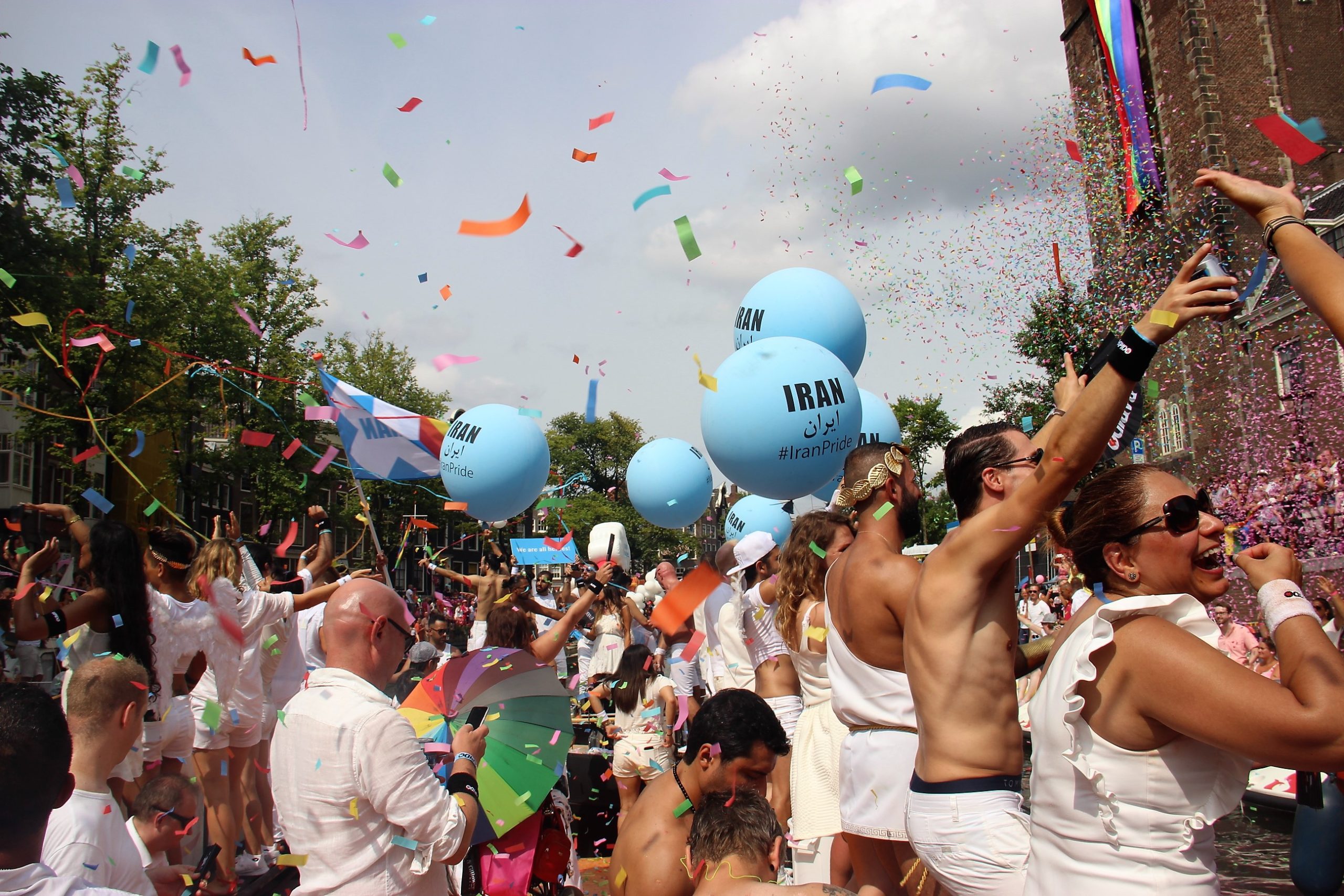
Iranian participated in Amsterdam Canal Pride Parade 2018 | Picture Credits: Wikimedia Commons
This post has been co-authored by Kamran Matin, Moira Dustin, Nuno Ferreira, Mehran-Rezaei-Toroghi, Isabel Soloaga
Few countries have a worse record on LGBTIQ+ rights than Iran. But it is not only at home that queer Iranians face homo- and transphobia. Those who make the momentous decision to leave Iran—often via Turkey—in search of a better life in Europe, North America or Australia also encounter systemic discrimination and mistreatment.
Yet, the plight and struggles of queer Iranian migrants and refugees receive relatively little attention. This is due in part—if not largely—to the rise of homonationalism in the West, which focuses exclusively on homophobia and transphobia within Iran to justify Western interventionism but has little interest when they occur in the West.
Indeed, in Iran, being queer is a constant battle, and one that is rarely won
Postcolonial discourses have pushed back against this narrative. But they neglect queer Iranians in a different way. Their preoccupation with queer imperialism often leads to an implicit dismissal of both the agency of queer Iranians in self-representation and the proactive role of the Iranian regime in anti-queer violence.
Indeed, in Iran, being queer (here understood as anyone who challenges sexual and gender norms) is a constant battle, and one that is rarely won. As a result, many queer Iranians seek to escape persecution and discrimination at home by going into exile, often travelling via Turkey before eventually resettling in North America, Europe, or Australia.
During this arduous journey, and after reaching their destinations abroad, they forge—against all odds—new understandings and practices of gender and sexuality, along with solidaristic forms of community and belonging.
Fleeing the Iranian inferno
Where is … my dwelling?
Is it carried in the hands of the north wind?
Or is it in the sparkle of life
in children’s eyes while playing with mud?
(Sina Khosravi – Denizli, Turkey)
A rich culture of same-sex relationships existed across much of the Iranian plateau for centuries. Classical Persian poetry, in particular, is marked by affectionate depictions of same-sex love as a central theme.
The arrival of colonial modernity transformed this landscape. Traumatised by military defeats and geopolitical pressures from the Russian and British imperialist powers, the Qajar (1789–1925) and Pahlavi (1925–1979) monarchies pursued an imitative project of defensive modernisation. This entailed state centralisation, national homogenisation, and the ideological heteronormativisation of society in the image of modern, heterosexual Europe.
The authoritarian construction of a modern patriarchal nation-state degraded Iran’s rich homosocial culture, rapidly erasing it as a sign of backwardness. The stigmatisation of homosexuality became deeply embedded in law, education, collective memory, and the social imagination.
Queer Iranians fought back, carving out spaces and developing new discourses of identity, aided by transnational communication technologies
Islamist revolutionaries who overthrew the pro-Western Pahlavi monarchy in 1979 (mis)took the Pahlavis’ imported heterosexual hegemony as an expression of ‘authentic’ Iranian culture. This misreading was reinforced by the simultaneous emergence of greater tolerance for same-sex desire in the liberal West, which Khomeini-led Islamists condemned as decadent and antithetical to Iran’s supposedly native heterosexual tradition. The Islamic Republic’s external anti-Western posture reinforced its internal homophobic violence.
Queer Iranians fought back, carving out spaces and developing new discourses of identity, aided by transnational communication technologies such as satellite TV, the internet, and social media. They selectively appropriated Western LGBTIQ+ rights discourses to fashion a distinct queer Iranian nomenclature. They also devised strategies to exploit loopholes in the Islamic Republic’s legal system—particularly its conditional allowance of Sex Reassignment Surgery (SRS)—as a means of escaping state violence and social stigma.
Nevertheless, strict limits remain on the safety that queer Iranians can secure under a theocracy that upholds gender hierarchy and homophobia as central to its religious identity and political legitimacy. Indeed, article 234 of the Islamic Republic’s Penal Code stipulates the death penalty for ‘the receptive/passive party’ in a male same-sex relationship.
Combined with widespread societal intolerance, this sexual and gender oppression has created a socio-legal inferno that forces many queer Iranians to migrate, often beginning by crossing into Turkey, the primary transit country en route to a safer place.
Enduring Turkish purgatory
Drowning now, there is nothing,
to grasp but brackish waters …
Now there have remained
only this swamp, nightmares,
and insomnia.
(Peyman Mazaheri Tehrani – Denizli, Turkey)
Turkey grants Iranian citizens visa-free entry and maintains long-standing ties with Western countries. As a result, most queer Iranians who go into exile arrive in Turkey to apply for international protection as refugees or to pursue their journeys to other places.
A combination of lengthy and inconsistent decision-making, officials’ limited understanding of queer lives in Iran, and poorly trained interpreters unfamiliar with sexuality and gender identity issues often produces unjust negative decisions.
Since 2018, Turkish authorities have taken over from UNHCR in handling asylum applications. For many queer Iranians, reporting to the police marks the start of a painful and prolonged bureaucratic purgatory marked by neglect, discrimination, and deprivation. Turkey’s turn towards Islamist conservatism under Erdoğan’s Justice and Development Party (AKP) has meant that queer Iranians in exile increasingly encounter the same violence that initially forced them to flee Iran.
A combination of lengthy and inconsistent decision-making, officials’ limited understanding of queer lives in Iran, and poorly trained interpreters unfamiliar with sexuality and gender identity issues often produces unjust negative decisions. This fosters deep social isolation, frequently compounded by mental health struggles and inadequate access to medical and psychological care.
Poor accommodation is another major challenge. Queer Iranians in exile are often forced into rural areas, far from specialised services, where conservative and religious communities increase the risk of homophobic and transphobic violence. Barriers to legal employment push many into clandestine work, where exploitation further harms their physical and mental health.
Even a positive decision rarely ends this limbo. Resettlement to countries such as the UK or Canada is constrained by limited quotas and insufficient funding, forcing many to rely on narrow and time-consuming private sponsorship schemes. After surviving Turkey’s social, cultural, and bureaucratic purgatory, many queer Iranians reach their host countries only to discover what feels like a false paradise.
Inhabiting the false Eden
I still get lost—as in my childhood—
wander from one scene to another
wearing wrong masks, improvising dialogues
and keep asking myself:
“Who else but me
feels like an empty shell?”
(Zeynab Peyghambarzadeh – Manchester, UK)
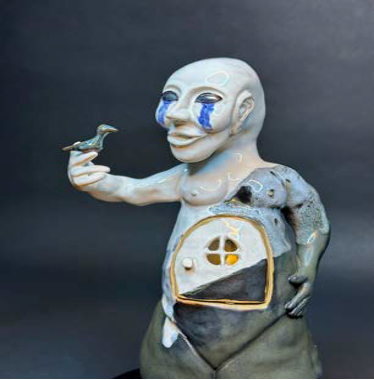
Queer Iranians’ experience of resettlement is often bittersweet. They may feel free from the violence of the queerphobic Islamic Republic and Turkish authorities, yet still face neglect and discrimination from British and Canadian authorities. They often receive insufficient support, inadequate accommodation, and limited information upon arrival. Although offered language and citizenship education to aid integration, this process frequently unfolds in environments that are not queer-friendly, and educators often lack adequate knowledge of queer issues.
In the UK, Home Office officials handling queer asylum cases often have a limited understanding of queer conditions in Iran and the country’s regional and cultural diversity. Their rigid application of ‘credibility’ criteria is unrealistic given the trauma queer Iranians have endured and the cultural barriers to expressing non-heteronormative identities.
Queer Iranians also encounter discrimination due to the rigid, West-centric categorisation of gender and sexuality within the UK and Canadian immigration systems. This excludes many who articulate their identities in terms of ‘fluidity’ and ‘hybridity’, recurring concepts in our interviews.
Health support for queer Iranians in the UK remains inadequate. NHS coverage is limited to primary, maternity, and emergency care, excluding Gender Affirmation Surgery (GAS). Unsuccessful asylum claimants may also lose NHS access entirely.
In Canada, initial accommodation for newly arrived queer Iranians is often poor in quality and short in duration. Housing problems are exacerbated by reduced investment resulting from governments’ outsourcing of accommodation provision to the private sector.
What’s to be done?
I live disconnected –
despite a long bloodline –
far away from where
my ancestors came.
(Mehrnaz Bassiri – Vancouver, Canada)
Queer Iranians need urgent support both inside Iran and abroad. Their systematic subjection to legalised violence inside Iran should be covered more widely. Improving queer Iranians’ lives and status should form a key part of the Western countries’ feminist diplomacy with the Islamic Republic of Iran and not be eclipsed by the so-called ‘high politics’ concerned with geopolitical and security issues.
In Turkey, the UK, and Canada, queer asylum and resettlement systems need overhauling. UNHCR should reassume its leading role in processing asylum claims to improve and accelerate decision-making in Turkey. Destination countries should increase their quota to help UNHCR accelerate resettlement for queer Iranians whose asylum applications have been successful. Queer refugees and migrants should be provided with queer-friendly housing, health care, and education upon arrival in the country.
At a time of a global rise in patriarchy, populism, and militarism, queer Iranians’ lives, safety, and well-being are doubly endangered, both at home and in exile. Only urgent, collective action by civil society, human rights organisations, and the media can ensure the recognition and the protection of queer rights, break this cycle, and affirm that queer Iranian lives matter—everywhere.
*This piece draws on a research project entitled ” Negotiating Queer Identity following Forced Migration: A Comparative Study of Iranian Queer Refugees in Turkey, the UK, and Canada (NQIfFM)based at the University of Sussex and funded by the UK’s Economic and Social Research Council (ESRC), whose support is gratefully acknowledged (Grant Ref: ES/V017497/1). The project has also produced a poetry collection,Rainbows on Rugged Terrains: Poetics of Queer Iranians in Exile, and a documentary,The Other Place. The subheadings of this article are inspired by the documentary’s tripartite structure. The poems and the image have been kindly shared by our research participants.

The Amargi
Amargi Columnist