Reza Pahlavi’s Vision for Iran Guarantees Failure
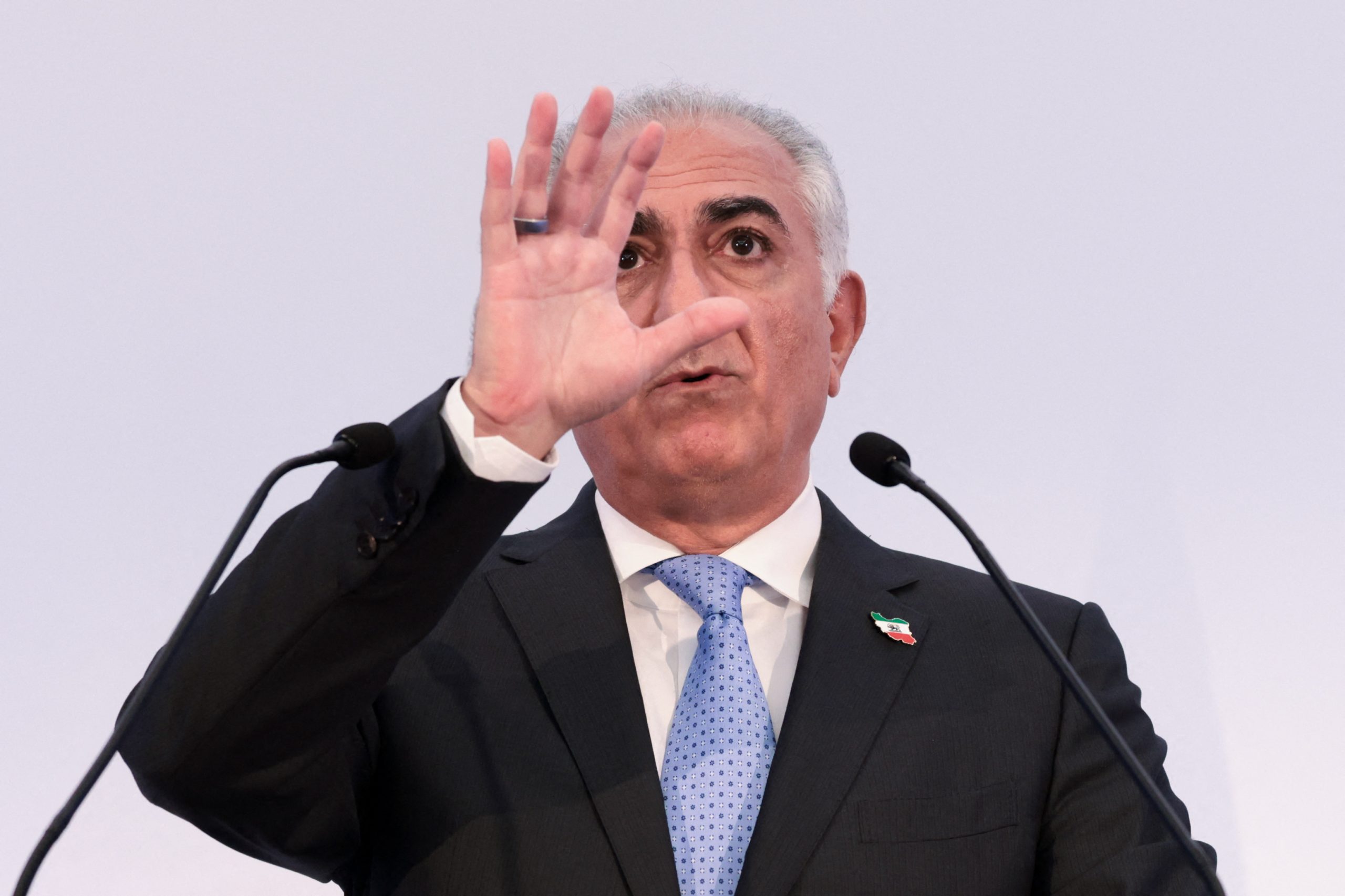
Reza Pahlavi, Paris, June 23, 2025. (Photo by JOEL SAGET / AFP)
Iranian opposition groups in exile have expressed support for the protesters, as unrest spreads throughout Iran. The protests were launched by the merchants of the Tehran bazaar in response to a drastic currency depreciation that destabilized the market.
This is the third wave of nation-wide protests in Iran, with the Woman, Life Freedom protests in 2022 and the 2019 protests that was sparked by rising fuel prices. Although the Islamic Regime has often faced public opposition throughout its 46-year reign, three nationwide waves of protests in only five years is a new record, making many consider the possibilities of a regime change in the near future.
Pahlavi Nationalism
All opposition groups that do not recognize the legitimacy of the Islamic Supreme Leader are outlawed by Tehran. Their members have been prosecuted inside the country and targeted by Iranian intelligence agents abroad.
However, the Islamic Regime has failed to remove the threat completely: Pahlavi monarchists, Kurdish parties, and Arab and Baluch opposition continue to challenge the rule of Iran’s authoritarian establishment.
The monarchists are led by Reza Pahlavi, 65, who campaigns from the United States. He is the oldest son of Mohammad Reza Pahlavi – the last Shah of Iran – whose reign was marked by authoritarianism, corruption, and human rights abuses. During the 1979 revolution, the Shah was forced into exile to Egypt, where he lived until his death a few months later.
Reza Pahlavi is the most prominent figure from the toppled royal family. Despite calling for the Islamic Republic’s overthrow for four decades, he gained prominence only after the Woman, Life, Freedom protests.
Reza Pahlavi presented his views for a post-Islamic Republic in a 168-page booklet titled The Emergency Phase Booklet (“Daftarchehye Dawrāne Ezterār”) published in June 2025 by National Union for Democracy in Iran as a part of its Iran Prosperity Project (IPP).
In this booklet, Pahlavi advocates for a constitutional monarchy similar to the British system, in which he is placed as the Leader of the People’s Uprising.
One of the central points, which interestingly overlaps with the Islamic Regime’s ideology and current policy, is intolerance towards what is referred to as “secessionists” – meaning Kurdish, Azeri, Arab, and Baluch parties.
In his booklet, Pahlavi looks at other countries where dictators have been toppled – such as Iraq – but refutes similarities between them and Iran. Realistically, however, the case of Iraq is a somewhat appropriate comparison. And Iraq’s post-Saddam Hussein transition is more akin to what the people of Iran have been calling for: oppressed peoples, including religious and ethnic minorities, being able to return to public life and engage in politics – although, it should be noted that political representation in Iraq’s system still leaves much to be desired.
Instead, Pahlavi looks at post-Brexit UK as an inspiration and proposes that post-Islamic Regime Iran should go through an ideological transition akin to the UK – where nationalism, anti-immigration, and anti-establishment populism are core elements. Given this context, it is perhaps no surprise that the monarchists are also adamant on slogans like “Make Iran Great Again,” a Trumpian motto which aligns with the politics of Brexit advocates.
In highlighting nationalism and immigration – and pushing for Iran being a unitary state – the booklet illustrates the classic right-wing views of the monarchist front in the form of creating one people (“Iranians”) and representing it as better than other peoples (Arabs, Turks, etc).
One of the central points, which interestingly overlaps with the Islamic Regime’s ideology and current policy, is intolerance towards what is referred to as “secessionists” – meaning Kurdish, Azeri, Arab, and Baluch parties; groups which are already exiled and outlawed by the Islamic Republic. It categorizes them as terrorists and puts the Free Life Party of Kurdistan (PJAK) in the same category as ISIS and IRGC, stating:
“The armed forces must perceive any ethnic, political, or armed action to divide the country as national security threat and react to it. This principle must be embedded within the national defense doctrine, military training and the commanding structure.”
In terms of immigration, it advocates for “controlling immigration from Afghanistan” through “ensuring the security of the Eastern borders”, mirroring the nationalistic right-wing rhetoric of the Islamic Regime, which discriminates against Afghan immigrants and paints them as undesired.
Although it is difficult to determine the percentage of Iranians who support the monarchist front, they do have some followers, and their leadership in the US has an open relationship with Israel, highlighted with his visit to Israel in 2023. This provides them with great political capital among Iran’s main adversaries who are willing to help, even militarily, should it be needed.
Democratic Opening
The Kurds, Arabs, Baluch, and Azeris, with their parties in exile, oppose the ideological position of the monarchist front.
The Kurds and the Baluch, having maintained an armed struggle against the Islamic Republic and being geographically attached to Iran, can capitalize on these strengths to mount serious challenges to the Regime.
The Kurdish parties have been located in Iraqi Kurdistan for four decades. And for many Kurds these parties are more legitimate than a central Persian government in Tehran. The Democratic Party of Iran (KDPI) and Komala (CPI) and Free Life Party of Kurdistan (PJAK) are the most prominent.
The first two are the oldest and have been engaged in the armed struggle against the Islamic Republic since the 1979 revolution. In the early years following the revolution, they engaged in guerrilla warfare against the Islamic Republic. However, since the 1990s, after the end of the Iraq-Iran war, their armed struggle has diminished significantly – which has further empowered the Islamic Regime. In post-2003 Iraq, due to Iranian pressure, the Iraqi government and the Kurdistan Regional Government (KRG) have further pacified these parties, and they are militarily weakened after decades of near total inactiveness.
The youngest of the three, PJAK has ideological links to the wider Kurdish movement and parties inspired by Abdullah Ocalan’s political philosophy. PJAK joined the armed struggle against the Islamic republic in early 2000s and maintains military readiness.
Several Baluch parties have also begun a new coalition under the name of Popular Fighters Front (‘Jabheye Mubarizīne Mardumī’), a newly formed front with an armed wing that has already carried out attacks on the Islamic Revolutionary Guard Corps (IRGC).
The province of Sistan and Baluchistan has suffered from both ethnic and religious discrimination, and its population is among the poorest and most deprived in Iran. This combination of economic and political injustice is central to the Baluch engaging in armed struggle.
The Kurds and the Baluch, having maintained an armed struggle against the Islamic Republic and being geographically attached to Iran, can capitalize on these strengths to mount serious challenges to the Regime.The same scenario is possible in the case of Arab and Azeri factions, who have begun to cooperate and communicate with the Kurdish factions.
This increased agency by Iran’s long-oppressed ethnic minorities, is unaccounted for in the monarchist plan. The monarchist front ignores these groups’ rights and expects loyalty to the crown, despite the Pahlavis’ oppressive, bloody history with ethnic minorities.
Implementing Pahlavi’s ideological vision in Iran can result in either another failed attempt to push the Islamic Regime out, as the monarchists’ divisive approach will fracture any form of cooperation – as happened with the 2022 protests; or, in case of the Islamic Regime’s internal collapse, the Pahlavi plan will lead to a future Iran that is marred with violence targeting political dissidents and minority communities – as the history of SAVAK during the Shah’s reign shows.

Ramyar Hassani
Ramyar Hassani is a commentator and analyst on Middle Eastern affairs. He has conducted academic research on the Iran-Israel conflict and holds a master’s degree in Middle East Studies, in addition to two BAs from the University of Oslo, Norway. He has appeared on renowned outlets like CNN, France24, Skynews, CBC, i24News, Fairobserver, The Jerusalem Post, and more.