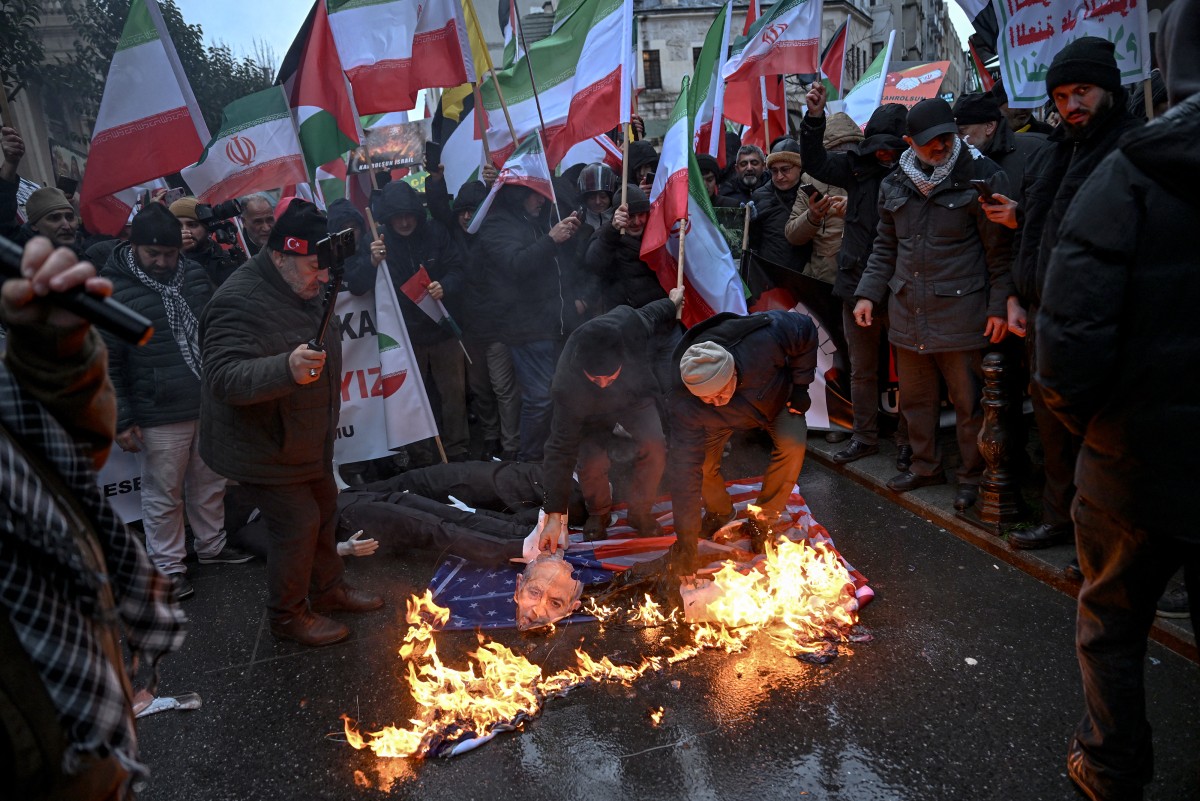
Tehran and Washington Back to Talks Amid Military Tensions
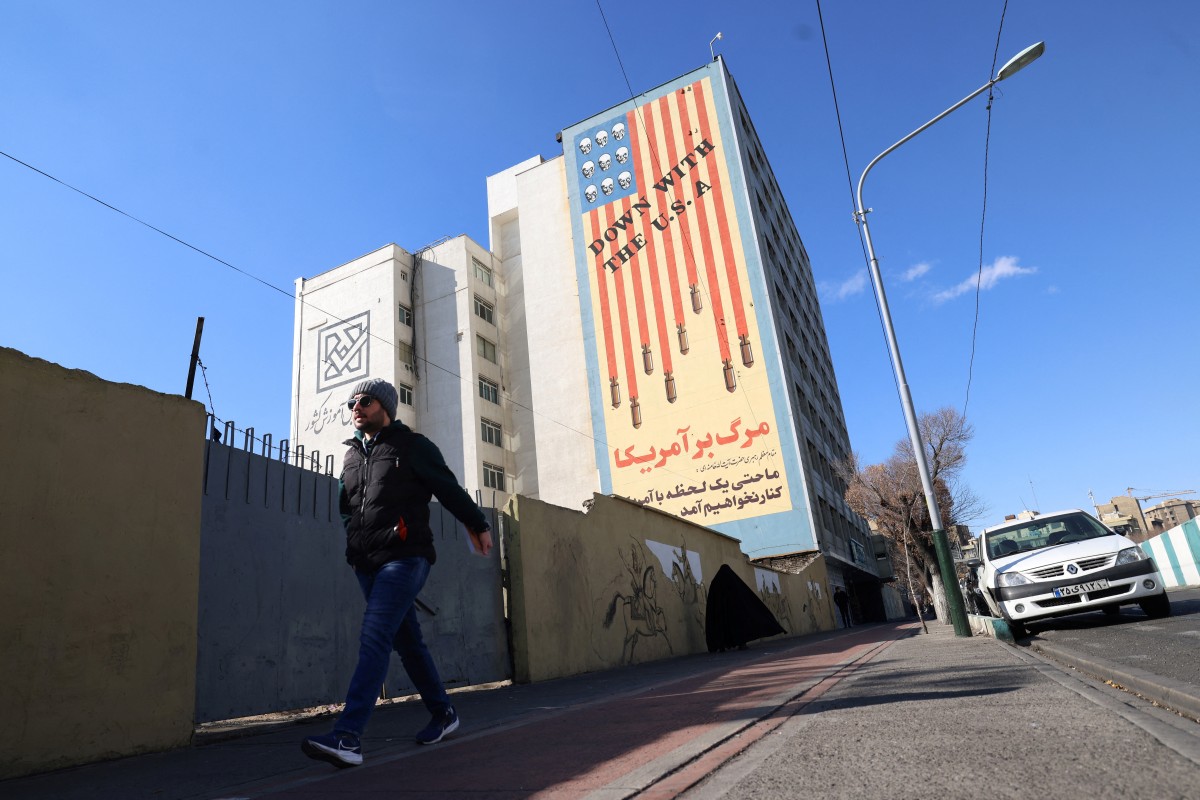
A man walks past a large anti-US mural painted on the side of a building in in Tehran on January 31, 2026. (Photo by Atta KENARE / AFP)
A new round of negotiations between Iran and the United States is expected to start on Friday, February 6, 2026, with mediation from Oman and indirect involvement of some regional actors. Simultaneously, the USS Abraham Lincoln and its escort warships are stationed in the Arabian Sea and stand ready for possible military operations.
These talks are happening in an atmosphere still shaped by the 12-Day War of 2025, the stronger U.S. military presence in the region, and the return of some of the toughest international sanctions against Iran. Now diplomats are once again trying to find a narrow path between war and agreement – a path that has been tried many times during the last two decades, often ending in deadlock or higher tension.
U.S. officials in Washington say diplomacy is still possible, but that if talks fail, the military option remains on the table. On the other side, messages coming from Tehran show readiness to negotiate, but only if pressure is reduced, there is no direct military threat, and demands do not go beyond the nuclear file.
These negotiations are starting at a moment when a combination of international and domestic pressures is affecting decision-making in Iran. One vital source of pressure is the return of UN Security Council sanctions which returned in 2025 through the snapback mechanism. With the activation of this mechanism, sanctions from the 2006–2010, which go beyond the nuclear program and affect parts of the banking system, sensitive technology trade, weapons sector, and Iran’s missile program, were brought back.
Along with social, political, and environmental crises, this situation inside the country has led to one of the bloodiest protest waves in the history of the Islamic Republic, which started in late 2025 and has continued into 2026. The combination of crises, plus the heightened military threat that came with the Abraham Lincoln carrier group being sent to the region, has pushed Tehran back to the negotiating table.
The disagreements are not only technical; they pertain to different definitions of regional security and balance of power.
Israel has not budged from its position and says any agreement must include full limits on Iran’s nuclear program, missile program, and proxy groups. Many Gulf countries, as well as Russia, are trying to manage the crisis and prevent another regional war, which the Iranian leadership has warned could involve the whole region.
Despite these efforts, talks face a serious risk of failure. The disagreements are not only technical; they pertain to different definitions of regional security and balance of power. The United States is trying to expand the negotiations beyond the nuclear file, while Iran is trying to keep talks limited to technical nuclear issues, and in return, they want sanctions relief and security guarantees. In past negotiations, disagreement about the scope of talks has been one of the main reasons for deadlock.
History of Iran’s Nuclear Program
Iran’s nuclear program started in the 1950s with U.S. support under the “Atoms for Peace” program. Iran signed the Nuclear Non-Proliferation Treaty in 1968 and later developed parts of its nuclear infrastructure. At that time, Iran was seen as a civilian nuclear partner of the West.
After the 1979 Revolution, the nuclear program was mostly stopped. The new government focused more on political consolidation and the war with Iraq, and there was little interest in expanding the nuclear program. However, in the early 1990s, the nuclear program slowly started again.
In 2002, the National Council of Resistance of Iran (NCRI) revealed undeclared facilities in Natanz and Arak, IAEA inspections increased, and Europe entered negotiations. In 2003, the Saadabad agreement was signed, which included the temporary suspension of some nuclear activities and more inspections, but it could not solve the deeper disagreements.
The UN Security Council entered the case in 2006 and gradually passed several resolutions that increased sanctions step by step:
- Resolution 1696 demanded suspension of enrichment.
- Resolution 1737 introduced financial and technology sanctions.
- Resolution 1747 expanded arms restrictions.
- Resolution 1835 emphasized the implementation of earlier resolutions.
- Resolution 1929 created the widest sanctions, targeting the missile program, banking sector, and arms trade.
This pressure cycle finally led to the 2015 nuclear deal (JCPOA). The JCPOA tried to limit Iran’s nuclear program and in return reduce sanctions step by step. But when Donald Trump came to power and the U.S. left the deal in 2018, the agreement process went into a standstill. From 2019, Iran slowly reduced its nuclear commitments and increased enrichment levels from about 3.5 percent to levels close to 80 percent.
Later attempts to revive the deal failed. With the return of maximum pressure policies and higher regional tension, the crisis entered a more dangerous phase. Finally, the failure of negotiations in the mid-2020s led to the 12-Day War, and after that, the snapback mechanism was activated, and some sanctions returned again.
Past experience shows that a collapse of diplomacy can quickly lead to a new cycle of escalation and military conflict.
The new round of talks has not yet paved a clear path to a stable agreement. The disagreement about the scope of negotiations, deep distrust between the sides, and domestic political limits in both countries all reduce the chance of a final agreement. Past experience shows that a collapse of diplomacy can quickly lead to a new cycle of escalation and military conflict.

The Amargi
Amargi Columnist