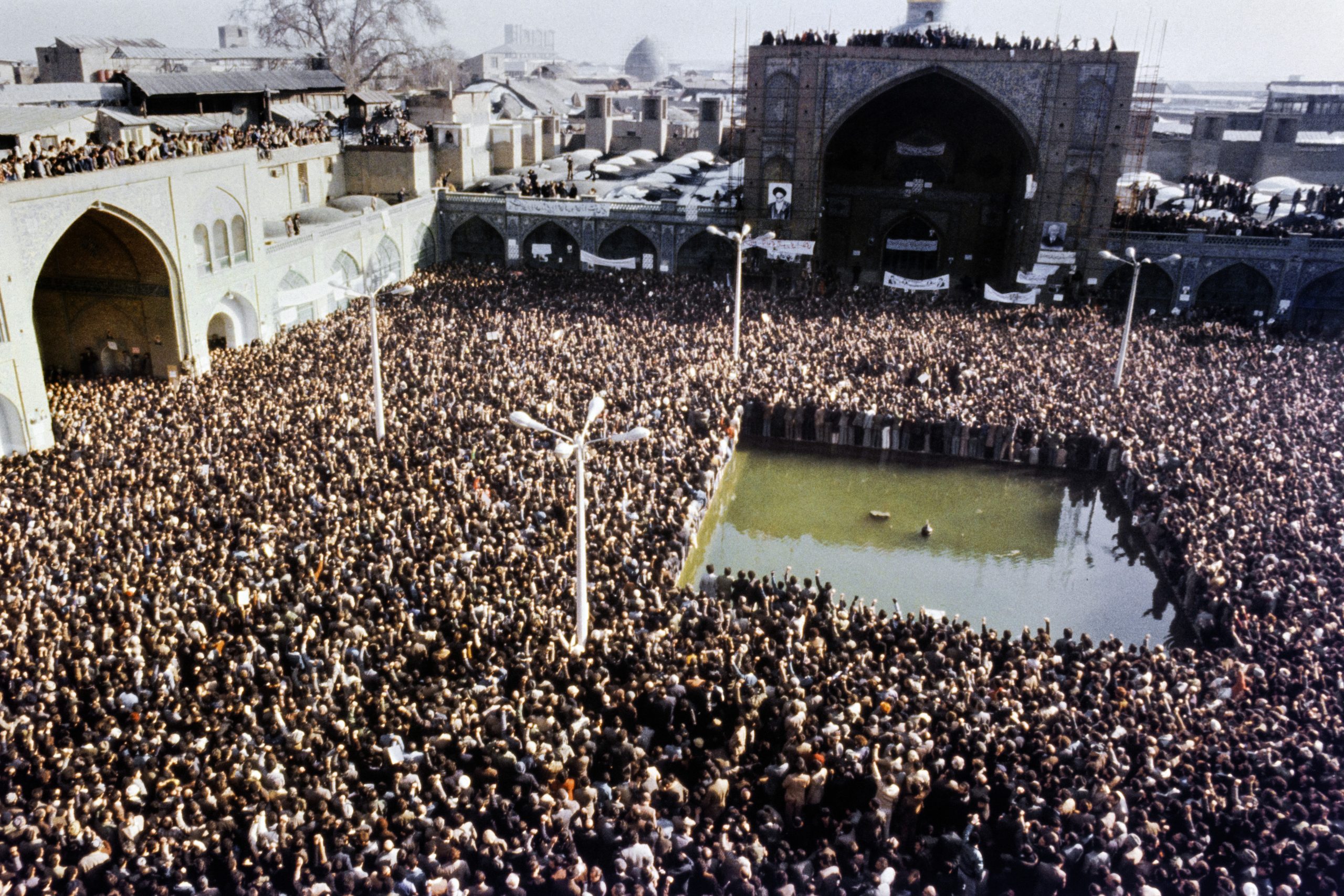
Terrifying Similarities: Germany in the Era of the Weimar Republic and Arab Nationalists Today
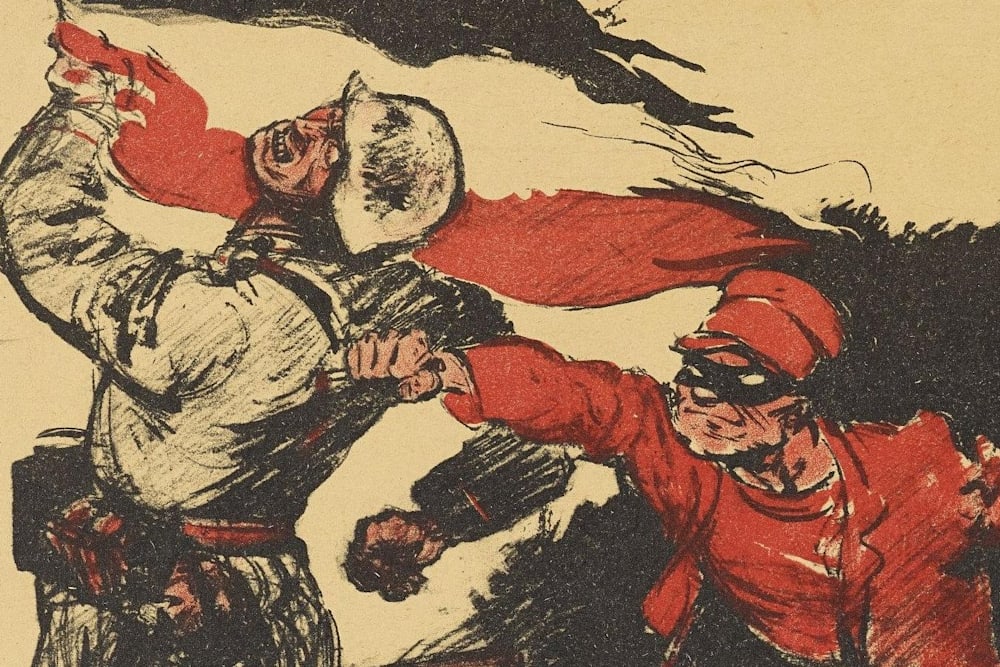
A picture depicting the ‘stab-in-the-back’ myth that was circulated shortly after the end of the First World War through a newspaper article. It claimed that the German army had been robbed of victory – by Bolsheviks, Jews, or other groups. It ended up greatly influenceing Nazi-era propaganda.
The collective hysteria we are witnessing in the media and the Arab world, directed against Kurds, is neither passing nor superficial. It is an extension of a long history in the Middle East, an industry of manufactured hatred and animosity toward “the other”. Those who have not understood the psychological landscape of Arab nationalism will struggle to grasp the origins of this hysteria. Anyone who reads twentieth-century history closely will notice striking parallels between the situation facing today’s Kurds and that of Jews in the years preceding World War II. These parallels serve as a warning, and the dangers of this new attack must be taken seriously.
Before the extermination of the Jews began, Germany was living through a terrifying historical defeat, which I would call, in Freudian terms, a narcissistic injury. Germans had lost World War I, emerging from it under a crushing economic burden, and were forced to reckon with its losses and damages. For some, particularly those raised on the myth of belonging to a superior race, this defeat and societal breakdown was impossible to explain. A sense of collapse, alongside the desire to rise again, operated like two relentless machines in the psyche of German society. Both were deeply present before Hitler came to power.
The theme of defeat occupied an important place in German literature of the era, and it is clearly visible in the work of writers associated with Nazi ideology. In the writings of Hans Kolbenheyer, Hanns Johst, and others, Germany is repeatedly portrayed as sinking into collapse. Communism, liberalism, and democracy are depicted as forces that have weakened the German spirit; the nation is presented as threatened with extinction; and intellectuals are blamed as a major cause of the catastrophe. Yet this pain did not grip only Nazi writers. It is also visible among significant authors outside that circle, appearing in Ernst Jünger’s famous work Storm of Steel, which some describe as paving the way for the Nazis’ militaristic spirit. More strikingly, it can be felt in the early writings of Thomas Mann, who later became one of Hitler’s fiercest opponents.
This feeling of defeat was not only a response to military loss and economic downturn; it also reflected a psychological fear that German identity might be lost or rendered meaningless. In Reflections of a Nonpolitical Man, Thomas Mann sheds light on this preoccupation with “loss” and “losing” that, in his view, weighed heavily on the German spirit. The book was written during World War I and published shortly after Germany’s defeat in 1918, so it carries the atmosphere of the moment – the shattering of nationalist pride. Mann writes from a conservative position, expressing fear that German culture, as the product of the German spirit, could be overwhelmed by the rational, cold logic of progress and science.
What matters most in the book is the distinction Mann draws between “culture” and “civilisation”. He presents culture as a spiritual, psychological, and deeply internal dimension of identity tied to being German, rooted in the nation. By contrast, civilisation is portrayed as universal, shaped by science and the broader development of the West. For Mann, civilisation represents rationality and surface order; unlike culture, it does not spring from the depths of the national spirit. The young Mann, therefore, viewed civilisation as a force capable of uprooting German culture, and contributed to his profound sense of defeat.
The drive to find an enemy, indifference to others, the erosion of political morality, and a growing attraction to killing and violence do not remain fringe for long
The era before the rise of Nazism was marked by peak feelings of defeat, destruction, and fear of losing identity. Major German novelists of the period, Alfred Döblin, Erich Kästner, and Kurt Tucholsky, among others, depicted a society moving rapidly toward the embrace of militarism and violence. One of the most dangerous signs of this stage of collapse is the emergence of a “weak” human type, someone who searches for a power that can restore agency and meaning. Perceiving life and identity to be under threat, this person looks for a clear enemy, someone to blame, an explanation that can absorb every loss and humiliation. A return to the German literature of the period shows how quickly such impulses can harden into a dominant moral climate. The drive to find an enemy, indifference to others, the erosion of political morality, and a growing attraction to killing and violence do not remain fringe for long. They spread, become normalised, and eventually shape what people come to believe and to practice.
If we look carefully, the Arab world in the Middle East is now experiencing a situation strikingly similar to Germany before the rise of Nazism. Over the past twenty-five years, from the fall of Baghdad to the destruction of Gaza, Arab religious nationalism has suffered a series of devastating blows. After September 11 and the fall of Saddam Hussein, this nationalist wave faced a severe setback. The rise of ISIS was one of the most extreme attempts by Arab religious nationalists to reverse defeat and reclaim a sense of power. In its brutal pursuit of reviving the Islamic and Arab Ummah [Arabic: ‘community’ or ‘nation’], ISIS committed horrific crimes without restraint.
The savagery of ISIS reflected a deep-seated fear of erasure among Arab religious nationalists. Its collapse, and the end of the so-called Islamic caliphate at the hands of Kurdish forces, inflicted an even deeper psychological and narcissistic injury in this political imagination. After ISIS fell, this crisis intensified, prompting many to respond with another surge of mobilisation. The October 7 attack by Hamas in Israel and the events that followed were an attempt to register a victory and escape that psychological rupture. But as Gaza faced a new political and humanitarian catastrophe, the sense of collapse and despair deepened again in the psyche of Arab nationalists and fascists.
In this atmosphere of collapse, a particular type of fearful and submissive person emerges, someone whose circumstances make them ready to become a fascist fighter, unleashing warlike instincts to escape feelings of loss and disintegration.
If we pay attention to this series of deep historical defeats, we also see a set of parallel developments that have eroded Arab nationalists’ confidence. Severe economic crises have pushed large parts of these societies into poverty. The political arena in countries such as Syria, Iraq, and Lebanon has fractured so deeply that it seems impossible to restore. Many people have lost faith in the future and see no clear horizon ahead. Taken together, these negative conditions have become the raw material for a dangerous political and psychological climate. In this atmosphere of collapse, a particular type of fearful and submissive person emerges, someone whose circumstances make them ready to become a fascist fighter, unleashing warlike instincts to escape feelings of loss and disintegration.
If we compare this with Germany before the rise of Nazism, the pattern becomes clearer. During the era of the Weimar Republic, a sense of decline and collapse produced a fearful and weakened character. This person believed that Germany was falling apart, that German culture was disappearing, and that the German individual was being humiliated. Yet this fearful and despairing person did not remain passive. They sought an enemy to blame for their defeat, an enemy easy to break, and through that imagined victory, satisfy their urge for aggression. At that time, Jews were conveniently portrayed as the enemy, serving as a justification for the ensuing catastrophe.
Antisemitism reached a peak during the Weimar era. In this context, authors such as Dietrich Eckart emerged, shaping the ideological environment that influenced Adolf Hitler. Eckart promoted the belief that a global conspiracy threatened the German nation, casting Jews and Bolsheviks as its central agents. He played a role in intensifying Hitler’s hatred of Jews. Although Eckart died relatively early, his influence helped to cement Hitler’s anti-Jewish worldview and connect him to antisemitic networks.
…the Kurd is imagined as a substitute for the “Zionist enemy”, becoming the object of displaced rage and resentment
Today, defeated Arab nationalists, as the Nazis once did in a different historical context, seek out weaker targets on whom to displace blame. In this narrative, the Kurds become the Arabs’ “old-new” enemy. Repeated defeats suffered by Arabs and Muslims at the hands of the Israeli state have discouraged direct confrontation, which only deepened humiliation without offering relief, leading them instead to seek an enemy they perceive as weaker. The wounded nationalist needs a target that can be attacked and defeated more easily, to manufacture an illusory victory. At this stage, the Kurd is imagined as a substitute for the “Zionist enemy”, becoming the object of displaced rage and resentment.
The portrayal of Kurds in official Arab media and within Arab nationalist circles echoes patterns that appeared in Nazi depictions of Jews prior to extermination. The Jews were accused of “disrupting the economy”, “serving foreign powers”, “existing outside the national body”, and “carrying ideas hostile to the national spirit”.
If we compare this with contemporary accusations about Kurds in Arab media, the structure is strikingly similar, despite the more contemporary vocabulary. Claims circulate that Kurds are responsible for economic hardship, that they are proxies of the United States and Israel, that they are “Muslims in name only”, and that they are feminists, Marxists, or atheists who undermine national unity and promote separatism. This resemblance should not be treated as a superficial coincidence. Arabic fascism seeks an illusory victory to redress historical defeat.
In the 1980s, following events such as the Camp David Accords and the Lebanon war, Arab nationalism experienced a similar sense of rupture. In that period, Saddam Hussein attempted to compensate for that narcissistic injury in the Arab psyche by attacking Iran. When he failed, his regime turned its violence inward, killing tens of thousands of Kurds, targeting a weaker, more defenceless enemy on whom to discharge its hatred.
Today, we are living through a comparable historical moment. Arab nationalists, feeling trapped by chaos, weak leadership, and frustration, need a new symbol, one that can offer a new victim. For many, Ahmed al-Sharaa has become that symbol, while the Kurds are cast as prey. They believe that if they can get rid of this “enemy”, they can escape the swamp of their historical defeat. Understanding the psychological conditions that enabled the Nazis to commit the Holocaust is a crucial lesson to prevent a similar catastrophe from being carried out against the Kurds by extreme nationalists.

Bachtyar Ali
Bachtyar Ali, a leading novelist, poet, and essayist, is celebrated as one of the most influential contemporary Kurdish authors. Best known internationally for The Last Pomegranate Tree, he has published over 40 works of fiction, poetry, and criticism, including 12 novels. His writings have been translated into numerous languages, from Arabic and Persian to German, Italian, and English. In 2017, he became the first author writing in a non-European language to win the prestigious Nelly Sachs Prize.