What Happened in Iraq in 2025
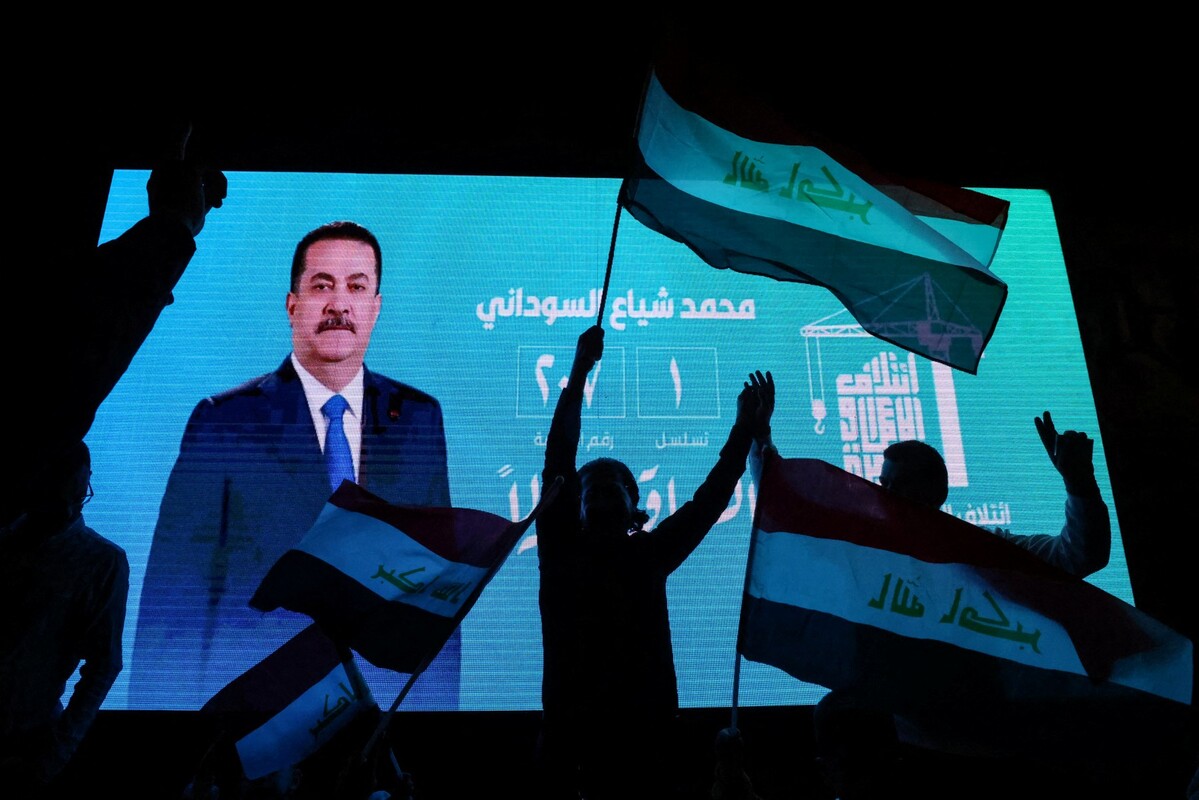
Supporters of incumbent Iraqi Prime Minister Mohammed Shia al-Sudani wave national flags in front of a screen displaying his portrait as they celebrate following the announcement of preliminary election results in Baghdad on November 12, 2025. Iraqis on November 11 headed to the polls for a general election that came as the country experiences a rare moment of calm in a region roiled by recent conflicts. (Photo by AHMAD AL-RUBAYE / AFP)
This report is co-authored by Sardar Aziz and Renwar Najm
In 2025, Iraq narrowly avoided being dragged into the 12-day Israel–Iran War, just managed to keep its finances afloat on the back of stable oil prices, and saw cautious progress in Baghdad–Erbil negotiations over oil exports. Yet the same constraints that have shaped Iraqi politics since 2003 remained in place.
Armed factions continued to undermine the state, coalition bargaining again delayed government formation after elections, and governance crises – including water scarcity and paying the public salaries of the Kurdistan Region’s labor force – persisted even when deals advanced on paper.
More than anything else, 2024 was a test of whether the state could preserve a degree of sovereignty and keep the country running, when regional escalation, domestic political fragmentation, and economic dependence all pulled in the opposite direction.
Security
Though many predicted a catastrophic security situation, the worst outcome never came into being: During the 12-day Iran–Israel War, Iraq sat uncomfortably close to the front line without becoming a belligerent. Iranian-aligned groups on Iraqi soil threatened retaliation against Israeli and United States interests, while Iraqi airspace was exposed to regional missile and drone traffic. The risks were acute: Israeli or U.S. strikes on Iraqi territory, internal political fracture, economic disruption, and a further erosion of Baghdad’s sovereignty narrative.
Iraq avoided direct involvement through a delicate combination of deterrence and diplomacy, clear messaging that the country would not be a battlefield, tighter security measures to limit militia action, quiet coordination with Washington and regional partners, and Iran’s own judgment that opening an Iraqi front would risk unmanageable escalation.
The war has ended, but the regional conflict is yet to be fully resolved, and Iraq sits powerless in shaping – or deterring – future escalations.
The incumbent Iraqi Prime Minister, Mohammed Shia’ al-Sudani, has tried to take credit for keeping the country out of the war, though American intervention has also played a role in holding off direct attacks on Iraq, as they see the country as an American ally. But the many complicated concurrent relationships and political dependencies, which have served Iraq in the present, are a major future vulnerability, especially as the U.S. pushes to disarm Iran-backed militias, demanding that Iraqi state institutions carry their weight in regaining sovereignty.
The militias, along with the Shia community, are facing an existential crisis: The fall of Bashar al-Assad in Syria announced to all in the region that Iran-aligned actors are vulnerable, and the militias, powered by Iranian backing, know the potential fall of the Islamic Regime would be devastating for them, both within Iraq and the wider region.
Additionally, the rise of Ahmed al-Sharaa, a figure with a past shaped in part by conflict and imprisonment in Iraq, has heightened anxieties in Baghdad about spillover risks. At the same time, his political rise resonated with some Iraqi Sunni circles, adding another layer of sensitivity to an already fragile internal balance.
Elections Did Not Strengthen Iraqi Democracy
Iraq has again slid into post-election paralysis as Shia political parties struggle to agree on a prime minister, and the Kurds remain largely divided over the Iraqi Republic President position
Iraq’s 2025 elections were peaceful and widely accepted as credible, a major improvement compared to previous cycles. The political problems, however, immediately returned after the vote.
Iraq has again slid into post-election paralysis as Shia political parties struggle to agree on a prime minister, and the Kurds remain largely divided over the position of the Iraqi Republic President. Although the Sunnis were also divided in their choice of Parliamentary Speaker, the Iraqi Parliament was able to nominate a Sunni Speaker.
The caretaker phase drags on, as blocs bargain over coalition mathematics, contest constitutional interpretations, and treat compromise as a zero-sum game over state institutions. The results reshuffled bargaining power without resolving the deeper fragmentations.
Iraqi democracy remains questionable, with no viable opposition and continuous use of non-democratic tools to coerce people to vote, and widespread boycotts reflect people’s lack of faith in the state’s electoral system.
PM al-Sudani’s Reconstruction and Development list emerged as the largest bloc with 46 seats. Nouri al-Maliki’s State of Law fell from 38 seats in 2021 to 29, weakening Maliki’s leverage within the Coordination Framework Shia alliance. Other forces associated with the Iran-aligned camp increased their parliamentary representation, including Qais al-Khazali’s Sadiqoun, which rose from nine seats in 2021 to 27, and the Badr Organisation increased from 13 seats in 2021 to 18. These gains underlined a key point of tension: even as Iran-backed networks faced setbacks elsewhere in the region, several of their Iraqi political arms remain electorally resilient and institutionally embedded, especially in security-linked portfolios.
Erbil–Baghdad relations
every day, people and families in Kurdistan have felt the strain in the Baghdad–Erbil relations most arduously
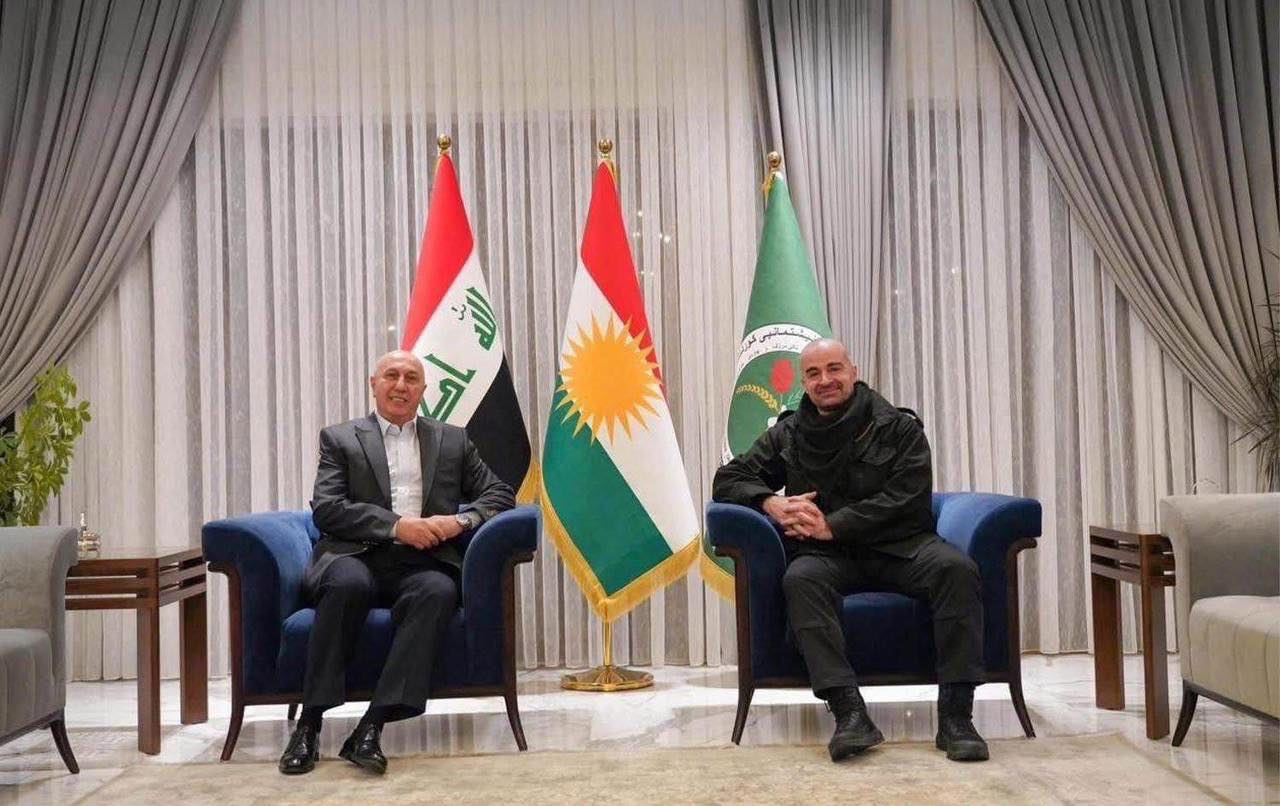
Relations between Baghdad and Erbil showed cautious progress in 2025, with visible steps towards resuming the Kurdistan Region’s oil exports to international markets after prolonged disruption. Yet, despite the deal, the decade-long public sector salary crisis in the Kurdistan Region has remained unresolved, with payments delayed or entangled in disputes over revenue reporting and budget authority.
This has kept pressure on the Kurdistan Regional Government (KRG) domestically, but every day, people and families in Kurdistan have felt the strain in the Baghdad–Erbil relations most acutely, due to diminishing household incomes, leading to lowered public confidence. The deal to resume oil exports was reportedly driven in large part by U.S. pressure, once again underscoring Iraq’s inability to settle major disputes independently.
In the Kurdistan Region, even after elections that were delayed for two years, the two ruling parties have yet to form a government coalition a year after the election. Kurdish politics in 2025 were marked by a prolonged caretaker administration and the absence of a functioning parliament to provide effective oversight.
Economy
relatively stable global oil prices allowed the government some breathing space… but it also reinforced the dependency that shapes decision-making and limits reform
Iraq’s economy, although historically insecure due to a lack of diversification, was a rare positive in 2025, as relatively stable global oil prices allowed the government some breathing space. This helped Baghdad avoid a crisis, even as the regional war risked a wider shock. But it also reinforced the dependency that shapes decision-making and limits reform. The year ended with the same structural vulnerabilities intact: a quasi-rentier public sector that subdues social and political pressure by keeping people on the state’s payroll, a private sector that remains constrained, and a national budget that is exposed to price swings that Iraq cannot control.
Water and environment
Iraq faced a deepening water emergency in what officials and reports described as one of the driest years in decades. Less water flowing in the Tigris and Euphrates Rivers and worryingly low reservoir levels strained agriculture and sharpened food-security risks, with irrigation cuts raising the prospect of lower wheat production and larger imports – further harming an already vulnerable economy.
To address a worsening crisis, Baghdad pursued water diplomacy with upstream neighbors, especially Turkey. This included a Turkey–Iraq arrangement that linked Iraqi oil revenues to Turkish-built water infrastructure projects, alongside discussions of a broader framework for joint management of shared rivers as drought pressures intensified.
The year showed a strange twist as the climate crisis turned into geopolitical and economic issues. The situation regarding water and Turkey has become intertwined with Iraqi political discourse, alongside the increasing influence of Sunni groups and the diminishing power of Shia factions. These developments threaten to undermine solution-oriented approaches aimed at addressing urgent and existential climate emergencies.
Looking ahead
In the coming year, it is likely that there will be more U.S. pressure on Iran-backed militias to disarm, and the militias will likely try to drag out negotiations as much as possible.
Adding to the morass, the U.S. military has to leave Iraq by September, which will inevitably impact the appointment of the next prime minister. Relatedly, electing a new government and prime minister might prove difficult within the constitutional timeline.
When it comes to the economy, the year is not looking rosy. A global price drop for oil will cause an insurmountable shortage in Iraqi revenue. If the country is forced to borrow, it might borrow from China, a step that will strengthen the already strong relationship, that is if China is willing to lend money.
Regarding Baghdad’s relations with the KRG, given that the ruling Kurdistan Democratic Party (KDP) is seen as close to the U.S., the oil agreement between Baghdad and Erbil has a decent chance of being extended, as the Shia factions seek to avoid unnecessary issues with the U.S.
In the meantime, the KRG and Baghdad need to cooperate and coordinate to ensure the continuity of salary payments, to safeguard the country’s security by forming a serious plan to curb the Islamic State’s re-emergence, and to help the economy stabilize by ensuring the KRG’s oil and gas industries are safe.

Sardar Aziz
Sardar Aziz is a researcher, columnist, and international advisor. Worked as senior adviser, Kurdistan Parliament, Iraq. writes in Kurdish and English. He focuses on Kurdish politics and economy, Iraqi politics, and China-Kurdistan and Iraq relationship. He has published with numerous think tanks in the US, Europe, and the Middle East. Author of a number of books in Kurdish in the areas of governing, institutions, and political economy. He has a PhD on the State in the Arab Middle East from University College Cork (UCC) Ireland. He teaches annually at the Asian Study UCC.