Yazidi Cause Alliance: How to Reclaim Politics
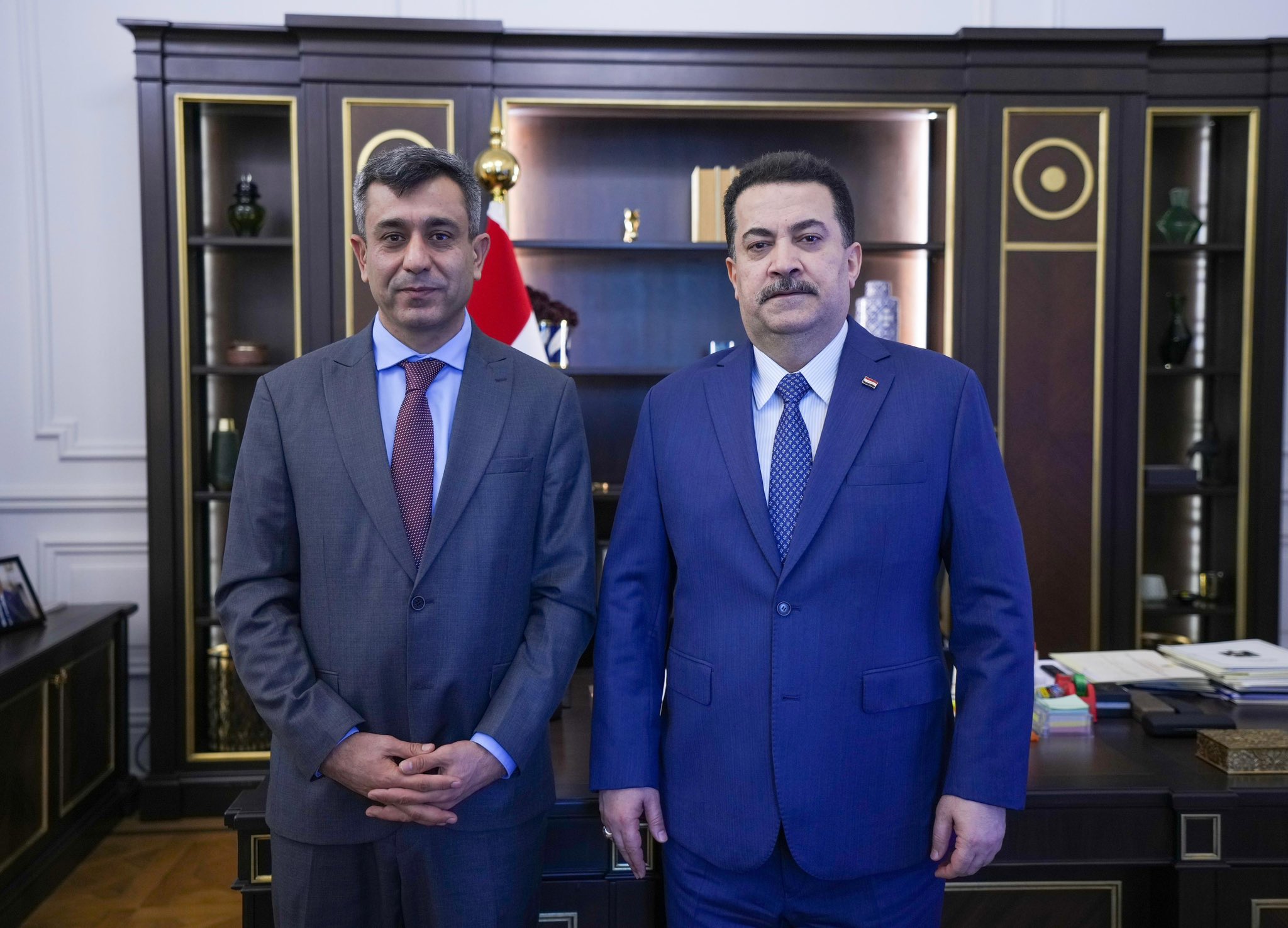
Murad Ismael (L), Member of the Iraqi Parliament representing the Yazidi Cause Alliance with Iraqi Prime Minister, Mr. Mohammed Shia’ Al-Sudani (R) | Picture Credits: X Account of Murad Ismael
Iraq had a parliamentary election on 11 November. The election was, to borrow Greg Palast’s film title, ‘The Best Democracy Money Can Buy.’ The uneasy relation between money and democracy is well known. In Iraq, since money is the only remaining link between the governing class and the populace, the political process is growing costlier with every election. This shapes the relationship between government and society, elites and ordinary people, and influences the economy, security, and stability in the medium and long term.
The Alliance managed to win nearly 50 thousand votes and secure a seat for Murad Ismael in the Parliament outside the Yazidi quota.
Within this rather bleak canvas, last May, a group of Yazidi activists decided to establish a coalition called the Yazidi Cause Alliance (CYA). The name is telling, as it suggests the presence of various groups, both established and emerging, old and new, and highlights the mosaic within the community. What unifies them is the Yazidi cause. The Alliance managed to win nearly 50 thousand votes and secure a seat for Murad Ismael in the Parliament outside the Yazidi quota.
In their foundation statement, they highlight the salient features of Yazidi politics. At the heart of it is a view that Yazidis can only be represented by Yazidis. The core of this representation lies in a long history of injustice. The Alliance stresses communitarian politics: “free from narrow personal interests or external influences, thus affirming its independent decision-making and national approach.” It also emphasizes the openness to any Yazidi group or individual who believes in these principles.
The Alliance has a number of goals, among them: recognizing the genocide that, so far, the Iraqi government has not done properly; rehabilitating the traumatized society; and maintaining the Yazidi heritage. The alliance sees the Yazidis as a people, and more than only a religious minority.
When was the beginning?
For Kamiran Kamal (interviewed), a local but reputable bookseller of Shangal, who has been close to several youths in the Alliance over the last fifteen years, the story of the Alliance is not well known. He sees the alliance as an outcome of a comprehensive project built on a number of pillars. It began with an initiative by a group of young people known as the Advocacy Team. The team consisted of around ten young activists and started just after the genocide a decade ago. As the Yazidi community was fragmented after the genocide, the initial goal was to unite the different groups under the banner of the “Alliance for the Cause.” The concept was appealing, especially to those who had survived a genocide and betrayal on a large scale.
Why is it important?
The Alliance is important in many ways; in itself and as a model. The Yazidi community happens to be one of the most marginalized communities in Iraq. Their suffering dates back centuries. During the Ottoman era, the community faced a large number of Fermans (a massacre campaign), resulting in massacres, with Yazidi tradition claiming seventy-two such Fermans. This chequered history serves as a background to the Alliance.
The minority quota seats do not have a separate voter registry, meaning that any Iraqi citizen can vote for a quota candidate, regardless of religion or ethnicity. As expected, the quota seats have fallen prey to big organized political parties…
What ISIS undertook on that Saturday in August 2014 was the beginning of a number of other sufferings. The community, in addition to genocide, also faced forced displacement. Today, there are more than one hundred fifty thousand Yazidis still living in tents set up in temporary camps controlled by the Kurdistan Democratic Party. They are stuck there because of politics that have nothing to do with them. Hence, the source of the Yazidi bitterness toward the KDP. Such camps are dotted around the Middle East. They are the temporaries that never end. They are the reality that makes home a fantasy, as the Palestinian poet Mahmud Darwish put it. The various Iraqi militias also contribute to making their return difficult. Therefore, making sure that displaced Yazidis are able to make their way back home is unsurprisingly at the top of the Alliance’s agenda.
Another important aspect of the Alliance is its opposition to the quota system. The minority quota seats do not have a separate voter registry, meaning that any Iraqi citizen can vote for a quota candidate, regardless of religion or ethnicity. As expected, the quota seats have fallen prey to big organized political parties, bringing the system into the center of a controversy. The Alliance’s victory poses a question: what comes after the quota system?
In addition, the Alliance aims to become institutionalized. This goes against the norms and values of most Iraqi political parties. The latter’s characteristics fall into three essential pillars: capturing state resources, maintaining a private army, and being run by a single personality or family. As Kamiran puts it, within the Alliance, faces may change, candidates may come and go, some may retreat, and others advance, but the Alliance continues to carry the cause forward. This, in other words, is institutionalization, a process by which organizations acquire value and stability, as Huntington once put it. When it comes to party organization, institutionalization translates to systematized organization, embedded decisional autonomy, value infusion, a consistent public image and presence, and a relatively stable basis of support, features that might be wishful thinking in the current Iraqi political milieu, at least currently.
Where is it heading?
It is a chance to alter the blueprint of political representation for minorities and become a pivotal turning point.
The Alliance has rekindled hope and aspiration among a wide spectrum of the Yazidi community. Some see this as unrealistic and think it might backfire, especially given the Alliance’s limited power and the Iraqi political establishment’s limited room for maneuver. The Iraqi expert on minorities Saad Salloum, who has a deep knowledge of the community, considers the emergence of the Alliance as a step to overcome quota and component politics in Iraq. For him, the Alliance stands out as an unprecedented experiment. It is a chance to alter the blueprint of political representation for minorities and become a pivotal turning point. However, all these depend on the ability of the Alliance leaders to transform their electoral achievement into a political project.
Can the Alliance become a model?
Saad Salloum hopes that the Alliance’s victory heralds the beginning of a new political phase, one that may extend beyond the Yazidi community to the wider national sphere. For that to happen, the Alliance has to succeed. This very fact makes the role of the Alliance as a role model more challenging. It is no secret that the Alliance is facing colossal challenges as it is sandwiched between the KDP and the Iraqi militia forces, and also between Baghdad and Erbil. If it succeeds, it might not only provide a new horizon for other communities, such as Christians, but also for secular-based groups, such as environmental activists and cultural advocates. For the Alliance to do that, it has to provide political support and space for its youth branch. It has to institutionalize and learn how to avoid mimicking others. Above all, it is important that the Alliance builds a rational relationship with its constituency and avoids the trap of unrealistic hope that might lead to despair.

Sardar Aziz
Sardar Aziz is a researcher, columnist, and international advisor. Worked as senior adviser, Kurdistan Parliament, Iraq. writes in Kurdish and English. He focuses on Kurdish politics and economy, Iraqi politics, and China-Kurdistan and Iraq relationship. He has published with numerous think tanks in the US, Europe, and the Middle East. Author of a number of books in Kurdish in the areas of governing, institutions, and political economy. He has a PhD on the State in the Arab Middle East from University College Cork (UCC) Ireland. He teaches annually at the Asian Study UCC.