A Kurdish Renaissance in Rojava
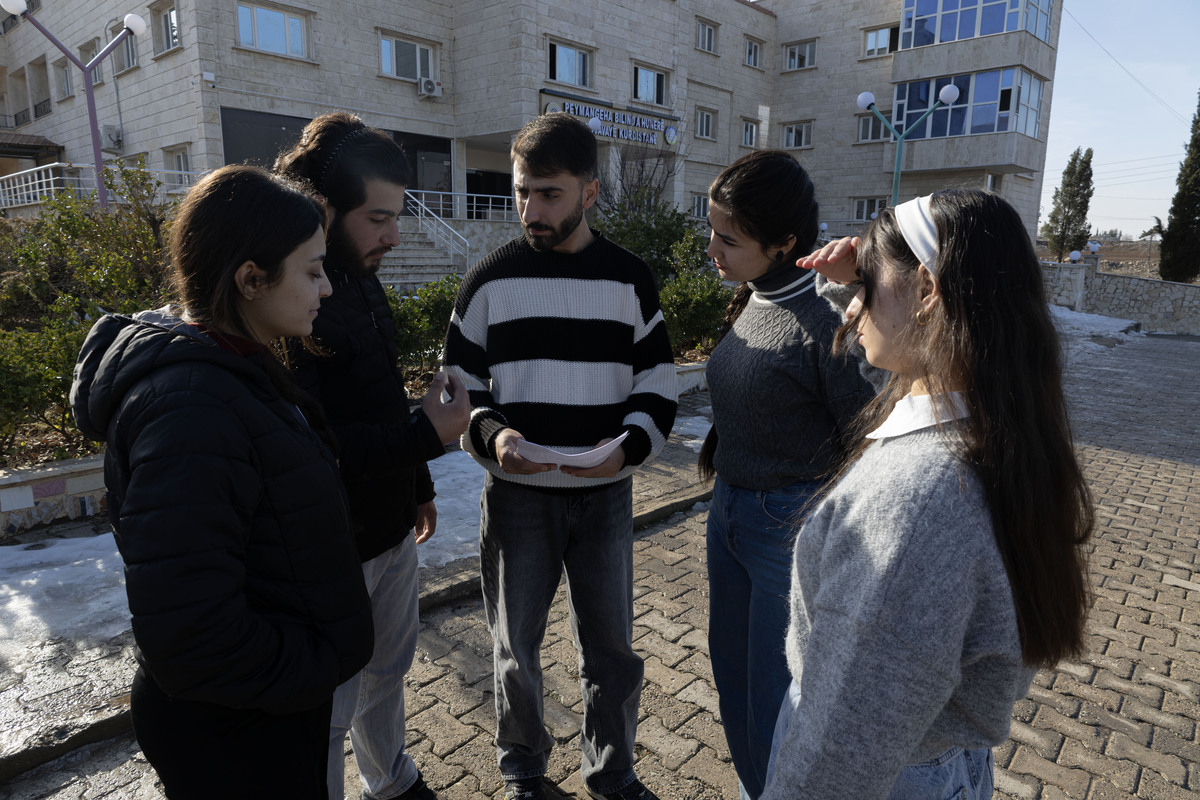
A group of students discussing in the institute’s garden during break time | Picture Credits: Abbas Abbas
After decades of repression during the reign of the Assad regime, Kurdish artists in northern Syria are now in the midst of a cultural renaissance. Kurdish artists say the Higher Institute of Arts in Rojava, actively reviving Kurdish expression, has become a symbol of resilience in the face of political upheaval.
Kurds make up around 10% Syria’s population, concentrated primarily in the northeast. After the 2011 Syrian uprising, the region saw a power vacuum that allowed Kurdish-led authorities to establish a semi-autonomous administration – known as the Democratic Autonomous Administration of North and East Syria (DAANES). This political shift became a catalyst for cultural liberation, transforming Kurdish art from underground resistance into a formal, institutionalized movement.
For decades, Kurdish artistic expression was suppressed under the Ba’ath Party. Cultural activities were banned, language restricted, and identity erased. Artists worked in secret, staging plays in hidden venues and distributing films on smuggled CDs. The 1962 census in Hasakah governorate stripped thousands of Kurds of citizenship, while subsequent policies – Arabization, bans on Kurdish language and celebrations like Newroz – systematically erased the Kurdish identity.
“We filled the atmosphere with songs and folk dances until the stage was ready. Then we’d vanish before the authorities arrived.”
Despite this, art remained a form of resistance. In the years before 2011, underground troupes like Bave Teyar kept Kurdish culture alive. Teyaro, a 41-year-old theater artist from Rojava, recalled his early days as a performer: “I began acting at twelve, with children’s troupes during Newroz. We were under constant surveillance.” He remembered how Kurdish mothers would help him escape security cordons after performances. “We filled the atmosphere with songs and folk dances until the stage was ready,” he said. “Then we’d vanish before the authorities arrived.”
One of the troupe members, Juma Khalil Ibrahim, better known by his stage name “Bave Teyar”, became a cultural icon. The film series that centered Bave Teyar, produced secretly before 2011, used comedy to address social issues. After being broadcast on Med TV – a European-based Kurdish satellite channel founded in 1995 – the films spread across the four parts of Kurdistan.
With the rise of CDs, demand surged, especially among Kurdish families using the films to help their children learn their mother tongue. “We’d show a film, and neighbors would ask for copies,” Teyaro recalled. “It spread to Damascus, especially in Kurdish neighborhoods like Zorava.” The increased popularity led to the Ba’ath’s intelligence services keeping a closer eye on them, forcing them into hiding.
The Rojava Revolution
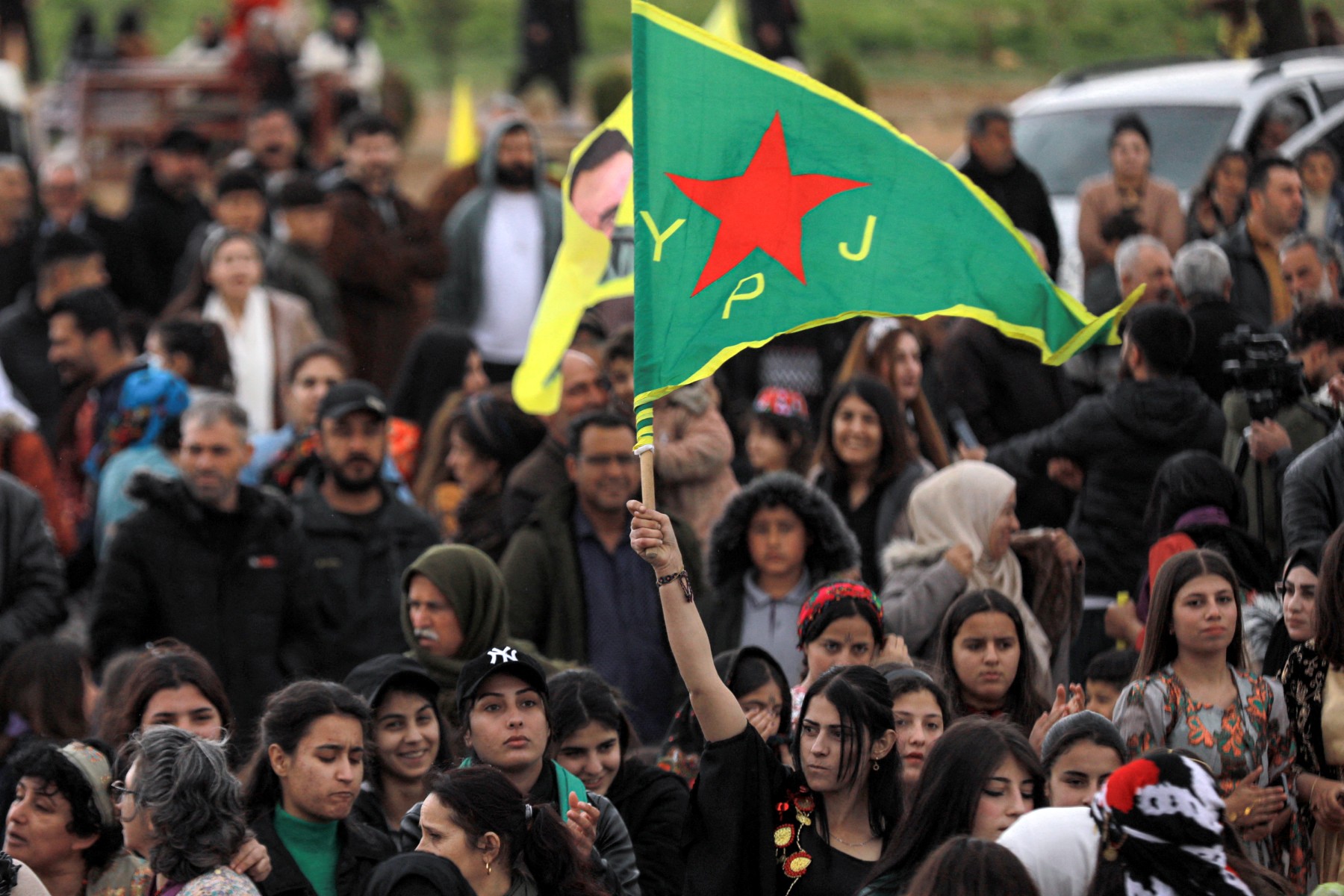
In 2012, as the Syrian army withdrew, Kurdish communities in Kobani, Afrin, and Jazira formed the People’s Protection Units (YPG) to protect their areas from the nationwide conflict, particularly from attacks by extremist Islamist armed groups. The Autonomous Administration was established and later expanded to Manbij, Raqqa, and Deir ez-Zor after their liberation from ISIS. The administration promoted democracy, gender equality, and cultural pluralism. Art flourished in this new environment.
Teyaro joined the YPG, while Bave Teyar joined the Internal Security Forces (Asayish). The troupe was renamed “Martyr Osman Troupe” in 2013 in honor of member Osman Oso, who was killed in a bombing carried out by ISIS in the city of Tal Abyad while on his way to perform. It continued producing films, including “Bave Teyar’s Last Word”, which won the Duhok Governate Award at the Duhok International Film Festival in December 2024. Teyaro accepted the award on behalf of Bave Teyar, who was killed in a Turkish drone strike on January 17, 2025, during a civilian protest at Tishrin Dam, a vital energy source and defensive stronghold for Kobani.
The Rojava Higher Institute of Arts … with departments in theater, cinema, music, painting, and sculpture, offers free education and housing to students from across northern and eastern Syria
Teyaro said that Bave Teyar was central to the protests: “Bave Teyar formed a dabke circle and began singing. The bombing happened halfway through the dance. I saw nothing but dust. I rushed to find him – but he had passed away.”
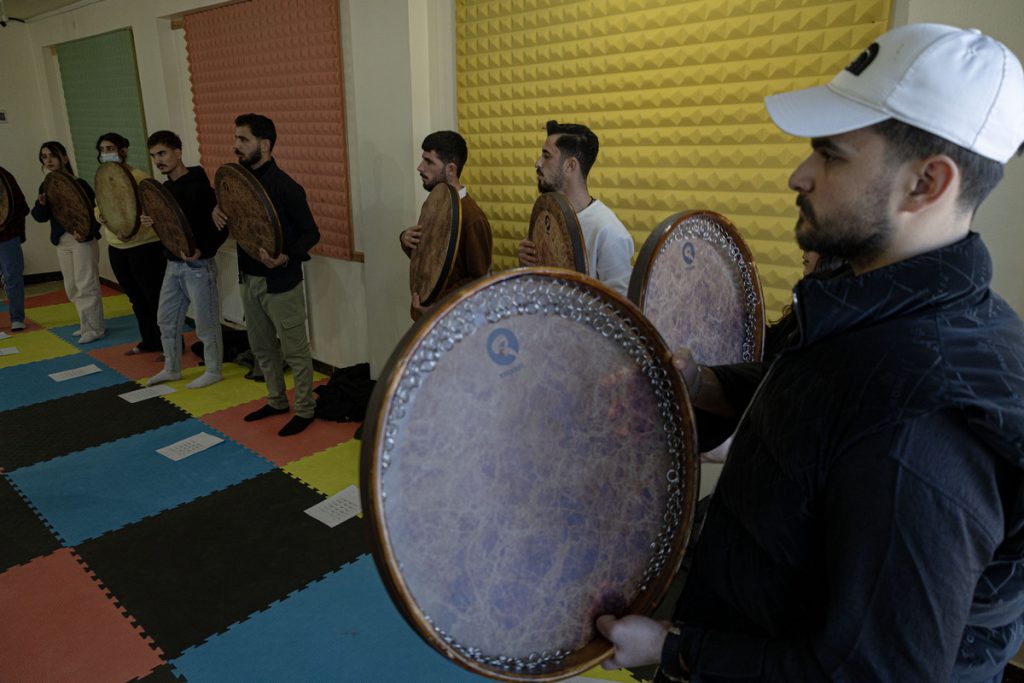
The Higher Institute of Arts
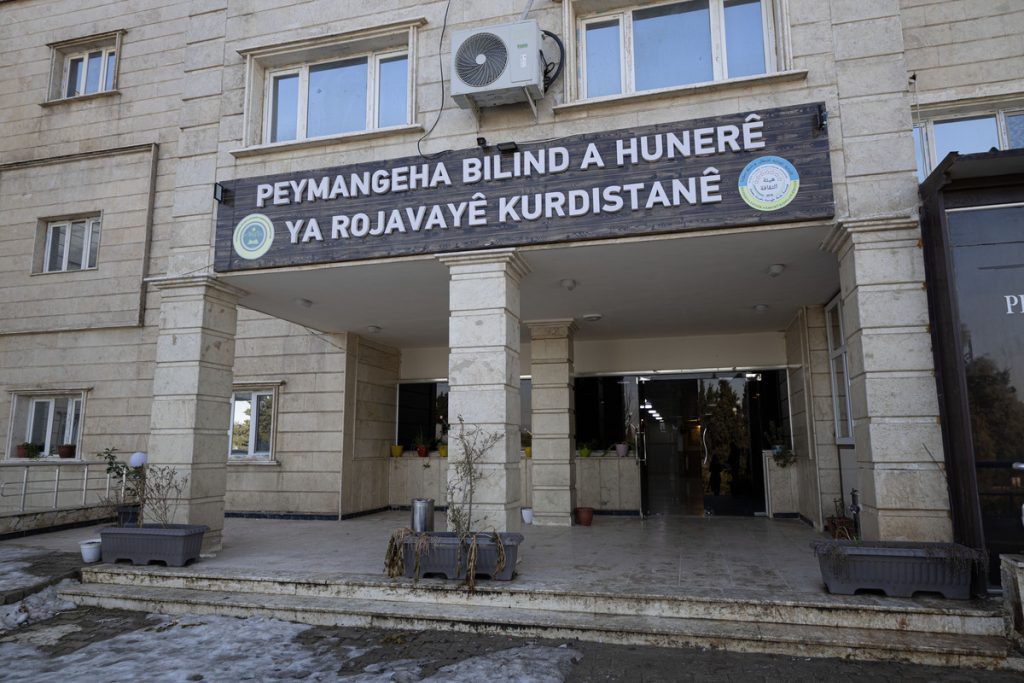
The Rojava Higher Institute of Arts, established on October 17, 2024, near Dêrik, marks a new chapter. The institute, with departments in theater, cinema, music, painting, and sculpture, offers free education and housing to students from across northern and eastern Syria – Raqqa, Kobani, Afrin, Aleppo, Qamishli, and Dêrik; however, the takeover of Aleppo and Raqqa by the Syrian Arab Army potentially changes availability. Co-president Jwan Ali said, “Art was forbidden. We formed troupes in secret. Now, we train artists academically to move from spontaneity to professionalism.”
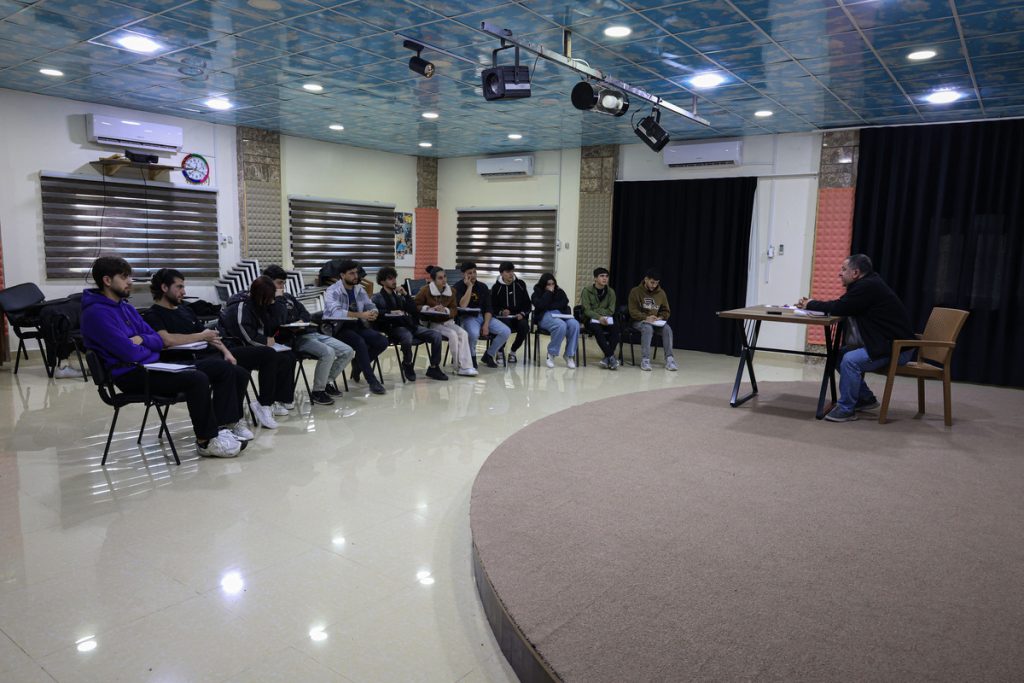
The institute welcomes students from all communities – Turkmen, Arabs, Syriacs – provided they speak Kurdish. “We have two Arab female students who learned Kurdish and joined,” Ali said. The use of Kurdish as the primary language of instruction “elevates Kurdish art, which was suppressed for decades,” he added.
Despite a drop in enrollment due to renewed displacement, demand remains strong. In 2025, 200 applied, and 90 were admitted. Enrolled students have ambitions of further expanding the cultural activities in Rojava: Viyan, a music student displaced from Serê Kaniyê (Ras al-Ain) after Turkey’s 2019 Operation Peace Spring, said: “After the first year, we aim to establish an orchestra.” While for many, such as Jana, 19, a visual arts student from Qamishli, the institute has provided opportunities to hone their artistic skills, while simultaneously engaging with academia in their native tongue. Jana described the chance to study art in Kurdish as a childhood dream.
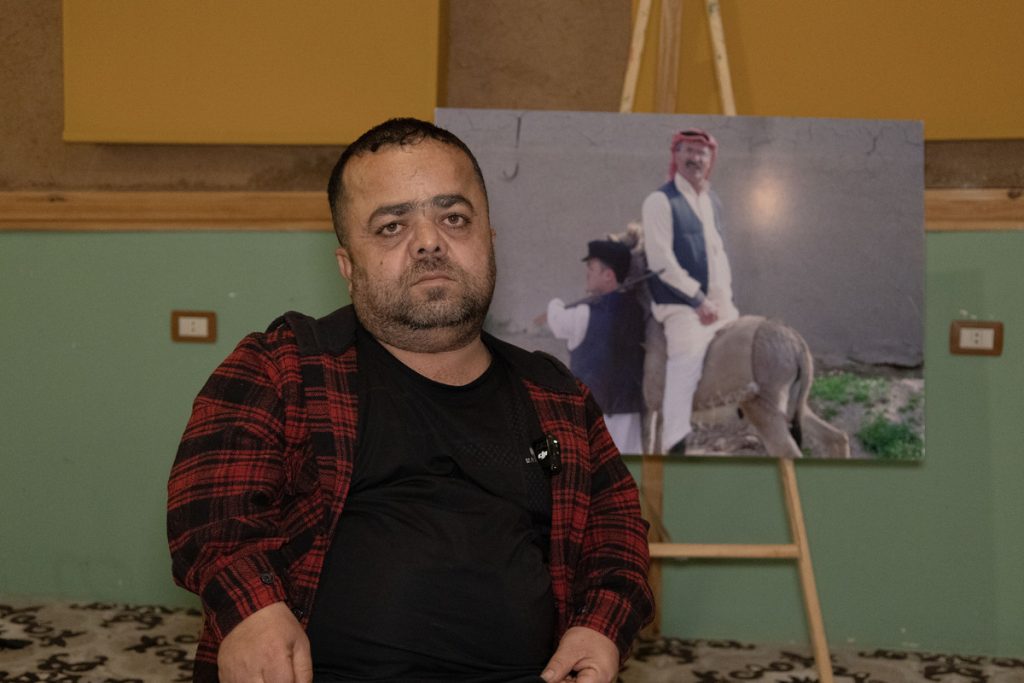
Theater student Baz Ismael, 27, claimed that the benefits of the institute can have broad effects: “Opening this institute is like the Enlightenment that brought Europe from darkness to light.” He said that once linguistic freedom was achieved, the next natural step was artistic freedom – something to which the community has aspired.
Uncertain future
Syrian interim president Ahmed al-Sharaa issued Decree No. 13 on January 16 to affirm Kurdish rights and cultural identity, but many Kurds view the move as symbolic and lacking meaningful structural change. Following weeks of bloody clashes between the SDF and the Syrian Arab Army factions, both sides reached an agreement where the Kurdish cultural rights have been secured.
The future will tell whether the Kurdish cultural rights will be incorporated into the Syrian constitution so that the Kurds will be given security that their hard-won gains won’t be dismantled.

Rozan Yousef
Rozan Yousef is a freelance editor, voiceover, and presenter based in Qamishli. She works with Al-Youm TV and R-Cell Communications in Rojava/North East Syria, contributing promotional videos for social media and televised reports on the region's cultural diversity.