Faith Under Fire: Syria’s Christians Seek Justice After Church Bombing
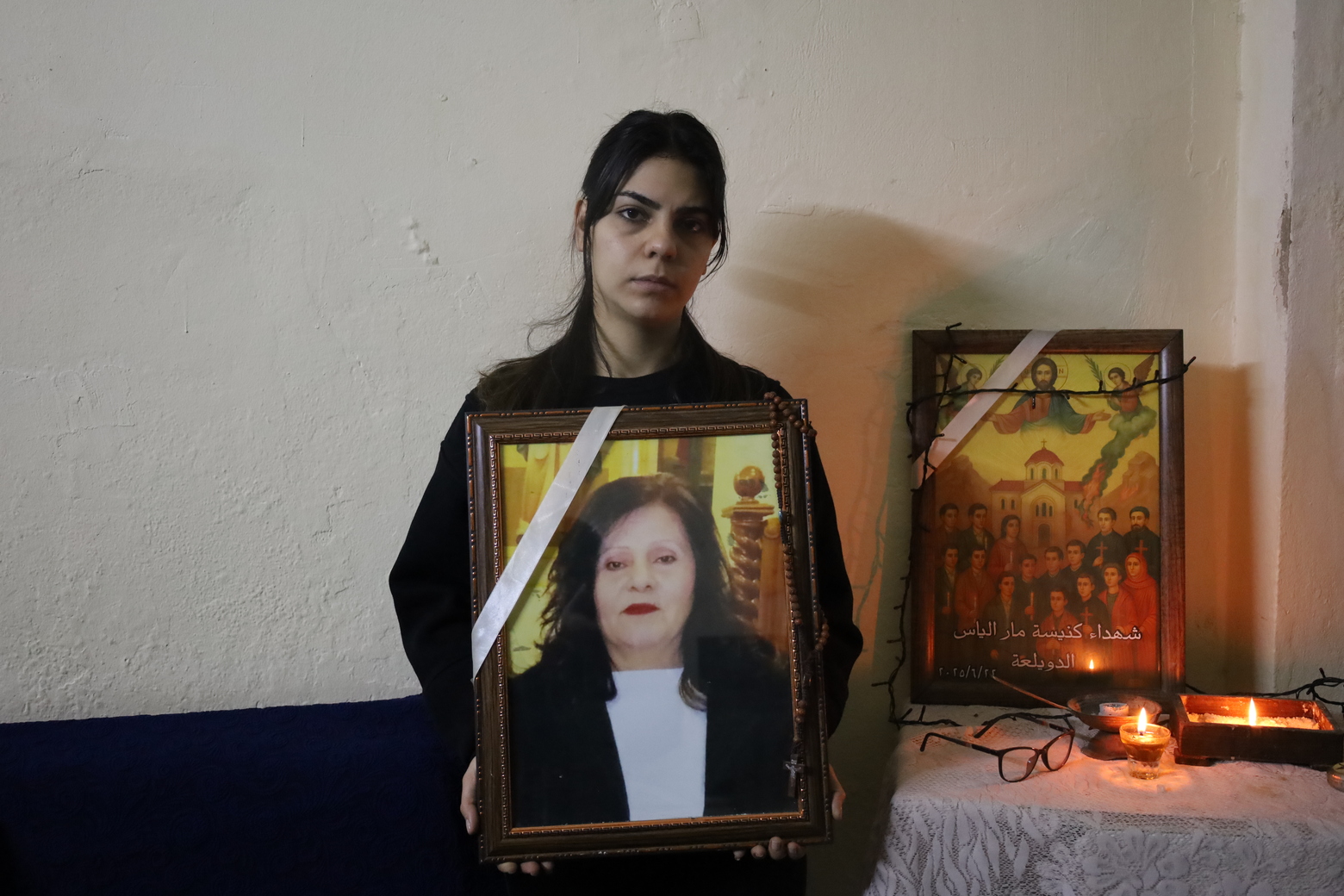
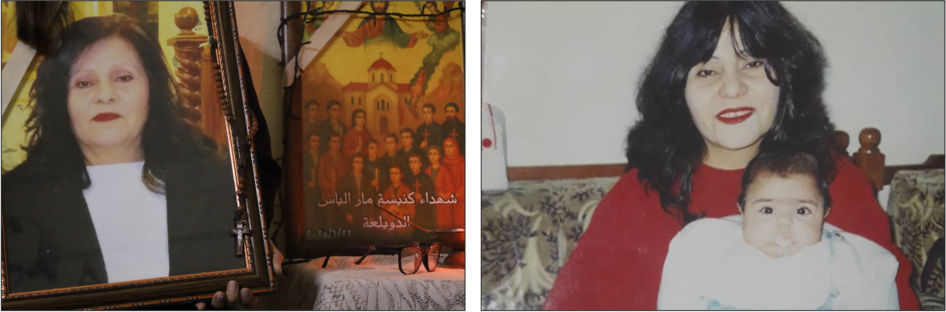
Mary Moussa Barhoum holds a picture of her mother who was killed at the Mar Elias church bombing | Picture Credits: Soha Ezzi
On 22 June 2025, Mary Musa Barhoum was getting ready to attend Sunday mass with her family at Mar Elias Greek-Orthodox Church in Damascus, unaware it would be the last time she would hear her mother’s voice.
Three months before the suicide bombing inside the Mar Elias church in Damascus, Mary’s family, along with other local residents of the Dweila (a Christian-majority neighborhood), began encountering strangers who would arrive in cars, chanting “Allahu Akbar” and playing Quranic verses and radical Islamic anthems through loudspeakers. Many residents of the locality, Christians and Muslims alike, came together and forced them to keep out of the neighborhood. Mary’s father, who was among the crowds that asked the strangers to leave, remembered: “When we told them to stop these practices, which did not represent the morals of Islam, one of them shouted loudly, ‘Kuffar! [Infidels] We will kill all of you.’ Dweila started to feel unsafe.”
Meanwhile, several communities in Damascus and other Syrian provinces had also been witnessing public campaigns led by organized individuals affiliated with pro-government armed groups, calling for jihad.
In contrast, the relevant authorities in the interim government neglected to address these flagrant incidents.
Wary of potential sectarian violence, Mary and her family confirmed that they, with help from other Dweila residents and activists from civil peace teams, had urged officials in the interim government and church offices to investigate such incidents. In response, Mar Elias Church issued several statements and took a few measures to promote civil peace.
In contrast, the relevant authorities in the interim government neglected to address these flagrant incidents. Instead, considerable leniency was shown towards the perpetrators, and there has even been widespread participation by members of the interim government’s general security forces in such incidents. Arsenios Dahdal, the bishop of the Greek Orthodox Patriarchate in Damascus and the entire Levant region, said, “This had caused concern among Christians, prompting some to participate in public demonstrations in their neighborhoods to express their rejection of these practices”.
Fears become reality
Mary, a 25-year-old English teacher, says, “My little sister [Nagham] and mother [Antoinette] left the house and headed to Mar Elias church to attend Sunday mass. I told them that I would join later. My mother had a habit of going to Church half an hour before the scheduled time for weekly mass, 6 PM.”
“I can’t remember how I survived, but I do remember that blood and human remains were everywhere”
Meanwhile, Mary was at home with her father, only five minutes away from the church. She received a text message from her sister urging her to hurry so that she would have a seat next to her and their Mother. At 6:15 PM, Mary wrote back to her sister saying that she would arrive in a few minutes.
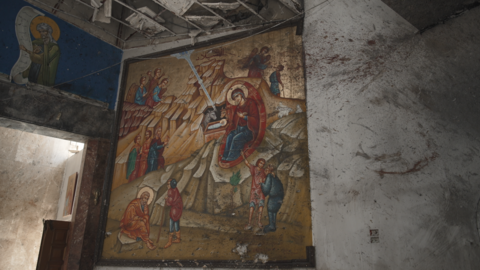
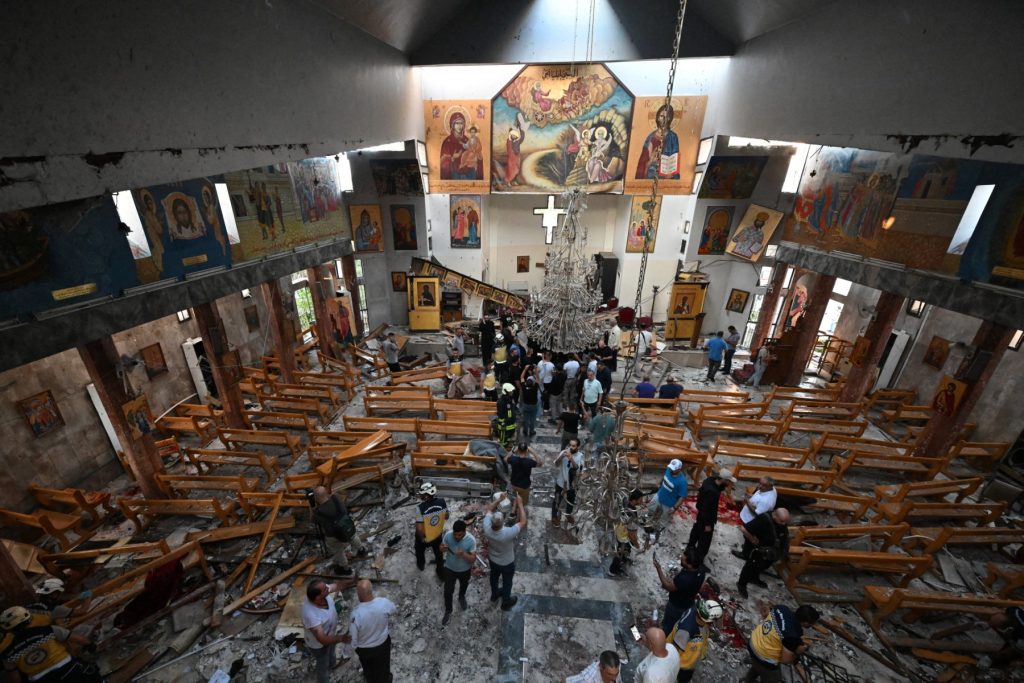
When Mary arrived at the church door, loud screams of “Allahu Akbar” tore through the air along with the sounds of gunshots. She threw herself to the ground and started crawling. Within seconds, an explosion rocked the church. “I can’t remember how I survived, but I do remember that blood and human remains were everywhere,” Mary said.
Surrounded by hundreds of civil defense teams and general security forces who arrived at the church, she began searching for her sister and mother. When she entered the hall, she heard her sister’s voice under the rubble. Moments later, her father and her sister’s husband came and pulled out Antoinette, who was crushed under the rubble, and she was then rushed off to the hospital. “At first, I couldn’t recognize my mother’s body among the blood and debris, but eventually I was able to identify her by her clothes and glasses.”Musa Barhoum, Mary’s father, reported, “Antoinette remained in a coma for two weeks, during which time she underwent several surgeries since she had multiple fractures throughout her skull and pelvis from shrapnel that had pierced her body.”
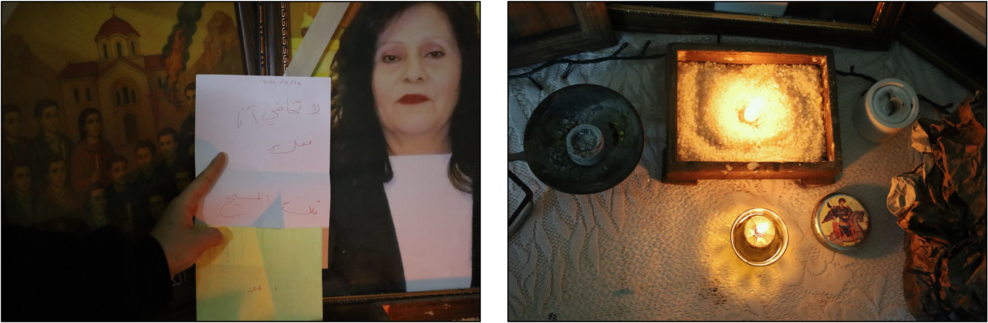
Antoinette remained in the intensive care unit. She was totally unable to speak, yet she managed to communicate sometimes by writing on paper. Mary says: “I still keep all the pieces of paper my mother wrote to us, in the days before her death.” After a month, in which she slipped in and out of a coma, she passed away at the end of July.
When I look back, I can’t forget what those extremists who came in vehicles to spread Islam said to us: that they would come back later to kill us. Our fears were justified.”
The terrorist bombing that targeted the Mar Elias Church killed 22 civilians and injured more than 80 others, some of whom are still suffering from serious physical injuries. Barhoum said, “I lost my wife and many loved ones and neighbours in this bombing. When I look back, I can’t forget what those extremists who came in vehicles to spread Islam said to us: that they would come back later to kill us. Our fears were justified.”
They have lost confidence in the interim government, as all of this occurred under their watch, with no action taken to stop these incidents or even arrest the perpetrators.
“To this day, every time we leave the house, we feel that something bad is going to happen to us,” he added.
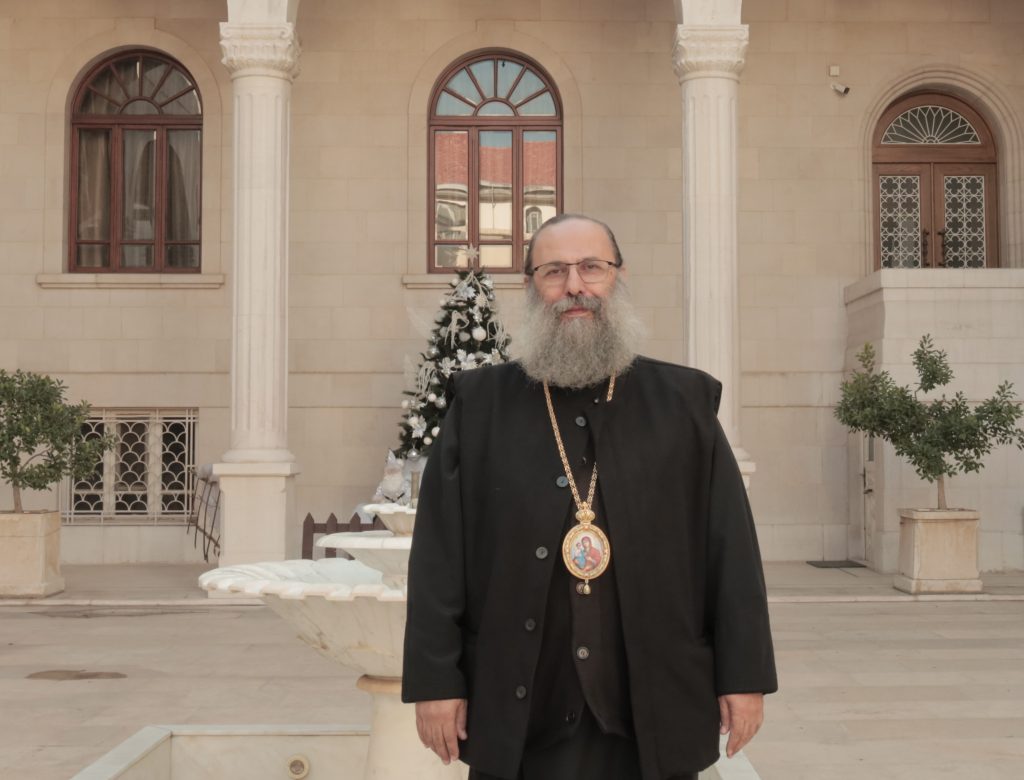
Arsenios Dahdal told The Amargi: “We repeatedly warned the interim government and its security agencies upon taking action, but regrettably, no decisive action had been taken. Therefore, we hold the interim government fully responsible for what happened.” For context, the Greek Orthodox Patriarchate also condemns all acts of violence and massacres targeting Christians and other Syrian communities that happened under the pretext of imposing security and stability, particularly in the coastal region, Homs, and Suwayda, as well as the ongoing violence in the Kurdish areas in Northeast Syria.
Also, the Patriarchate is in constant contact with the families of victims of the Mar Elias Church attack, providing psychological and financial support. However, they have reportedly not seen any efforts in this regard from the transitional government, something that is highly concerning to Dahdal.
He adds, “Transitional justice in Syria has not yet been achieved, and we lack the basic pillars for it. As a Christian community, we are lending a hand to the government and other relevant parties to advance justice and accountability, to prevent the deepening divisions among Syrians, and to protect the unity of the country.”Musa and his family affirm that they will not give up demanding accountability until justice is served for the souls of their loved ones who were killed in the bombing. They don’t expect this attack to be the last of their troubles, especially given the waves of violence that are spreading across Syria’s map. Christians, not only in Damascus but across the country, have evidently lost their sense of security.
“They think they have killed our faith, but on the contrary, our faith has grown stronger.”
As a final thought, Mary said, “When I regained my consciousness after the explosion, I witnessed a scene I cannot forget: that of an armed member of the general security forces who was smiling as the bodies of the victims were being removed from the church hall. They think they have killed our faith, but on the contrary, our faith has grown stronger.”

Soha Ezzi
A filmmaker, civil activist, and independent journalist based in Damascus, Syria