Ankara’s Ownership Over Syria
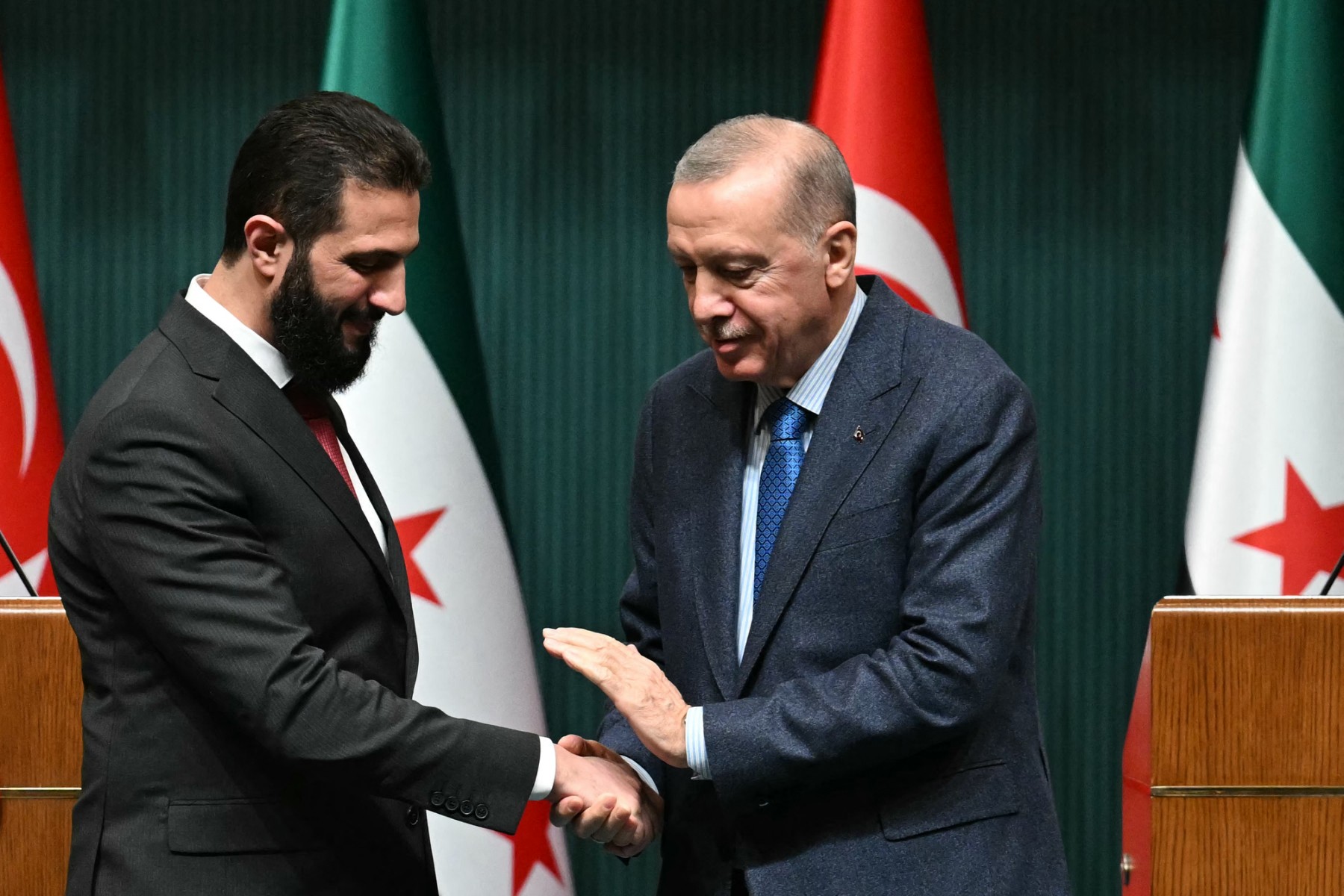
Turkish President Recep Tayyip Erdogan (R) and Syria’s interim president Ahmed al-Sharaa shake hands following their meeting at the Presidential Palace in Ankara, on February 4, 2025. (Photo by OZAN KOSE / AFP)
The integration process under way between the Kurds and the Damascus administration in Syria is often presented as a technical administrative arrangement or framed under the heading of an “internal reconciliation.” In reality, however, it is intertwined with Turkey’s own Kurdish question, the United States’ increasingly explicit emphasis on “stability” in its Syria policy, Israel’s security calculations, and the still-incomplete redesign of the region.
According to journalist and writer Faik Bulut, what is unfolding in Syria today is not a “peace process,” but rather a period of provisional balance in which risks are being managed, demands are deliberately kept within narrow limits, and actors are cautiously testing one another. In this equation, meeting the Kurds’ core political demands is not considered feasible, while the survival of the Syrian state—by whatever means—has emerged as a shared priority.
Turkey occupies the position of a “de-facto guardian authority”
One of the critical thresholds at which this balance became tangible was the trilateral meeting between U.S., Israel, and Damascus in Paris on January 6. The aspect that reached the public sphere was the indirect understanding between Israel and the Damascus administration, yet the truly decisive element was a broader, multi-actor consensus. Turkey was not physically present at the table, but it was de facto shaping the process. From the perspective of Damascus, Bulut says to The Amargi, Turkey occupies the position of a “de-facto guardian authority” – a force that steers the process, defines its boundaries, and, when necessary, assumes a protective role. France’s quiet acquiescence in Paris, Israel’s lack of objection, and the US’ behind-the-scenes guidance completed this picture. For the Kurds, the outcome meant that a crucial channel of support was steadily narrowing.
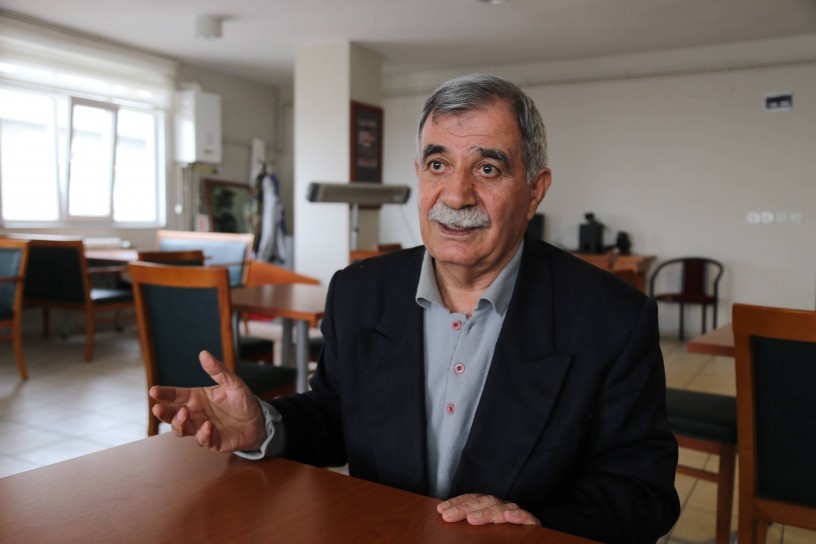
How Was the SDF Sidelined?
According to Faik Bulut, the sidelining of the Syrian Democratic Forces (SDF) was the outcome of a process prepared months in advance. This rupture became visible through Ambassador Tom Barrack’s appointment to Turkey and the shift in the US’ Syria policy. Bulut argues that Barrack aligned himself with Ankara’s security perspective and thereafter deviated from this line very little.
Bulut says that behind this rapprochement lies not only the US’s search for stability but also a strong economic calculation. In March 2025, during discussions in the US Congress, a report titled Bridging the Gap: Turkey Between East and West framed Turkey as a strategic bridge. Likewise, in the report, potential resources, amounting to 694 million tons of rare earth elements, in Turkey were highlighted as a critical advantage for the US in its ongoing global competition with China. Bulut believes this emphasis shows the Syria file was being handled in direct connection with economic considerations. By this point, Washington’s position on the SDF had become clear, Bulut says: “The SDF were our partners in the fight against ISIS; the cow is dead; the partnership is over.”
Where the SDF Went Wrong
According to Faik Bulut, at the current stage, the SDF also bears responsibility for the direction the process has taken. This responsibility is not military in nature; it stems primarily from diplomatic and political weaknesses. The contacts the SDF maintained with France, the US, and the US Central Command provided visibility, but these relationships remained at a personal level and failed to evolve into an institutional, sustainable lobbying network.
“You cannot conduct diplomacy solely to find support for yourself. You also have to neutralize the diplomacy of the forces that are working to block you.”
Another shortcoming, Bulut argues, was the failure to recognize that the leverage held by the SDF was gradually eroding. The ISIS card was particularly decisive in this respect. “You cannot bind all countries to yourself with only the ISIS card,” Bulut says.
The most critical issue, however, was the tribal question. The Arab tribes are neither homogeneous nor ideologically coherent structures. According to Bulut, the SDF assumed they could manage this complex social fabric through ideological transformation or internal security mechanisms. By contrast, Turkey and Damascus approached the tribes from a far more pragmatic angle, organizing them through interest-based relationships. In Bulut’s view, what the SDF should have done was know when to withdraw from areas they could not consolidate.
Finally, Bulut stresses that the SDF did not take Turkey’s behind-the-scenes diplomacy seriously enough. Recalling the intense diplomatic effort Ankara carried out in the period leading up to Jolani’s rise, Bulut states: “You cannot conduct diplomacy solely to find support for yourself. You also have to neutralize the diplomacy of the forces that are working to block you.”
Turkey’s Fear of Precedent
One of Ankara’s core concerns has been what the Kurds have gained in northern Syria and how those gains might reverberate inside Turkey. From Ankara’s perspective, every right granted to the Kurds in Syria carries the potential to set a precedent for the Kurdish question at home.
Bulut summarizes this line of thinking as follows: “If integration is possible, it should remain at the most minimal level; the Kurds should not become a collective political actor.” During the process the March 10 agreement, Ankara adopted a similar stance, exerting pressure to ensure that the agreement would be implemented in line with its own security perspective.
According to Bulut, in the “Peace and Democratic Society Process,” Turkey also aims to extract broader concessions by offering only limited steps to the Kurds. In Bulut’s view, Turkey is not merely exporting its own understanding of a “solution” to Syria; it is replicating an entire state model. “The notion of one man, one army, one state is a product of this intention,” he says. “The designations ‘Syrian Arab Republic’ and ‘Syrian Arab Army’ are also part of this mindset.”
The Influence Built In Syria
“Turkey has long abandoned the classical notion of “border defense.”
Ankara has changed its approach to national security. According to Bulut, Turkey has long abandoned the classical notion of “border defense.” The new approach is based on confronting threats not at the border line itself, but beyond it, at a depth of 30 to 40 kilometers. The military and administrative order established in areas such as Afrin, Ras al-Ayn (Serê Kaniyê), and Tel Abyad (Girê Spî) is the on-the-ground reflection of this doctrine.
Bulut emphasizes that for Turkey, what is decisive is not the military presence in itself, but the political and administrative control of these areas.
The Sustainability of the Agreement
According to Bulut, it is possible that the agreement will hold in the short term; however, serious risks loom in the medium and long run. Recalling that Hayat Tahrir al-Sham (HTS) has a consistent record of violating every agreement it has entered, Bulut adds that he sees no strong indication that this arrangement will prove to be an exception. The crucial point in this process, however, is that the Kurds have, for the first time, become an officially recognized political actor.
The integration between SDF and HTS contains a deep structural and ideological incompatibility. For this reason, when power balances shift or when the Damascus administration feels stronger, it will be inevitable for existing agreements to be reopened. “As Jolani grows stronger, he will ruthlessly discard any agreement, ally, or structure that becomes a liability to him,” Bulut says. “If necessary, he would even sacrifice jihadist militants.”
Bulut notes that this is also why the West’s approach to Jolani has remained cautious. At one point, minorities were seen as the answer to the question of “who could keep this man in check,” but Jolani’s high level of pragmatism disrupted that calculation. Bulut maintains that the balance is not permanent: “Integration may later become a tool to once again use the Kurds, Alawites, and Druze as elements of balance.”

Rengin Azizoğlu
Rengin Azizoğlu is journalist and news editor based in Istanbul.