Christians in Iraqi Kurdistan Express Growing Insecurities Despite Official Guarantees
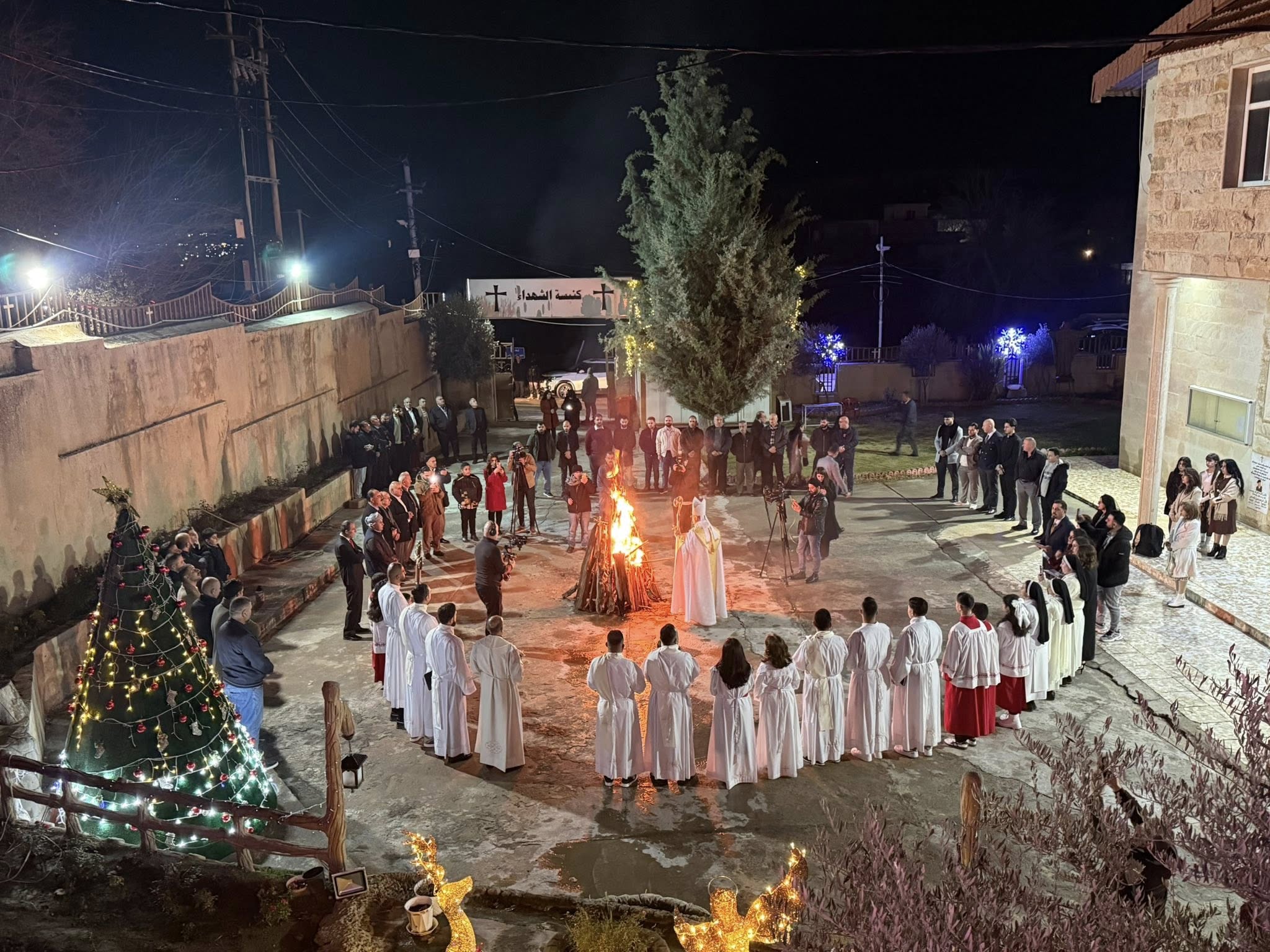
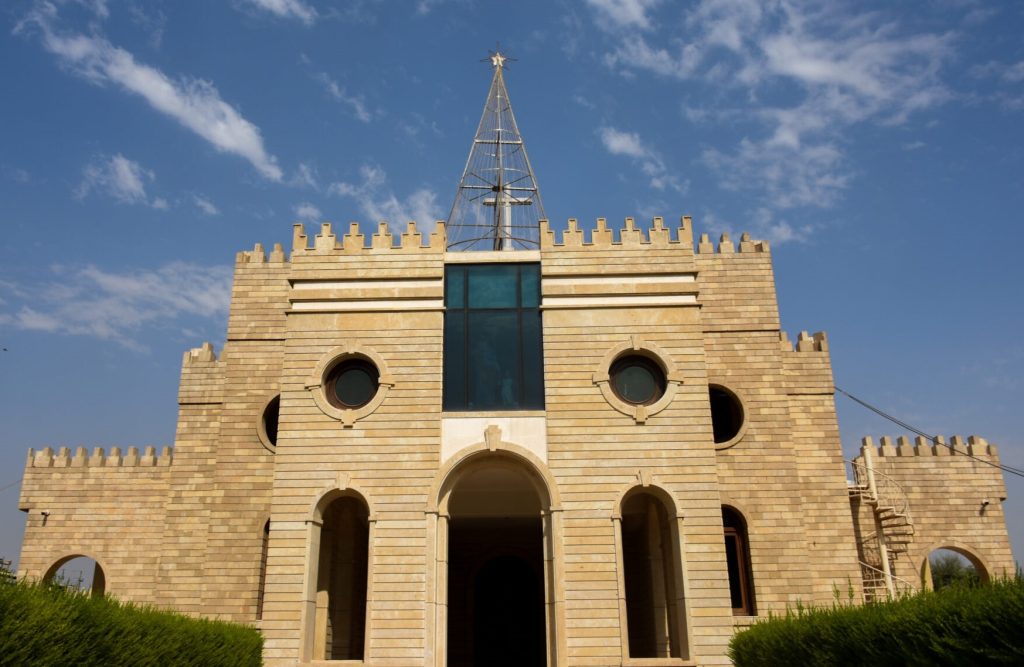
Celebration and Mass at the Church of the Martyrs in the Shaqlawa district | Picture Credits: Chaldean Archdiocese of Erbil
“If asylum procedures hadn’t become stricter, I would have emigrated,” says Yusuf Hanna, sipping his bitter coffee. “How can we endure when we’ve become the weakest link in this country’s fabric?”
Hanna, 57 and a resident of Ankawa district in Erbil, articulates the anxieties of an uncertain future experienced by a large segment of Christians in the Kurdistan Region of Iraq (KRI) and, more generally, in Iraq. As the minority celebrates Christmas and welcomes a new year, many are asking if continuing to live there is a realistic option.
Joy shadowed by anxiety
Towns and areas with Christian majorities are adorned with festive lights and Christmas trees. Masses, religious ceremonies, and festivals are held even after New Year’s Eve, reflecting a strong attachment to rituals integral to a deeply rooted Christian identity within Iraq.
Yet, recent memory is burdened with painful experiences lived by Christians over the last two decades, including sectarian violence, forced displacement, and direct targeting by extremist groups.
Despite repeated assurances from the Kurdistan Regional Government (KRG) of protecting religious and ethnic diversity, many Christians view recent recurring incidents as troubling indicators, although they are officially brushed off as isolated cases.
Messages sent through cemeteries
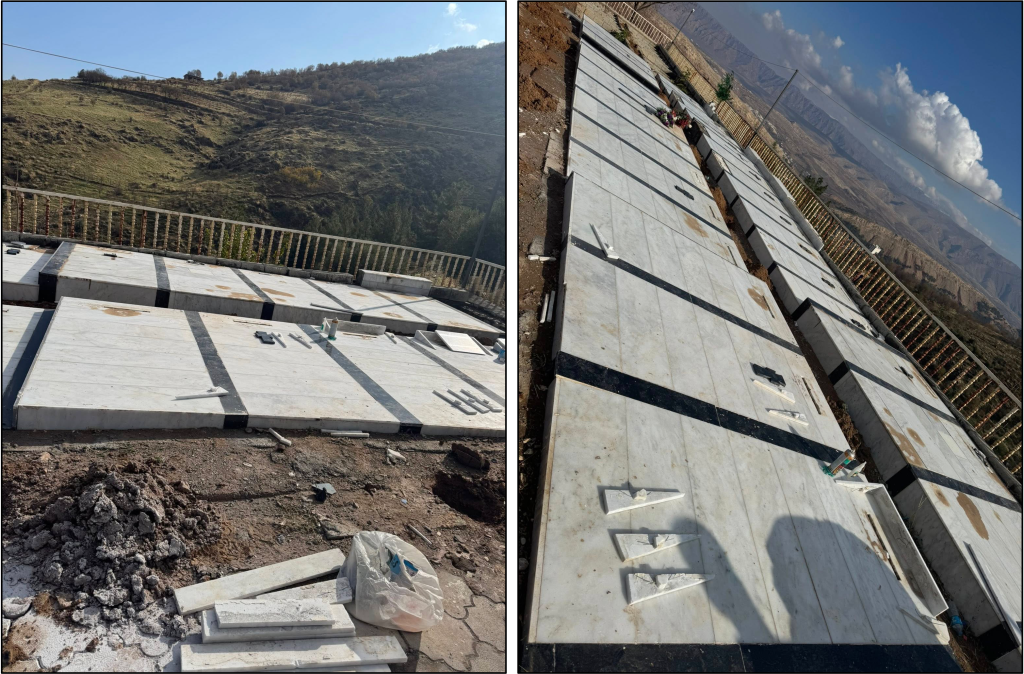
Prominent among these was when Christian cemeteries in the districts of Koya and Shaqlawa were vandalized during the first half of December. The attacks involved smashing, breaking, and defacing graves and tombstones, and triggered shock within Christian communities with their symbolism. At the same time, Mar Khnana Church, affiliated with the Assyrian Church of the East in the Deraluk subdistrict of Duhok province, was pelted with mud and stones.
“The incident carries deeper implications. We fear it was a message meant for the living, not the dead.”
Law enforcement responded quickly in the former – announcing the arrest of the perpetrator and releasing videos of him confessing to vandalizing the cemetery while intoxicated, and revealing a criminal record, including a prior accusation of burning a shrine in Erbil market in 2022. These measures, however, failed to dispel widespread doubts among Christians that it was an individual act.
A relative of those buried in the cemetery said, “The incident carries deeper implications. We fear it was a message meant for the living, not the dead.”
On social media, Christians expressed concern that attributing the crime to intoxication was an attempt to downplay responsibility and enable impunity. In response, Muna Yaku, head of the Kurdistan Region’s Human Rights Commission, stressed that: “The crime is complete in all its elements, and the suspect’s intoxication will not exempt him from punishment.”
She emphasized that embracing diversity is “a major responsibility that lies first with the authorities, then with the majority, and finally with the rest of the components.”
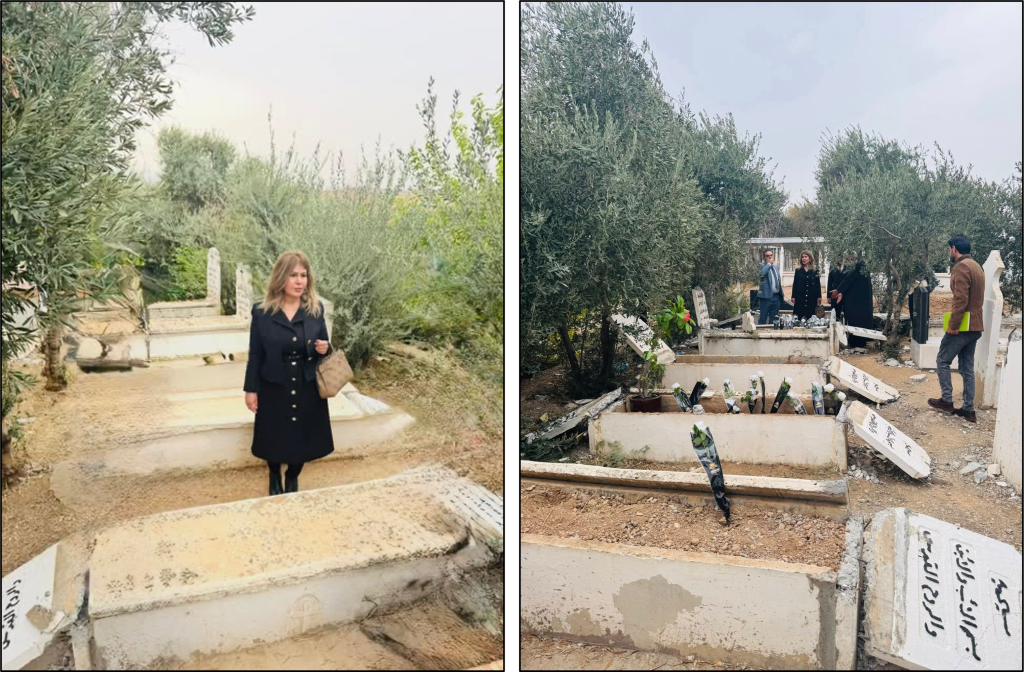
“Any post or comment carrying hatred, excommunication, or bullying on religious or ethnic grounds must be taken seriously, because what happens to cemeteries can extend to the living,” she warned.
The recurrence of similar incidents, along with the fact that Shaqlawa and Koya are among the areas that have experienced a sharp decline in Christian populations over the past two decades, has not helped alleviate fears. Estimates suggest that no more than 200 families remain across both districts, following successive waves of internal and external migration; unfortunately, a reality common to many areas where Christians once had a historical presence.
Diverging assessments
In response to the cemetery attacks, KRG Prime Minister Masrour Barzani called for the swift apprehension of the perpetrator and pledged to restore the damaged cemetery. Anoo Jawhar, Secretary-General of the Christian Alliance and Kurdistan Region Minister of Communications, said the swift arrest of the suspect “clearly proves there is no place for extremism in Kurdistan.”
The Chaldean Patriarchate, the country’s largest Christian ecclesiastical authority, expressed confidence in the KRG, while the Union of Islamic Scholars in the Kurdistan Region voiced solidarity, stating that “Attacking the dead is no different from attacking the living, and it violates the principles of Islam.”
However, opinions within Christian political circles appeared divided. Former Iraqi MP Joseph Sliwa argued that the attacks “are neither new nor random,” pointing to similar incidents in Shaqlawa, Koya, Zakho, and Duhok in previous years.
By contrast, Rami Nouri, a Christian MP in the Kurdistan Parliament, downplayed the concerns, saying “there is no justification for alarmism,” describing the region as enjoying “exceptional stability,” and noting that security forces pay special attention to minority communities.
Not all developments are bleak. In a notable gesture, Father Diaa Shaba, priest of Harmota and Koya, announced that “Muslim donors contributed to the construction of a new church” – a step that may help allay fears among Christians.
Direct targeting
Concerns are not limited to incidents at cemeteries, however. On 1 April 2024, participants celebrating Akitu, the Assyrian-Babylonian New Year, were assaulted in Duhok by an axe-wielding man, seriously injuring two people before being arrested. Authorities later announced that the attacker was “a Syrian national who embraced ISIS ideology.”
According to the Directorate of Christian Affairs at the Kurdistan Region’s Ministry of Endowments, the number of Christians remaining in Iraq todayis estimated below 300,000
Gradual erosion
According to the Directorate of Christian Affairs at the Kurdistan Region’s Ministry of Endowments, the number of Christians remaining in Iraq today—mostly in the Kurdistan Region and Nineveh province—is estimated below 300,000. Other estimates place the figure closer to 200,000.
This is a dramatic decline since 2003, when the Christian community in Iraq exceeded 1.5 million. Sectarian violence, followed by ISIS’s 2014 onslaught, triggered massive displacement waves and other factors that profoundly reshaped the community’s demographic map.
Encroachment on a national occasion
Another controversial incident occurred last September when a procession commemorating Chaldean martyrs in the village of Suriya, Zakho district, was harassed. The incident involved removing Chaldean flags from some participants and led to confrontations between Chaldean party representatives and security personnel.
Following the incident, Bishop Felix Saeed Al-Shabi, Archbishop of Zakho, issued a statement accusing a security force of attempting to run over women in the procession. He asserted that he had informed senior authorities in the region, after which swift measures were taken and renewed promises were made to protect Christians.
“Extremist voices incite hatred, and political currents fuel it,” said Rami Yusuf, a young Christian. “If this is not stopped, the consequences will be worse in the future.”
Confiscated representation
Politically, Christians complain that their decision-making power has been hijacked using their allocated seats in the regional and federal parliaments under the minority quota system. They argue that these seats—meant to protect diversity and rights—have instead become tools controlled by dominant political forces.
They point to the dominance of candidates backed by the Kurdistan Democratic Party, led by Masoud Barzani, and the Babylon Movement, led by Rayan al-Kildani and supported by Iran-aligned Shiite forces, which have won most quota seats, especially in recent federal elections, through votes that Christian activists say do not reflect the community’s true size.
This prompted Chaldean Patriarch Louis Sako to call for the establishment of an independent Christian political council. He also proposed amendments to the election law to restrict quota voting to community members, warning that “continued marginalization and exclusion threaten their very presence on their land.”
The church had also protested political actions seen as undermining its authority. In 2023, the presidency revoked a decree granting Sako authority over church endowments—reportedly under pressure from Rayan al-Kildani—prompting the patriarch to relocate his headquarters to Erbil in protest before returning after a new decree restored his powers.
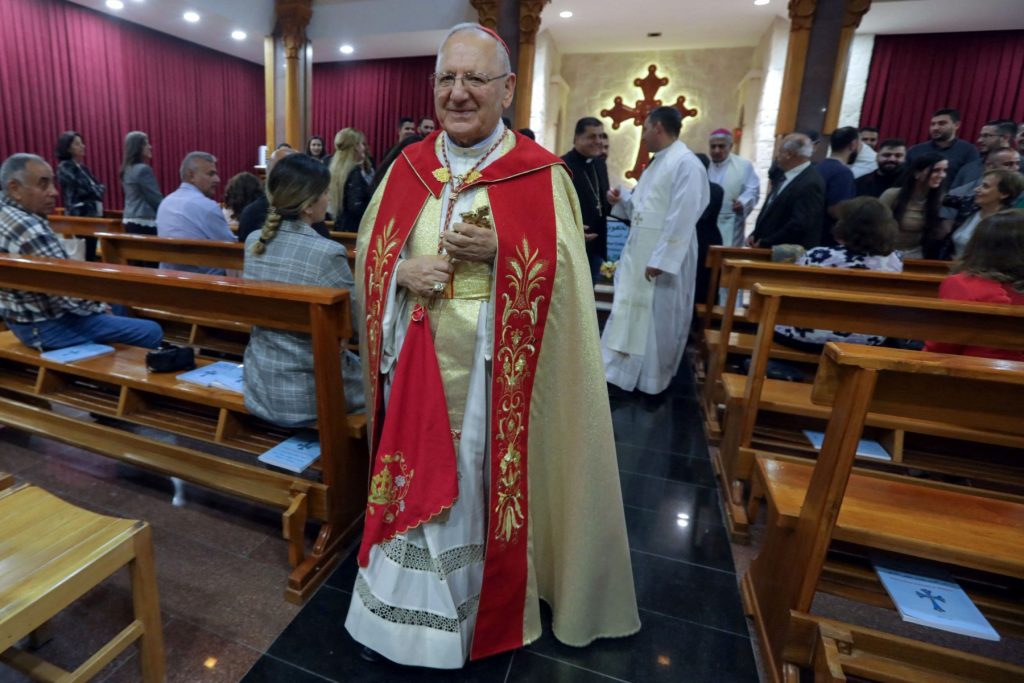
Political pressure has not abated. Most recently, Sako faced harsh criticism and calls for prosecution after using the term “normalization” in a Christmas Eve Mass speech in Baghdad on 24 December, attended by Iraqi Prime Minister Mohammed Shia al-Sudani, in which he said, “Normalization should be within Iraq and with Iraq, the land of prophets.”
Sudani responded by saying that “the word normalization does not exist in Iraq’s dictionary due to its association with an occupying entity,” referring to Israel.
Christians also complain of land confiscations or manipulation of land records, particularly in the Nineveh Plain, Ankawa, and villages in Duhok
Although Sako’s office denied that his remarks called for normalization with Israel, and emphasized they had been misinterpreted, Muqtada al-Sadr attacked him, saying: “Normalization is a crime punishable under Iraqi law, and anyone calling for it is not beyond accountability.” Rayan al-Kildani also criticized Sako’s speech, while Shiite MP Mustafa Sanad threatened legal action.
Land and demography
Christians also complain of land confiscations or manipulation of land records, particularly in the Nineveh Plain, Ankawa, and villages in Duhok. While authorities report that most cases were resolved through compensation, affected residents contend that losing land constitutes a profound psychological blow that makes remaining costly and uncertain.
In Ankawa, Christians also object to the spread of nightclubs within residential neighborhoods, which residents see as infringing on the area’s character, despite official justifications related to tourism and the economy.
The nightmare of migration
Against this bleak backdrop, emigration remains a constant obsession. As Western countries tighten restrictions, Christians are forced to pursue longer and more expensive routes: work permits, family sponsorships, or years-long waits in neighboring countries.
A young man from Duhok said, “The long wait consumes your life, but it is still easier than waiting inside a country that does not give you a real sense of safety.”

The Amargi
Amargi Columnist