Armenian Union Party Launches in Northeast Syria Amid Political Transition
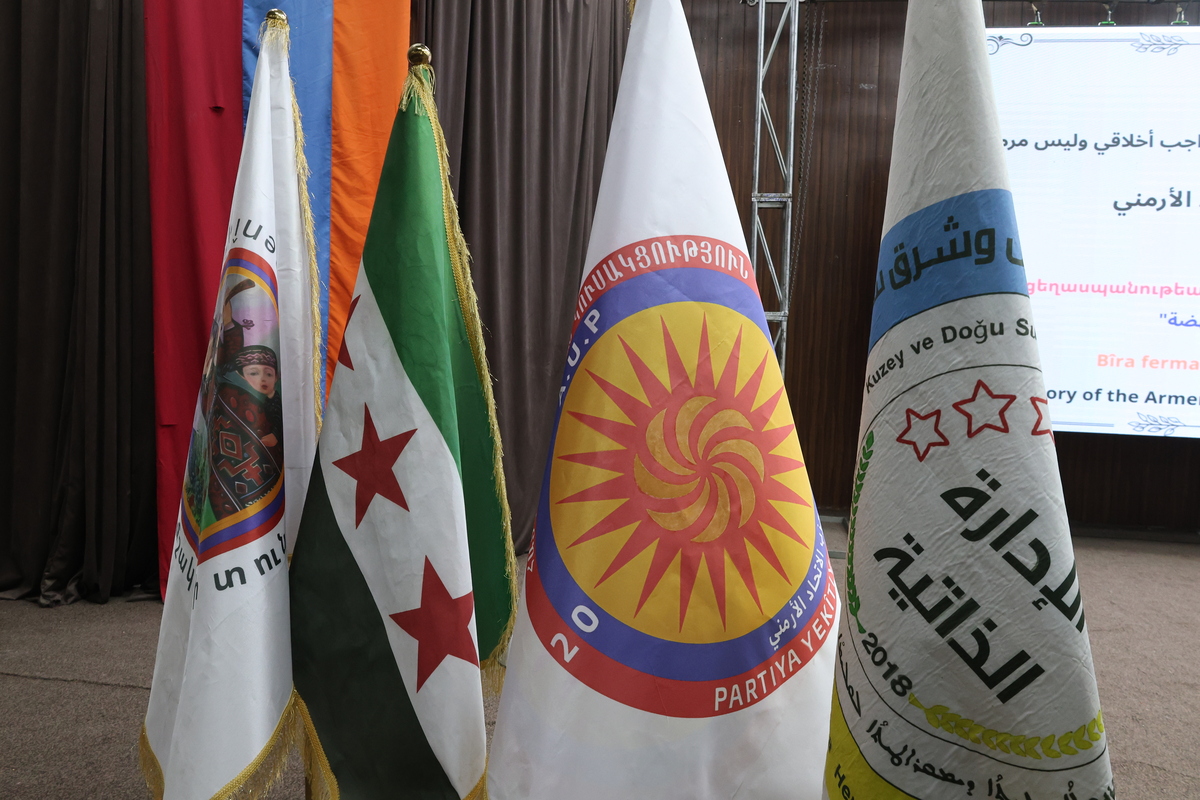
Armenian flag alongside the flags of the Autonomous Administration and Syria | Picture Credits: Abbas Abbas
Hasakah, Northeast Syria
A year after the fall of Bashar al-Assad in December, 2024, Armenian political actors in northeast Syria have announced the formation of a new party, reflecting shifting political dynamics under the Democratic Autonomous Administration of North and East Syria (DAANES). Officials from the DAANES have welcomed the Armenian party’s launch, calling all Syrian communities equal stakeholders in Syria’s future.
Imad Tetryan, secretary general of the newly established Armenian Union Party, announced the party’s launch in Hasakah, an area governed by the Autonomous Administration and the Kurdish-led Syrian Democratic Forces (SDF). He said the decision was driven by, what he described as, continued political exclusion by Syria’s transitional government in Damascus, particularly toward non-Arab, non-Sunni Muslim communities.
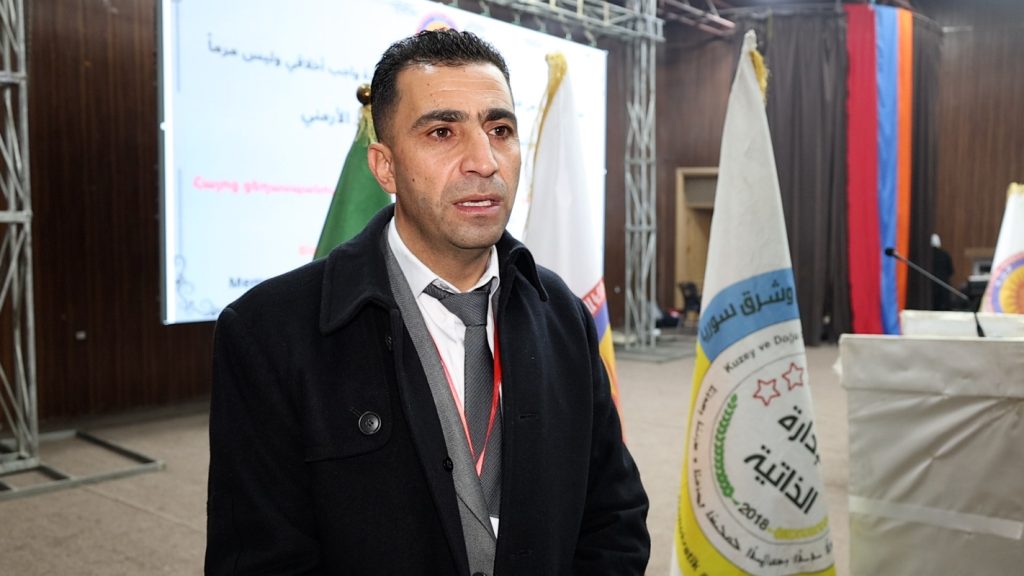
The Armenian Union Party is not the first Armenian political organization in Syria. However, according to Tetryan, it is the first to be founded within territories administered by the Autonomous Administration, and the first to define itself around Armenian self-determination rather than religious affiliation or descent from genocide survivors. The party says membership is open to all, regardless of ethnicity and cultural background.
…the Syrian transitional government’s exclusionary policies are very similar to Assad’s; and avoiding a repetition of the previous authoritarian conditions motivated them to launch the party.
Party leaders say their goal is to consolidate Armenian political representation, both within Syria and among the broader Armenian diaspora. Tetryan added that after the events of Suwayda and the Syrian coast, where thousands from the Druze and Alawite communities were massacred, “It was incumbent upon us to establish this party to stand against these practices, because we too have suffered from genocides, and we do not want them to be repeated.”
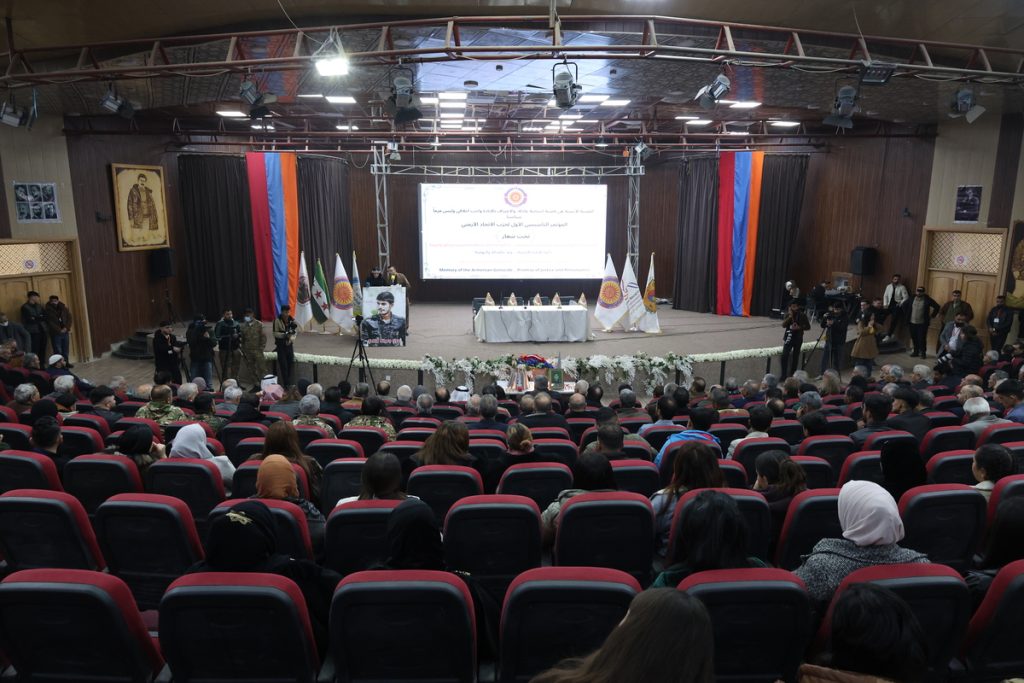
The Armenian Union Party operates within the framework of the Autonomous Administration of North and East Syria and is part of the Syrian Democratic Council (SDC), which includes various parties and political forces from around the country. Tetryan explained that the party participates in local political and cultural decision-making processes in areas where Armenians live. He emphasized that the Autonomous Administration has safeguarded Armenians’ rights, including education in the Armenian language and official recognition of Armenian cultural heritage – rights which were denied under Assad’s Baathist government.
He explained that, by contrast, the Syrian transitional government’s exclusionary policies are very similar to Assad’s; and avoiding a repetition of the previous authoritarian conditions motivated them to launch the party.
Another point of agreement between the party and the Autonomous Administration is women’s political participation, which has been a notable element of the party’s platform.
The party has also highlighted its independence, distancing itself from religious institutions and traditional Armenian political structures. According to Tetryan, the party seeks to preserve Armenian cultural identity while working alongside other ethnic and religious groups to promote a decentralized and inclusive political system for Syria.
Another point of agreement between the party and the Autonomous Administration is women’s political participation, which has been a notable element of the party’s platform. Kohar Khajadourian, a member of the party’s political bureau, pointed to the Autonomous Administration’s co-chair system, which requires shared leadership positions (one man and one woman) as a mechanism that ensures broader representation and has expanded women’s roles in political, military, and social institutions in the region.
Armenians are also present within the region’s military structures, as Mkrtich Katangian, commander of the Armenian regiment within the SDF, explained. He said that they joined the SDF primarily to protect their community, and initial integration, aided by joint training programs and shared command structures, was relatively smooth.
Katangian acknowledged some early resistance to taking up arms among some Armenians, citing pacifist traditions within the community. Over time, however, participation in the SDF became more widely accepted, particularly as security threats persisted. He said that the SDF’s system, which recognizes the right of all groups to self-representation, strengthened cooperation across ethnic and cultural lines and helped foster collective discipline and reduced tensions. The SDF’s ranks – which include soldiers from a range of communities, including Armenians, Syriacs, Assyrians, Arabs, and Kurds – is a testament to their successful system.
According to Katangian, Armenians also hold positions within SDF leadership structures, military units, and local councils. He estimated the number of Armenian fighters in the SDF to be between 150 and 200 – including both local Armenians and members of the diaspora who had grown up among Kurdish and Arab communities.
Officials from the Autonomous Administration have welcomed the party’s formation. Hamdan al-Abd, deputy co-president of the Executive Council, said the founding conference demonstrated Armenians’ intention to remain politically engaged in Syria. He rejected the use of the term “minorities”, arguing that all communities are equal stakeholders in the country’s future.
…the party’s political engagement within the Autonomous Administration reflects a broader effort to maintain community presence and influence in a fragmented post-war Syria.
Despite these developments, demographic decline remains a major challenge for Syria’s Armenian population. Before the war began in 2011, Armenians in Syria were estimated to number between 100,000 and 190,000, with the largest concentration in Aleppo. Years of conflict and emigration have sharply reduced those numbers. By the mid-2010s, estimates placed the remaining population between 30,000 and 40,000, mainly in Aleppo, Damascus, Hasakah, and Qamishlo.
Party leaders acknowledge that sustaining Armenian institutions and cultural life under these conditions will be difficult. Still, they say the party’s political engagement within the Autonomous Administration reflects a broader effort to maintain community presence and influence in a fragmented post-war Syria.

Abbas Abbas
Abbas Abbas is a journalist and photojournalist for The Amargi in Qamishli, northeastern Syria (Rojava). He has worked with Al-Youm TV and Ornina Media, and contributed reports and visual stories to local and international outlets, focusing on field coverage and the humanitarian realities of the region.