Displaced Syrians Say Return Home is Blocked by Turkish Veto
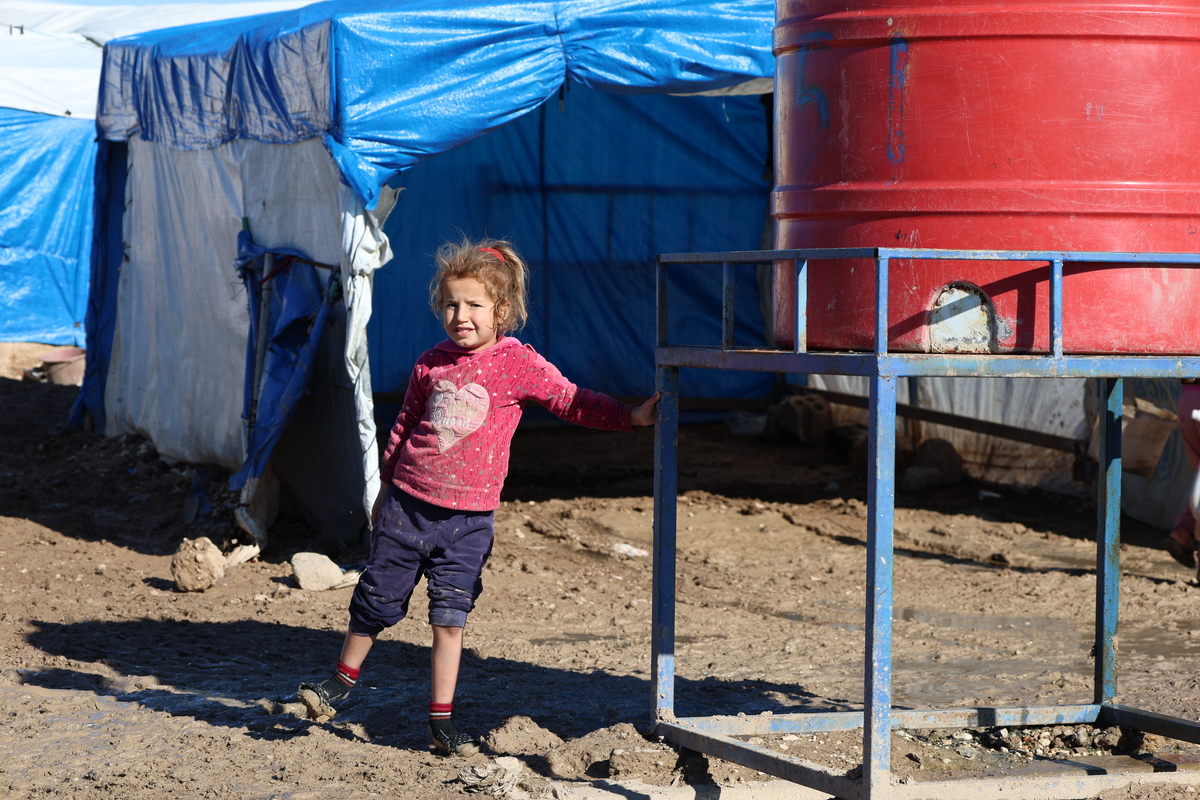
A child from the town of Sari Kaniya in the Washokani camp | Picture Credits: Abbas Abbas
For nearly a decade, regional politics have kept the fate of internally displaced persons (IDPs) from North and East Syria in limbo. Now, as they struggle through the cold winter months, they long to return to their occupied homes, but know that political negotiations start and stop with little regard for their lives.
“But instead of returning to Afrin, we were forced out of the Shahba camps because Turkish-backed militias attacked us.”
A year has passed since the fall of the Ba’ath regime and the collapse of Bashar al-Assad’s rule, but little has changed for the displaced. Tents and abandoned schools remain their only shelters, as the March 10 Agreement between Syrian Interim President Ahmed al-Sharaa and Syrian Democratic Forces General Commander Mazlum Abdi has yet to bring about meaningful change on the ground.

50-year-old Ilham Mohammed Horo hopes to return to her home, occupied by Turkish-backed factions. She and her family live in a former elementary school in Qamishli. Her classroom-turned-bedroom arrangement is one of dozens across northeastern Syria where thousands of displaced Kurds from Afrin, Ras al-Ain (Serê Kaniyê), and Tel Abyad (Girê Spî) now sleep.
Ilham said they were promised they would go home, “But instead of returning to Afrin, we were forced out of the Shahba camps because Turkish-backed militias attacked us.” She explained their Kurdish identity was the reason for their displacement, and worried about even worse treatment, “Does that [Kurdish identity] mean we don’t have the right to exist? Do they want us gone entirely?”
Her experience is not unique to her situation: Kurdish civilians have largely been caught up in the geopolitical changes in Syria, as their return depends on successful negotiations between the Democratic Autonomous Administration in North and East Syria (DAANES) and the Syrian Interim Government, as well as the Kurdistan Workers’ Party (PKK) and Turkey, as Turkey still firmly opposes any Kurdish demands in Syria.
How the Displacement Began
In March 2018, Turkish forces and Turkish-backed factions captured Afrin after 58 days of fighting with Kurdish YPG and YPJ forces. Hundreds of thousands fled, scattering across the Shahba region and northeast Syria.
A year and a half later, on October 9, 2019, Turkey launched Operation Peace Spring, seizing Ras al-Ain and Tel Abyad after heavy bombardment and clashes with the Kurdish-led Syrian Democratic Forces (SDF). Hours before the invasion, U.S. troops withdrew from border posts, a move that opened the way for the offensive, and entire towns emptied overnight.
Today, these displaced families make up the population of camps like Washo Kani, Talai, and Tel al-Samen, as well as schools retrofitted into shelters across Qamishli and Hasakah.
“We Are Held Hostage by Others’ Interests”
Ilham believes their prolonged exile is not due to logistical difficulty but political calculation. She argued that the global and regional powers active in Syria could quickly arrange their return, “But every time the SDF and the [Syrian] transitional government get close to an agreement, Turkey steps in to sabotage it.”
Mentioning Afrin, her voice changed: “Afrin is not Turkey’s, and not the militias’,” she stated. “Afrin is Kurdish. We will go back, however long it takes.”
However, she also emphasized that Turkish-backed factions are keeping the area volatile: “Armed groups like the Sultan Murad Division, al-Amshat, and al-Hamzat still control the city. They kill, they arrest, they extort.”
“Detainees are passed from faction to faction, then to Turkish intelligence-ran prisons. What is the crime of an 18-year-old girl who is arrested, raped, gives birth in prison, and stays detained? What is her crime?”
For the tens of thousands of displaced Kurds from Afrin, she explained that they want to return and live a dignified life after all these years of conflict, “We will not go back to live under fear,” she said. “We will return with our own forces, under our own flag – not under occupation.”
Though, despite the collective wish to see a political resolution and an end to their struggles, Ilham’s biggest worry was not seeing Afrin again; rather, she worried about the many Kurdish girls who have been kidnapped and detained: “Some are still in Turkish military prisons,” she said.
The circumstances she described were graphic and heart-wrenching, backing up reports from human rights organizations and war crime investigations, “Detainees are passed from faction to faction, then to Turkish intelligence-run prisons. What is the crime of an 18-year-old girl who is arrested, raped, gives birth in prison, and stays detained? What is her crime?”
In the al-Talai Camp, Hasakah, where Iham lives, there are 2,615 families – 16,691 people – waiting to go home. “Peace first, then return. We want a safe and dignified return to Afrin, Serê Kaniye, Girê Spî, and all the Syrian areas suffering under war and occupation.”
Seven Years in Camps
At the Tel al-Samen Camp in Raqqa, live 1,247 families – 6,960 people – who, after seven years in tents and schools, long only to return home, but know that political will, not time, stands in the way.
In a school building in Qamishli, Iskandar, 42, lives with his wife and their four children. They have been in IDP camps for the past seven years. After fleeing Afrin, the family moved from Shahba to Tabqa to Qamishli, never settling anywhere long enough to call it home.
“We are ready to return now,” he said. “But Afrin is unstable. Settlers occupy our homes and land.”
He mentioned that even those who have been able to return home continue to struggle, as Turkish-backed factions extort civilians for financial gain – often by seizing olive groves, a major blow to a region where olive groves are central to the economy.
“Displacement wasn’t our choice. War forced us. A father doesn’t leave his land unless it’s the only way to keep his children safe.”
Twelve kilometers west of Hasakah, near a Global Coalition to Defeat ISIS military base, sits Washo Kani Camp, home to 2,260 families – 16,250 displaced persons from Ras al-Ain and Tel Abyad. For seven years, they have battled heat, cold, disease, and shrinking aid.
Ibrahim al-Ahmad, 65, bears the scars of long displacement. An Arab man with seven young children depending on him, he has often been without work in these difficult years.
“Displacement wasn’t our choice,” Ibrahim said. “War forced us. A father doesn’t leave his land unless it’s the only way to keep his children safe.”
Nearby, Ibrahim Faris, 48, shares a tent with his six children. “Life in these tents is harsh. Aid is limited,” he said. “I built a room out of adobe bricks for the children to protect them from the cold.”
He wished for the same thing as all others at the camps: “We want to go back to our homes.”

Similarly, Shirin Mohammed Suleiman, 41, worried for her children more than anything else. She described floods inside the camps, illnesses spreading, and the daily grind of survival.
For Suleiman Mai, a man in his sixties working a small biscuit stall, he said he was willing to endure terrible circumstances, so long as he could see his home again, “Let us return safely, even if we return to poverty. All we want is our home.”

Abbas Abbas
Abbas Abbas is a journalist and photojournalist for The Amargi in Qamishli, northeastern Syria (Rojava). He has worked with Al-Youm TV and Ornina Media, and contributed reports and visual stories to local and international outlets, focusing on field coverage and the humanitarian realities of the region.