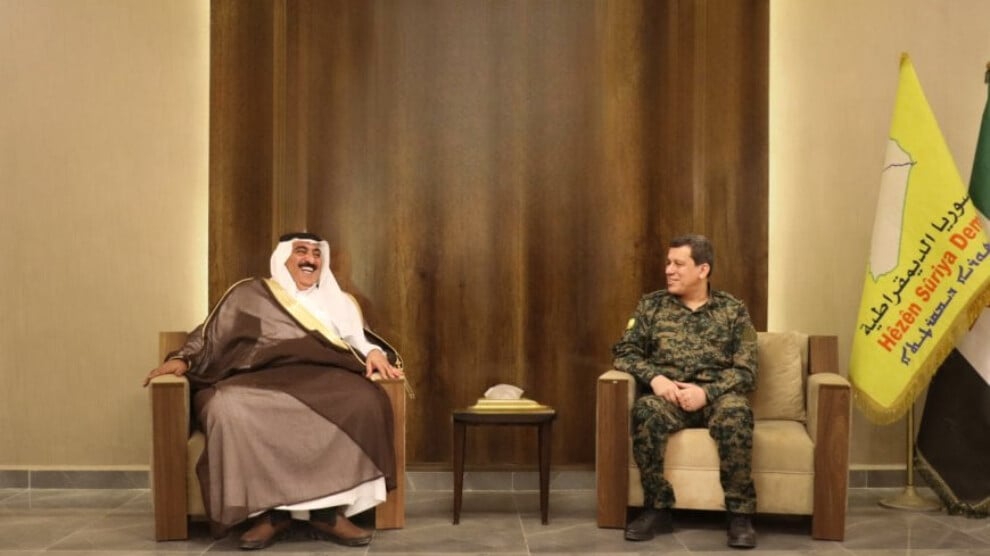
Explainer: The West & the Kurds; from Sykes-Picot to Save the Kurds Act
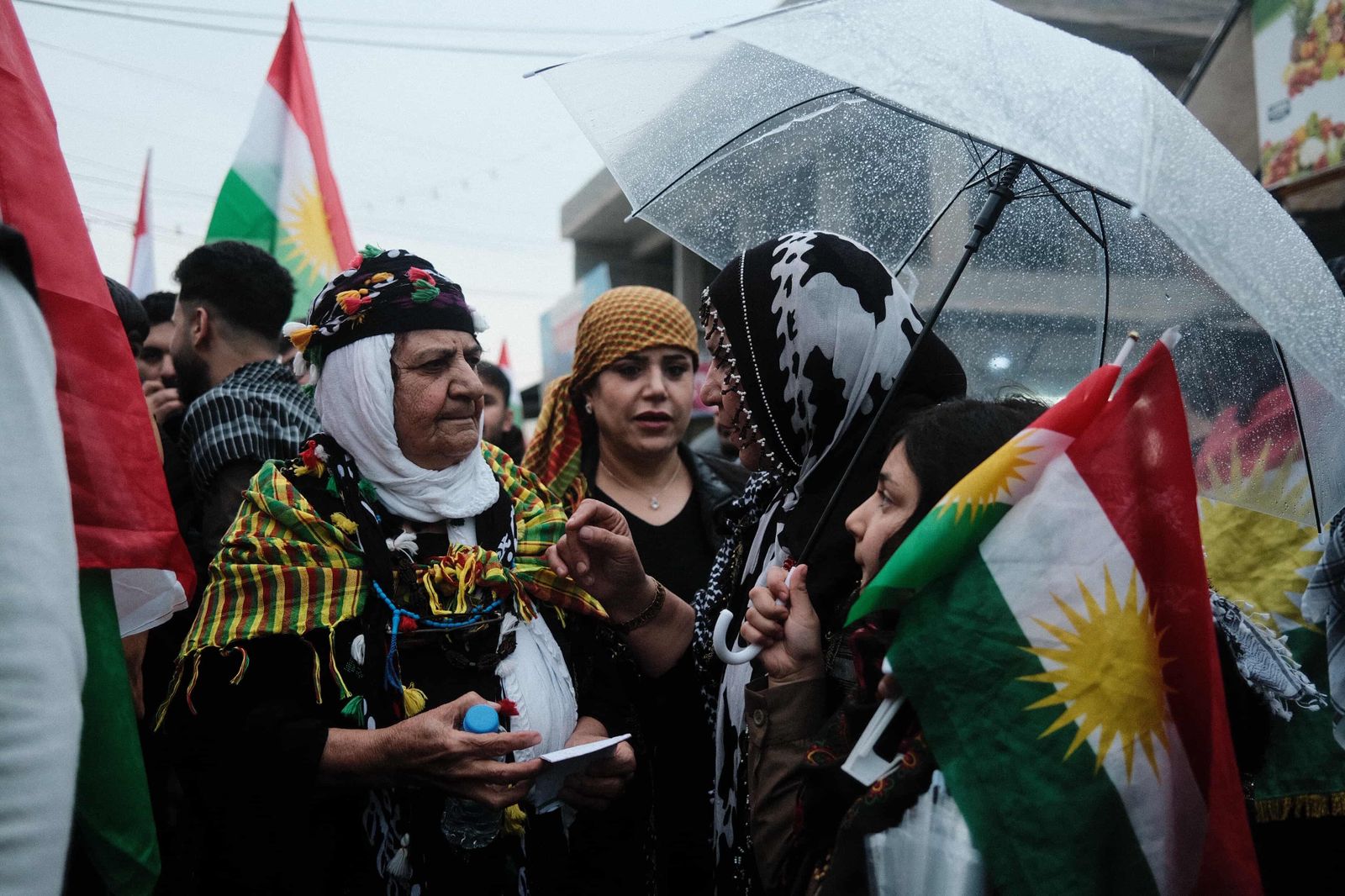
A group of Kurdish women take part in a protest in Kirkuk in solidarity with Rojava and the Kurds of Syria, Friday, January 30, 2026.
U.S. Senator Lindsey Graham recently announced on his X account that he will introduce the “Save the Kurds Act” ,a bill aimed at protecting the Kurds and sanctioning actors targeting them. The move triggered widespread online support for Senator Graham and a petition from Kurds across political lines, including prominent figures like Kurdish businessman and Peshmerga general Sirwan Barzani, who shared a supporting petition across social platforms.
This moment of U.S. political support sits atop a century-long and turbulent history of Kurdish relations with Western powers, which is a story of promise, support and protection, betrayal, alliance, and abandonment that has shaped both Kurdish aspirations and the modern Middle East.
1. The Broken Promises of the post-World War I
At the end of the First World War, the Ottoman Empire collapsed and European powers drew new borders. The Treaty of Sèvres (1920) initially offered the Kurds the possibility of autonomy or even statehood, but that promise was undone by the Treaty of Lausanne (1923), which created modern Turkey and ignored Kurdish territorial claims. No Kurdish state was recognized. Many Kurds felt they had been sacrificed for broader European interests.
2. The 1946 Republic of Kurdistan
In January 1946, Kurdish leaders in northwestern Iran declared the Republic of Kurdistan in Mahabad, a short-lived independent Kurdish state supported by the Soviet Union but opposed by the Iranian government. It was one of the first modern Kurdish states and became a powerful symbol of national identity. The republic fell within a year after Soviet forces withdrew under global pressure, and its leaders were executed.
3. Mid-20th Century Insurgencies
The decades that followed were marked by repeated Kurdish revolts against the governments of Iraq, Iran, and Turkey. In Iraq, Mullah Mustafa Barzani led uprisings for Kurdish rights and autonomy. Initially, the Kurds received covert support from the U.S. (often routed through the Shah of Iran) in the early 1970s but that alliance collapsed in 1975 when U.S. policymakers, most notably Henry Kissinger, agreed to a deal between Iran and Iraq that left the Kurds exposed. This is remembered by many Kurds as a profound betrayal.
4. Saddam Hussein and Chemical Attack (1980s)
During the Iran–Iraq War (1980–1988), Iraqi leader Saddam Hussein launched the Anfal campaign, which included chemical attacks, the most infamous at Halabja in March 1988 which killed thousands of Kurdish civilians. The brutality shocked the world, but global powers were slow to intervene.
5. 1991 Gulf War and the No-Fly Zone
The 1991 Gulf War, triggered by Iraq’s invasion of Kuwait, created a new opening. After Iraqi forces withdrew, Kurds rose up in northern Iraq, but were brutally suppressed once again. International outcry led the U.S. and its allies to establish a no-fly zone that protected Kurdish areas. A United Nations resolution, supported by France and others, helped make this enforcement possible, enabling the Kurds in Iraq to build semi-autonomous institutions. The current achievements in the Kurdistan Region of Iraq would be impossible to think of without the US and European countries support.
6. Washington Agreement & Kurdish Politics
Between 1994 and 1998, internal Kurdish conflicts between Masoud Barzani’s KDP and Jalal Talaban’sPUK escalated into civil war. Western diplomacy pressured both sides into the Washington Agreement in 1998, which ended active fighting and allowed the Kurdistan Regional Government (KRG) to solidify autonomy within Iraq.
7. Designation of PKK in Terror List
In the 1990s, Turkey pressured the U.S. and European allies to designate the PKK as a terrorist organization. This move criminalized the Kurdish freedom movement in Turkey. Afterwards, this designation prepared the grounds and justified the capture of PKK leader Abdullah Öcalan in Kenya in 1999 after the European countries refused him asylum, a move Kurdish activists saw as EU hypocrisy.
8. 2003 Iraq Invasion and Beyond
The 2003 U.S.-led invasion of Iraq toppled Saddam’s regime and transformed Kurdish politics. The Kurds gained significant influence within Iraq’s new political order, and many believed this would be a pathway to full independence. However, Kurdish hopes for a sovereign state were never fully realized due to regional pressures and internal Iraqi politics.
At the same time, the European Union tied Turkey’s stalled accession process to reforms on minority rights, but this has produced slow change, and many Kurds in Turkey still face systemic discrimination and cultural suppression.
9. ISIS, Rojava, and Battlegrounds
In 2014, ISIS overran vast swaths of Iraq and Syria. Kurdish forces, the Iraqi Kurdish Peshmerga and Syrian Kurdish YPG/YPJ, became key ground partners with the U.S.-led coalition. The U.S. broke its silence when its airstrikes foiled ISIS attacks on Yazidis and helped the YPG/YPJ to defeat ISIS in Kobani. So, basically, the U.S. recorded history by helping the Kurds to achieve their most proud victory in the modern history. Their role was crucial in defeating ISIS strongholds. But again, Kurdish aspirations for broader support were complicated by shifting U.S. policy and Turkish hostility.
In Rojava (northeast Syria), Kurdish political movements established autonomous administrations. Turkey reacted with military offensives, most notably in 2018 in Afrin and 2019 in other Kurdish areas, where the international community offered muted responses. Many Kurds felt abandoned, even as they continued to fight ISIS and uphold civilian governance.
10. Iraqi Kurdish Referendum and Contemporary Frustrations
Iraqi Kurds held an independence referendum in 2017 that showed overwhelming support for statehood, but the result led to a diplomatic backlash and loss of strategic territories like Kirkuk and Sinjar when Baghdad forcefully reasserted control. This deepened Kurdish frustration with Western powers who had backed them militarily but stopped short of supporting full independence. However, the Western support continued for the Kurdistan Region of Iraq as a federal region and the support still remains there.
11. The SDF Abandonement
One hard lesson about hope without illusion came in early January 2026, when the United States effectively abandoned the SDF. Among Kurds, this felt like the collapse of the last security guarantee and confirmed a long-held belief that the U.S. is not a reliable ally.
After the SDF withdrawal, Syrian government forces and the Turkish-backed forces moved quickly. First, Sheikh Maqsoud and Ashrafiyah and parts of Aleppo were taken. Then Raqqah and Deir ez-Zoor came under control of the Damascus forces. As the forces began advancing toward the Kurdish cities, the situation shifted again. This time, after an outcry from the Kurdish friends in the Western countries, especially in the US Congress, the U.S. and European pressurel most clearly from France, intervened, mediating with Damascus and pushing to halt further offensives.
There is currently a ceasefire in place for another ten days. This period will likely further detirmine the Kurdish views toward Western countries, especially on whether any real security guarantees will ever be provided, given that it remains almost impossible for the Kurds to protect themselves within the hostile nation-states of the region.
11. Today’s “Save the Kurds Act”
Decades of shifting alliances have produced a complex legacy: Western support has often been decisive militarily, yet Kurdish hopes for political recogniton and self-rule, let alone sovereignty, are repeatedly dampened by broader geopolitical imperatives. The Save the Kurds Act and the broad Kurdish support it has garnered reflects both a desire for protection and recognition, and a long memory of how global power politics have shaped Kurdish fate.
Rojava’s senior diplomat, Ilham Ahmed, expressed deep gratitude to the United States and France for leading mediation efforts that helped bring about the agreement between the SDF and Damascus, describing their role as vital to advancing stability and supporting a successful integration process.
The coming weeks will determine whether the Kurdish saying “no friends but the mountains” once again proves true, or whether the Kurds come to realize that, beyond the mountains, they may also have Western powers as allies willing to guarantee their political rights in Syria’s future.

The Amargi
Amargi Columnist

![[Amargi Exclusive] In the Zagros Mountains, PJAK’s Co-chair Says Iran has “Already Collapsed” and Warns Against “Another Dictatorship”](https://cms.theamargi.com/wp-content/uploads/2026/01/ressize-Screenshot_2026-01-12_at_15.05.23-1.png)