DEM Party Co-Chair Warns Turkey: Attacks on Kurds in Rojava Are Killing Hope for Peace in Turkey
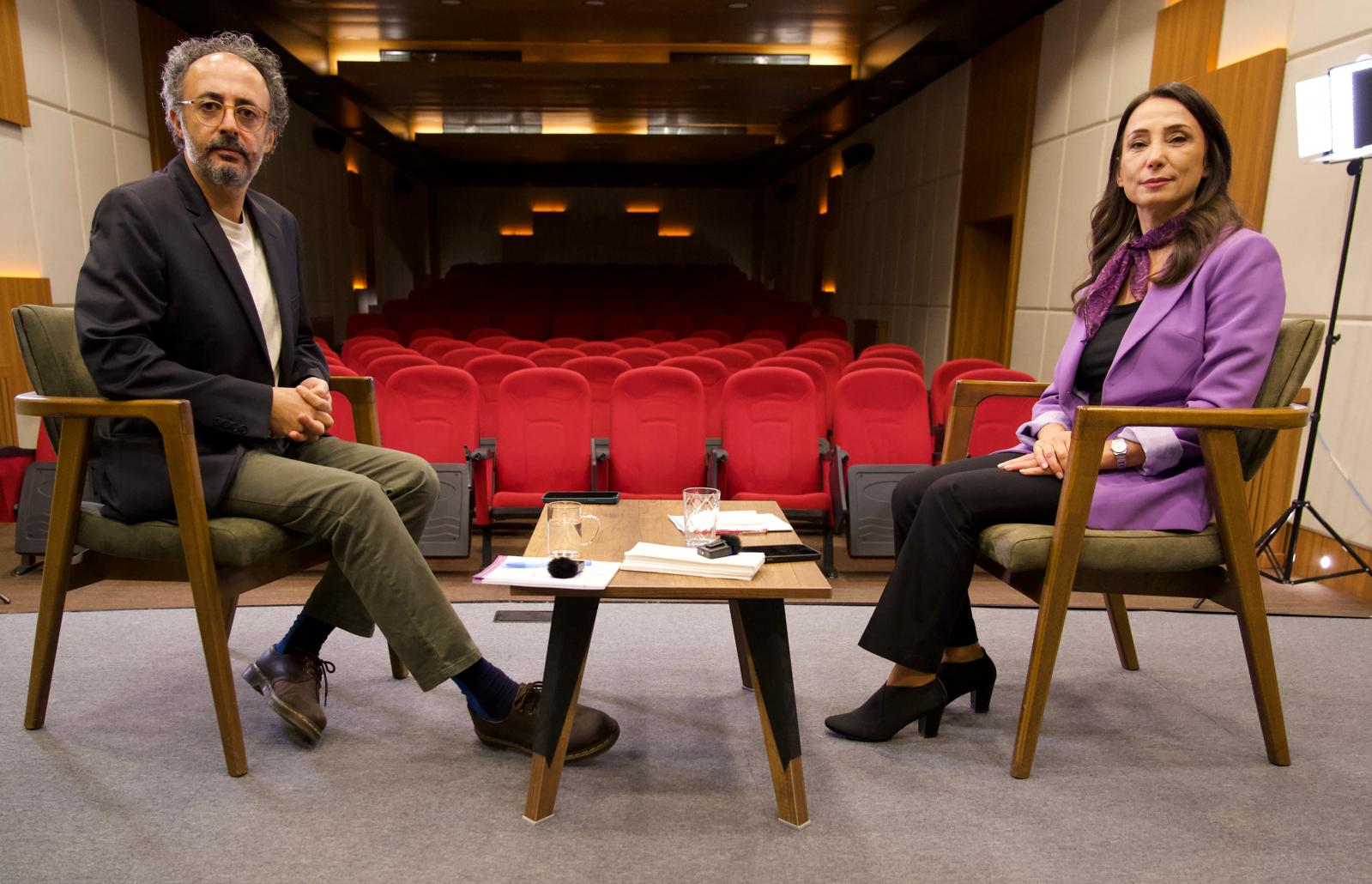
In an exclusive interview with The Amargi, Tülay Hatimoğulları, co-chair of the DEM Party, called on Turkey to immediately halt its support for Syrian Arab Army attacks on Kurdish areas in Syria, warning that the ongoing massacres in Rojava are eroding Kurdish faith in any renewed solution process inside Turkey. “When Kurds are being massacred in Rojava,” she said, “Kurds in Turkey lose hope in peace.”
The conflict in Syria, which began with the Syrian Arab Army’s attack on two Kurdish neighbourhoods in Aleppo on January 6, coinciding with the security agreement signed with Israel in Paris, has escalated into a devastating war, as Damascus tries to bring all of Syria under its centralized rule.
The Kurdish-led Syrian Democratic Forces (SDF) withdrew from Raqqa and Deir ez-Zor, formerly ISIS strongholds, to the east of the Euphrates River in an attempt to prevent a civil war, but this was not enough to prevent the conflict.
Damascus, backed by the U.S., Israel, and Turkey, has besieged Kurdish cities and towns to force the SDF to surrender. A U.S.-brokered 14-point ceasefire and integration agreement was signed between the SDF and Damascus on January 18th. However, the Syrian Arab Army has not adhered to this agreement, and it continues its attacks and military buildup around Kurdish areas, particularly the city of Kobani.
The inhumane treatment of Kurds, especially women, by Damascus-affiliated armed factions has drawn widespread international condemnation, while the DEM Party, the largest Kurdish party in Turkey, has intensified its diplomatic and political efforts to urge the Turkish government to support peace.
In this context, we spoke with Tülay Hatimoğulları, co-chair of the DEM Party, who travelled from Turkey to Qamishli in Syria on January 21st, about her observations in the region and the risks this process poses for Turkey, Syria, and the Kurds.
The ceasefire between the Syrian Democratic Forces (SDF) and the Damascus regime was extended for another 15 days as of January 25th. When you, as part of a delegation led by the DEM Party, including representatives from the Democratic Regions Party (DBP), TJA (Free Women’s Movement), Mothers for Peace, and various bar associations, travelled from Turkey to Qamishli in Northeast Syria on January 21st, a four-day ceasefire was in effect. Does your impression from there suggest any hope that the ceasefire could become permanent?
January 22nd, the day we began our contacts, was the last day of the four-day ceasefire. On the same day, US Special Envoy to Syria Tom Barrack and US Central Command (CENTCOM) Commander Brad Cooper were scheduled to meet with SDF General Commander Mazloum Abdi in Erbil, in the Kurdistan Region of Iraq. This meeting was expected to result in an agreement on the implementation of the 14-point ceasefire and integration agreement signed between Damascus and the SDF on January 18th. And therefore, a request to extend the four-day ceasefire was anticipated. Indeed, this meeting on January 22nd yielded such a result, and on January 23rd, the decision was made to extend the ceasefire for another 15 days. However, the Damascus regime can use ceasefire declarations to prepare for stronger attacks. Therefore, the situation we observed in Qamishli indicated that there wasn’t much trust in this decision. The people are already in a state of serious alert.
So, is there preparation for war?
Not war, but rather preparation for defense, especially in the east of the Euphrates. The SDF has already declared a general mobilization. Since the declaration of mobilization, a large number of young people, especially from the Kurdistan Region of Iraq, have been coming to the Rojava region. These young people are coming not primarily to fight, but to protect civilians and to provide logistical support.
Who did you meet with in Qamishli, and in what context?
We met with the Democratic Union Party (PYD) administration and the umbrella organization of the Rojava women’s movement. There is a new formation called the “April 26 Conference,” established by all the Kurdish organizations that attended the [Kurdish Unity] Conference held in Qamishli on April 26th. It includes the PYD, as well as PYD’s rival Kurdish parties, such as the Kurdistan National Council (ENKS). We had productive meetings with the April 26 Conference, which includes a wide range of different groups. We also met with the Northeast Syria Foreign Relations Office and Elham Ahmad.
The common point among all the institutions in Rojava is the need to utilize diplomatic channels to prevent war. The Kurds emphatically stressed that they are committed to both the March 10 agreement and the January 18 agreement they signed with Damascus, and stated that it is Damascus, not them, that has violated these agreements.
What were your impressions and observations of daily life in Qamishli?
preparations for defense against attacks are not only done by the armed forces, but also by civilians.
Despite the ceasefire, there is a very high level of anxiety that an attack could happen at any moment. This concern, that Damascus will not keep its promises, leads the Kurds to keep their defense lines active, instead of creating fear in them. Let me be clear, preparations for defense against attacks are not only done by the armed forces, but also by civilians. All civilians are preparing to protect themselves.
When we arrived in Qamishli on January 21, it was already dark. The region is experiencing its coldest winter in recent years. But despite the very cold weather, thousands of women, children, and elderly people were protesting the attacks in the city center with flags and banners in their hands. On the day we were leaving, nearly half a meter of snow fell. Even with these harsh weather conditions, people are prioritizing their self-defense.
A SERIOUS HUMANITARIAN CRISIS IS IMMINENT IN KOBANI
Kobani, where ISIS suffered its first defeat in 2015, is under a serious embargo and siege. According to news reports from January 24, four children died in Kobani due to the cold. Are you aware of the latest developments in Kobani?
Unfortunately, very serious problems are occurring in Kobani. The whole world, just like in 2014, must turn its attention to Kobani again. Kobani is a symbol not only for the region but for the entire world.
It’s clear that the interim Damascus administration is trying to put the people of Kobani in a desperate situation in these winter conditions by cutting off electricity, water, and internet access.
After the SDF withdrew from Raqqa on January 18-19 to prevent a possible Kurdish-Arab war, the electricity and water supply from the Tishrin Dam to Kobani was cut off by the interim Damascus administration. There is also no internet access in the city. People are trying to meet their electricity needs with generators. However, there are serious problems in meeting this demand since the winter cold has increased the need for fuel. Due to the conditions imposed by the war, there is also a severe shortage of basic necessities people need to survive. These difficulties are fuelling people’s refusal to surrender to Damascus. The people have an incredible will to resist. But humanitarian aid corridors must be opened to the region, especially to Kobani, as soon as possible. Otherwise, a very serious humanitarian crisis is imminent.
THERE IS A SIEGE AGAINST THE KURDS IN KOBANI
It’s clear that the interim Damascus administration is trying to put the people of Kobani in a desperate situation in these winter conditions by cutting off electricity, water, and internet access. When you listen to the rhetoric of Ahmad Al-Shaara (Abu Mohammed al-Jolani) and the Damascus administration, they claim that they want govern all of Syria. But depriving water and electricity to hundreds of thousands of civilians in a region they claim to govern reveals their true intentions. This is not against the SDF, but a racist siege against the people of Rojava, against the Kurds. Saying “If you don’t surrender, I will deprive the civilian population of electricity and water,” and then actually doing it, summarizes how [Al-Shaara’s] HTS administration views Kurds.
According to some assessments, the Jolani administration is imposing this heavy embargo on Kobani, where ISIS was defeated, to force the population to migrate en masse from the city. What do you think is the main purpose of this embargo?
There is both a racist punitive purpose and a plan to force the people to migrate. HTS and the forces supporting it want to de-Kurdify Rojava. Because the Kurds of Rojava are aware of this, they are trying to defend themselves in every way.
TURKEY SHOULD NOT TAKE SIDES, IT SHOULD GUIDE PEACE
Does the fact that your trip to Qamishli was not prevented by Turkey mean that the Turkish government is still keeping diplomatic channels open?
We did not encounter any difficulties during passport procedures. But I don’t know if this means that the government wants to keep diplomatic channels open regarding Syria and Rojava.
However, Turkey should not provide logistical and military support to HTS and the interim Damascus administration against the Kurds. Turkey should not take sides; it should be a guide for peace. Unfortunately, so far, Turkey has sided with Damascus against the Kurds and has played a negative role.
During the 15-day ceasefire period, there will be diplomatic engagement regarding the implementation of the January 18 agreement between the SDF and Damascus. Turkey’s responsibility is to not intervene to favor Damascus and to no disrupt a possible agreement between the parties. Turkey should support this process so that it turns into a permanent ceasefire. The PYD officials we met in Qamishli repeatedly emphasized that not a single stone had been thrown from their region towards Turkey, and said, “We have never posed a security threat to Turkey.”
You are conducting a “peace process” with the government in Turkey. Are you in direct contact with the Turkish government regarding its Rojava policy?
No, we haven’t had many meetings recently. But regarding the process, our party’s Imrali Delegation has been conducting various meetings with both Abdullah Ocalan and the government for a year. Our recent meeting with the government regarding Rojava was related to our request of opening border crossings for humanitarian aid against the siege on Kobani. We conveyed this request to the government, but we have not yet received a response.
FORCES SUPPORTING HTS WANT TO PROVOKE A KURDISH-ARAB WAR
You just said that the SDF withdrew from Raqqa to prevent a possible Kurdish-Arab war. Who is aiming for such a war?
We believe that the forces supporting HTS have such an objective, and that a conspiracy with international dimensions and contexts is being put into effect, inciting Arab tribes against the Kurds. It seems that the interim Damascus administration is also not far removed from this plan. The aim is to pit the Arab tribes against the Kurds. While HTS and Damascus are doing this in practice, we believe that regional countries supporting the Damascus administration are also active behind the scenes.
Which regional countries are you referring to?
I think there’s no need to list the countries individually right now; I believe that they will realize the consequences of such a conflict and abandon this plan.
If the forces supporting HTS want such an internal conflict, why was the ceasefire extended for another 15 days?
it has been clearly stated to all parties that the SDF will not withdraw from the Kurdish regions as they did in Raqqa and Deir ez-Zor.
Starting a war between the Kurds and Arab tribes may not be a short-term plan, but one intended to unfold over time. The extension of the ceasefire is influenced by the balance of power on the ground and international reactions. If the International Coalition Against ISIS in Syria had not changed its strategy, the attacks on Kurdish neighbourhoods in Aleppo and the subsequent events since January 6 would not have occurred.
During our meeting on January 22, PYD officials reminded us that, except for some isolated clashes, there has historically never been a serious Kurdish-Arab war in Syria. According to them, if the SDF had not withdrawn from Raqqa and Deir ez-Zor, such a war with the Arab tribes could have occurred, and some forces had planned exactly that. However, PYD officials stated that they have conveyed to both Damascus and the US that they will resist to the end in areas with a high concentration of Kurdish population, such as Hasakah, Qamishli, and Kobani. SDF officials also expressed this during their meeting with [US Envoy to Syria] Barrack and [CENTCOM Commander Admiral] Cooper in Erbil on January 22. This means that if Damascus enters these areas, the war will deepen. Because it has been clearly stated to all parties that the SDF will not withdraw from the Kurdish regions as they did in Raqqa and Deir ez-Zor.
The 15-day ceasefire has multiple reasons. First, the US needs time to evacuate ISIS members to Iraq. Second, it is clear that the SDF and the Kurds will resist. And furthermore, it leaves open the possibility that the parties may reach a deal on adhering to the January 18 agreement.
Do you think the conditions for such an agreement exist?
Neither Damascus nor the SDF has said so far that they will not abide by the January 18 agreement. However, there is also an uncertainty where anything can happen at any moment. The international community must be aware of this danger. If war breaks out again, everyone will be affected, not only Syria. However, for the January 18 agreement to be implemented in practice, the ceasefire needs to be extended beyond 15 days. International pressure is needed on this matter as well.
You said that some powers want a Kurdish-Arab war. Who would benefit from a Kurdish-Arab war, and in what way?
The government wants to create cracks and confusion within the Kurdish movement. However, these kinds of psychological manipulation methods have been used many times in the past, but none of them worked.
Syria has been turned into a battleground for regional powers vying for hegemony. Therefore, an unstable Syria will increase the influence of numerous external powers in this arena. In fact, the Kurdish-Arab war plan is a trap not only for the Kurds, but also for the Damascus regime. Because in such an environment, Damascus will become a dependent satellite in every sense. Of course, instability in Syria is not the sole objective and end goal for the regional powers I mentioned; whoever establishes dominance in Syria will be able to extend their influence to other areas as well.
KURDISH ANGER IS GROWING
The commission established within the Turkish Grand National Assembly met with Abdullah Ocalan in Imrali Prison on November 24, 2025. However, despite your party’s insistence, the minutes of this meeting were not disclosed to the public and were not even shared with the other members of the commission. However, these minutes were published on January 23, while Damascus’s attack on the SDF was ongoing. Similarly, news that Abdullah Ocalan gifted a rug to MHP Chairman Devlet Bahçeli on December 12, 2025, was also shared with the public by the MHP on the same day [January 23]. How do you interpret these moves by the government? Is the state trying to create tension between Ocalan and the Kurdish movement?
As you said, we wanted the minutes of the parliamentary commission’s meeting in Imrali to be published in their entirety. However, the minutes published on January 23 are not the raw transcript of the meeting, but a summary. More than a month has passed since Mr. Ocalan sent the gift to Mr. Bahçeli. Why did they do this now? The government wants to create cracks and confusion within the Kurdish movement. However, these kinds of psychological manipulation methods have been used many times in the past, but none of them worked. I think these are extremely simplistic methods and will not yield any results. The government should not resort to such simple tactics; it should understand the historical importance of peace efforts and take steps to resolve the problem.
Furthermore, in both Syria and Turkey, these kinds of interventions are making Kurds angrier and driving them towards an emotional break with the state. The losses that Turkey is incurring is far greater than the gains achieved through small steps.
THE GOVERNMENT’S FAILURE TO CONSIDER THE EMOTIONAL DISCONNECT AMONG THE KURDS
Until now, Turkey has presented the SDF and autonomy in Northeast Syria as an obstacle to the “peace process” in Turkey. Following the SDF’s withdrawal from Raqqa and Deir ez-Zor to the east of the Euphrates River, some circles within the Turkish government said that the “peace process will now progress faster.” Do you share this opinion?
There is no unified view on this within the government or the state. What you described is one view. But the opposing view is that the SDF must be completely defeated, and that after that point, there will be no need for a solution process in Turkey. However, Kurds being massacred in Rojava is pushing Kurds in Turkey to lose hope in the solution process. The government is aware of this emotional obstacle, but it doesn’t take it seriously enough.
You cannot say, “I will support the Syrian regime’s oppression of the Kurds, so that I can break the resistance of the Kurds here, reject their demands, and then achieve peace under those conditions.” If this is how the government thinks, the government is disconnected from reality. Turkey should not support Damascus’s anti-Kurdish actions; it should facilitate an agreement between the parties. Under such conditions, democratic forces and the Kurds will renew their faith in the solution process in Turkey and support it. But the government’s current Syria policy is jeopardizing the process in Turkey.
Turkey, and especially the pro-government media, claims that the SDF is not adhering to the eight-point agreement signed with Damascus on March 10, 2025, and that this is the reason for everything that is happening
No, this is manipulating the facts. All the officials we met in Qamishli stated that every step they took to comply with the March 10 agreement was obstructed by Damascus. The agreement stipulated the establishment of commissions to put it [the agreement] into practice – the last article of the agreement mandated the formation of these commissions. However, every move the SDF made to establish these commissions was stalled by Damascus.
As you know, on January 4, 2026, an SDF delegation held a final meeting in Damascus regarding the implementation of the March 10 agreement. However, while the interim president Ahmed al-Shaara (Jolani) was expected to attend these meetings, he did not show up. During the meeting, both sides reached an ideal compromise. But the Damascus administration said, “Al-Shaara is not here right now, let’s meet again in a few days and sign this agreement together with al-Shaara.” As it turns out, the January 6 attack on Kurdish neighbourhoods in Aleppo was concurrently being planned.
This scandalous act is enough to show the Damascus administration’s insincerity regarding agreements. On January 18, the SDF and Damascus signed the 14-point agreement [which includes a ceasefire]. However, despite this agreement, Damascus has continued its attacks against Kurds. It is very clear who wants war and who wants peace in Syria and the region.

İrfan Aktan
İrfan Aktan was born in Hakkari-Yüksekova. He graduated from the Journalism Department of the Faculty of Communication at Ankara University in 2000 and completed his Master’s Degree in the Women’s Studies Center at Ankara University. He worked as journalist for Bianet, BirGün newspaper, Express, Nokta, Yeni Aktüel, and Newsweek-Türkiye magazines, Gazete Duvar, Artı Gerçek and IMC TV. His books include Nazê/Bir ‘Göçüş’ Öyküsü, Zehir ve Panzehir: Kürt Sorunu and Karihōmen: Japonya’da Kürt Olmak.
![[Amargi Exclusive] In the Zagros Mountains, PJAK’s Co-chair Says Iran has “Already Collapsed” and Warns Against “Another Dictatorship”](https://cms.theamargi.com/wp-content/uploads/2026/01/ressize-Screenshot_2026-01-12_at_15.05.23-1.png)