Former Lafarge Employees: Lafarge Funded ISIS in Syria
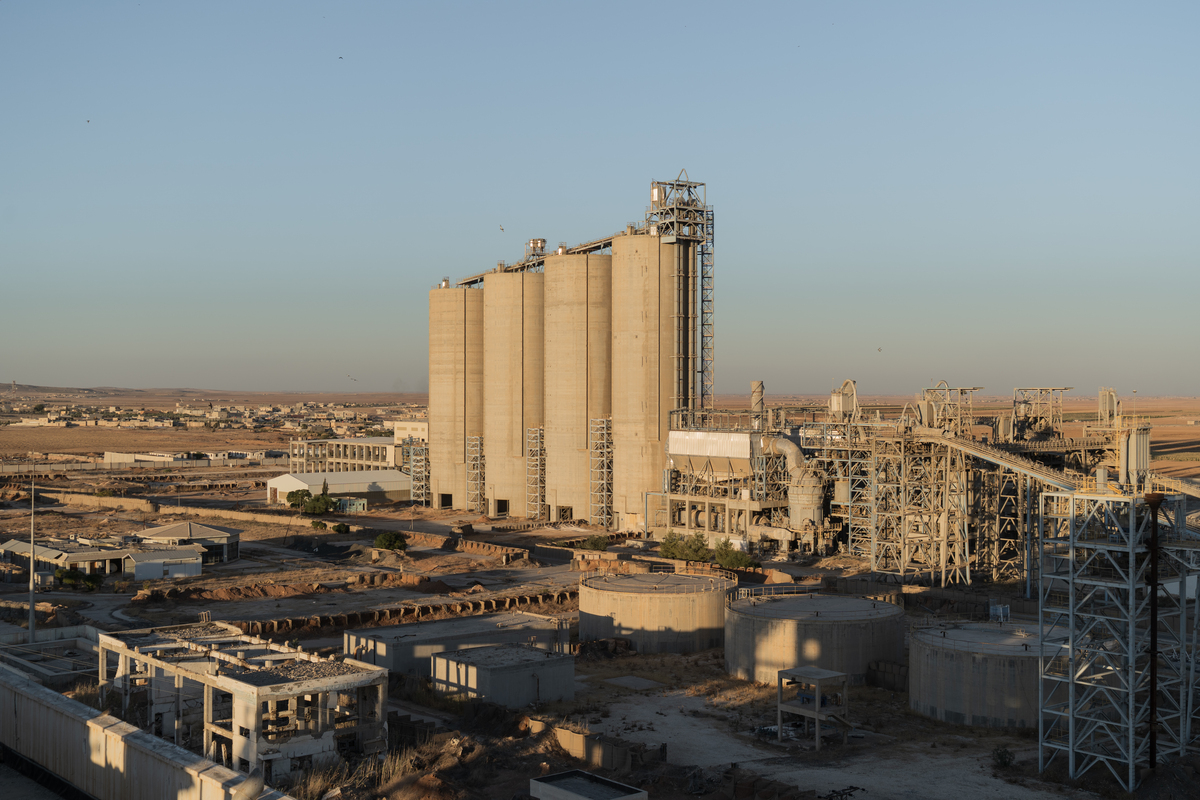
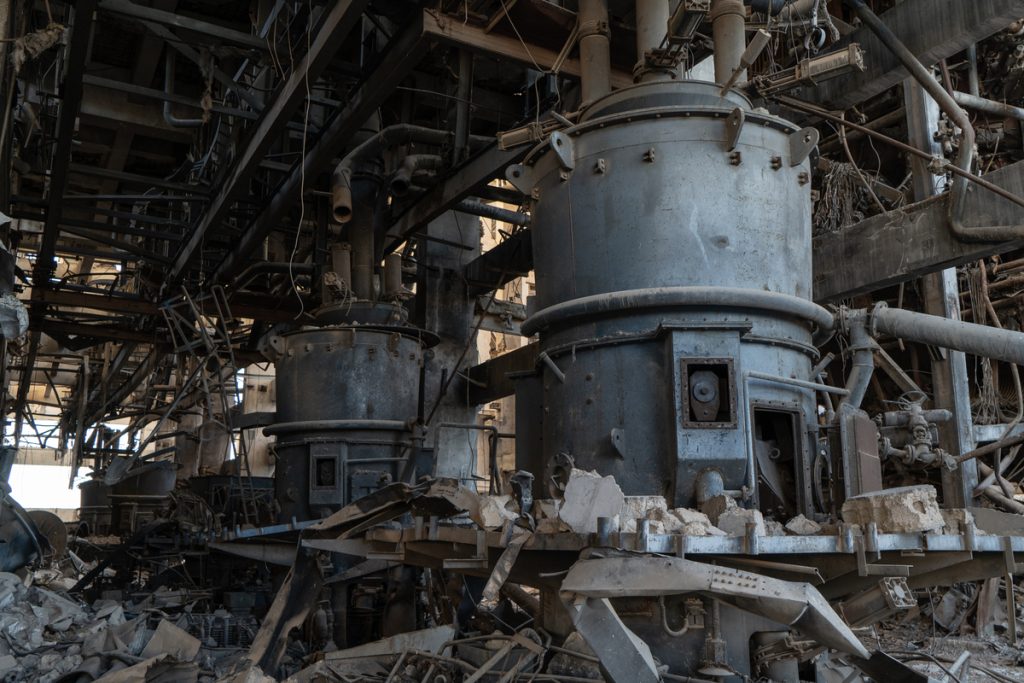
The former French Lafarge cement factory in Jalabiya, 10 years after its capture by ISIS. Photograph by Angeline Desdevises / Hans Lucas
French cement giant Lafarge is facing trial in France over allegations that it financed terrorist groups in Syria – including ISIS – to keep its operations running between 2012 and 2014. In court, former employees have described being forced to work as fighting intensified and ISIS gained control of areas around the factory.
“I’m Syrian, so I have to die?” Those cutting words came from a former factory worker, who spoke on Friday, November 28, in the judicial court of Paris. As the courtroom held its breath, the man continued: “Are our lives worth less than theirs?”
The former worker from Aleppo gave an edifying testimony in court. He recounted how he and his colleagues had been forced to stay in the factory, even though business was slowing down and the threat from ISIS was growing: “They insisted on maintaining a presence on site. We served as a facade, a shield to protect the factory.”
They told me, ‘If you don’t come to the factory, I’ll find ten others who can replace you.’ They were constantly blackmailing us.”
According to his testimony, Lafarge’s management demanded permanent activity from their employees, convinced that their presence would prevent the site from closing.
When asked by a defense lawyer, “Why didn’t you leave?” a former production manager replied that he simply had no choice: “I was under pressure from management in Damascus to be physically present on site. They told me, ‘If you don’t come to the factory, I’ll find ten others who can replace you.’ They were constantly blackmailing us.”
According to another former employee, Mussa, interviewed by videoconference the previous day, the hierarchy knew it was in a position of strength and could impose its conditions on employees: “After the war broke out, there were no more job opportunities. We accepted anything. We needed this work to feed our families.”
Dangerous Routes
“We became a target for the jihadists and risked being arrested or even killed. We were bargaining chips for them.”
According to the employees’ testimonies, in July 2012, they were forced to move to Manbij on the orders of management, when armed factions entered Aleppo.“I had to leave my family,” said Abdul Ahmed, a native of Aleppo. At the time, he was receiving an additional 17,000 Syrian pounds – approximately $200 in 2012 – in housing compensation, a sum he considered insufficient.
Lafarge chartered buses to transport these men, who were based in Manbij, to the factory. A former employee, who wished to remain anonymous, said traveling by that bus was a risk that made their lives dispensable, “We became a target for the jihadists and risked being arrested or even killed. We were bargaining chips for them.”
The former employees said they continued working at the factory until it was taken over by ISIS.
A Perilous Paycheck
More than 4,000 km away from the Paris court, in Jalabiya, in northeastern Syria, other former employees also told stories of years lived in fear and under threat, and the constant dangers on the roads and at checkpoints.
Although Lafarge organized transportation between Manbij and Jalabiya, no transportation was provided to Aleppo, where employees had to go to receive their salaries. They were forced to use public transport, exposing themselves to greater danger. They had to cross the city from east to west to reach the bank (Bank Audi).
In 2012, many of them found themselves caught in clashes between the Syrian army – loyal to Assad – and the rebel Free Syrian Army in Aleppo.
“There were bodies on the ground, bombs were falling everywhere, and the bank simply told us there wasn’t any money left,” recounted Abdulkader, a former Kurdish worker.
“To get from one side of the city to the other, you had to cross areas controlled by different factions,” Mussa said. Adding to the danger and the chaos were the snipers that sat at what he referred to as “the demarcation line”; those snipers would shoot at anything that moved.
The workers had to navigate warzones and avoid armed factions – although, for Mussa, he was not always successful, as he recounted being arrested three times by different armed groups on his journeys to Aleppo.
It was only after the death of one of them at the end of 2013 that management finally agreed to pay workers directly at the factory. “We had been warning them for months, but the managers ignored us. Only after a colleague was killed did they listen to us,” one of the workers lamented.
The workers said that to deal with the growing danger, Lafarge required its employees to live inside the factory. It was an untenable solution due to the total isolation and lack of communication: “There was internet on site, but we didn’t have access to it and we had no news from our families,” Mussa explained in court.
Despite ISIS’s progress, the factory continued to operate, but the staff gradually dwindled. Foreign workers were repatriated in 2012, while local Christian and Alawite employees stopped coming to work. Eventually, it was employees from neighboring villages who ensured the factory’s continued operation.
The last employees to leave the factory stayed to the last hour before ISIS took over the area on the 19th of September 2014. They saw hundreds of displaced civilians in minibuses and motorcycles fleeing toward the city of Kobane.
According to the former employees, ISIS forced began abducting technicians from other areas to resume production on site for their own needs.
One of the court witnesses chose to remain anonymous, and talked about his late father, who was murdered by ISIS in Manbij: to arrange his father’s funeral, he left Germany, where he was working remotely, and returned to Manbij. Lafarge then asked him to stay on site offering to double his salary. But he refused for two reason: he knew the peril of working there and knew that Lafarge was allegedly paying sums of money to ISIS to maintain its facilities in working condition.
Management Denial
Former Lafarge executives and their Syrian subsidiary are now working to defuse the charges against them.
On the witness stand, former CEO Bruno Lafont maintained that he was never informed of payments made to ISIS.
Other defendants acknowledged the existence of local transactions but claimed they were unaware of the terrorist nature of the groups, describing an opaque and chaotic environment during the Syrian war.
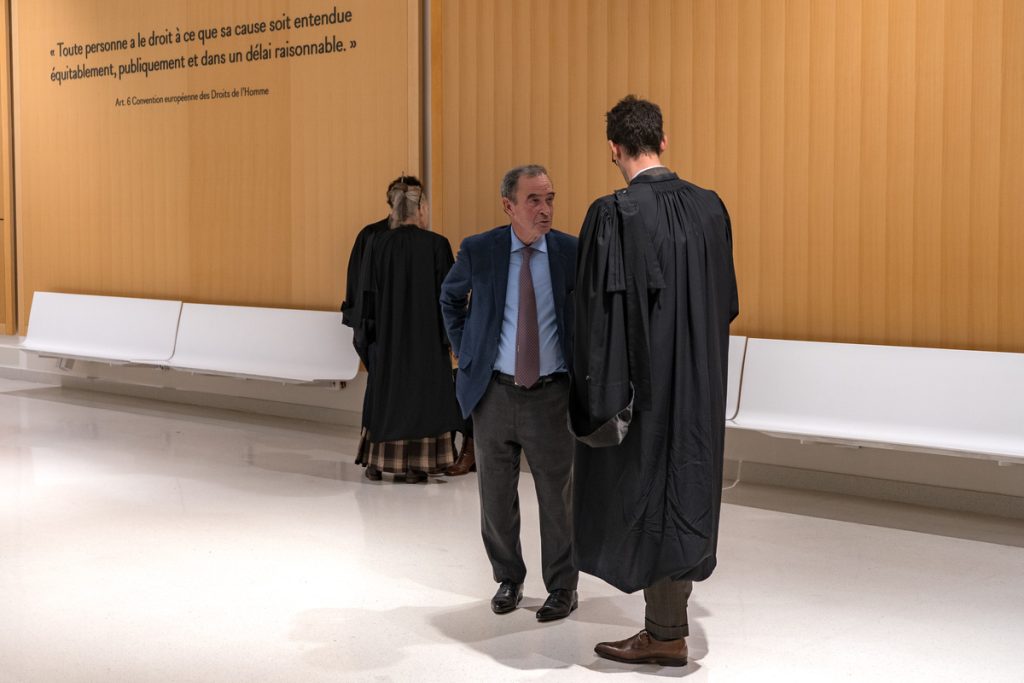
Frédéric Jolibois, who managed the cement plant from the summer of 2014, said he was “duped.” He claimed to have been manipulated by Firas Tlass, an influential figure in the region and an indispensable interlocutor at the time. Jolibois denied any personal responsibility in the financing.
As they took the stand one after another, the accused employed a variety of defense strategies: each one blaming a superior, a colleague, or the Syrian context, and all denying responsibility.
We attempted to contact Lafarge’s parent company, the Holcim group, but they did not respond to our requests.
Environmental and Health Impacts
One aspect that has often been ignored is the environmental and health damage caused by the cement manufacturer’s presence in the region.
Cement production has a high carbon footprint, as manufacturing it requires a large amount of energy, which comes mainly from fossil fuels, and the emissions generated are harmful to both the environment and human health.
“I was asked to operate the chimneys between midnight and 6 a.m., precisely to prevent the black smoke from being seen.”
Adle, whose home was located just two kilometers from the factory, said that every morning, they would wake up to a fine layer of black dust covering their windows, “In the summer, when we slept outside, we woke up with our faces black with dust,” she recalled, adding that her children coughed incessantly when the cement factory was still in operation.
Former factory worker Mahmoud Mustafa said that those responsible were supposed to put a system in place that would capture the resulting industrial dust with chimney filters that would be replaced every three months. But the safety protocol was never followed: “I was asked to operate the chimneys between midnight and 6 a.m., precisely to prevent the black smoke from being seen.”
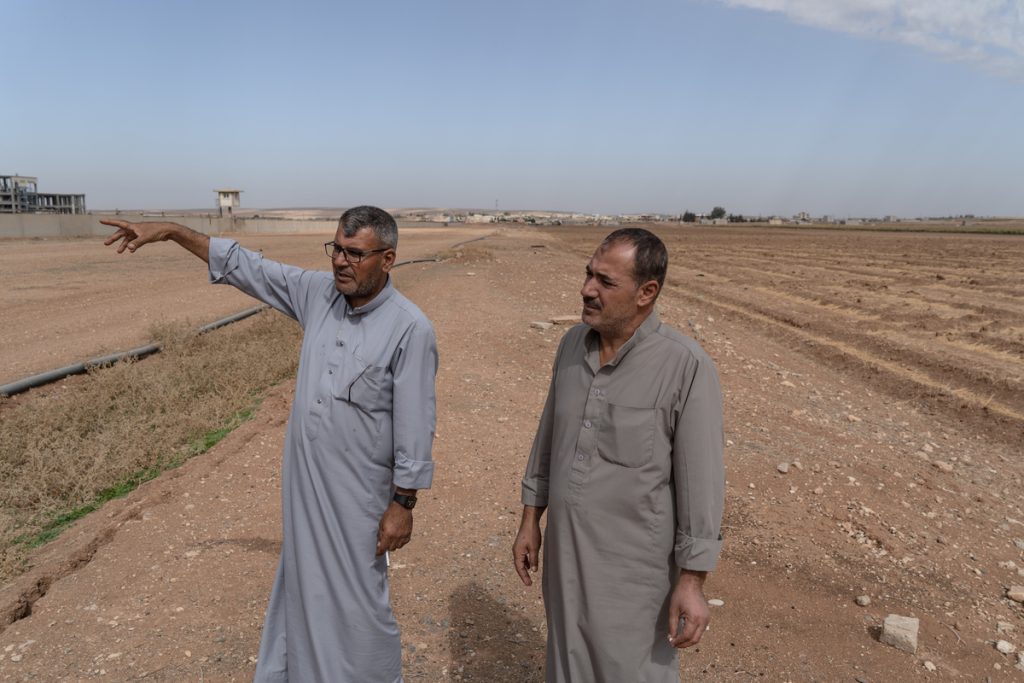
When Lafarge arrived in the region, it bought several plots of land from farmers to build its plant. But the farmers whose fields bordered the site, said the company should have bought more to create distance between them.
They explained that their land has become practically unusable due to soil pollution. The factory dust, loaded with heavy metals and chemical residues, would fall on the fields and tarnish the ground, making farming increasingly difficult.
Farmer Mahmoud Mohamed has seen his annual wheat production drop sixfold since the factory was built,“For several seasons, I couldn’t grow anything; it was impossible to plough my land. And I received no compensation for that.”
Other sources of pollution, like water polluted by fuel waste, was initially discharged in the immediate proximity of the site, before being dispersed further afield on arid land with the help of local farmers.
“We want compensation for our land and our homes, and we want those responsible to be brought to justice,” Mahmoud Mohamed said.

Angéline Desdevises
Angéline Desdevises is a writter and photographer, member of the Hans Lucas press agency. Her work on social issues in conflict zones is published by the French press and in the international press.