How the SDF Could Redraw Syria’s Power Map
By Abbas Abbas and Cihad Hammy
In North and East Syria, the Kurdish-led Syrian Democratic Forces (SDF) have built a rare pocket of stability,prioritizing ethnic and religious diversity, gender equality, and localized defense structures. Their success has prompted debate over replicating this model elsewhere in Syria, even as some power-sharing disputes remain unresolved.
With the start of the Syrian Revolution in 2011, the Democratic Union Party (PYD) supported neither the Syrian opposition nor the Syrian regime, as both sides shared an exclusionary anti-Kurdish mentality.
After the withdrawal of the Assad forces from Rojava (Kurdistan region in Syria) in 2012, the PYD cadres mobilized their existing networks to build self-defense structures inspired by the philosophy of democratic confederalism,theorized by founder of the Kurdistan Workers’ Party (PKK) Abdullah Ocalan.
From these early efforts emerged the armed forces of the People’s Protection Units (YPG) and the Women’s Protection Units (YPJ).
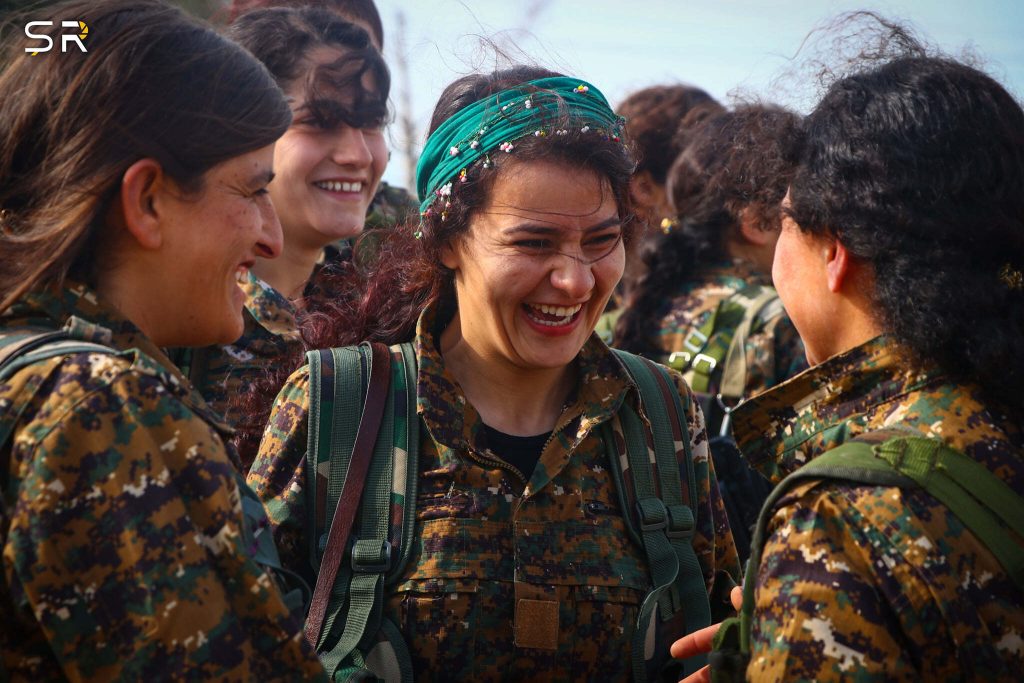
“The establishment of YPJ was essential to protect societal values,” Kurdistan Derik, a commander in the Women’s Protection Units, told the Amargi. “It is a force capable of defending women’s identity, existence, and language, which had been marginalized and denied for so long.”
Self-defense is central to PYD’s political philosophy of democratic confederalism – a system built on communal democracy, women’s liberation, and social ecology.
In the context of war, especially during the existential war against the Islamic State in Syria and Iraq (ISIS), it would have been impossible for these principles to thrive without a force capable of protecting the communities that practiced them.
“We are not warmongers, nor do we want bloodshed, but when someone attacks your home, village, city, or homeland, you must resort to legitimate self-defense.” Said Derik, emphasizing that the main task of the YPG and YPJ has always been self-defense.
The Syrian state collapsed in North and East Syria in 2011, and the YPG and YPJ soon filled the security vacuum. These two forces gained international recognition during the war of Kobani, when they stopped ISIS from occupying the Kurdish city, with the help of airstrikes by the anti-ISIS US-led Global Coalition.
Following the defeat of ISIS in Kobani, there was further need to fight the jihadist forces and liberate cities that theycontrolled outside Rojava. This ultimately led to a stalwart partnership between left-wing Kurds and the liberal West,which had been unprecedented in the history of the region.
Establishing the Syrian Democratic Forces
In the aftermath of the YPG and YPJ’s success in Kobani, the US approached Kurds in Syria to establish a multi-ethnic force that then became the key partner for the US-led Coalition in the war on ISIS. The establishment of the Syrian Democratic Forces (SDF) – a multi-ethnic, multi-religious force, reflecting the diversity of the Syrian people – started to materialize in this context in 2015.
“We view the SDF as a force that brings together all Syrian components. The primary goal behind the founding of the SDF was to present the true image of Syria.” Sipan Hemo, member of the SDF General Command, said to the Amargi.
However, despite its inclusive structure, many Arab tribal leaders viewed the SDF as an occupying force rather than a liberating force, particularly in areas that were freed from ISIS and where local government structures, linked to IS, had been dismantled.
To expand its reach beyond Kurdish areas, the SDF incorporated Arab factions. One of the main Arab factions were the Army of Revolutionaries (Jaysh al-Thuwar).
Ideologically moderate, the Army of Revolutionaries fought not only the Assad regime but also extremist Islamist factions and Turkish-backed Islamist groups in the rural areas of Hama, Idlib, and western Aleppo in 2013-2014.
Talking about how they joined the SDF, Army of Revolutionaries Commander-in-Chief Abdul Malik Bard, told the Amargi, “When the SDF was formed on October 10, 2015, the Army of Revolutionaries was already a part of it.” He stressed that, “This means we were part of the formation from the beginning, not joining later. As for adapting, we didn’t face any obstacles because we share the same ideology, principles, and project.”
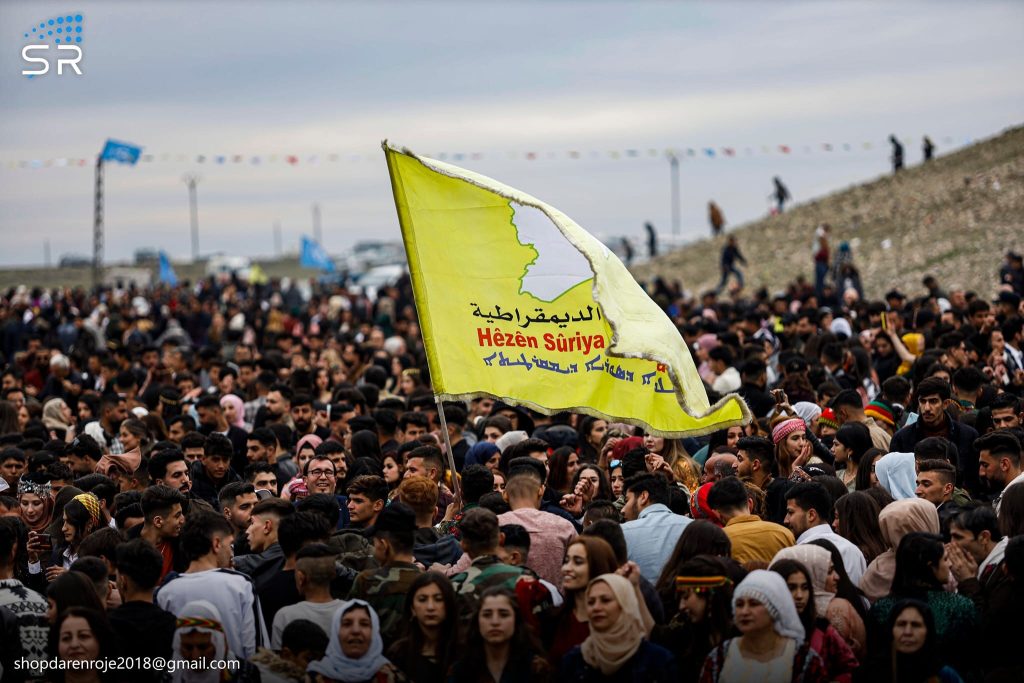
Sheikh Bandar al-Humaydi, commander-in-chief of al-Sanadid Forces – a tribal militia based in the Jazira region – toldthe Amargi that in the early stages of establishing the Syrian Democratic Forces (SDF), the forces on the ground consisted of the YPG, YPJ, and also al-Sanadid Forces.
He added that the al-Sanadid Forces, formed by the Arab Shammar tribe, welcomed the inclusion of other groups within the SDF, emphasizing that the goal was, and remains, to maintain the region’s security and stability and to involve all the people of North and East Syria in defending their land and dignity.
Representation and Structure of Power in SDF
One of the requirements for defending local communities has been the establishment of formal councils to represent the population. According to Sipan Hemo, the formal institutional structure of the SDF is organized through the local military councils in Raqqa, Deir ez-Zor, and the Jazira region. These councils come together under the Military Council of the Syrian Democratic Forces to jointly make decisions through their representatives.
In reference to the SDF’s representation structure, Hemo said, “In the Jazira region, one of the three Military Council commanders is Arab. While in Deir ez-Zor and Raqqa, all commanders are Arabs. In other words, representation corresponds to the local demographic composition – where the population is mostly Arab, Arabs lead.”
In terms of diversity composition and representation, Abdul Malik Bard explained, “Arabs constitute the largest segment, exceeding 60%, while other groups, such as Kurds, Turkmen, Syriacs, and others, represent approximately 40%.”
Despite this formal structure, non-Kurdish ethnic groups and local factions have accused the SDF of monopolizing power and marginalizing rival political or tribal entities in the areas they govern.
Al-Humaydi explained that each military council within the SDF enjoys a degree of freedom with regard to field decisions – according to the specificities of its region, whether in fighting terrorism or in addressing internal challenges– while the general lines and basic policies remain unified and agreed upon between the General Command and the military councils. He added that the General Command of the SDF, led by General Mazloum Abdi, is the body responsible for making strategic decisions within the SDF’s internal system, after consulting with various military leaders.
And although the SDF emphasize representative councils and inclusive leadership, human rights organizations have documented credible allegations of arbitrary arrests, detention, forced conscription, and torture carried out by SDF forces and the internal security forces (Asayîş), particularly against critics of the Autonomous Administration of North and East Syria (DAANES) or those aligned with opposition groups.
Emphasizing the SDF’s commitment to coexistence and combating ethnic division, Abdul Malik Bard noted, “There has never been any discrimination between Arabs, Kurds, Turkmen, Syriacs, and Armenians.” However, the system of governance has also had some challenges: “Occasional instances of tribal or nationalistic prejudice may be observed among some individuals. So, we have been committed to educational methods and bringing awareness to reduce them occurring.”
YPJ Commander Kurdistan Derik added that the coordination of YPG, YPJ, and SDF extends across the entire chain of command: “From a military standpoint, this work is being carried out jointly, from the lowest levels up to the highest institutions.”
Gender Equality
The focus on shared leadership and representative councils extends to gender equality as well, and women play a central role in military and political decision-making, “From the beginning of the Rojava Revolution, women have taken leadership positions,” said Derik. “The co-chair system ensures that every structure is led by both a woman and a man.” The co-chair system, unique to Kurdish politics, ensures that all public positions are held by a partnership of one man and one woman. She added, “Our main goal is to build a democratic and just Syria, achieve gender equality, and allow all peoples – each with their own identity and culture – to participate freely without any central authority.”
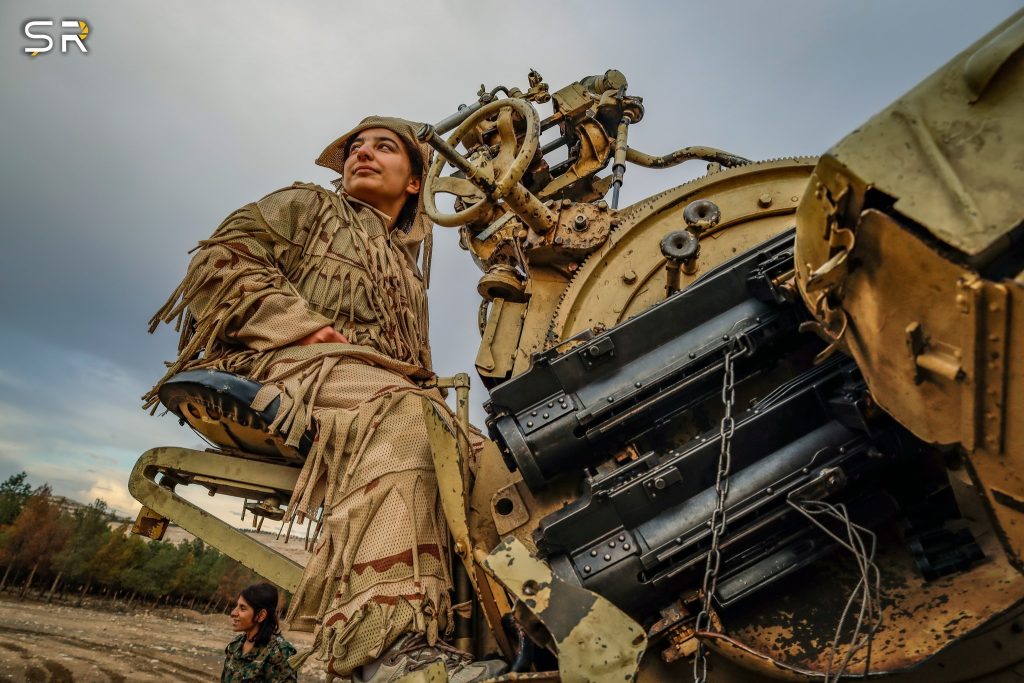
The Rojava Revolution’s Blueprint
Despite having succeeded in bringing different communities together and repelling non-democratic Islamist groups, there are still problems in finding a balance between local representation, combating abuse, and dispelling suspicions of power monopolization.
Their concept and structure represent a unique attempt to integrate inclusive governance in a zone characterized by a nationalist, patriarchal, and exclusionary mentalities.

The Amargi
Amargi Columnist