Rojava at the Brink: Why the SDF–Damascus Agreement Risks Ending Kurdish Autonomy in Syria
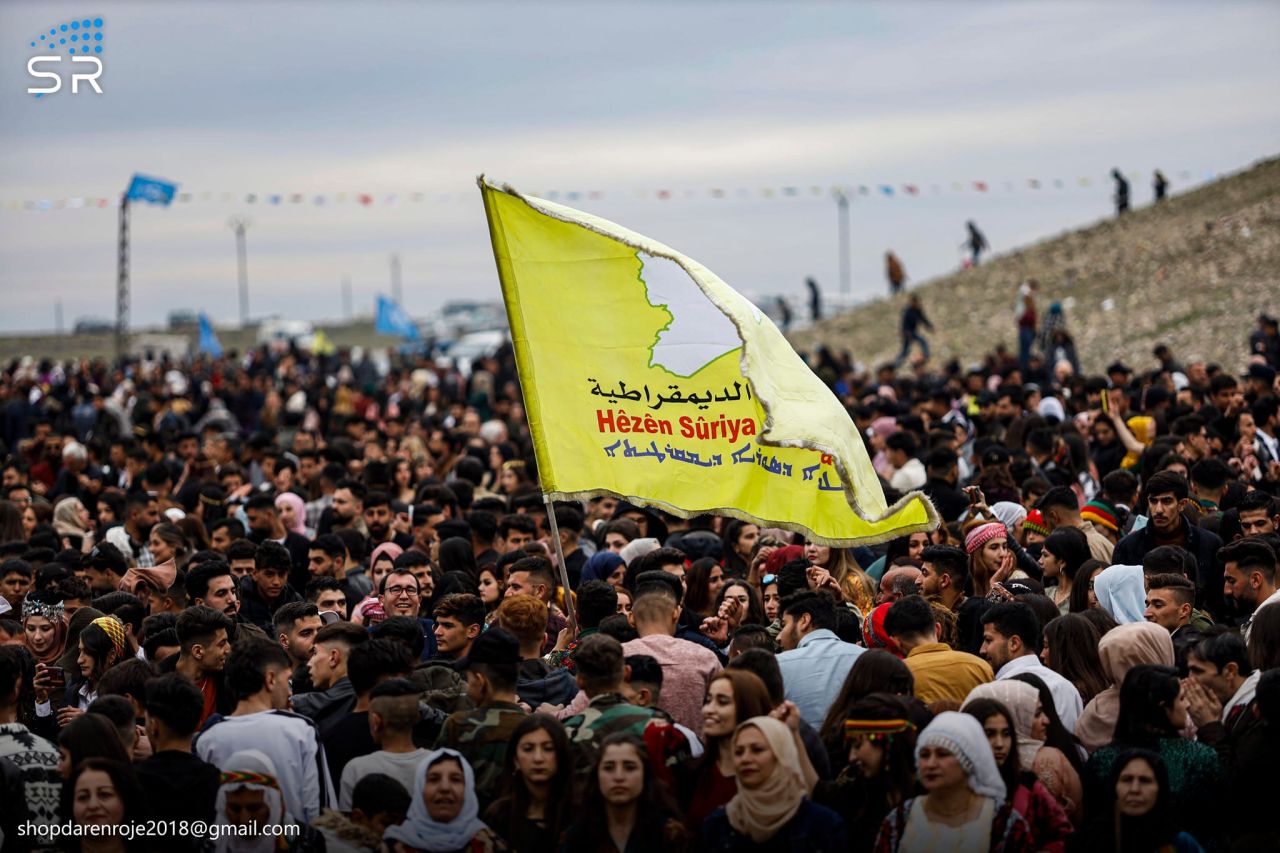
The Syrian Democratic Forces (SDF) have announced that they have reached an ‘integration agreement’ with the Damascus government led by the US-backed former al-Qaeda commander, Ahmad al-Sharaa. Yet no full text of the agreement has been published, and the fragments reported so far offer little reassurance for the people of Rojava or for the fighters of the People’s Protection Units (YPG) and the Women’s Protection Units (YPJ) who have defended it for more than a decade.
Based on the available information, one can hardly avoid the conclusion that the Kurdish side has entered this agreement from a position of strategic weakness and political naïveté. Far from consolidating the basic gains of Rojava’s revolutionary experiment, the deal appears to formalise their dismantling.
The most consequential issue is the fate of the SDF as an organised military force. Kurdish sources mention the creation of several brigades composed of existing SDF fighters, but say nothing about command structures. Pro-government sources, by contrast, insist that SDF fighters will be incorporated as individuals after vetting by Damascus. The integration of the SDF as a bloc in order to preserve its organisational coherence and autonomous command, long a core Kurdish demand, is therefore not guaranteed. In practice, this amounts to the dissolution of the SDF as Rojava’s defensive backbone.
Equally alarming is the silence on YPJ. The all-female units that became a global symbol of gender emancipation in war against ISIS appear to have no guaranteed institutional future under the agreement. If the reported provisions are accurate, there will be no formal all-female military or security units even in Kurdish-majority areas. This would be an extraordinary rollback of one of Rojava’s most radical social achievements.
The security provisions are perhaps even more troubling. The agreement reportedly requires the SDF to withdraw from urban centres, with Damascus security forces deployed, albeit in small numbers, to oversee the integration process. There are no safeguards against these forces acting as a fifth column, coordinating with pro-regime elements in mixed cities such as Hasaka. Provocations could be engineered to justify Syrian army intervention, with potentially catastrophic consequences for Kurdish civilians. Syria’s recent record – whether against Alevi or Druze communities – offers little confidence that such scenarios are implausible.
Control of borders is another critical fault line. The agreement appears to hand Damascus effective control of the Semalka–Fayshkhabur crossings and Qamishli airport. This would encircle Rojava, severing its logistical and political links with Bashur (the Kurdistan Region of Iraq) and allowing regime forces to project power directly into the region by air.
Perhaps most striking is what the agreement does not contain. There is no constitutional recognition of Kurdish self-administration, no guarantees for linguistic or cultural rights, and no legal entrenchment of any provision. Everything can be revised or revoked unilaterally by Damascus.
The administrative institutions of the Democratic Autonomous Administration of North and East Syria (DAANES) are likewise to be subordinated to the central government. Employees will be placed on Damascus payroll and required to follow central directives, effectively transforming revolutionary self-governance structures into provincial bureaucratic appendages. This is the quiet dismantling of Rojava’s political experiment.
The agreement also lacks third-party guarantees, monitoring mechanisms, or demilitarised lines. In contemporary conflict resolution, such omissions are extraordinary. They suggest either remarkable trust in Damascus or a profound misreading of the balance of power.
“Rojava’s collapse would send shockwaves through Kurdistan and beyond, reinforcing anti-Kurdish states and actors giving a new lease of life to centralised, openly racist colonial states that dominate the Kurds.”
Taken together, these provisions amount to a formal end to Rojava as a de facto autonomous region. The only purported silver linings are the avoidance of an all-out war and the retention of SDF fighters in nominal brigades. Yet even these are fragile. If Damascus controls vetting and command appointments, it can engineer the composition and loyalty of these units, hollowing them out from within. And this, in turn, removes the main barrier against anti-Kurdish atrocities by jihadists within the Syrian army.
Why, then, this apparent capitulation? It is difficult to avoid the conclusion that Rojava’s leadership has misjudged the US Syria strategy, its own leverage, and Damascus’s intentions. If Rojava leaders, particularly Mazlum Kobani, believe they have preserved Rojava’s gains, they are likely deluding themselves. Damascus, emboldened by military momentum and tacit support from the United States, France, Israel, and Turkey, has no structural incentive to make meaningful concessions absent a countervailing force.
That countervailing force has historically been Kurdish resistance. Rojava still possesses significant military and societal resources, and it commands deep solidarity across Kurdistan and the diaspora. Time, too, is not necessarily on Damascus’s side: a major humanitarian crisis in Kurdish areas would carry severe political and diplomatic costs.
Moreover, an American attack on Iran, which is increasingly likely, can rapidly and radically change the geopolitical equations across the region including in the Mesopotamia offering Rojava new opportunities for self-reorganisation. A new Iraqi government led by Nuri al-Maliki is likely to adopt a hostile posture towards al-Sharaa’s government in Damascus indirectly strengthening Rojava’s position. A new resurgence of ISIS can also impact the US and Europe’s current calculations and policies that disfavours Rojava.
Rojava’s fate matters far beyond northeastern Syria. Its experiment in radical democracy, gender equality, and local autonomy has reshaped Kurdish politics across the region. Its collapse would send shockwaves through Kurdistan and beyond, reinforcing anti-Kurdish states and actors giving a new lease of life to centralised, openly racist colonial states that dominate the Kurds.
In recent weeks, solidarity with Rojava has surged across Kurdish communities worldwide. Expectations are high that its political and military leadership will rediscover the courage that defined the defence of Kobani in 2014. Jolani is no stronger than ISIS was then; the YPG and YPJ are not weaker; and the people of Rojava seem no less prepared for sacrifice.
The slogan that emerged from the ruins of Kobani still resonates: Resistance is life. Whether Rojava’s leaders still believe it may determine the future of Kurdish self-governance in Syria and perhaps the trajectory of Kurdish politics across the region.

Kamran Matin
Kamran Matin is an Associate Professor of International Relations at the University of Sussex, UK, specialising in historical sociology, international theory, nationalism, and Iranian and Kurdish politics and history. His current research focuses on the theory of ‘uneven and combined development’ (UCD), nations and nationalism, and non-Western colonialism. He is the co-author of Queer Identities in Migration: Iranian Journeys (Bristol University Press, 2026), the author of Recasting Iranian Modernity: International Relations and Social Change (Routledge, 2013), and the co-editor of Historical Sociology and World History: Uneven and Combined Development over the Longue Durée (Rowman & Littlefield International, 2016). He has also published numerous articles, commentaries, and op-eds on Kurdish and Iranian politics. He is a non-resident fellow at the Kurdish Peace Institute in Washington, DC, and a research associate at the German Institute for Global and Area Studies (GIGA) in Hamburg.