Why Tom Barrack is Wrong About Decentralization in the Middle East
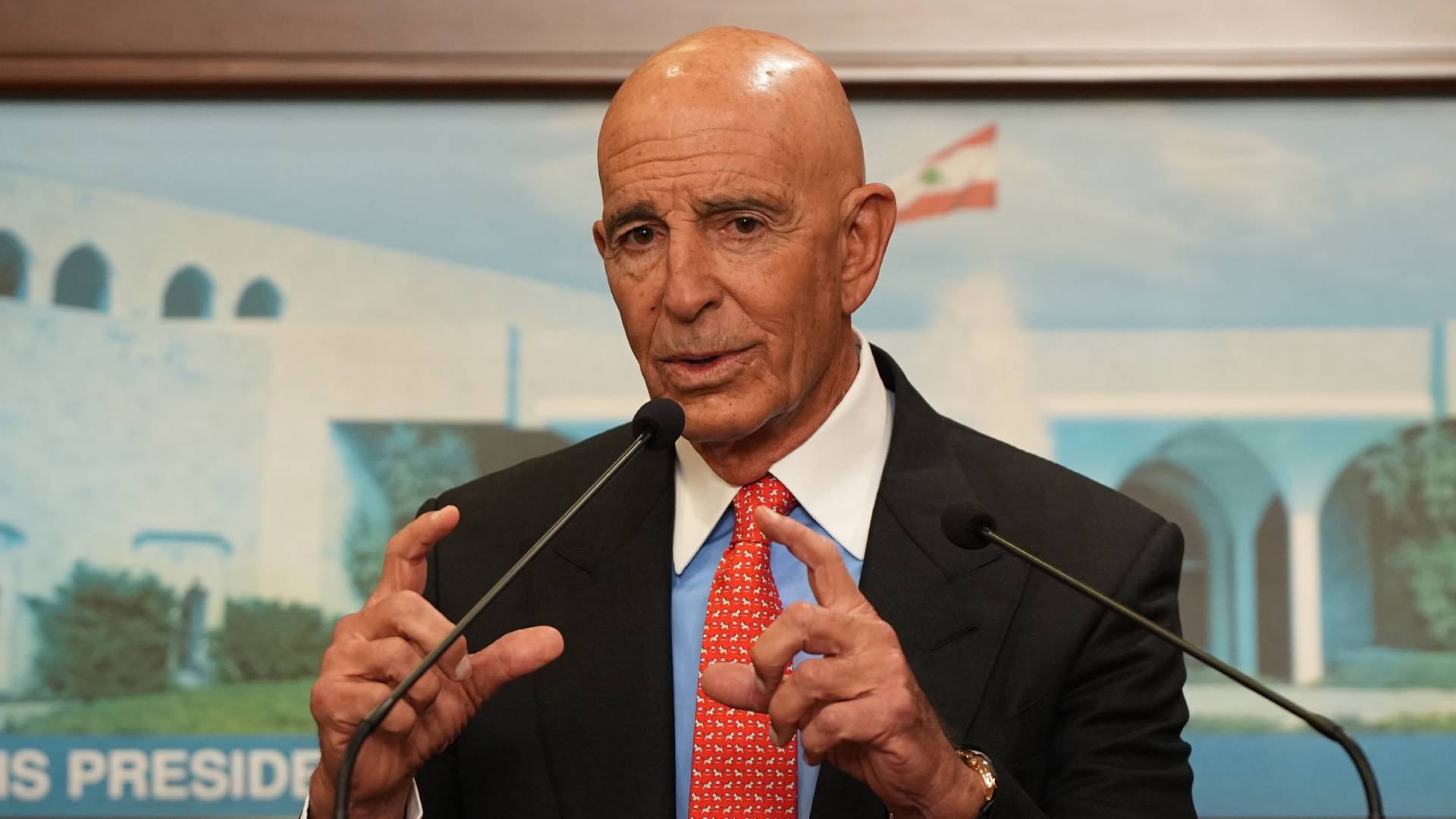
Tom Barrack, US Ambassador to Turkey and Special Envoy to Syria
The US Special Envoy to Syria, Tom Barrack, who also serves as the US Ambassador to Turkey, stirred controversy with his multiple comments on which governance model would work best for Syria. He hasn’t hesitated in lambasting the failure of those in Lebanon, Iraq, and Libya, which he characterised as chaotic. He even went further, stating that he “does not see a democracy in the Middle East” and that democracy has never worked in the region; therefore, he infers that the best option for the region is a benevolent monarchy. His logical conclusion from this line of argument is that decentralization has never worked in the Middle East, and wouldn’t work in Syria, particularly in accommodating Kurdish demands to maintain their autonomous status within a new government.
At the heart of the controversy lies Barrack’s eurocentric and deeply flawed statement that federalisation and decentralisation are mere illusions.
To be sure, Trump’s special envoy reflects Donald Trump in the sense that the latter has always expressed admiration for right-wing and authoritarian leaders, the likes of whom include Erdogan, Orban, Putin, and the monarchs of the Gulf countries, describing them as strongmen; unsurprisingly, this list seems to include interim Syrian president, Ahmad al-Sharaa. However, the stakes for the Syrians are higher this time, given that the new ruler and his entourage were part of an Islamist-Jihadi organisation. Unsurprisingly, many are sceptical about their approach towards the rights of the diverse communities in Syria.
At the heart of the controversy lies Barrack’s eurocentric and deeply flawed statement that federalisation and decentralisation are mere illusions. This characterisation is supported by three main reasons. First, Barrack wants to reinforce the idea propagated by authoritarian regimes in the region that democracy is a property of the West and an alien form of government to the cultures of the Middle East, so it would be a waste of US dollars to try to impose democracy on Middle Eastern regimes. This premise, however, is historically unfounded.
Second, decentralisation or federalisation is not an illusion; it is a political mechanism for distributing power across multiple decision-making centres. The aim of this process is to prevent the concentration of power at the centre, which often leads to tyranny. Decentralisation and devolution of power are not only advantageous to societies with diverse ethnic, linguistic, and religious communities but also relevant to other political contexts that seek to prevent the abuse of arbitrary power by a central government and to protect individual liberty, as in the US federal system.
Third, the fact that the Middle East has not experienced a large degree of democracy is precisely because of the mostly centralised systems and the concentration of power in the hands of the military and despotic rulers. Therefore, Barrack’s argument needs to be reversed: the longue durée centralisation of power ingrained in the Middle Eastern states at their inception in the early 20th century is, in fact, a root cause of democratic deficiency and absolute appropriation of power. This centralization is what has facilitated elite corruption, civil war, continuous political unrest, and public grievances.
Barrack’s statement that decentralisation hasn’t worked in Iraq and Lebanon is both superficial and mischaracterised. If there are governance failures in these countries, they are not due to the decentralisation of power but rather to a combination of factors. Colonial designs, regional interventions, and sectarian divisions coalesced to form dysfunctional systems. The confessional system in Lebanon dates back to the Ottoman era, after which it was institutionalised by the French creation of Lebanon in 1920. What they did in Lebanon was not to decentralise power, but sectarianize it by creating inequalities among its diverse religious composition. This policy provided a recipe for the political unrest that continues to this day.
As for Iraq’s long history of conflict and suppression of freedom, it would be wrong to ignore the absolute centralisation of power by the Ba’ath regime in its 35-year-long rule, creating a totalitarian system that led to massacres and genocide against the Kurds. The core issue of bad governance in the new Iraqi state does not stem from decentralisation. On the contrary, the federal structure protected, to some extent, the Kurdistan region’s relatively autonomous status from the central government’s arbitrary power. The real issue is an amalgamation of different factors, including the US’s destruction of state institutions in the invasion of Iraq, followed by the Shia-Sunni sectarian civil war, the domination of government by a corrupt political elite, and Iran’s political influence in creating and supporting several Shia militias within the state.
Now, at the core of this controversy is a deep disagreement over which form of government should be adopted in the new, post-Assad Syria. The disagreement comes from various communities in Syrian society, including the Druze, Alawites, and, most significantly, the Kurds, the latter fearing that their rights will be trampled on by the former Islamists–turned rulers of the country.
It has to be acknowledged that the autonomous administration has created one of the most progressive and democratic political structures in the region
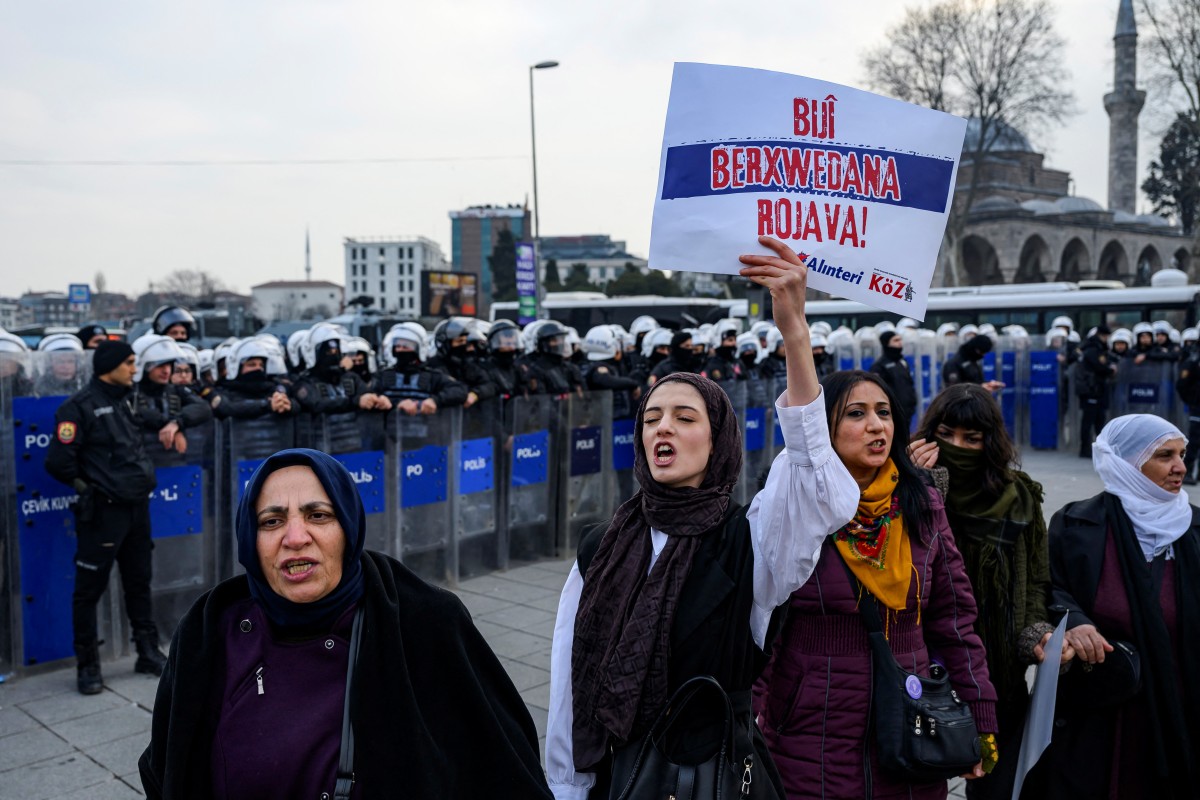
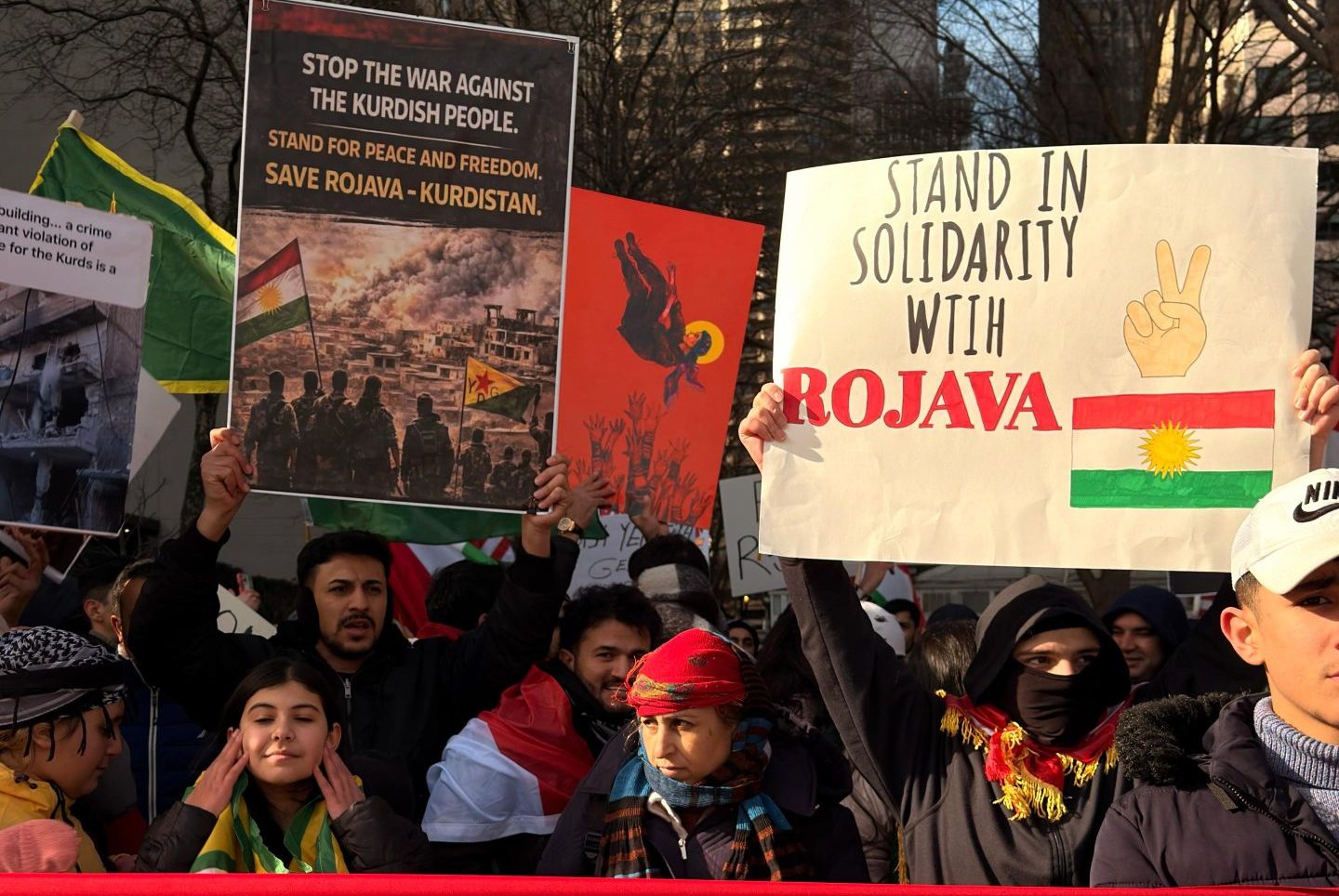
Although the Kurds have achieved tremendous gains in establishing a de facto autonomous region in Northern and Eastern Syria, known as Rojava since 2012, with the highly organised, multi-ethnic Syrian Democratic Forces (SDF), the issue cannot be reduced to only military gains. It has to be acknowledged that the autonomous administration has created one of the most progressive and democratic political structures in the region, with high female participation, a secular democratic social contract, representative institutions, and a decentralized democratic decision-making process delegated to local councils. These gains are significant for Syria as a whole and can be built upon as Syrians draft a new constitution to establish a new and unified Executive.
The biggest pressure influencing Barrack’s comments appears to come from Turkey, which has significant political influence over the al-Sharaa government and acts as its political patron
It would be utterly injudicious of the US to let these democratic institutions disintegrate and let the current Syrian rulers potentially impose their Islamist agendas, including curbing women’s participation in military units, as evidenced in their demand for the dismantling of the all-female Women’s Protection Units (YPJ).
The biggest pressure influencing Barrack’s comments appears to come from Turkey, which has significant political influence over the al-Sharaa government and acts as its political patron. Turkey’s aggressive rhetoric regarding security concerns is a constructed security threat aimed at dismantling the SDF and disintegrating the democratic institutions in Rojava. It would be morally and politically wrong for the US to succumb to this pressure and to help establish a centralized state that will inevitably lead to the dominance of a particular group.
It was still in the early days when Ahmad al-Sharaa granted himself extensive powers to directly appoint 70 of the 210 members of the new parliament, with the rest selected by committees he himself had appointed. The new rulers also issued a constitutional declaration that is remarkably exclusionary on different levels. The optimal solution to this quandary is to adopt a constitution that guarantees the rights of all peoples and those of every region to local governance. Political mechanisms that prevent a new dictator from emerging are crucial.

Dara Salam
Dr Dara Salam is a Teaching Fellow at the Department of Politics and International Studies at SOAS University of London. He received his PhD from the Centre for Ethics and Global Politics at LUISS University. In the meantime, he was a full-time visiting PhD researcher at King’s College London. He completed his MA and MPhil in Philosophy at Birkbeck College, University of London. Prior to joining SOAS, Dara was a Visiting Scholar in the Centre for Culture and Law at Queen Mary, University of London