Why the Fate of Rojava Could Shape the Future of Kurdistan?
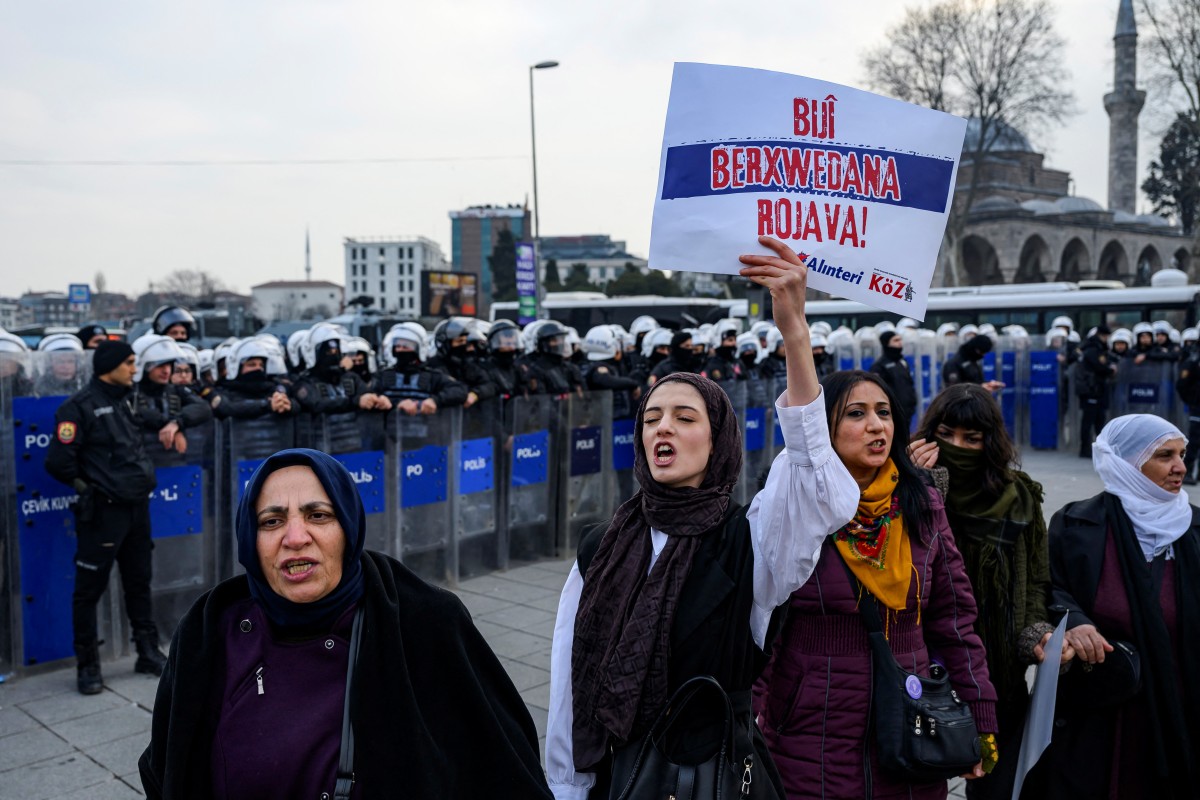
A protester holds a placard reading “Long live the Rojava resistance” which is the Kurdish name for Kurdish-majority regions of Syria, as she chants slogans in front of anti-riot police officers during a demonstration in solidarity with Kurds in northern Syria, in Istanbul, on January 24, 2026. (Photo by Yasin AKGUL / AFP)
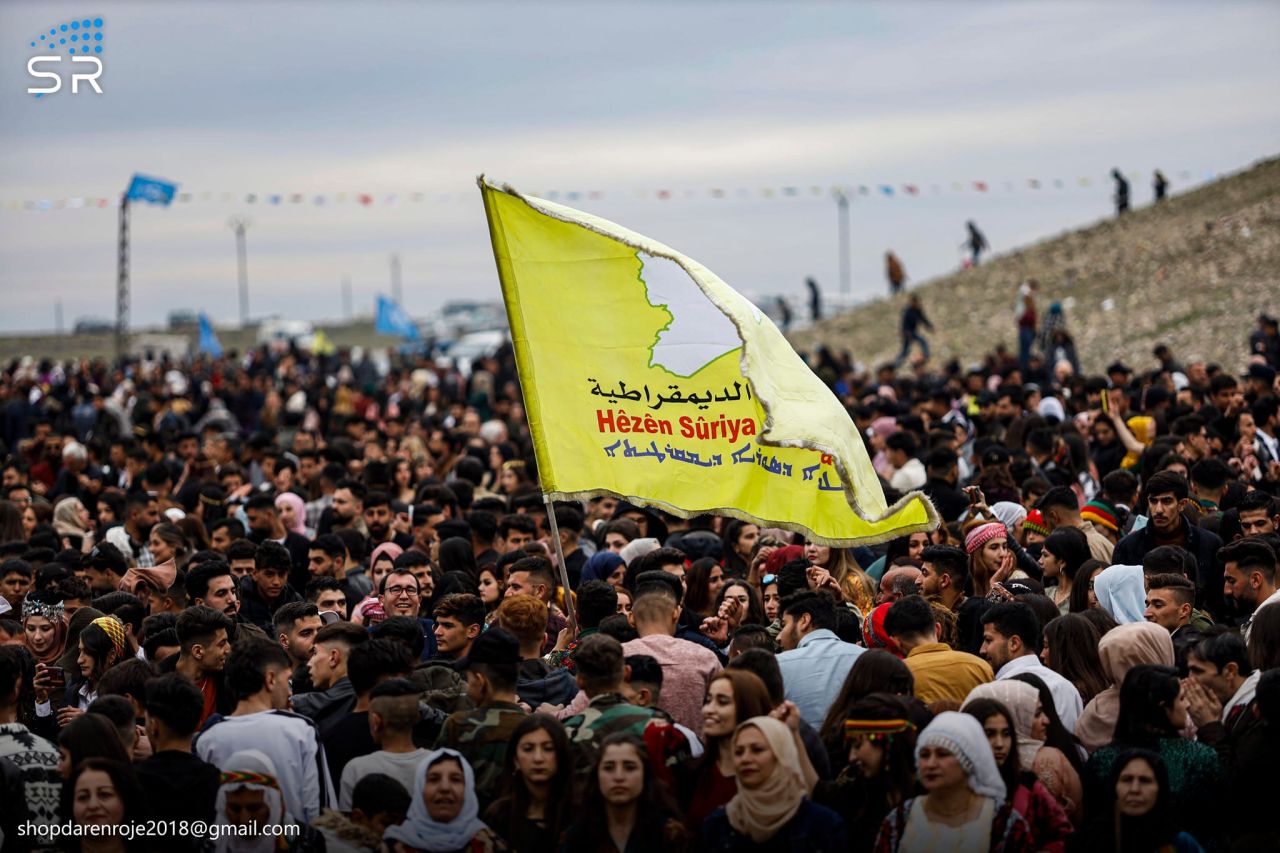
Rojava, or Western Kurdistan, has captured global attention for reasons that extend far beyond the battlefield. To some, it is the Kurdish territory that resisted ISIS, a frontline in the fight against extremism. To others, it is an experiment in radical governance: a decentralized, council-based system rooted in direct democracy, gender emancipation, and ecological consciousness. Yet for the Kurds, Rojava’s significance transcends ideology or military achievement.
Many Kurds believe that its political survival is inextricably linked to the broader fate of Kurdistan itself. Situated in northeastern Syria, bordering Bakur (southeast Turkey) and Başûr (northern Iraq), Rojava is home to roughly six percent of the world’s Kurdish population, an estimated 2.5 million people. Kurdish fighters sacrificed over 12,000 lives in the struggle against ISIS.
Rojava’s vulnerability – as it remains without legal recognition on the international stage – became starkly visible following the January 6 trilateral summit in Paris, attended by the United States, Israel, and the Syrian transitional government. The meeting resulted in a U.S.-supervised “fusion cell” for intelligence and military de-escalation, and also appeared to give tacit approval for a limited offensive by Ahmed al-Shaara’s HTS forces against Kurdish positions.
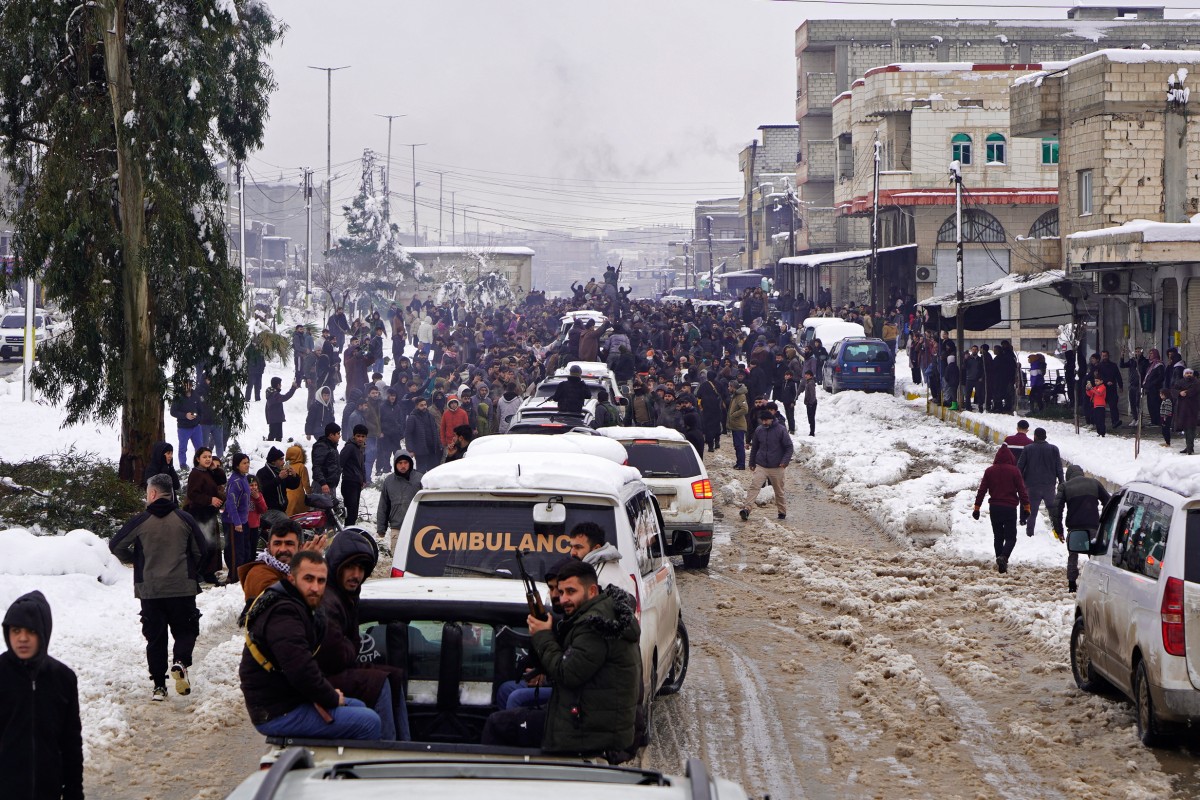
Kurdish forces were compelled to withdraw from Aleppo’s Kurdish neighbourhoods, displacing approximately 134,000 people, many of whom were forcibly displaced for a third time after previous displacements from Afrin and Manbij. The offensive extended beyond Aleppo, targeting the SDF, placing Kobane under siege, while Arab tribal fighters defected from SDF ranks and joined the Syrian Arab Army’s attacks.
Confronted with this multilayered pressure – which was backed by Turkey, the United States, Saudi Arabia, and Qatar – the Kurds declared a “public mobilization.” Fawza Yusuf, a member of Rojava’s Democratic Union Party (PYD) executive council, told The Amargi that they refused any form of surrender or giving up their rights, which they had been denied under the previous Syrian regime.
Rojava, the smallest portion of Kurdistan, had become the focal point of Kurdish resistance.
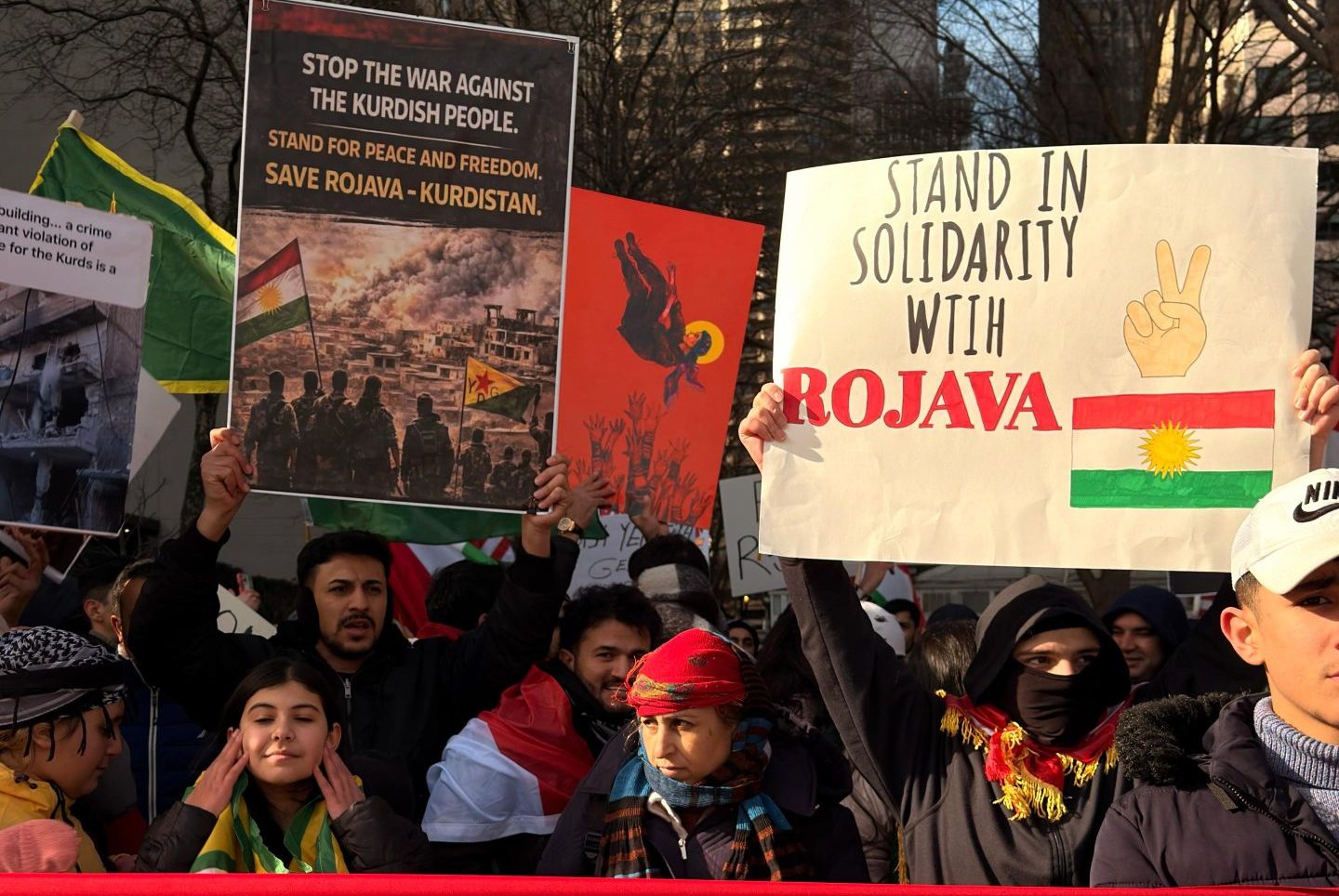
The response from Kurds across the four parts of Kurdistan, and from the diaspora, was immediate and unified. Volunteers from Bakur and Başûr entered Rojava, ready to defend the region’s political and territorial gains. And even Kurdish political rivals, like the Kurdistan Democratic Party (KDP) under Masoud Barzani, voiced support. Rojava, the smallest portion of Kurdistan, had become the focal point of Kurdish resistance.
Since 2012, Rojava’s governance model of council-based, participatory, and rooted in women’s emancipation has drawn global attention, inspiring academic and activist debates about alternative political systems. Yet beyond its ideological impact, Rojava carries tangible political consequences for Kurdistan at large.
If Rojava secures autonomy, it establishes that Kurdish political existence is possible in at least two parts of Kurdistan. But such recognition presupposes some measure of tolerance from Turkey, which has long opposed Kurdish autonomy in Syria. In 2012, Turkey’s Erdogan, Prime Minister at the time, warned Iraqi Kurdish leaders that Turkey would never allow a similar autonomous structure in Syria. As the second-largest NATO military power, Turkey wields outsized influence over Kurdish political options, using a combination of alliances, economic leverage, and military interventions to shape regional outcomes. Considering Turkey’s growing geopolitical role and the Kurds’ status as a stateless people, the Kurds have remained a leverage point in political games rather than a true political partner in global affairs
The Kurdistan Regional Government (KRG) in Iraq has faced similar pressures, particularly after the 2017 independence referendum. Following the loss of Kirkuk and disputes over oil revenue, Baghdad employed legal, economic, and political mechanisms to roll back autonomy. Turkey, meanwhile, has exercised a “dual-track” policy: conducting counter-terrorism operations, maintaining military outposts in the Kurdistan Region, and simultaneously cultivating economic dependence through trade and energy cooperation. These levers have effectively compelled the KRG to align with Ankara’s interests to an extent that resembles a neo-colonial tendency, highlighting the broader geopolitical constraints on Kurdish self-rule. A politically autonomous Rojava could relieve some of this pressure, creating room for normalized relations between Turkey and Kurdish actors in Iraq.
Rojhelat, or Eastern Kurdistan in Iran, adds another layer. Turkey and Iran share more than 500 kilometres of border, much of it running through Kurdish-majority areas. Ankara also supports Turkish Azeris in Iran, further complicating Kurdish territorial and political claims. A politically recognized Rojava could open diplomatic pathways, strengthening Kurdish efforts for autonomy in Rojhelat by establishing a precedent for Turkish tolerance.
Ultimately, the future of Rojava hinges on both intra-Kurdish unity and strategic leverage with global powers.
The stakes are equally high for Bakur, the Kurdistan region in southeast Turkey. Turkey’s campaign to eliminate PKK-linked groups and resist any Kurdish autonomy in Syria directly affects Kurdish prospects in southeastern Turkey. Any improvement in Ankara-Rojava relations could recalibrate Turkish policy toward Bakur; conversely, further escalation in Rojava risks intensifying conflict across the border
The question remains, however: how will Turkey show any tolerance toward political autonomy for the Kurds in Rojava? Ultimately, the future of Rojava hinges on both intra-Kurdish unity and strategic leverage with global powers. The political autonomy of the Kurds presupposes intra-Kurdish unity above all, particularly among Kurdish political parties. This unity can exert pressure on Western powers, particularly the Trump administration, through the U.S. Congress and Senate.
The 2019 U.S. withdrawal from northeastern Syria illustrated how Kurdish solidarity can influence international actors. Following the withdrawal of U.S. troops from northeastern Syria under Trump’s decision in October 2019, Turkey launched another offensive against Kurdish-majority areas, occupying Serê Kaniyê (Ras al-Ayn) and Girê Spî (Tell Abyad). In response, the U.S. House of Representatives overwhelmingly passed a bipartisan resolution (354–60) condemning Trump’s troop withdrawal. The resolution explicitly opposed ending U.S. efforts to prevent Turkish military operations in northeastern Syria and urged restraint, effectively pressuring Trump to reconsider his approach. Subsequently, Trump and his administration threatened sanctions and economic measures against Turkey should it continue its offensive, signalling direct pressure on Ankara to curb its operations against Kurdish areas.
Although Kurdistan has been divided into four parts, the political fate of each is deeply interconnected: by securing a measure of autonomy for Rojava, the Kurds are, in effect, paving a stronger path for the political future of other parts of Kurdistan.

Rojin Mukriyan
Rojin Mukriyan has PhD in the Department of Government and Politics at University College Cork, Ireland. Rojin’s main research areas are in political theory, feminist and decolonial theory, and Middle Eastern politics, especially Kurdish politics. She has published articles in the Journal of International Political Theory, Philosophy and Social Criticism, and Theoria. Her research has thus far focused on the areas of Kurdish liberty, Kurdish statehood, and Kurdish political friendship. She has published many think tank commentaries and reports on recent political developments in eastern Kurdistan (Rojhelat), or north-western Iran. She has also frequently appeared on a variety of Kurdish and Persian language news channels. X account: @RojinMukriyan