Kurdish Student Tortured for Allegedly Lowering Turkish Flag
A Kurdish university student has become the target of public debate in Turkey after allegations that he pulled down a Turkish flag in the border town of Nisêbîn (Nusaybin) during the January 21 demonstrations for Rojava.
25-year-old Diyar Koç is a computer programming student in Elazığ. He had traveled to Mêrdîn (Mardin) during the academic break and joined the march while there. When the police intervention began, he attempted to move away with the crowd but was taken into custody. After Diyar was detained, the circulating “flag removal” allegation quickly began to be mentioned alongside his name.
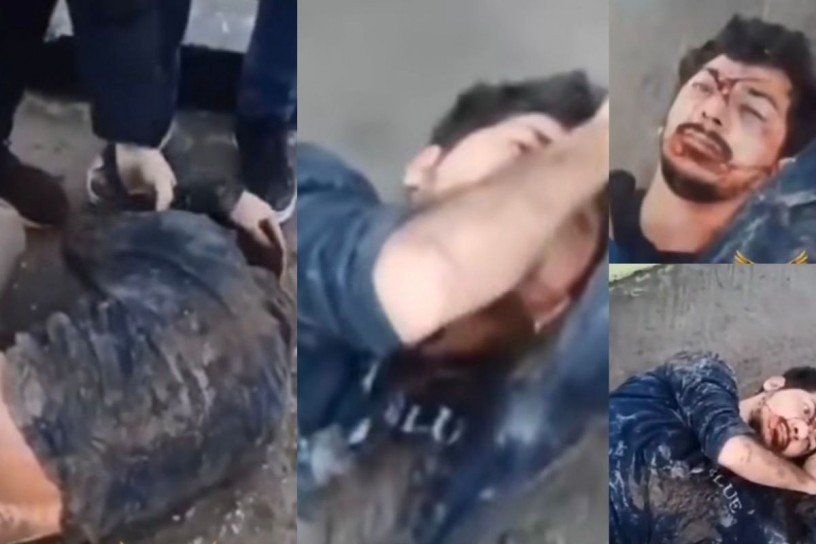
According to Diyar’s testimony and his lawyer’s statements, Diyar’s experience under detention amounted to torture. Diyar is currently receiving medical treatment in Ankara due to the serious injuries he sustained while in police custody and his condition remains critical. He was kept in intensive care for a period of time and then returned to prison.
Detained after the protest
Diyar Koç was first beaten at the protest site and then taken to a military area. According to Diyar’s testimony, he was assaulted by what he estimated as twenty people.
Examinations carried out there reveal the severity of the torture: spinal fractures, internal organ damage, and severe head trauma…Despite this, he was discharged two days later, before his treatment was completed.
Diyar has testified that during the beating, he lost consciousness, and cold water was poured over him to make him regain consciousness. To avoid further assault, he pretended to be dead. After being kept for hours with his hands cuffed behind his back, he was transported in the trunk of a vehicle to a police station where the torture continued. There, he received a severe blow to the head. When he lost consciousness again, he was assumed to be dead and was abandoned at Nusaybin State Hospital with the words, “This one is dead anyway.”
An investigation marked by lack of accountability
After the initial medical intervention, Diyar was transferred to Mardin Training and Research Hospital. Examinations carried out there reveal the severity of the torture: spinal fractures, internal organ damage, and severe head trauma. According to his family, doctors stated during their initial assessment that Diyar was in critical condition. Despite this, he was discharged two days later, before his treatment was completed. The family and his lawyers believe that the decision to discharge him may have been made under pressure.
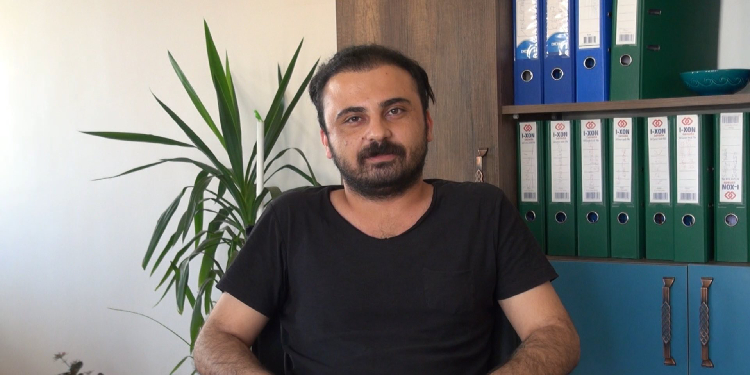
Attorney Süleyman Şahin from Lawyers for Freedom Association (ÖHD), said to The Amargi that this is a coordinated case in which the responsibility does not rest solely with the police, “From the chief public prosecutor to the doctors, everyone has a role in what happened.”
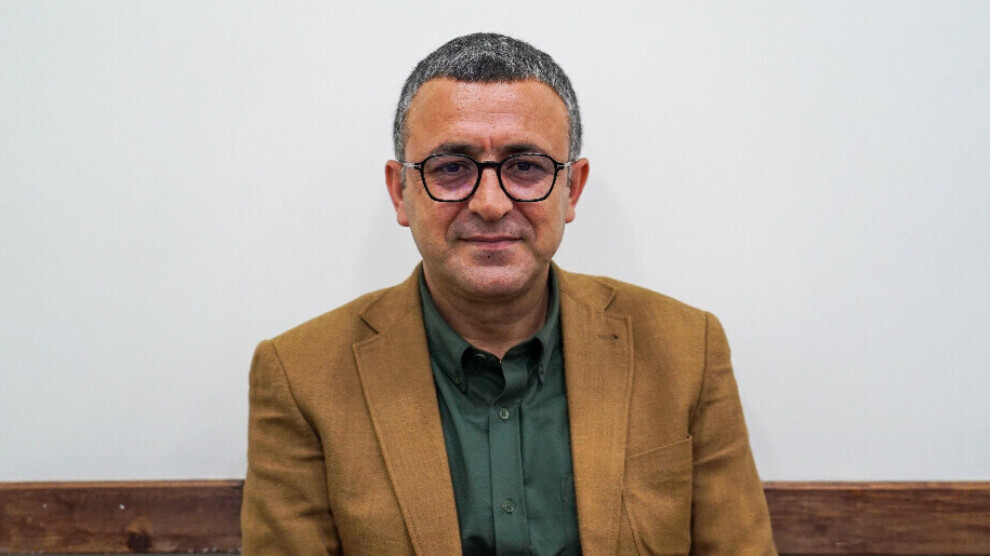
Serhat Eren, a member of parliament for the Peoples’ Equality and Democracy Party (DEM Party) representing Amed (Diyarbakır), described Diyar’s discharge from the hospital as contrary to both law and medical ethics, given his critical condition. According to Eren, discharging a patient whose health condition is so severe constitutes an “inhumane” practice and directly contradicts the prohibition of torture enshrined in international law.
Eren stated that criminal complaints have been filed by the DEM Party Legal Commission and Diyar’s lawyers against those responsible.
According to his lawyers, during the police interrogation…no questions were asked regarding the allegation that a flag had been taken down.
The uncertainty and arbitrary treatment extended into the judicial process as well. Following the protest, many were taken into custody, but lawyers were unable to reach their detained clients until the next day. Additionally, no case number was assigned to the case until the third day, effectively making it impossible for lawyers to file objections to the detentions.
On the same day, Diyar was removed from the hospital and taken to the Counterterrorism Branch in Nisêbîn. According to his lawyers, during the police interrogation the questions were largely limited to “Why did you come to Nusaybin?” and “What were you doing there?” No questions were asked regarding the allegation that a flag had been taken down.
The flag removal allegation was not treated as a charge
Diyar was referred to the Criminal Peace Judgeship with a request for pretrial detention, without first making a statement to the public prosecutor. He was brought to court in a wheelchair. According to his lawyers, he vomited repeatedly during the hearing, his head was bandaged, and his face was unrecognizable due to the beating.
At the judgeship, Diyar was asked whether he had climbed a tower along the border, whether there had been a flag there, and whether he had hung or attached anything. When he said there was no flag, the judge followed up by asking, “Did you hang anything?” Diyar replied, “No.”
Despite this, he was placed in custody on charges of membership in an illegal organization and violating border security. According to his lawyers, Diyar was not even in a condition to sign documents.
Attorney Süleyman Şahin drew attention to the Diyar’s health issues and mental state during the trial, saying, “A detention order was issued for someone whom the judge had to ask, ‘Are you able to sign?’”
Following his detention, Diyar was portrayed on social media as the perpetrator of the alleged “flag removal”, without any judicial ruling or official statement having been made.
According to Şahin, the court was unable to exercise independent discretion. Because the “flag removal” allegation had already been circulating: “There had to be a consequence to the lynching on social media, and that consequence was placed on our client.”
Following his detention, Diyar was portrayed on social media as the perpetrator of the alleged “flag removal”, without any judicial ruling or official statement having been made.
Serhat Eren stated that the footage circulated was not recorded on the Turkish side of the border. Eren argued that judging by the images circulating, the individuals who lowered the flag were on the other side of the border. He added that the state possesses no concrete evidence linking Diyar to this allegation, and that if such evidence existed, “the state would have released the footage.”
Eren said that the flag in this case functions less as an alleged crime that exists in the file and more as a discursive tool that renders the torture inflicted on Kurds invisible. He emphasizes that the fundamental issue underlying the discourse of flag and security is the continued denial of Kurds’ basic rights and freedoms. In his view, the rejection of demands for language rights, identity, and political subjectivity is the primary reason why security-driven reflexes are activated in cases such as this.
What Has Happened to Diyar Koç?
Following the arrest order, Diyar was taken to Mardin Prison. Citing his medical condition, the prison administration refused to admit him. That same night, he was transferred back to the hospital. The following day, Diyar was sent to Amed (Diyarbakir), where he was again not admitted to prison. He ended up at Gazi Yaşargil Training and Research Hospital and placed in intensive care. Doctors determined that the risk of brain hemorrhage had reemerged.
Due to the risk of severe internal organ damage, he remained in intensive care, until he was transferred to Ankara Etlik City Hospital for further treatment, to be kept under observation due to risks relating to damage to internal organs. Currently, after being discharged, he is held in Sincan No. 1 F-Type High-Security Closed Prison.
Member of parliament Eren warned that sending a severely injured Kurdish detainee to Ankara at a time when nationalist and racist rhetoric is intensifying carries serious risks. He stressed that the Ministries of Justice and Health bear the highest level of responsibility to protect Diyar’s health and safety. “A person taken somewhere for treatment must not leave there in a coffin,” he said.

Rengin Azizoğlu
Rengin Azizoğlu is journalist and news editor based in Istanbul.