Syrian Integration Deal Fails to Alleviate Civilian Suffering in Kobani
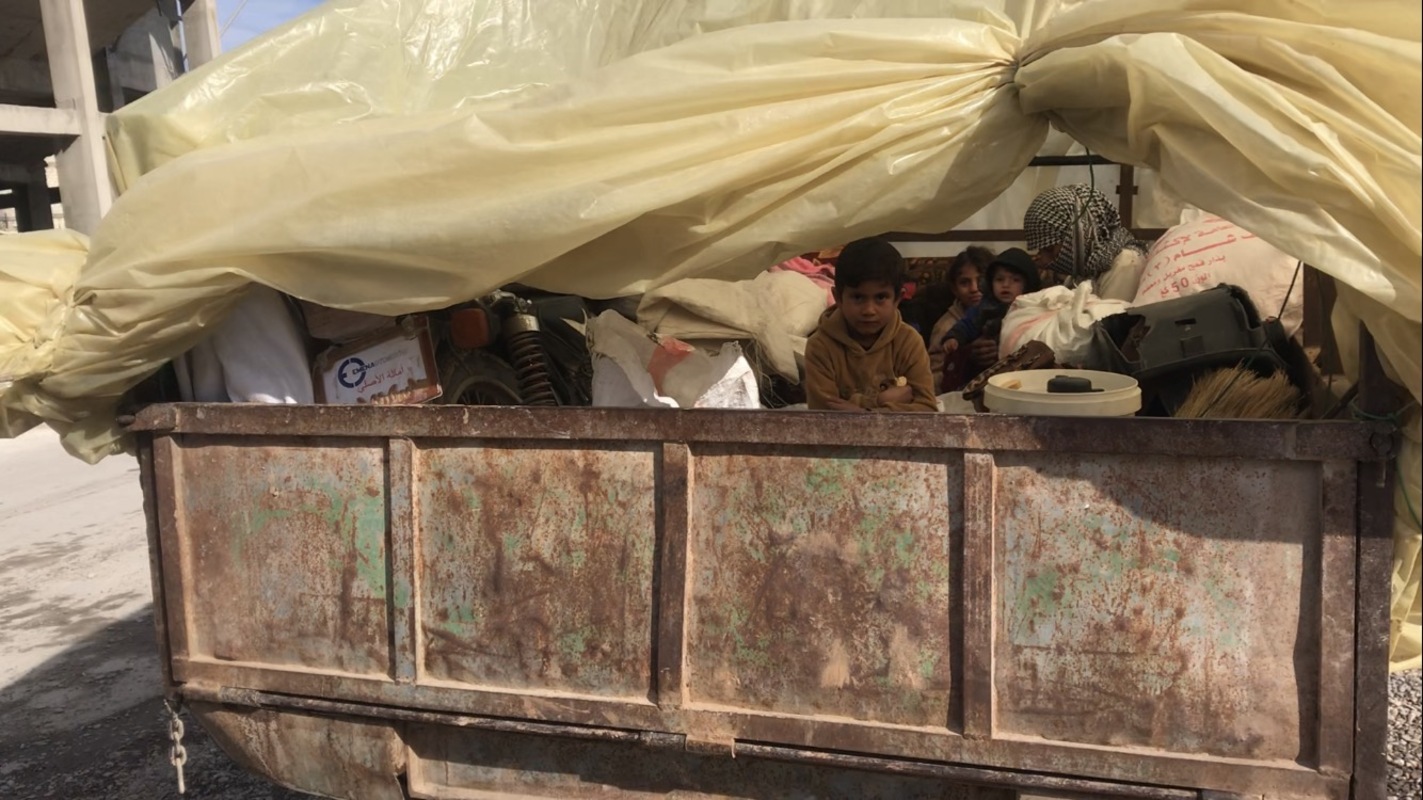
Many IDP families are living in trucks | Picture Credits: Khalil Muhammad
Under a new ceasefire and integration deal, the Syrian Arab Aramy (SAA) and Syrian Democratic Forces (SDF) are both retreating to military barracks after more than a month of clashes, and they are handing their positions over to Internal Security personnel. For local residents and IDPs in the besieged city of Kobani, however, they still face a humanitarian crisis.
Long, winding queues of people waiting for the limited supplies of bread, diesel, and water needed to keep their families alive have become an everyday sight in Kobani. The Kurdish city has been a flashpoint in the Syrian transitional government efforts to gain control over the country’s Kurdish-majority regions, which have been administratively, politically, and militarily autonomous from Damascus since 2012.
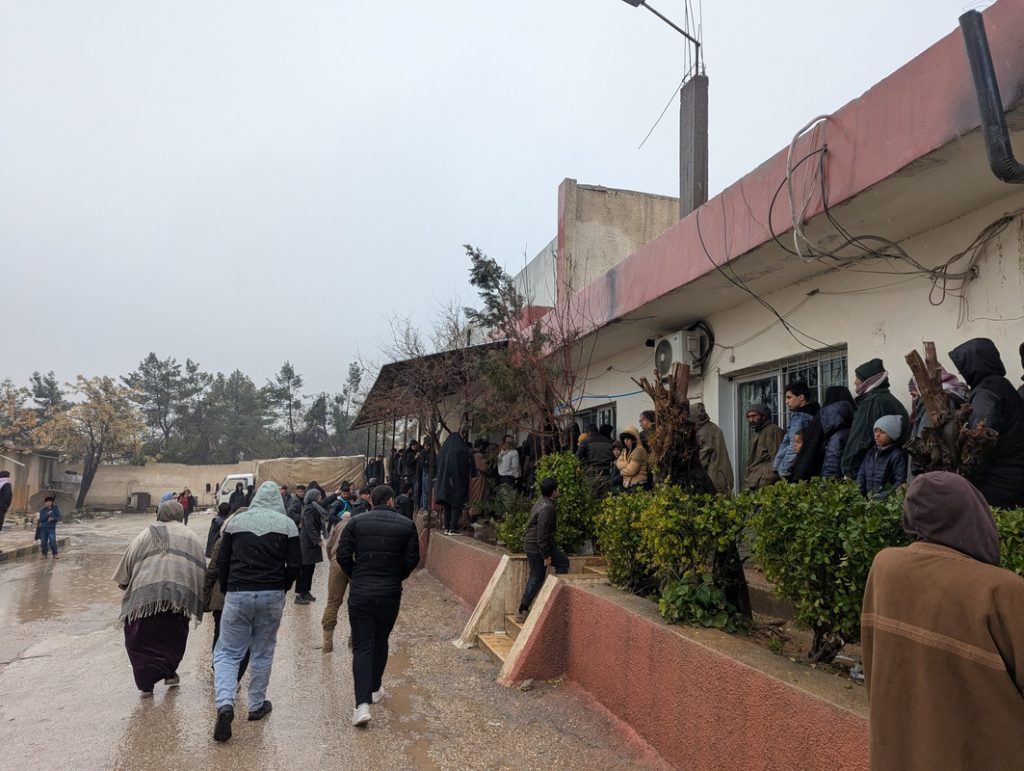
The siege that was imposed on Kobani during the SAA’s January assault remains in place – with SAA forces surrounding the city from three sides and the heavily militarised Turkish border blocking the fourth. Failing health services, unreliable electricity, and rampant food insecurity characterise life in the city and many feel increasingly abandoned.
A Limping Health System
Increased use of contaminated water is leading to a health epidemic. Between 300 and 500 people have been coming to hospital every day.
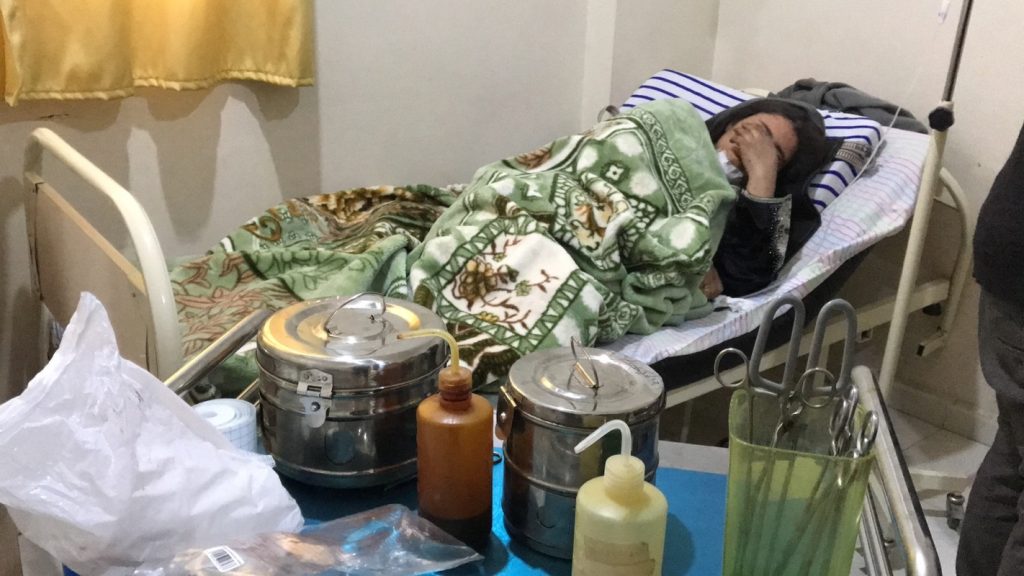
Clinics and hospitals are operating with limited resources and experiencing frequent power blackouts, as well as a shortage of medicines and equipment. Medical staff say that even routine care has become extremely difficult, and they are now overwhelmed by cases of poisoning caused by contaminated water.
Last week, Damascus’ Energy Minister, Mohammed al-Bashir, raised eyebrows in Kobani when he declared that “the cessation of drinking water pumping or the concern of its interruption in the province is a thing of the past.” 14 water stations remain out of service in the area.
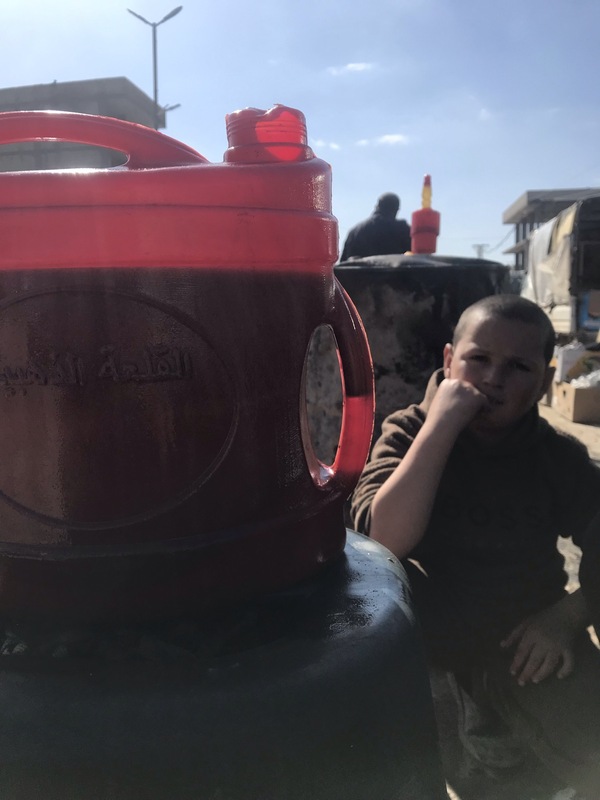
“The water cannot be treated, therefore it is unsafe for consumption,” says Kobani’s Health Committee co-chair, Azize. “But people do not have alternative water sources. The mains supply is cut.” People who have private wells use what water they can draw without power, while the city continues trying to provide as much as it can. However, increased use of contaminated water is leading to a health epidemic, “We are seeing new cases of severe diarrhoea every day, particularly amongst children,” Azize says. Between 300 and 500 people have been coming to hospital every day, reports Ahmed Mahmood, co-chair of the Euphrates Canton Health Board.
Doctors and pharmacists also report shortages of essential drugs, including treatments for inflammation, chronic diseases, and emergency supplies. Power outages interrupt surgeries and disable diagnostic equipment, while also affecting the storage of medications. In many cases, facilities are unable to respond to post-operation complications. Amed Khalil, a pharmacist in Kobani, says, “Patients can’t get medicine at the hospital. People are going around six pharmacies to find something. The main problem is [running out of] medication for cancer patients.”
No Fuel and Electricity
Trucks full of children, worn mattresses, and whatever else people were able to grab as they fled their homes, are parked along the roads.
Long and unpredictable power outages have affected nearly every aspect of daily life. Without power and diesel, water pumps cannot function, bakeries have been forced to shut down their ovens, and families are left without heating.
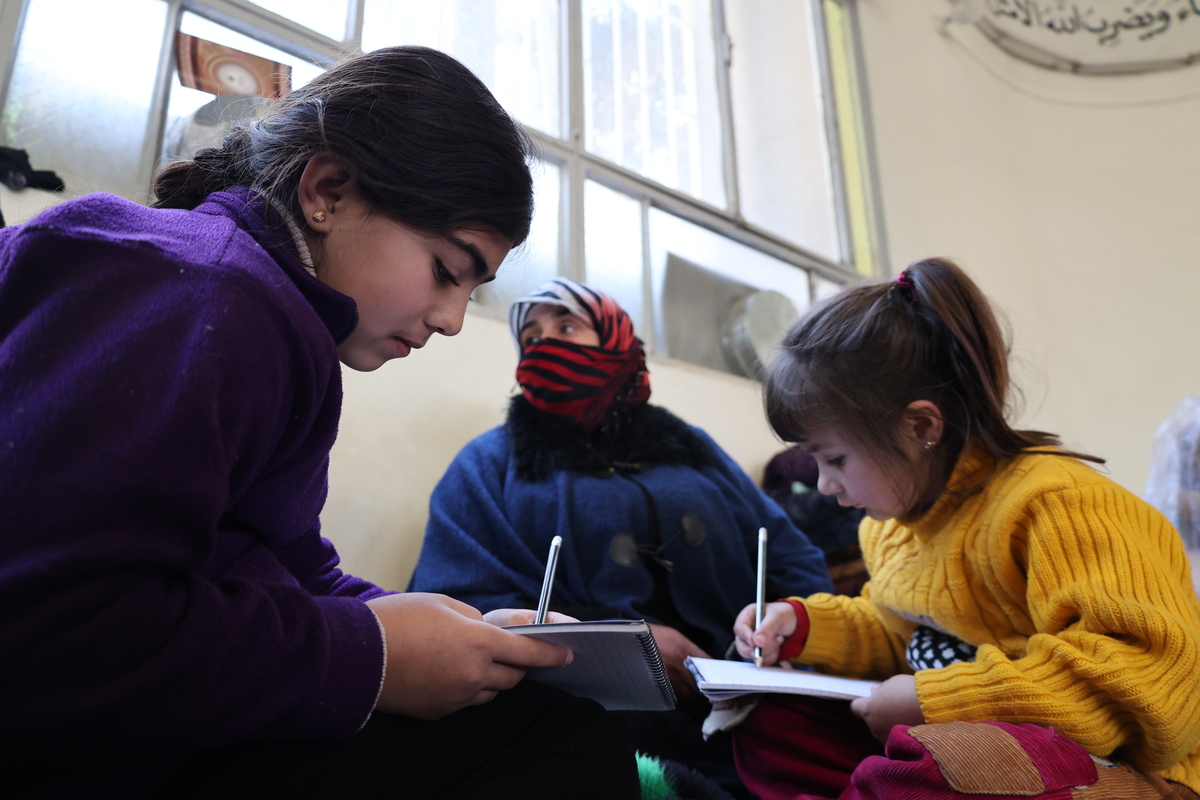
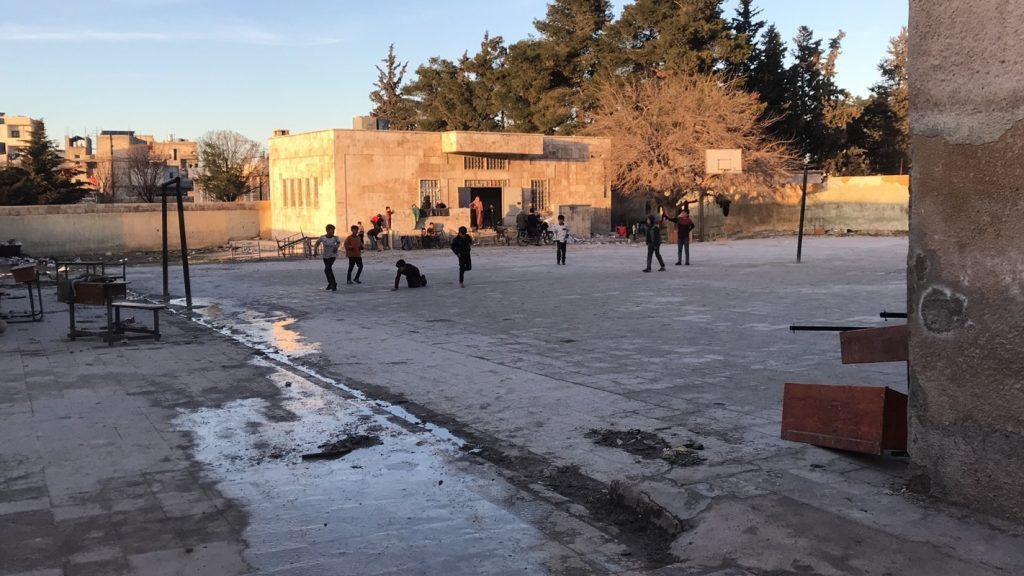
Most of the 45,000 internally displaced (IDP) families have taken refuge in schools, mosques, and the ruined old museum that lies in a part of the city that was never rebuilt after ISIS destroyed it in 2014. Others remain in vehicles. Trucks full of children, worn mattresses, and whatever else people were able to grab as they fled their homes, are parked along the roads.
Households primarily rely on small generators, but fuel prices have skyrocketed during the current siege. Many have had to endure the cold and darkness. Although some parts of Kobani received a few hours of electricity on the evening of February 10, it is unreliable.
Fresh Food A Luxury
Fresh items such as vegetables and fruit are now luxuries for residents.
Access to basic goods is a challenge. Although shops are still open, prices have risen sharply, and many families can no longer afford basic items. Bread is prioritised, but fresh items such as vegetables and fruit are now luxuries for residents.Locals warn that prolonged shortages and high prices are affecting the lives of children and the elderly, which could have long-term health consequences. A shopkeeper, Delil Muhammad, says, “We are running out of everything. People are trying to smuggle things into the city, but at triple the price.”
Adults describe reducing portions and skipping meals to try to ensure their kids have something on their plate. “We can endure the situation,” says, Muhammad Bozo, a displaced resident who fled the SAA’s onslaught last month, “but for the children it’s a real problem.” Kurdish NGOs outside of Syria have sprung into action and attempted to bring in aid, but all routes into the city remains inaccessible, controlled either by the STG or Turkish military. The head of the humanitarian Bahar Organisation says they are in contact with Damascus regarding aid delivery, but there have been no signs of cooperation yet. Although a UN aid convoy was granted access, Kurdish Red Crescent worker Avdi Mahmoud al-Ali estimates that it covered 10% of the need.
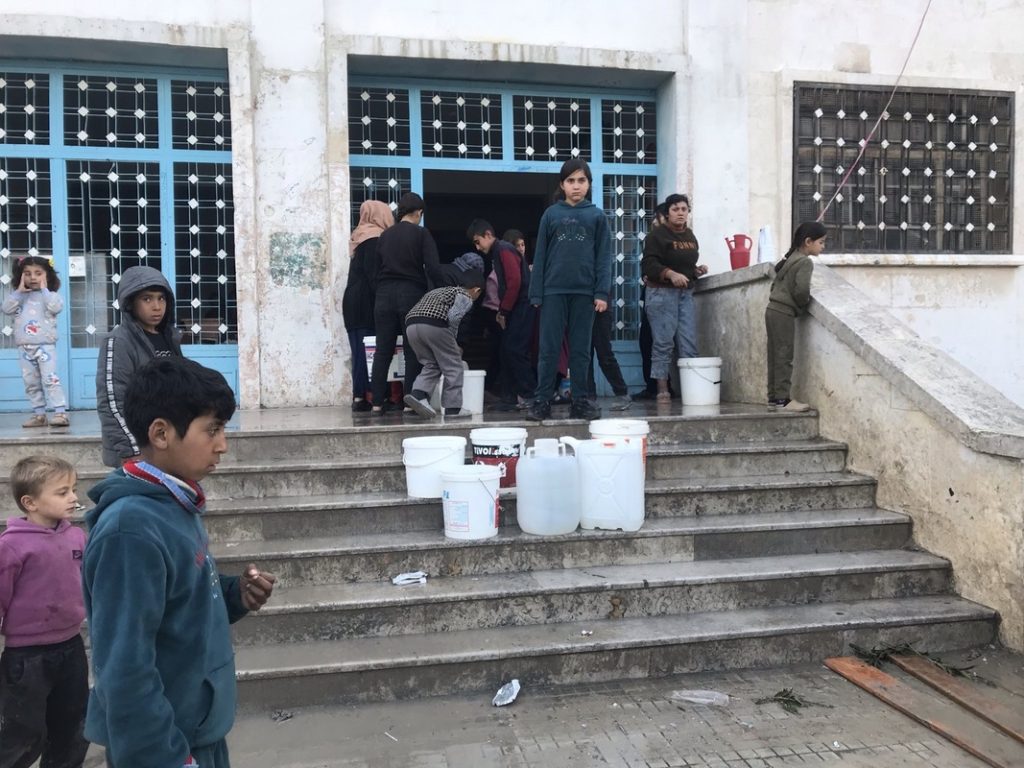
Kobani’s Kongra Star office – the main women’s organisation in the city – explains that growing demand far outstrips the limited aid supply, adding “We want the siege to end so that we will have no need for aid in the first place.”
Alongside the humanitarian crisis, many IDPs are worried about the state of their properties in the Kobani countryside. Locals who were displaced have claimed that looting and theft by SAA forces in the villages from which they fled are rampant.
A Crisis of Trust
From the outside, it appears that the implementation of the STG and SDF’s integration pact is gaining pace. France is acting as the guarantor power for the agreement, which Paris’ Foreign Minister recently described as “the best opportunity available to both parties.” Kobani’s Internal Security Forces sent a delegation to meet with their STG counterparts in Aleppo. The latter’s commander, Colonel Mohammed Abdel Ghani, also met with a civilian delegation from Kobane, on the February 6 in order to discuss security coordination mechanisms, facilitating the safe return of displaced peoples, and reviewing the progress of the integration agreement.
Yet, today, the city’s local media office felt compelled to issue a formal statement asserting that “Recent reports circulated by several news outlets claiming that the blockade on Kobani and its countryside has been lifted … bear no connection to reality.”
For many families in Kobani, survival has become a matter of improvisation, as they seek to get medical care without functioning hospitals, cook and store food without electricity, reside in damaged buildings, and keep the city running with paralysed services.
Perhaps the most evident consequence of the past month has been the collapse of trust. Many residents say they no longer believe government statements or official reassurances. “If they wanted to help, they could, but they don’t,” complains Shareef Omar. “Kobane feels like a bargaining chip rather than a city of civilians with urgent needs.”
“We have seen more than one agreement fail to deliver,” says Said Omer, a local journalist. He cites the SAA’s attacks on Aleppo’s Kurdish neighbourhoods, which occurred nine months after a similar integration deal was signed in Aleppo. “This new government has avoided taking action and instead made empty statements,” he claims.
Residents insist that solutions to the crisis exist: security guarantees against SAA attacks, protection for IDPs to return, the opening of supply routes, and humanitarian access. Isolated from the rest of Syria through roadblocks and from the online sphere through internet blackouts, the strikingly common sentiment is that this is the result of deliberate political decision-making and systematic neglect.

Khalil Muhammad
Khalil Muhammad is a independenet journalist, fixer and human rights defender based in North East Syria.