Children’s Education Suspended in Rojava, North and East Syria
Picture Credits: Abbas Abbas
Written with contributions from Abbas Abbas
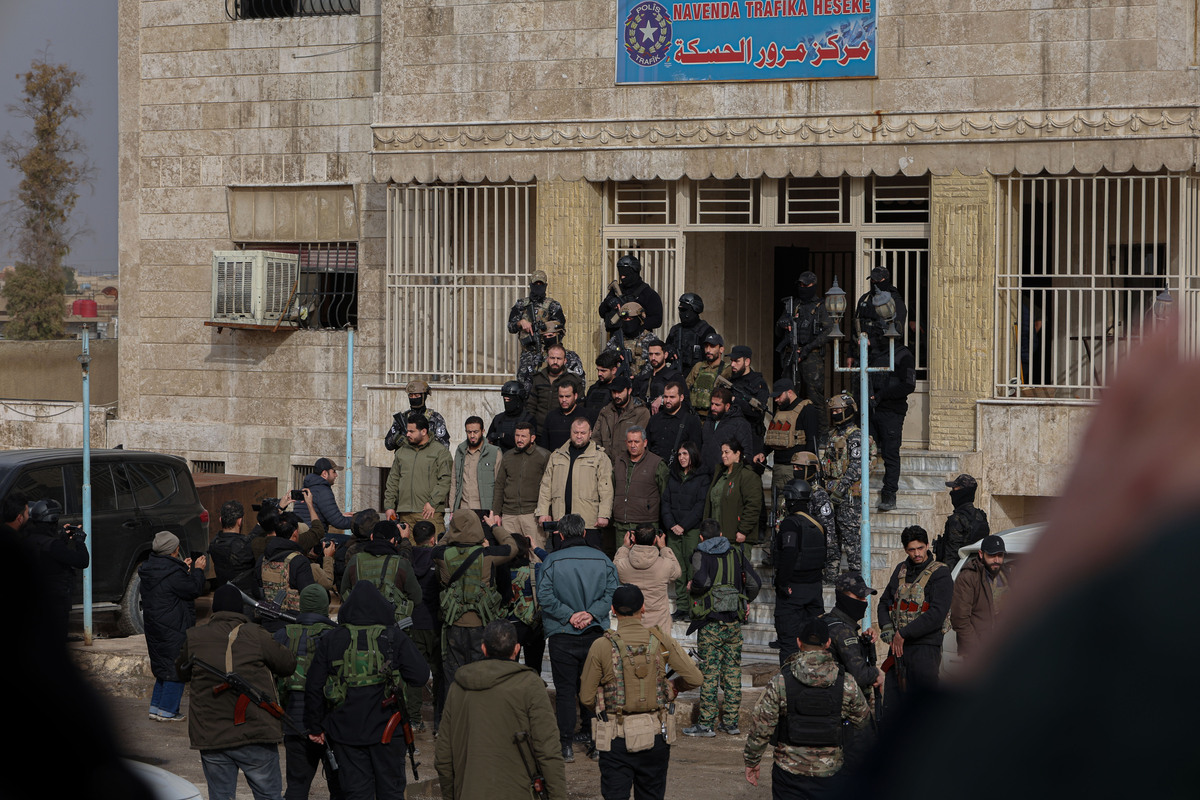
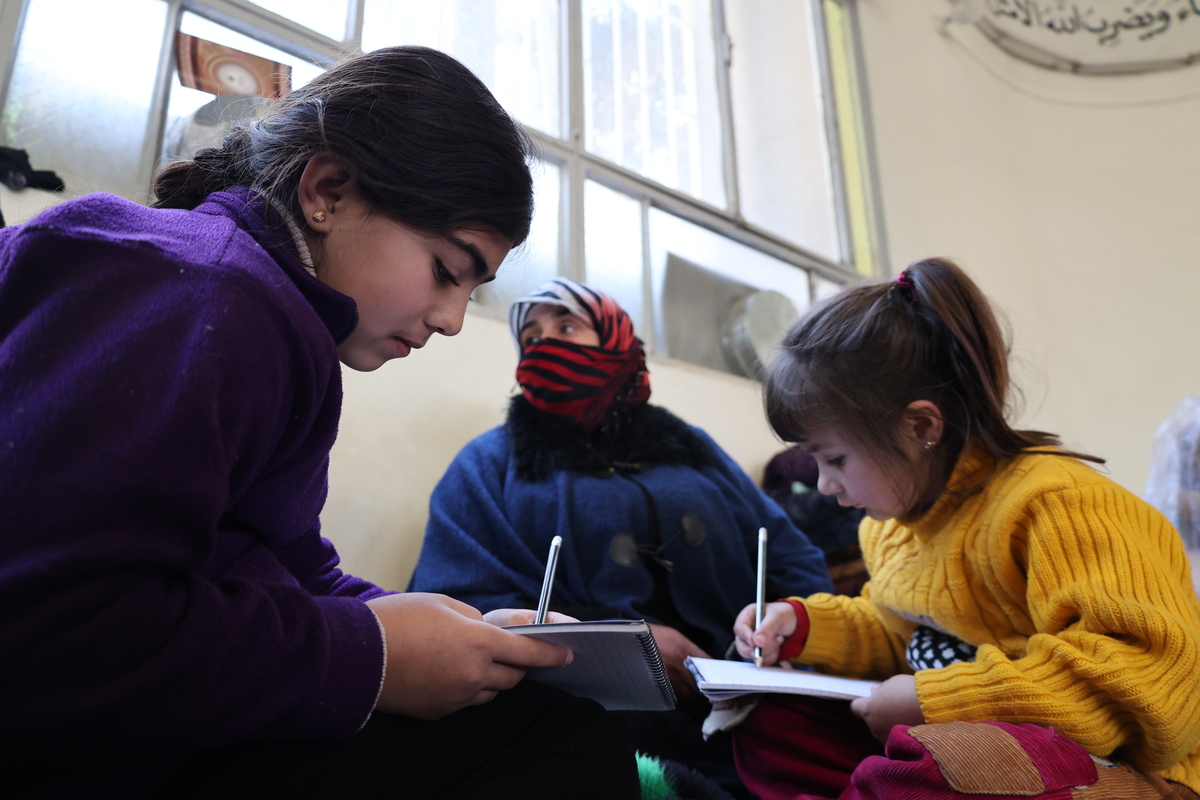
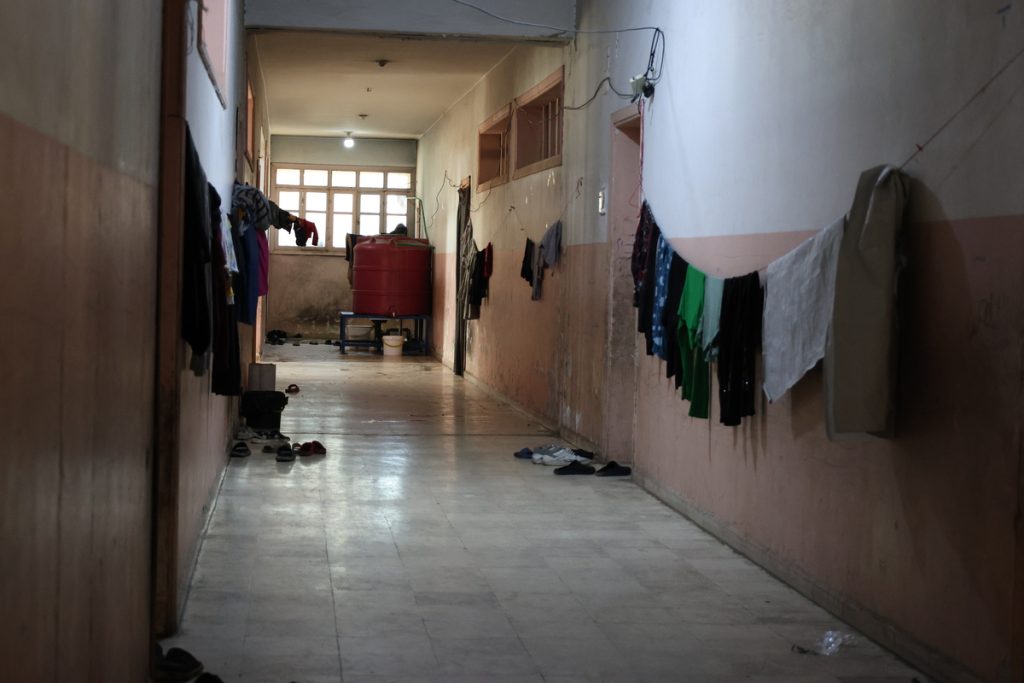
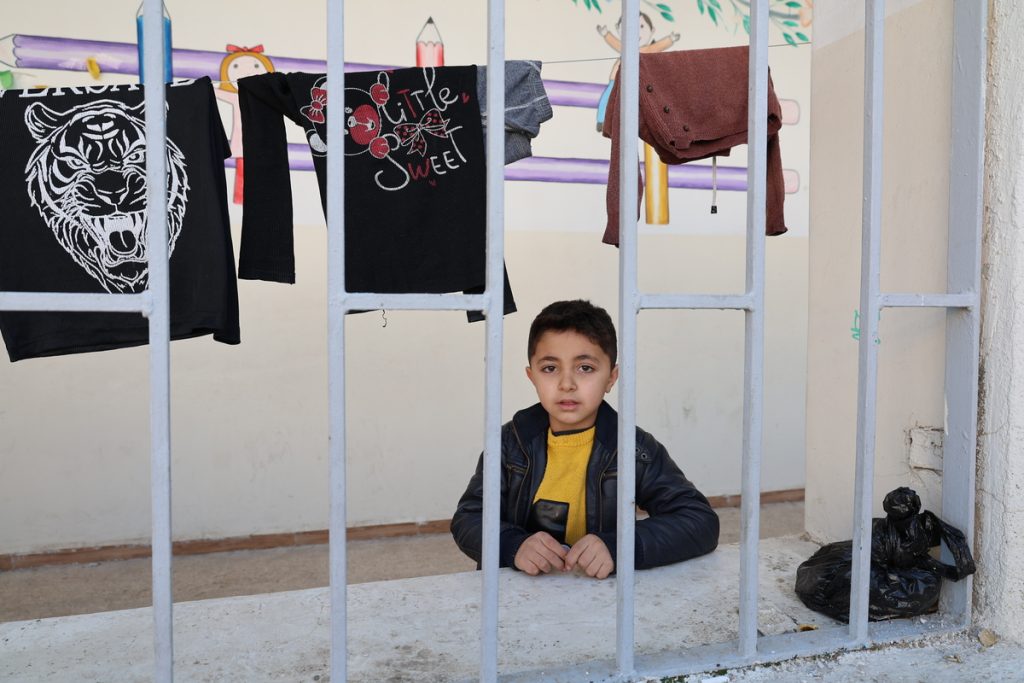
In the Kurdish-majority areas of northern Syria, thousands of children are unable to continue their education as most classrooms have been repurposed to serve as shelters for the 170,000 IDPs who were displaced in January by the Syrian Arab Army’s (SAA) offensive.
In freezing winter temperatures, displaced families are living in frigid, concrete classrooms, having brought little more than the clothes on their backs with them when they left home. They fled when the SAA attacked regions east of the Euphrates River to seize Raqqa, Tabqa and Deir ez-Zor from the Syrian Democratic Forces (SDF) last month.
“We cannot open our schools for the kids to return to their studies,” said Semira Hajj al-Ali, co-chair of the Kurdish-led Autonomous Administration’s (DAANES) Education Board. “In the Jazira region, 259 schools are housing IDPs. 25 schools in Kobani – still encircled and besieged – are hosting those who have fled the attacks from the surrounding villages and countryside.”
In other parts of Syria, however, education is slowly starting again: “Today, over 4.5 million students at various educational stages are heading to their schools, as the second semester of the year 2025-2026 begins,” said the Syrian state-run media SANA, on February 1st, 2025. Despite a teachers’ strike related to poor pay and job insecurity in the country’s northwest, 12,000 schools across the country opened their doors to welcome pupils back after the holidays. Three days later, the Syrian Ministry of Education issued its 2026 exam program for high school certificates, while UNICEF and Finland announced €2.7 million aid package to support child education in Syria.
“Children’s rights to study, to get educated, and to live a peaceful and safe life have all been violated,” said Julia Khalo, who works at Stêrk, a children’s rights organisation in North and East Syria. She added that many children have also been psychologically impacted by the recent attacks, with some of those displaced having witnessed violence on the road.
“Some families have already returned to Afrin, but most are waiting. We want everyone to return together, when their safety can be guaranteed.”
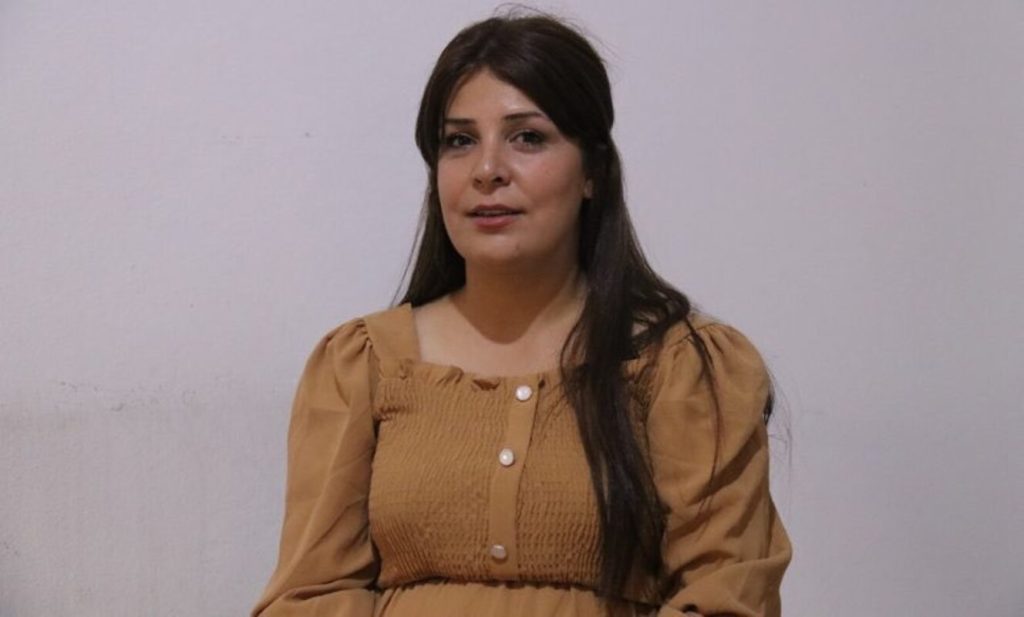
The January 29 integration agreement between the SDF and the Syrian government stipulates the return of all displaced people to their areas of origin. For this to be realised on the ground, however, time is needed, according to Emina Omer, a coordination member of the Women’s Council of North and East Syria: “Some families have already returned to Afrin, but most are waiting. We want everyone to return together when their safety can be guaranteed.” This would require Turkey ending its occupation of those regions, the exit of the notorious Turkish-backed militias – which are now part of the new Syrian Army – and the return of stolen property to the displaced locals.
Damascus’s Promises Fall Short
The recent agreement also included an article promising that the state would formally recognize diplomas and school certificates issued by DAANES’ educational institutions as legitimate. In the 14 years of de facto autonomy in NES, many families in Kurdish areas chose not to register their children at DAANES institutions but to instead send them to the few, overcrowded schools run by the Ba’ath government or pay exorbitant fees for private education. This was because the graduation certificates issued by the DAANES held no domestic or international currency, invalid everywhere outside of NES.
As DAANES’ schools and other civil bodies merge with Damascus’ central ministries and institutions, all workers will retain their positions but will now be formally employed by the state.
But changes are expected. One unresolved issue is the language of education. With the creation of the DAANES, children could receive schooling in their mother tongue, a right denied to them under Bashar al-Asaad’s government.
The Syrian transitional government has issued a decree to protect Kurdish linguistic, cultural, and citizenship rights. Interim president Ahmed al-Sharaa repeated his commitment to this when he met with a delegation from the Kurdish National Council in Damascus. But so far, the decree has amounted to the provision of two hours of elective Kurdish lessons each week, which falls short of the expectations of millions of Kurds who have now spent over a decade using Kurdish as their language of schooling, politics, and governance.
“What about Kurdish history? Each people have their own history – and ours is not given space within the government textbooks.”
Gulistan Shefa, who teaches in a primary school in a village near Derik, said she anticipates a negative impact on Kurdish students should their language of schooling be changed. She also brings up the likelihood of the Syrian state curriculum being reintroduced, which may hinder protections promised by the decree: “What about Kurdish history? Each people have their own history – and ours is not given space within the government textbooks.”
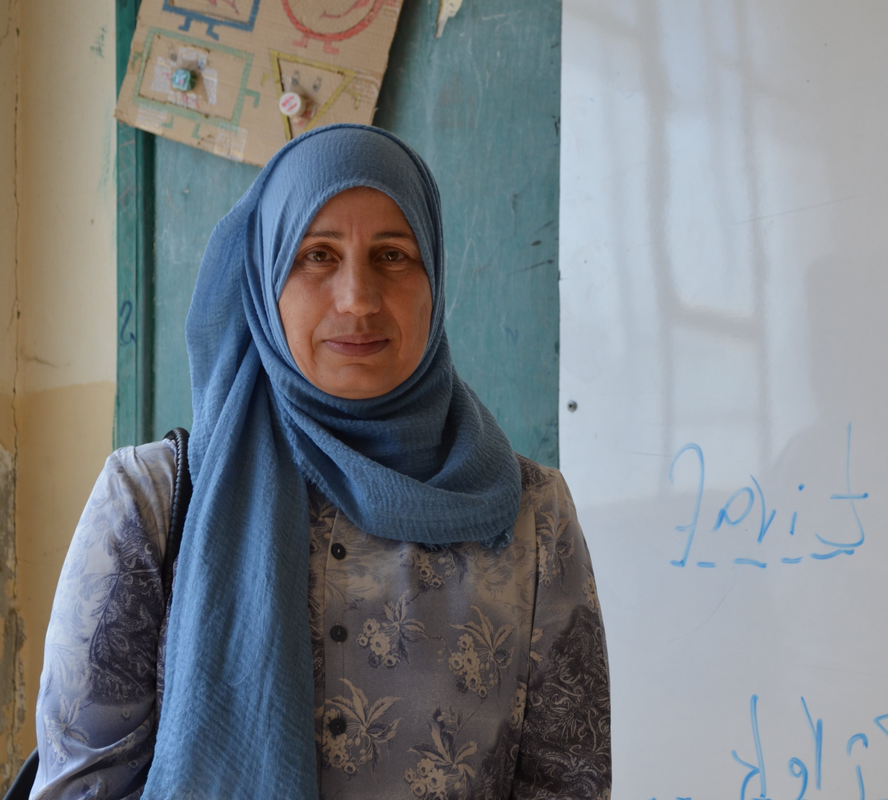
The DAANES’ curriculum differs from Damascus’ on several points, such as the former’s secular content and emphasis on women’s rights. Given al-Sharaa’s Islamist leanings and power base, it seems likely that the Damascus government will push for the DAANES’ curriculum to be abandoned. The curriculum has previously faced popular opposition in Arab-majority areas, who accused it of containing overly political content. Local women’s activists, however, assert that subjects such as Jineoloji (Kurdish: “Science of Women”), which are taught in the region’s schools and universities and have a dedicated department in Rojava University, have an important impact in understanding and overcoming patriarchy in society. Jineoloji Academy’s Zeriban Hisen said that the education system and curriculum are currently under discussion, “But we know very well that the Damascus government holds women’s thought, ideas and organisations with low regard.”
University students have also suffered as a result of the recent turmoil. Omar Mukhtar, a student of Raqqa’s al-Sharq University, was among 60 students who fled together from when the SAA forces advanced on January 18. He said that with this takeover, al-Sharq’s name was immediately changed to al-Firat, and he fears he will not be able to graduate: “So far, no one has reached out to us about the possibility of students returning.”
With the closure of al-Sharq, two of the four public universities built in NES since 2012 have now been forced to shut down, with Afrin University abandoned upon Turkey’s invasion of the region in 2018.
All classes at the remaining two universities have ceased due to the attacks: “I was in the middle of a practical exam, but didn’t finish because of the situation,” said Laveen Battal, who is in her final year at Rojava University in Qamishlo.
While school textbooks and curricula in the Kurdish language were devised quickly after the region gained de facto autonomy from Assad’s regime in 2012, creating adequate course materials and resources for university subjects in Kurdish took more time. Laveen, who studies petrochemical engineering, said that she and her peers “have been trying to translate all the course materials into Kurdish.”
Over the last 14 years, education activists, linguists, translators, teachers, students, and civilian administrators have undertaken the painstaking work of building a Kurdish-language education system in NES. Although many publicly decried the education system’s shortcomings and the quality of schooling in the early stages – due to teachers needing to adapt to new curricula, retraining, and having to rely on the scarce Kurdish materials available – these efforts continued, and their results are now visible within Kurdish society in northern Syria. The younger generations are far more advanced than their parents in the technical grasp of their mother tongue, while arts, culture, and media in the Kurdish language have also blossomed.
However, with all educational institutions currently shut, and the threat of curriculum and language change looming, the preservation of those gains is by no means guaranteed.

Eve Morris-Gray
Eve Morris-Gray is a freelance writer focussed on civil society movements and democracy.